
A global sporting event is supposed to be a moment of celebration. Billions of fans tune in. Host cities polish their streets and stadiums. Governments spend billions to put their best face forward for the world. But as preparations ramp up for the 2030 FIFA World Cup, a deeply troubling picture has been emerging from Morocco, one of the tournament’s three co-hosts. And the more people learn about it, the angrier they get.
The story involves millions of animals, a 91-page dossier delivered to football’s governing body, celebrities firing off furious posts, and a Moroccan government caught between global scrutiny and a genuinely difficult public health crisis. There are competing claims about what is actually happening on the ground, conflicting official statements, and a pattern of evidence that animal welfare organizations say cannot be explained away. And somewhere in the middle of it all, Morocco is building what will be the world’s largest stadium.
What follows is a thorough account of what is known, what is disputed, and what the international community is demanding. This story did not start trending overnight. It has been building for years.
The Scale of the Problem
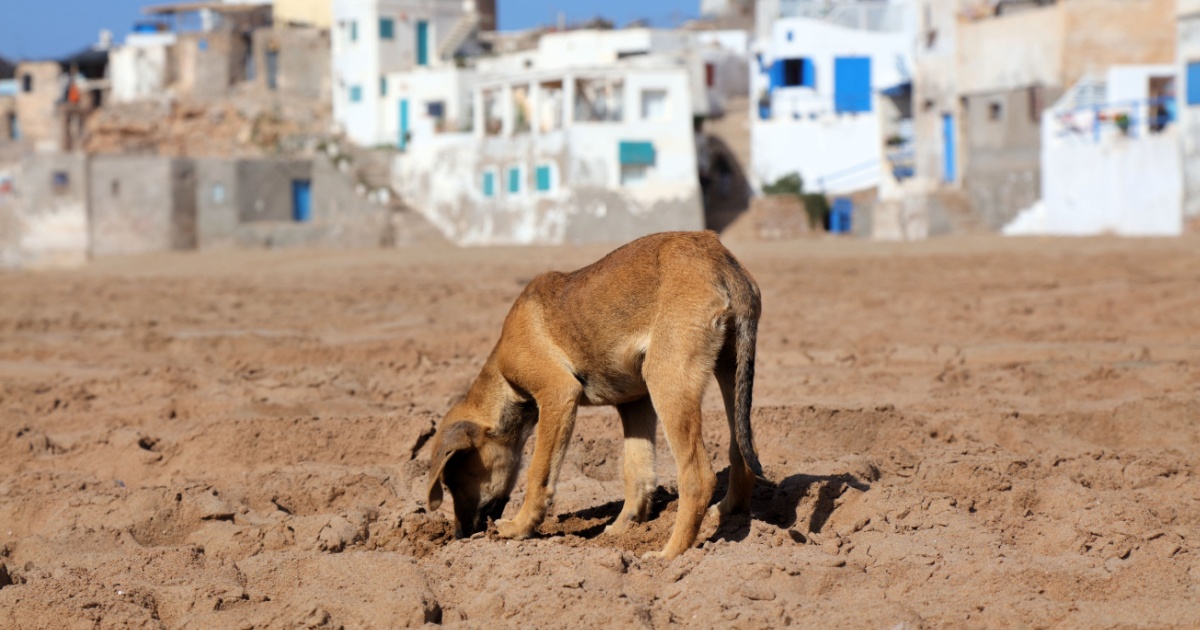
Morocco is facing mounting criticism over allegations that the country intends to exterminate approximately three million stray dogs ahead of the 2030 FIFA World Cup, which it will co-host with Spain and Portugal. The figure of three million is significant, because advocates say Morocco has around three million stray dogs, though no official figures exist. Moroccan government authorities put the number lower: Moroccan authorities estimate the country’s stray dog population is between 1.2 and 1.5 million.
The gap between those numbers matters, but both sides agree that Morocco has a large and long-standing stray dog population, and that its management has been inadequate for years. It is estimated that over 300,000 street and owned dogs lose their lives every year as a result of Morocco’s killing methods, often in front of a witnessing public, including children. That baseline figure predates the World Cup announcement. The concern from animal welfare groups is that the pace has accelerated sharply since Morocco was selected to co-host.
The FIFA Council unanimously agreed in October 2023 that the sole candidacy for the FIFA World Cup 2030 would be the combined bid of Morocco, Portugal, and Spain. A statement from the International Animal Welfare Protection Coalition (IAWPC) said: “After the World Cup confirmation, the extermination of the dogs has increased dramatically. As a result, the fear is that Morocco will now go ahead with their plan for the mass slaughter of three million dogs.”
What Animal Welfare Groups Are Reporting
The IAWPC, a coalition of animal welfare organizations that includes the RSPCA and PETA, has led the most sustained international campaign on this issue. The coalition submitted a 91-page dossier to FIFA, including photographs documenting poisonings, forced starvation, and the shooting of dogs.
Les Ward, head of the IAWPC, told CNN that “individuals armed with rifles go out into the streets, often at night, and shoot the dogs.” “Others are rounded up and taken to municipal dispensaries where they are poisoned. They simply disappear.” Omar Jaïd, President of the Provincial Tourism Council of Ifrane, confirmed the city has “started cleaning the streets of stray dogs, as part of our preparations for the 2030 FIFA World Cup.”
In some cities, stray dogs are poisoned with strychnine, a pesticide banned in many countries for causing inhumane suffering. Strychnine is a powerful toxin that causes severe muscle spasms and a painful death.
In Defense of Animals, a US advocacy group, reported that between 60 and 70 dogs are being killed every other day in cities including Marrakech and Agadir. Separately, documents obtained by The Athletic reportedly show local authorities ordered 1,000 rounds of ammunition in September 2025 to deal with stray dogs.
New footage posted to the official Facebook page of Oujda’s mayor reveals a government-run animal facility under construction containing concrete cells, a chemical-filled “animal disposal pit,” and no signs of adoption programs, sterilization efforts, or public education. Local media is reporting on plans to build 130 of these facilities across Morocco. Animal welfare groups claim the centers are more than likely to be used as mass killing hubs, designed to eliminate free-roaming dogs ahead of the 2030 FIFA World Cup.
In June 2025, Morocco’s Administrative Court in Rabat found the Ministry of the Interior symbolically responsible for the widespread killing of stray dogs and cats. The case was brought by a coalition of Moroccan animal protection groups accusing the government of mass round-ups, shootings, and poisonings of dogs in the lead-up to the 2030 World Cup. While the court declined to award the symbolic one dirham in damages sought, campaigners saw the ruling as an important legal and moral precedent.
The Human Cost, Too
The situation has left an impression on people who live there, not just those watching from abroad.
For a 19-year-old from Ifrane, a small mountain town known as the “Switzerland of Morocco,” the sight of dead dogs had become routine. She asked to be referred to only by a pseudonym for fear of retribution by Moroccan authorities. “Walking to school, I would pass pools of blood on the street,” she recalled. “At a certain point, I realized it wasn’t normal to start your day stepping over dead bodies.” According to her, the killings have gotten especially bad in the last year.
Erin Captain, originally from Indiana, moved to Casablanca with her husband and quickly grew attached to the local strays. “They’re amazing creatures,” she said. “I began caring for two puppies: vaccinating and feeding them, watching them grow.” Then, one by one, the neighborhood dogs started disappearing. Captain told CNN that municipal vans prowled the streets day and night.
The welfare groups have also raised a separate but serious concern: the impact on children. The killings are taking place in public, in full view of passersby including children. Morocco’s education and welfare services, along with international animal rights groups, have reported several cases of children exhibiting violent behavior toward animals after witnessing public killings. The UN Committee on the Rights of the Child highlights the severe psychological impact of witnessing violence, noting its contribution to cycles of societal aggression and trauma.
Morocco’s Official Position
Morocco has strongly denied that a coordinated cull is underway. A spokesperson stated: “It is entirely untrue that Morocco is planning to cull stray dogs ahead of the 2030 FIFA World Cup.” Officials have highlighted a Trap, Neuter, Vaccinate, Release (TNVR) program established in 2019, alongside investments in veterinary clinics and municipal hygiene infrastructure.
Since adopting the TNVR model in 2019, Morocco has spent roughly $23 million establishing animal control centers and training staff. The TNVR center in El Aarjate offers a glimpse into the humane approach Morocco is working to implement. The facility is described as clean and well-organized, with veterinarians treating 400 to 500 dogs from Rabat and surrounding areas. Dogs deemed healthy are returned to the streets, while those deemed aggressive or terminally ill are humanely euthanized.
The government has a genuine public health argument to make, too. In 2024, Morocco recorded 33 human rabies deaths, a 65% increase over the historical annual average of 20 deaths documented from 2000 to 2021. More than 100,000 dog bites and scratches were reported that year.
The WHO states clearly that culling free-roaming dogs is not effective in controlling rabies. This is a critical finding. Killing unvaccinated dogs does not solve rabies. New animals migrate in from neighboring areas. By destabilizing vaccinated dog populations, Morocco’s actions have caused rabies outbreaks in previously cleared areas, directly undermining the country’s stated commitment to the World Health Organization’s “One Health One Welfare” program to eradicate rabies by 2030.
The gap between national policy and local municipal practice is a recurring theme in this story. Municipalities, not the national government, are responsible for managing stray animals. Mohamed Roudani, Head of the Public Health and Green Spaces Division at Morocco’s Ministry of the Interior, acknowledged: “There’s a legal vacuum. Some cities still rely on traditional methods, and there’s currently no law against killing stray dogs.”
A Contested Draft Law
The Moroccan government has moved to address the legal vacuum. A bill aimed at protecting street animals was adopted in August 2025, though it remains pending parliamentary review. It would set fines of up to $1,500 or jail terms of up to three months for harming stray dogs.
But animal welfare groups say the legislation is deeply flawed. A provision in the proposed law would criminalize the feeding and sheltering of stray dogs and cats, while also granting broad authority for their removal. Article 51 grants local authorities the power to “put an end to the danger of stray animals” if deemed a threat to public order and security, without defining humane methods or requiring independent oversight. Critics argue this could be used to justify killing under vague and subjective grounds.
Activist and cultural entrepreneur Chama Tahiri told Middle East Eye the sudden draft law came about because of “public shame from the international media coverage of the culling.” One local advocate was blunt: “I don’t believe they are going to roll out TNVR. I think they will kill the majority and maybe release a few to show goodwill, but it’s clear this is not for the good of the animals, it’s for the World Cup image.”
The government has invested nearly 240 million dirhams, approximately $26.5 million, in building and equipping centers for strays and supporting sterilization programs. Whether those centers are functional welfare facilities or something else is precisely what is in dispute.
FIFA’s Role and Its Failures
FIFA has been aware of Morocco’s dog culling since at least 2023. That March, the European Link Coalition (ELC), a UK-based NGO that researches the connections between animal abuse and human trauma, met with senior FIFA officials to present evidence of a rise in culling ahead of the 2030 World Cup. The materials included dozens of photos, videos, and witness testimonies.
In April 2024, FIFA Human Rights Advisor Marta Piazza told the ELC that the organization “truly valued” their input and was engaging with Morocco’s government to “ensure alignment with FIFA’s bidding requirements.” A “suggested way forward” was promised in the coming weeks. According to the ELC, FIFA then fell silent. The organization says it has not heard from Piazza or her colleagues since.
In its evaluation report for Morocco’s World Cup bid, FIFA cited the country’s commitment to animal welfare. In December 2024, FIFA blindly accepted Morocco’s claim that the slaughter had ended in August 2024 and that resources were being allocated for humane programs. Yet extensive evidence from animal welfare groups proves these assertions are false, with government-sanctioned killings not only continuing but escalating as Morocco secured hosting rights.
FIFA has since stated it is working with the IAWPC, which convened a global panel of senior legal and animal welfare experts to review Morocco’s draft regulations. In a statement to CNN, FIFA said it had contacted the Royal Moroccan Football Federation and “received confirmation that a number of measures have been implemented over the last 5 years,” with new legislation in the works aimed at balancing public health and animal welfare.
Critics say that language amounts to years of delay dressed up as progress. Minky Worden of Human Rights Watch told CNN: “Football fans around the world love dogs. Animal mistreatment could become a major PR issue if FIFA doesn’t take concrete action.”
Global Outrage and the Boycott Question
The story has drawn reactions from high-profile figures across the entertainment and political spectrum. Oscar-nominated actor Mark Ruffalo has spoken out against the reported cull, writing on X: “Killing millions of dogs to prepare for a global sporting event is not progress, it’s a moral failure.”
Downton Abbey star Peter Egan, a long-time animal rights campaigner, called the killings “nothing short of state-sanctioned slaughter,” adding: “I’ve seen the horrific images coming out of Morocco, and they will haunt me forever.” Peter Egan joins a growing list of supporters including Dr. Jane Goodall and Chris Packham, all of whom have condemned the killings and called on Morocco to adopt humane alternatives.
PETA supporters disrupted a Morocco versus Manchester City match at the FIFA Club World Cup in Philadelphia in June 2025, rushing the field with signs declaring “Morocco – Stop Shooting Dogs and Cats!” PETA has also asked soccer icon Cristiano Ronaldo to donate toward spay and neuter clinics in Morocco.
Calls to boycott the 2030 tournament are gaining momentum across American social media platforms, despite the United States not being among the host nations. The treatment of stray dogs in Morocco could cast a shadow over the World Cup and deter many animal-friendly football fans from attending. The effect of culling would also be short-term at best, since new dogs take the place of those killed as animals migrate from neighboring areas and more young animals survive.
Meanwhile, Morocco is building on a truly ambitious scale. The Grand Stade Hassan II is planned to have a capacity of 115,000 spectators, making it the largest football stadium in Africa and the second largest stadium in the world. The stadium is part of a broader $500 million investment package led by Morocco’s state-backed fund. Altogether, Morocco has earmarked nearly $2 billion for new construction and refurbishments, an investment that extends far beyond football to transport infrastructure, airport terminals, and new hotels. The contrast between those numbers and the resources allocated to humane dog management has not gone unnoticed.
The Humane Alternative: Why TNVR Works
The IAWPC and other groups are not calling for Morocco to simply leave the stray dog problem unaddressed. They are asking for it to be addressed properly. TNVR is strongly recommended by both the World Health Organization and the World Organization for Animal Health (WOAH).
TNVR is designed as a humane and scientifically supported method to stabilize and reduce stray animal populations. It involves capturing free-ranging dogs, sterilizing them, vaccinating them against rabies, identifying them with visible tags, and returning them to their original territories. The approach relies on the principle that a stable, non-breeding population will naturally decline over time.
The approach has advocates inside Morocco itself. Salima Kadaoui, founder of the SFT animal sanctuary in Tangier, launched Project Hayat in 2016 with the aim of treating, vaccinating, neutering, and tagging stray dogs before releasing them back into the city. Over the years her foundation grew and gained international recognition.
Kadaoui has said that “local officials still see dogs on the streets as presenting a bad image,” identifying the core problem: the pressure to project an image of clean, tourist-ready streets, rather than a commitment to long-term humane management.
Read More: Dogs Can Smell If You’re Stressed or Relaxed and Adjust Their Behavior For You
What This Means for You
The Morocco stray dog crisis is not a simple story of cruelty versus compassion. It involves a genuine public health crisis, a government with real infrastructure constraints, a legal framework that is only now being constructed, and a global sporting body that has repeatedly acknowledged the problem while stopping short of decisive action.
What is clear is this: the evidence gathered by animal welfare organizations, verified by multiple independent journalists including video footage from as recently as May 2025, shows killings continuing in cities across Morocco. The Moroccan government’s official position that no cull is taking place does not hold up against documented procurement orders for ammunition, witness testimonies, and court rulings that found the Ministry of the Interior symbolically responsible for mass killings.
What is also clear is that FIFA holds significant leverage. The organization required Morocco to commit to animal welfare as part of its bid. It has a Human Rights Policy. It has been presented with documented evidence of violations for over two years. The question animal welfare advocates, celebrities, and fans across the world are now asking is simple: at what point does awareness become accountability? The 2030 World Cup is not a distant event. The stadiums are being built. The tournament is coming. And the clock for Morocco’s stray dogs, and for FIFA’s credibility on ethical standards, is running.
If you want to take action, the IAWPC’s Morocco dog campaign page has petition links and contact information for FIFA and the Moroccan government. In Defense of Animals has also published open petitions calling on FIFA to act, and the SPCA International has added its voice to the growing chorus demanding humane alternatives be implemented before the tournament begins.
AI Disclaimer: This article was created with the assistance of AI tools and reviewed by a human editor.
Read More: Scientists Believe Dogs Are Entering a New Phase In Their Evolution