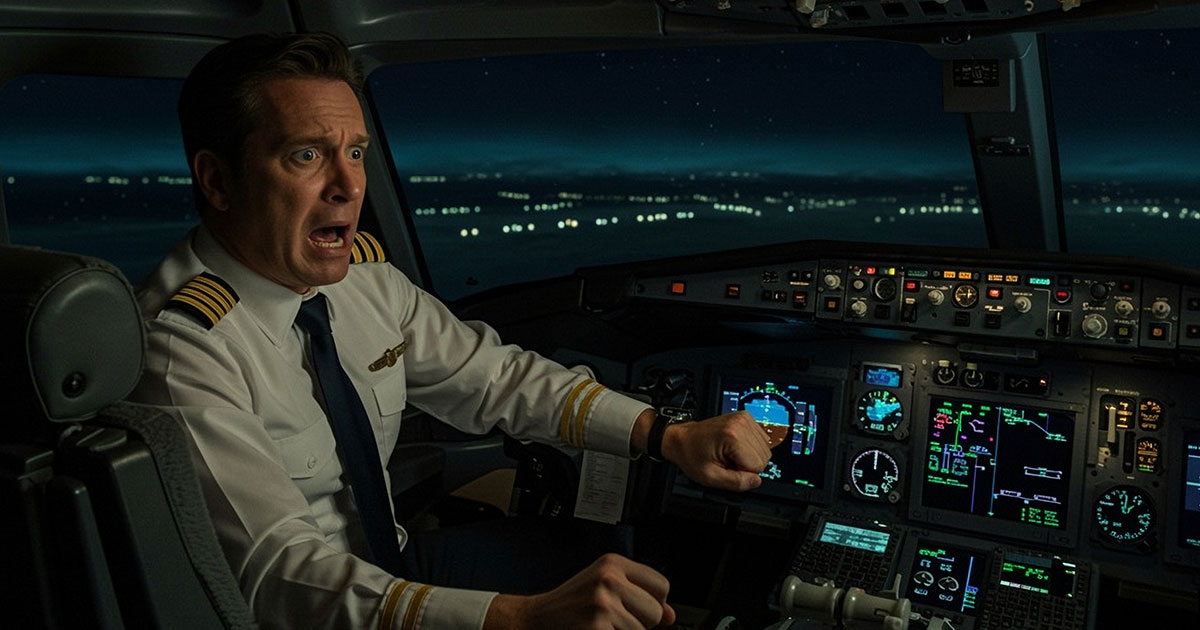

According to a radiation weather expert, a stream of high-energy particles from a supernova explosion may have triggered a sudden loss of altitude on a passenger plane. In late October, a JetBlue Airbus A320 commercial airliner traveling to Newark unexpectedly dropped altitude without warning, rapidly plummeting from 35,000 feet to 10,000 feet. At least 15 passengers sustained serious injuries, prompting an emergency landing. According to the pilot, the 15 passengers were taken to the hospital with 3 passengers with lacerations to the head.
The October 30th Incident
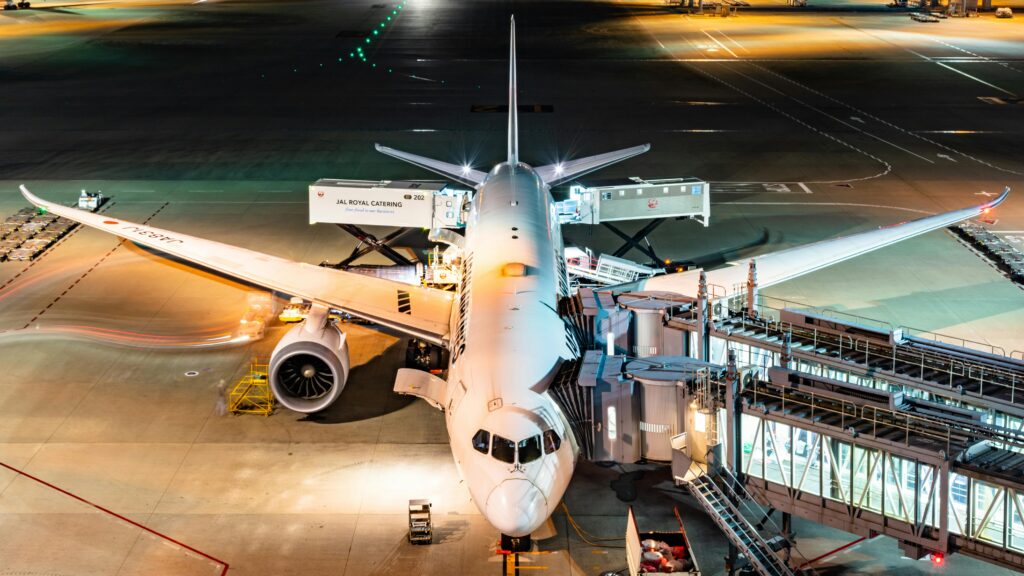
On October 30, 2025, JetBlue Flight 1230 departed Cancun, Mexico, heading for Newark, New Jersey. The flight progressed as usual until the aircraft abruptly pitched nose-down while cruising over Florida. Pilots quickly regained control of the plummeting plane. However, the sudden, drastic drop threw passengers violently upward into the cabin ceilings. Several people suffered serious lacerations and injuries with 15 passengers requiring hospitalization. The plane was then immediately diverted toward Tampa International Airport for an emergency landing.
This incident would lead to the mass grounding of over 6,000 aircraft only a month later. It is one of the largest aviation industry recalls, triggering widespread disruption and cancellations over the last weekend of November 2025. The Federal Aviation Administration launched an investigation into the “flight control issue.” Their initial findings revealed that the sudden loss of altitude was linked to a malfunction in one of the aircraft’s computers that controls the wings and tail of the plane. What had sparked this drastic and sudden malfunction may be attributed to cosmic radiation, according to radiation weather expert, Clive Dyer.
Airbus’s Initial Solar Radiation Theory
Credit: Pexels
Airbus initially blamed the flight’s malfunction on “intense solar radiation” for corrupting “data critical to the functioning of flight controls”. The manufacturer claimed solar particles had infiltrated the aircraft’s computer systems and allegedly altered essential information needed for flight control. 6,000 Airbus A320 aircraft were subsequently grounded worldwide for mandatory updates to the software a month after the incident. The software update rollout was issued to fix the vulnerability caused by the incident.
A Radiation Expert’s Perspective
However, Clive Dyer, a space weather radiation expert at England’s University of Surrey, challenged Airbus’s conclusion. Dyer has spent decades studying radiation effects on aircraft electronics systems. He reviewed the solar activity records for October 30, and according to his stats, solar radiation levels that day were completely normal. According to Dyer, the radiation intensity was nowhere near levels that could damage or affect aircraft electronics. Dyer proposed an alternative cause: a single cosmic ray particle, possibly from deep space.
Dyer believes the onboard computer of the affected aircraft could have been hit with cosmic rays. These are not rays like light or X-rays. Instead, they are streams of high-energy particles traveling near light speed. According to Dyer, these rays could have originated from a distant supernova explosion which might have occurred millions of years ago. These stellar events are incredibly violent and accelerate charged particles at incredible velocities outwards. The particles then travel across the galaxy for eons before reaching Earth.
“Cosmic rays can interact with modern microelectronics and change the state of a circuit,” Dyer explained to Space.com. “They can cause a simple bit flip, like a 0 to 1 or 1 to 0. They can mess up information and make things go wrong.”
How Cosmic Rays Damage Aircraft Electronics
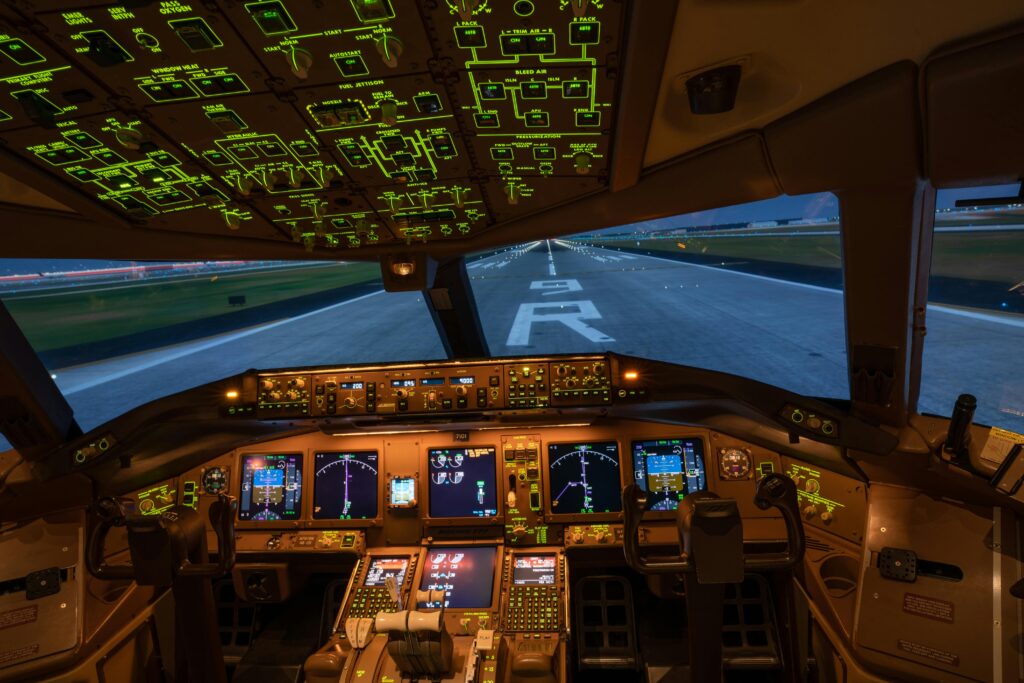
Modern aircraft depend on sophisticated computer systems for flight control. The Airbus A320 relies on electronic flight control computers for every movement it makes. These computers must function flawlessly every second. However, cosmic rays pose a threat to microelectronic devices. A single high-energy particle striking a computer chip causes what experts call a “single-event upset.”
When a cosmic ray particle impacts a microelectronic circuit, it deposits energy. This energy creates charged particles within the semiconductor material. The charged particles alter the electrical state of transistors and memory cells. A binary digit stored as “1” flips to “0” or vice versa. This is a simple bit flip. The computer suddenly reads incorrect data. Flight control systems may receive false information about the aircraft’s attitude or position, resulting in a potential catastrophe.
A single bit flip sounds minor, but aircraft systems cannot operate with any margin of error. One corrupted data bit triggers unexpected commands. These erroneous commands then can set off a chain of reactions that lead to catastrophic results similar to the near-tragic incident that occurred to the JetBlue Airbus. Single-event upsets differ fundamentally from permanent hardware failures. The cosmic ray particle passes through electronics in nanoseconds. The bit flip remains temporary and soft. However, if that particular bit controls something critical, the damage could lead to permanent and devastating results.
According to emergency airworthiness directives issued by EASA and the FAA, radiation-triggered computer errors could exceed “the aircraft’s structural capability” in worst-case scenarios. Such uncommanded altitude changes become catastrophic. Urgent updates to onboard computers protect dozens of Airbus A320, A319, and A321 aircraft variants. Approximately 900 aircraft required new computer hardware. All required software updates to better protect against space radiation devastating their electronics.
2008 Qantas Flight 72
Dyer noted that the JetBlue incident closely paralleled another aviation incident. In 2008, Qantas Flight 72 experienced two sudden pitch-down maneuvers. That aircraft was an Airbus 330 flying over the Pacific Ocean. The nosedives injured 119 people. The investigation identified a fault in one air data computer. However, investigators never determined the root cause of the bit flip. Dyer suspects cosmic rays caused the 2008 incident as well.
Aircraft Altitude and Cosmic Ray Exposure
The cosmic ray danger intensifies at aircraft cruising altitudes. Dyer and other experts explained that atmospheric depth provides people on Earth with protection against outer atmospheric or cosmic radiation. This barrier offers protection equivalent to 13 feet of concrete. At sea level, people receive cosmic radiation exposure of 0.06 microsieverts per hour. At 35,000 feet, exposure increases dramatically to 6 microsieverts per hour.
The effect becomes even more pronounced at higher altitudes. The highest cosmic ray exposure occurs around 60,000 feet. This is where the secondary particle cascade reaches maximum density. Scientists call this peak the “Pfotzer maximum.” Aircraft cruising between 30,000 and 40,000 feet sit squarely in the dangerous zone. Frequent flyers and flight crew accumulate cosmic ray doses comparable to patients receiving annual medical radiation treatments.
NASA researchers conducted an experiment called RaD-X to measure cosmic radiation. The mission deployed instruments on high-altitude balloons and aircraft. Scientists took measurements at seven different altitudes. The results showed a steady increase in radiation rates at higher altitudes. These measurements provided crucial data for understanding radiation hazards. NASA has since developed improved instruments for real-time aircraft radiation monitoring.
How Modern Microelectronics Became Vulnerable
Electronic systems have become increasingly miniaturized, increasing their vulnerability to cosmic rays. Semiconductors contain billions of transistors packed onto tiny chips. Memory cells have shrunk drastically, operating voltages have decreased significantly, which all make these circuits more susceptible to single-event upsets. A cosmic ray that would not have caused damage to 1980s electronics but now easily corrupts modern devices.
Clive Dyer identified complacency in manufacturing as a serious problem. Manufacturers simplified electronic designs to reduce costs. They removed redundancy and error-checking features and removed safety margins. These changes made aircraft electronics more efficient but less robust. Dyer noted that over 20 years, no major solar weather events had occurred, possibly prompting manufacturers to become complacent.
Semiconductor manufacturers have developed standards for testing device vulnerability. The JEDEC 89A standard specifies procedures for measuring terrestrial cosmic ray effects. Chips undergo testing to quantify single-event upset susceptibility. However, testing cannot prevent cosmic ray strikes. The particles are random and essentially unshieldable. Complete protection would be economically unfeasible.
The Global Aviation Industry’s Response
Airbus responded with software updates deployed to 6,000 aircraft. The updates implement more frequent data refreshing in critical flight control parameters. This rapid refreshing corrects corrupted data before it can trigger control movements. Older A320 aircraft require hardware replacement of their ELAC computers. Newer models need only software updates. Some aircraft required complete reversion to earlier software versions that proved more robust against radiation. The updates consumed substantial airline resources during peak travel season.
The grounding faced criticism from industry observers who questioned whether solar radiation alone justified the action. Space weather experts confirmed that radiation levels on October 30 were normal. The solar explanation did not fit the facts. Yet Airbus proceeded with the massive grounding anyway. The company emphasized that its update protected against both solar radiation and cosmic ray effects. Safety concerns trumped travel disruptions in the decision calculus.
Airlines worldwide scrambled to implement the mandatory updates. American Airlines, United, Southwest, and international carriers all faced delays. Thousands of flights were cancelled or postponed. The holiday travel season experienced unprecedented disruption. Passengers endured cancelled vacations and missed connections. Yet the industry recognized that aircraft safety must come first. The alternative of risking more incidents like JetBlue Flight 1230 was unacceptable.
Single-Event Upsets in Historical Context
Single-event upsets are not new phenomena. They were first observed in spacecraft electronics during the 1960s. Satellites experienced unexpected malfunctions that engineers attributed to cosmic radiation. The problem grew more serious with advancing technology. Spacecraft designers incorporated redundancy and error correction to improve reliability. Ground stations could reset corrupted systems remotely.
Aircraft systems presented different challenges than spacecraft. Aircraft cannot contact ground stations to reset computers during flight. Pilots must immediately recognize and respond to false data. The time between error and potential catastrophe is seconds. Clive Dyer studied this problem extensively. In the 1980s, he was part of a team researching single-event upsets in spacecraft. Later, his team flew radiation monitors aboard the supersonic Concorde aircraft.
Dyer reviewed historical incident records and identified patterns. Several aircraft accidents and incidents lacked clear explanations. Investigators suspected electronic malfunctions but could not determine causes. Some of these incidents may have resulted from cosmic ray strikes. The 2008 Qantas Flight 72 incident was never fully explained despite a thorough investigation. Dyer believes cosmic rays caused the unexplained pitch-down maneuvers.
Watch The Full Video Here: Questions Surround JetBlue Flight That Lost Altitude
The Dangers of Solar Activity and Particle Enhancement
While cosmic rays pose a constant threat, solar activity dramatically increases the danger. The sun periodically releases massive bursts of energy called solar flares. These events eject streams of particles into space. During major solar storms, particle radiation can increase immensely above normal cosmic ray levels. Such extreme events can affect numerous aircraft simultaneously. The increased flux makes single-event upsets far more likely.
Solar flare-induced particles carry much higher energy than typical cosmic rays. These particles can penetrate deeper into the atmosphere and aircraft structures. They can cause not only soft errors but also permanent hardware damage. The sun has grown increasingly active in recent years. Scientists predict a surge in solar activity heading toward 2025 and beyond. This solar maximum phase increases the probability of severe radiation events during flight operations.
Dyer warned that future solar weather events present a growing threat. “You can get huge increases in particle radiation from the sun,” he stated. “A thousand times higher than cosmic rays, and then many aircraft could be bothered by it.” The sun’s eleven-year cycle currently approaches peak activity. Airlines and manufacturers must prepare for scenarios where multiple aircraft experience simultaneous electronics problems during intense solar events.
Implications for Aviation Safety Standards
The JetBlue incident highlighted gaps in aircraft electronics protection standards. Federal regulators had not required manufacturers to specifically address cosmic ray effects. The focus was on conventional failures and weather-related issues. Cosmic rays were considered rare enough not to warrant major design changes. This assumption proved dangerously optimistic. The incident prompted regulators to reconsider standards.
Manufacturers now face pressure to produce hardier electronics. Components must withstand both cosmic rays and solar radiation. Error-detection and correction methods must be more robust. Flight control computers require greater redundancy. However, improvements increase weight and cost. Airlines operate on thin profit margins. The industry must balance safety enhancements against economic pressures.
Airbus’s 6,000-aircraft grounding represented an unprecedented intervention. The company prioritized safety while acknowledging massive operational costs. Other manufacturers watched closely to understand regulatory expectations. The incident established a precedent. Future cosmic ray concerns would receive serious attention. The aviation industry recognized that prevention is better than managing accidents.
Expert Perspectives on Future Risk Assessment
Dyer cautioned that complacency has become the most dangerous factor in aviation electronics. Manufacturers had not experienced major cosmic ray incidents in decades. They assumed the problem was manageable. The JetBlue incident proved this assumption false. Modern microelectronics lack the robustness of older systems. Smaller components and lower operating voltages increased vulnerability. Yet testing, shielding, and monitoring remain economically challenging at scale.
The most practical solution involves rapid data refresh cycling in flight critical systems. Airbus’s software update implemented this strategy. By constantly re-checking critical parameters, temporary bit flips become irrelevant. Before new false data can trigger control movements, the system resets to correct values. This approach provides protection without major hardware redesign. It represents a pragmatic response to an invisible threat.
Dyer believes the industry should invest in better radiation monitoring. Real-time detection of cosmic ray and solar particle events could provide early warnings. Aircraft could modify operations during high-radiation periods. Pilots could be informed of increased electronics risk. Redundancy in critical systems could be activated during dangerous conditions. Such measures would cost money but save lives over time.
Conclusion
Modern aircraft electronics, while sophisticated, remain vulnerable to radiation effects. The industry responded appropriately by updating systems and grounding the fleet. However, long-term solutions require greater commitment to radiation hardening and monitoring. As solar activity increases in the coming years, the threat will intensify. Aviation safety depends on preventing the next incident before it occurs. The cosmic rays are always there, waiting silently in the thin air at altitude.
Read More: What Might Happen If The Earth’s Magnetic Poles Flip