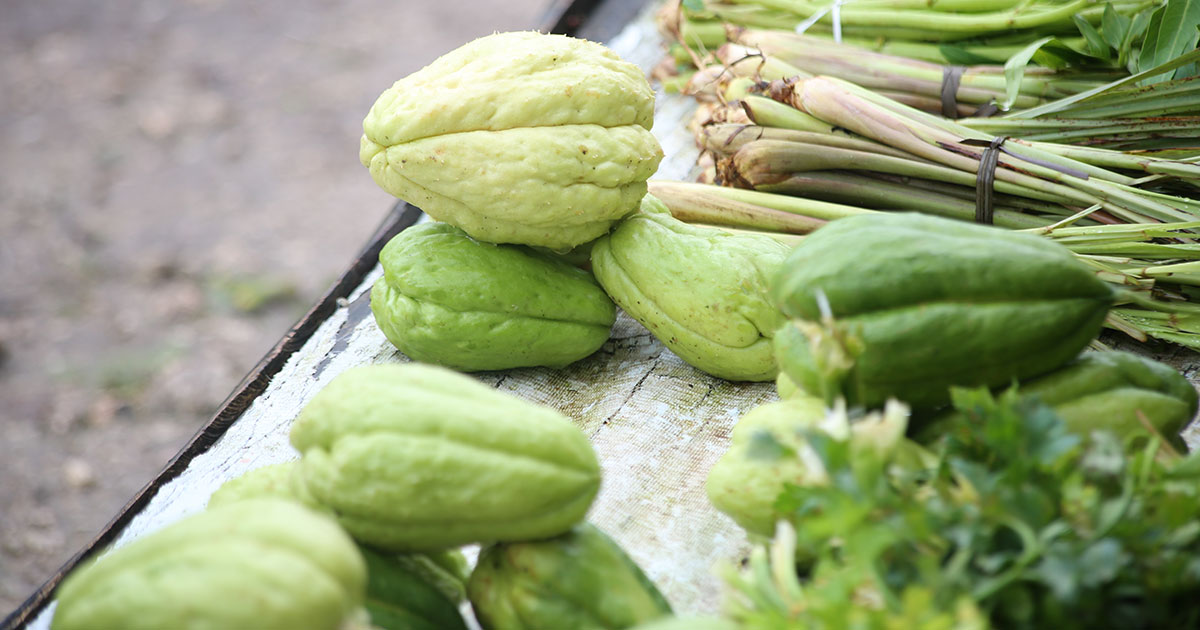

Chayote (Sechium edule) has been a dietary staple across Latin America, Southeast Asia, and parts of the Caribbean for centuries, yet most North American grocery shoppers walk right past it. That is starting to change. A growing body of nutritional research points to this pale green, pear-shaped gourd as a meaningful contributor to two of the most pressing health concerns for adults in midlife and beyond: digestive function and cardiovascular health. The vegetable is not a miracle food, but the evidence behind its benefits is specific enough to deserve a closer look.
Chayote belongs to the Cucurbitaceae family, the same botanical group as cucumbers, zucchini, and melons. A single cup of cooked chayote (about 132 grams) contains roughly 25 calories, less than 0.3 grams of fat, around 6 grams of carbohydrates, and approximately 2 grams of dietary fibre. It also provides meaningful amounts of folate (vitamin B9), vitamin C, vitamin K, potassium, zinc, and magnesium. That nutritional profile, low in calories and dense in micronutrients (vitamins and minerals the body needs in small amounts), is part of what makes researchers and clinicians pay attention. The other part is what happens inside the body when people consume it regularly.
What the Research Actually Says About Chayote
A range of published nutritional and clinical studies, and several of the underlying findings are worth unpacking in detail. The evidence clusters around two primary areas: the gut and the heart. These are not unrelated systems. Gut health and cardiovascular health are now understood by researchers to be deeply interconnected, a relationship that makes chayote’s dual profile especially relevant.
A key part of the research case for chayote involves its fibre content and its antioxidant compounds, particularly myricetin, a flavonoid (a type of plant-based chemical compound with antioxidant properties) found in notable concentrations in chayote fruit, seeds, and leaves. Research published in the journal Molecules in 2020 examined the flavonoid composition of chayote and confirmed the presence of myricetin alongside quercetin and kaempferol, all of which have demonstrated anti-inflammatory and antioxidant effects in cell and animal studies. These compounds do not operate in isolation. They work alongside fibre and micronutrients in ways that researchers are still mapping, but the directional evidence is consistent.
VeryWell Health’s editorial team, which reviews nutritional research with clinical oversight from registered dietitians, notes that chayote’s fibre and antioxidant content together make it a functionally useful food rather than simply a low-calorie filler. The distinction matters because not all vegetables contribute equally to measurable health outcomes. Some provide bulk with minimal micronutrient value. Chayote provides both, and the specific compounds it contains correspond to mechanisms that affect real physiological processes.
The Digestive Case for Chayote
Dietary fibre is the most direct line between chayote and gut health. The approximately 2 grams of fibre in a cup of cooked chayote is predominantly soluble fibre (fibre that dissolves in water to form a gel-like substance in the digestive tract). Soluble fibre slows the movement of food through the stomach and small intestine, which has several downstream effects. It moderates the absorption of glucose (blood sugar) and cholesterol. It feeds beneficial bacteria in the large intestine. And it contributes to a feeling of fullness, which has implications for weight management in addition to digestion.
The gut microbiome (the community of trillions of bacteria, fungi, and other microorganisms living in the human digestive tract) responds directly to fibre intake. Research published in the journal Cell Host and Microbe in 2022, led by a team at the University of California, Davis, found that a high-fibre diet significantly increased the diversity of beneficial gut bacteria and reduced markers of intestinal inflammation over a 17-week period. While that study was not specific to chayote, it reinforces the mechanism by which chayote’s fibre content could support digestive resilience. Microbial diversity in the gut is now considered a reliable marker of overall gut health, and it is achieved primarily through consistent dietary fibre intake.
Chayote also contains small amounts of a compound called cucurbitacin, a natural substance found across the Cucurbitaceae family. Cucurbitacins have been studied for their potential anti-inflammatory effects on the gastrointestinal lining. A 2019 review published in Nutrients examined plant-based cucurbitacins and noted that while human clinical trials are still limited, preclinical evidence suggests a protective role for the gastrointestinal mucosa (the protective inner lining of the gut). This is relevant for adults who deal with conditions like irritable bowel syndrome (IBS) or mild chronic gut inflammation, though chayote should not be positioned as a treatment for any diagnosed condition.
Chayote and Bowel Regularity
One of the more practical digestive benefits of chayote is its role in supporting regular bowel movements. The combination of soluble and insoluble fibre in the gourd adds bulk to stool and helps it move through the colon at a healthy pace. Chronic constipation affects approximately 16% of adults globally, according to the World Gastroenterology Organisation’s 2020 report, and it increases disproportionately with age. For adults over 35, adding fibre-rich vegetables like chayote to daily meals is one of the most evidence-supported dietary strategies for maintaining regularity without relying on over-the-counter laxatives.
Staying well hydrated amplifies the fibre benefits. Soluble fibre absorbs water, and without adequate fluid intake, increased fibre consumption can occasionally worsen constipation rather than relieve it. Drink at least 2 to 2.5 litres of water daily when increasing vegetable fibre intake.
Read More: The Gut-Heart Connection: How Your Microbiome Affects Cardiovascular Risk
How Chayote Supports Cardiovascular Health
The cardiovascular benefits associated with chayote come from several overlapping mechanisms, and the most significant of these is the effect of its soluble fibre on LDL cholesterol (often called “bad” cholesterol because high levels are associated with arterial plaque buildup). Soluble fibre binds to bile acids (digestive chemicals made from cholesterol) in the intestine and carries them out of the body in stool. The liver then pulls cholesterol from the bloodstream to make more bile acids, which lowers total circulating LDL cholesterol. This mechanism is well-established in the scientific literature and is the same reason oats and legumes are consistently recommended by cardiologists for heart health.
A 2021 meta-analysis published in the American Journal of Clinical Nutrition, which pooled data from 181 controlled trials involving over 18,000 participants, confirmed that each additional 7 grams of daily soluble fibre was associated with a statistically significant reduction in LDL cholesterol of approximately 5 to 6%. While chayote alone will not deliver 7 grams of soluble fibre in a single serving, it contributes to a cumulative daily intake alongside other plant foods. The broader dietary pattern is what produces results, and chayote is a useful and versatile addition to that pattern.
Potassium, Blood Pressure, and Arterial Health
Chayote is a moderate source of potassium, providing approximately 190 to 210 milligrams per cooked cup. Potassium is an electrolyte (a mineral that carries an electrical charge and is critical for cell function) that plays a central role in regulating blood pressure. It does this by counteracting the blood-pressure-raising effects of sodium and by relaxing the walls of blood vessels. The American Heart Association recommends that adults aim for 3,500 to 5,000 milligrams of potassium daily from dietary sources, and most adults in Western countries fall well below that target.
A 2020 systematic review published in the Journal of Human Hypertension, led by researchers at Imperial College London, found that higher dietary potassium intake was associated with lower systolic blood pressure (the top number in a blood pressure reading, reflecting the pressure in arteries when the heart beats) by an average of 3.49 mmHg across a study population of adults with and without diagnosed hypertension (high blood pressure). That may sound modest, but at a population level, a 3 to 4 mmHg reduction in systolic blood pressure translates to a meaningful reduction in stroke and heart attack risk. Chayote is not the only or highest source of potassium in a typical diet, but it adds to the cumulative load without adding sodium, saturated fat, or excess calories.
Myricetin and Vascular Inflammation
Myricetin deserves specific attention in the cardiovascular context. Chronic low-grade vascular inflammation (ongoing mild inflammation in the walls of blood vessels) is now considered one of the primary drivers of atherosclerosis (the buildup of plaque inside arteries), which underlies most heart attacks and strokes. Research published in Phytomedicine in 2019 reviewed the pharmacological activity of myricetin and found that it inhibits LDL oxidation (a process that makes LDL cholesterol more damaging to artery walls), reduces platelet aggregation (the clumping of blood cells that can lead to clots), and exerts anti-inflammatory effects on endothelial cells (the cells lining the inside of blood vessels).
These findings come primarily from cell studies and animal models, which means they show mechanism but not yet confirmed clinical outcomes in humans at the doses found in food. Researchers at several institutions, including teams affiliated with Sichuan University in China, have called for human clinical trials to quantify the cardiovascular effects of myricetin-containing foods at realistic dietary concentrations. What the existing evidence supports is a plausible and consistent mechanism by which chayote’s flavonoid content could contribute to healthier blood vessels over time, when consumed as part of a broader diet rich in varied plant foods.
Blood Sugar Regulation: A Benefit Worth Understanding
Chayote has also drawn attention from researchers interested in blood glucose (blood sugar) management, which sits at the intersection of both digestive and cardiovascular health. Uncontrolled blood sugar is a major driver of type 2 diabetes and cardiovascular disease, both of which increase significantly in prevalence after age 40.
Chayote has a glycemic index (a measure of how quickly a food raises blood sugar levels, with higher numbers indicating a faster rise) estimated to be quite low. The soluble fibre content slows the absorption of glucose from the small intestine, blunting the post-meal blood sugar spike that characterises refined carbohydrate consumption. Research referenced in ScienceDirect’s nutritional database on chayote suggests that animal studies have observed hypoglycemic (blood-sugar-lowering) effects from chayote leaf and fruit extracts, with the proposed mechanism involving compounds that may influence insulin sensitivity (the body’s ability to use insulin effectively to transport glucose into cells).
It should be noted that most hypoglycemic research on chayote has been conducted using extracts rather than whole food, and mostly in rodent models. The translation to human dietary consumption is not yet directly confirmed by large clinical trials. What is established is that the glycemic response to eating whole chayote is gentle, making it a practical carbohydrate choice for adults monitoring blood sugar, particularly those with prediabetes or metabolic syndrome (a cluster of conditions including high blood pressure, elevated blood sugar, abnormal cholesterol levels, and excess abdominal fat that increase heart disease risk).
Folate: The Overlooked Benefit for Adults Over 35
One of the less-discussed nutrients in chayote is folate, also known as vitamin B9. A single cup of cooked chayote provides roughly 40 to 45 micrograms of folate, approximately 10% of the recommended daily intake of 400 micrograms for adults. Folate is most commonly discussed in the context of pregnancy, where deficiency is linked to neural tube defects in newborns. But folate has critical functions in adults that extend far beyond reproduction.
Folate is essential for DNA synthesis and repair, which is why its adequacy becomes more relevant as people age and cellular damage accumulates over time. It also works alongside vitamins B6 and B12 to regulate homocysteine (an amino acid that, at elevated levels in the blood, is associated with increased risk of heart disease, stroke, and cognitive decline). A 2021 review published in Nutrients by researchers at the University of South Australia found that adequate dietary folate intake was associated with lower circulating homocysteine and reduced cardiovascular event risk, particularly in adults with existing risk factors. For older adults who are not taking B-vitamin supplements, dietary sources of folate like chayote contribute meaningfully to maintaining adequate levels.
Practical Ways to Add Chayote to Your Diet
Chayote is more versatile than its unfamiliarity might suggest. The flesh has a mild flavour that sits somewhere between a cucumber and a zucchini, with a slightly firmer texture that holds up well to both raw and cooked preparations. The skin is edible, though some people prefer to peel it. Every part of the plant is technically edible, including the seed inside, the shoots, and the leaves, all of which are used in traditional Latin American and Southeast Asian cooking.
Here are reliable ways to work it into regular meals.
Eat it raw in slices or sticks. Raw chayote retains more of its vitamin C content (heat-sensitive) and provides a satisfying crunch. Slice it thinly and use it in slaws with lime juice and cilantro, or eat it with hummus as a snack.
Add it to soups and stews. Chayote holds its shape during long cooking times, unlike zucchini, which can turn mushy. Add it to chicken soup, vegetable stews, or minestrone in the last 20 to 25 minutes of simmering.
Roast it. Toss halved or cubed chayote in olive oil, garlic, and a pinch of cumin, then roast at 200 degrees Celsius (400 degrees Fahrenheit) for 25 to 30 minutes until lightly golden. It develops a slightly nutty flavour when roasted.
Use it in stir-fries. In Filipino cooking, chayote (called sayote) is commonly stir-fried with garlic, onion, and either pork or shrimp. The method keeps prep time short and pairs the gourd with complementary flavours that mask any blandness.
Substitute it for higher-calorie vegetables. Because of its low calorie density, chayote can replace or partially replace potato in soups or casseroles without significantly altering texture, while substantially reducing the calorie and glycemic load of the dish.
Look for chayote in Latin American grocery stores, Asian supermarkets, and some mainstream grocery chains with expanded produce sections. Choose firm fruits with smooth, unblemished skin. They will keep at room temperature for up to a week or in the refrigerator for two to three weeks.
Who Should Be Paying the Most Attention
Adults in their 40s, 50s, and 60s stand to benefit most from incorporating chayote regularly, not because it is a targeted intervention but because the health areas it supports – cardiovascular function, digestive health, blood sugar moderation, and vascular inflammation – are the areas where risk accumulates most meaningfully in midlife. The evidence is not at the level of pharmaceutical intervention, and no single vegetable is. But the consistent thread across the research is that regular, varied consumption of vegetables with high fibre and flavonoid content produces measurable improvements in these risk areas over time.
Adults managing diagnosed conditions like hypertension, high cholesterol, type 2 diabetes, or IBS should talk to their physician or a registered dietitian before making significant dietary changes. Chayote is safe for most people, but it is one part of a broader nutritional strategy rather than a standalone solution. The strongest case the research makes is for diet quality overall, and chayote is a practical, affordable, and underused tool for improving it.
—
This article is intended for informational purposes only and does not constitute medical advice. Always consult a qualified healthcare professional before making changes to your diet, particularly if you have a diagnosed health condition or are taking medication.
Medical Disclaimer: This information is not intended to be a substitute for professional medical advice, diagnosis, or treatment and is for information only. Always seek the advice of your physician or another qualified health provider with any questions about your medical condition and/or current medication. Do not disregard professional medical advice or delay seeking advice because of something you have read here.