Poland: Europe’s Next Great Superpower Rising in 2026
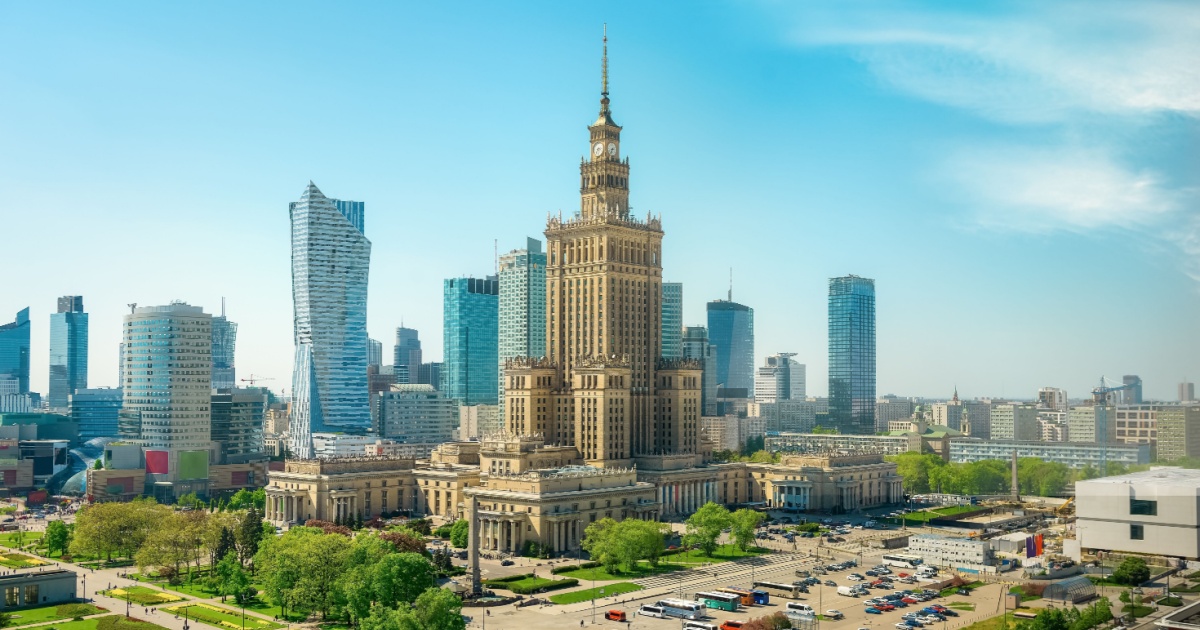
Something is quietly happening on the eastern edge of the European Union, and most Western observers are only just beginning to notice. A country that spent five decades trapped behind the Iron Curtain, written off as a peripheral state in the post-Cold War order, is now drawing more American military hardware, more foreign technology investment, and more diplomatic attention than almost any other nation on the continent. It is rewriting its military, its economy, and its geopolitical identity at the same time.
That country is Poland.
To understand why Poland is being talked about in serious foreign policy circles as Europe’s most consequential rising power, you need to look not at one factor but at many of them working in concert simultaneously. Economic momentum, military expansion, strategic geography, diplomatic heft, and a technology sector that is punching well above its weight – all of these threads are coming together at once, in a way that has not happened for Poland in over a century. What follows is a comprehensive look at the evidence.
1. An Economy That Has Not Stopped Growing
Poland’s economic story is extraordinary by any objective measure. Poland’s GDP has increased sevenfold since 1990. That is not a typo. No other similarly-sized European economy has compounded growth at anything close to that pace over the same period. The country has had uninterrupted economic growth since 1992, even after the 2008 financial crisis – a run that very few nations anywhere in the world can claim.
The momentum has not slowed. Poland’s gross domestic product rose by 3.6% in 2025, the strongest growth since 2022, showing a clear acceleration from 3.0% in 2024. To put that in context, most of Western Europe was limping along with growth rates well below 2% during the same period. The Polish economy is outperforming its Central and Eastern European neighbors and many EU countries.
The country became a one trillion dollar economy in September 2025 – a milestone that formally placed it in the same league as major global economies by nominal output. The economy of Poland is an emerging and developing, high-income, industrialized social market economy that is the sixth-largest in the European Union by nominal GDP and fifth-largest by PPP-adjusted GDP (purchasing power parity, which adjusts for what money actually buys in each country).
Looking ahead, the trajectory holds. ING forecasts that GDP growth in 2026 will accelerate slightly to 3.7%, driven by an expected surge in EU investment fund absorption and continued domestic consumption. In 2026, economic growth is projected to reach 3.5%, according to the European Commission’s own forecast. Both projections point in the same direction: sustained, broad-based expansion that most of Europe would envy.
Poland was the only Central and Eastern European country whose economic performance didn’t disappoint compared to initial expectations for the 2024 growth outlook. Every other major economy in the region – Hungary, Romania, the Czech Republic – came in below what analysts had predicted. Poland delivered.
2. The Defense Buildup That Is Remaking the European Security Order
If Poland’s economic story is impressive, its military transformation is nothing short of historic. Poland now leads NATO in defense spending as a percentage of GDP, surpassing even the United States, and has arguably emerged as Europe’s most capable military power and a key thought leader on defense matters.
In 2025, Poland’s defense spending is projected to reach a record 186.6 billion zlotys (approximately $45 billion), exceeding the 2024 budget by 28.6 billion zlotys. Overall, defense expenditure accounts for 4.7% of Poland’s GDP in 2025, solidifying the country’s position as a leader in defense within NATO. For comparison, the USA invests 3.2%, the UK 2.4%, and France and Germany around 2% each. Poland is in a different league entirely.
According to a recent SIPRI report, Poland’s military expenditure rose 23% year on year – more than threefold since 2016. That rate of increase is essentially unprecedented in peacetime for a democratic nation. Poland will increase its defense spending next year to 4.8% of GDP, which would make it the highest defense spender in the NATO alliance as a share of national income.
The money is not just sitting in a budget line – it is being converted into hardware. Poland has acquired M1A1 Abrams tanks from the United States, Patriot air defense systems, FA-50 fighter jets from South Korea, K239 Chunmoo multiple rocket launchers, and signed contracts for K2 tanks and K9 self-propelled howitzers. Poland’s defense posture has taken a historic turn since Russia’s war in Ukraine began, with the Polish Army, Navy, and Air Force undergoing an extensive modernization program at both pace and scale.
Russia’s invasion of Ukraine pushed Poland to launch military modernization and expansion plans at an unprecedented pace. Warsaw’s position on NATO’s eastern flank – sharing borders with Belarus and Kaliningrad, and sitting just hundreds of miles from the front lines of a live war – makes these investments feel less like ambition and more like necessity.
According to Deloitte’s estimates, defense expenditure in Poland will total PLN 1,868 billion in the 2025 – 2035 period, compared to PLN 825 billion in 2014 – 2024. That means Poland intends to more than double the scale of its defense investment in the coming decade. For analysts at the RAND Corporation, the key question is not whether Poland will build a significant military capability, but whether it can absorb the scale and pace of procurement fast enough to translate investment into operational readiness.
3. The Indispensable Ally: Poland’s Strategic Position
There is a phrase that U.S. Secretary of Defense Pete Hegseth used during a February 2025 visit to Warsaw that has been widely quoted in diplomatic circles. He described Poland as a model ally on the continent, “willing to invest not just in their defense, but in our shared defense and defense of the continent.” He described Poland as a “strategic frontline partner on NATO’s eastern flank,” and a staunch ally not only in words, but in actions as well.
That assessment from Washington reflects something that has solidified over several years of crisis. Defense cooperation between Poland and the United States is especially close and extensive, and Poland has been a focus of U.S. and NATO efforts to deter Russian aggression in Europe, playing a central role in U.S. and NATO activities to aid Ukraine.
The Ukraine dimension is central to Poland’s strategic importance. Former U.S. Ambassador to Poland Mark Brzezinski has emphasized Poland’s central role in supporting Ukraine throughout the war. Millions of Ukrainians poured across the eight border crossings between Poland and Ukraine, with Poland serving as the primary logistics corridor for aid to Kyiv. Since the start of Russia’s full-scale invasion, Poland has allocated more than 4 billion euros in military aid to Ukraine.
As of late 2024, of the almost 800 tanks that Ukraine received from other countries, Poland facilitated delivery of more than 350 of them. Poland is not merely a diplomatic supporter of Ukraine – it is a hands-on logistics coordinator, a training ground, and an equipment conduit. Poland hosts a logistics hub for NATO’s support to Ukraine, as well as the Joint Analysis, Training and Education Centre (JATEC) in Bydgoszcz.
The humanitarian dimension is equally striking. About 9 million Ukrainians crossed into Poland since the start of the full-scale invasion, with roughly 2 million remaining. Poland absorbed by far the largest share of Ukrainian refugees of any nation, doing so without the extended political friction that emerged in other host countries.
4. EU Leadership: From Peripheral Member to Policy Architect
Poland’s influence is not confined to military affairs. Poland held the Presidency of the Council of the European Union in the first half of 2025, from 1 January to 30 June – its second presidency after its first in 2011.
The timing of that presidency was not routine. Poland assumed the rotating presidency at a time of heightened security challenges, including the ongoing Russian invasion of Ukraine, foreign election interference, and persistent hybrid attacks targeting Europe’s critical infrastructure. Leading the EU agenda through that period required political discipline and diplomatic weight.
The Tusk government pushed for more military cooperation with European partners, signed a security treaty with France, and hailed the adoption of the EU’s Security Action for Europe (SAFE) regulation as one of the key achievements of Poland’s EU presidency. The SAFE instrument unlocked a proposed €150 billion in EU-backed loans to help member states purchase military equipment jointly – a mechanism that Poland is already the largest beneficiary of.
Prime Minister Donald Tusk is one of the strongest and most experienced leaders on the European Council. He served as Poland’s head of government from 2007 to 2014 and as President of the European Council from 2014 to 2019. His presence gives Poland a political voice that far exceeds what pure economic size alone would typically confer.
5. A Technology Sector That Global Giants Are Racing To Enter
Poland’s rise is not built on military and diplomatic leverage alone. The country is becoming a major node in the global technology economy. Poland made its debut on the 2024 FDI Confidence Index, ranking among the top 10 countries globally, and is attracting foreign investment across high-growth sectors including fintech, healthtech, AI, and green energy.
The numbers are concrete. Microsoft announced it intends to spend PLN 2.8 billion by June 2026 to expand its hyperscale cloud and AI infrastructure in Poland, as well as collaborate with Polish National Defense to strengthen national cybersecurity. Meanwhile, Google signed a memorandum with the Polish government to fast-track AI adoption across institutions and businesses, committing to training and education initiatives in AI that it says will enhance security and economic opportunities. These are not token investments from firms looking to plant a flag – they are major capital commitments to Poland as an operational base.
The Polish tech sector is booming, with AI startups alone raising nearly $171 million in 2024. Poland has the largest tech workforce among Central and Eastern European countries, and more than 60,000 technology businesses are now operating in the country, supported by an annual influx of approximately 15,000 computer science graduates.
City-level rankings confirm the trend. Warsaw has consistently ranked among Europe’s top cities for investment potential in fDi Intelligence rankings, sitting alongside London and Dublin. Wroclaw, often called the “Polish Silicon Valley,” has attracted substantial foreign direct investment over the past five years. Since Poland’s political transition in 1989, the country has attracted USD 364 billion in foreign direct investment, accounting for nearly 40% of all FDI inflows in Central and Eastern Europe. That cumulative figure speaks to a consistent investment destination track record, not a short-term spike.
6. The Labor Market Paradox
One of the most counterintuitive facts about Poland’s rise is that it is happening alongside serious demographic headwinds. Poland’s demographic decline accelerated in 2025, as the country recorded around 168,000 more deaths than births – the 13th year in a row that more people have died than been born.
The country’s fertility rate fell to a new low of 1.1, one of the lowest levels in the world. Without intervention, projections are stark: Poland’s statistical office estimates the country’s population could drop to just 29.4 million by 2060. That is a 20% decline from today’s roughly 37 million.
Yet, paradoxically, Poland’s labor market is performing at its historical best. Despite a shrinking and aging population, the number of workers in Poland reached its highest-ever level, with 17.361 million employed people in the third quarter of 2025. Older workers are remaining in employment beyond retirement age, and previously inactive adults – particularly women – are entering the workforce in larger numbers. With unemployment at a record low of 2.8% and the working-age population steadily declining, ensuring an adequate number of specialists is becoming one of the most pressing challenges for the entire sector, according to analysts at Deloitte Central Europe.
Immigration has also partly softened the impact of population decline, with Poland recording some of the highest migration inflows in the European Union. The demographic challenge is real, and no analyst serious about Poland’s long-term trajectory dismisses it. But for the time being, the country is managing it through workforce participation gains and migration inflows – and its economic output has not yet suffered the drag that shrinking demographics would typically produce.
7. Domestic Politics: Strength With Friction
Poland’s rise to regional prominence is real, but it would be misleading to present it without acknowledging the domestic political tensions that complicate the picture. An opposition candidate won Poland’s presidential election on 1 June 2025, with Karol Nawrocki, backed by the Law and Justice party, defeating the government-backed candidate Rafal Trzaskowski in a second-round run-off.
The result means Poland’s government, led by Prime Minister Donald Tusk, now faces cohabitation with a president who holds veto power over legislation and represents a sharply different vision of foreign policy. The new president has adopted an openly critical stance toward Ukraine, and Poland’s once-unified consensus on Ukraine has fractured.
At the same time, both the government and the opposition broadly agree on the two most consequential strategic priorities: high military spending and the U.S. alliance. A broad national consensus exists – despite polarization – regarding the priorities of Poland’s foreign policy strategy: the relationship with the United States, high military spending, and support for Ukraine.
If the domestic political front is brought under control, Poland’s reputation as Ukraine’s key supporter is strengthened, and relations with Germany are restored, Poland will be poised to reclaim its place at the heart of European efforts to develop a common response to the worsening security environment, according to the European Council on Foreign Relations.
The internal tensions are real and worth watching. But they have not stopped the economic engine, the defense buildup, or the inflow of foreign capital. On the core metrics that define geopolitical weight, Poland is still moving in one direction.
Poland’s case for being Europe’s next great power rests on a convergence of seven distinct pillars that are reinforcing each other simultaneously. Its economy has grown sevenfold since 1990 and is still accelerating, hitting the trillion-dollar mark in 2025. Its military spending, at 4.7% of GDP, leads NATO and is scheduled to rise further to 4.8% in 2026, backed by a massive conventional rearmament program. Its strategic position as the logistical backbone of Western support for Ukraine has made it genuinely indispensable to the U.S. and NATO in ways that will outlast the immediate conflict. Its technology sector is attracting billions from Microsoft, Google, and hundreds of smaller global players, with Warsaw now ranking among Europe’s top cities for investment potential. And its political leadership, for all its internal tensions, has shaped the EU’s defense and security agenda in ways that no previous Polish government ever attempted.
The honest caveat is that superpower status is not a destination Poland has reached – it is a trajectory it is on. The demographic decline is not a talking point; it is a structural challenge that will test the country’s economic capacity for decades. The domestic political cohabitation between Tusk’s government and the new president creates policy friction at exactly the moment when a coherent foreign strategy matters most. And the sheer scale of the defense buildup, while impressive, comes with a budget deficit that is more than double the EU’s guideline level. Poland is a rising power with genuine vulnerabilities. But looking across the full weight of evidence in 2026, it is hard to point to another European country that is growing its military, its economy, its tech sector, and its diplomatic footprint at the same time, at the same pace. That combination is what makes Poland’s trajectory the most consequential story in European geopolitics right now – and one that will affect the entire continent’s future direction for decades to come.
AI Disclaimer: This article was created with the assistance of AI tools and reviewed by a human editor.