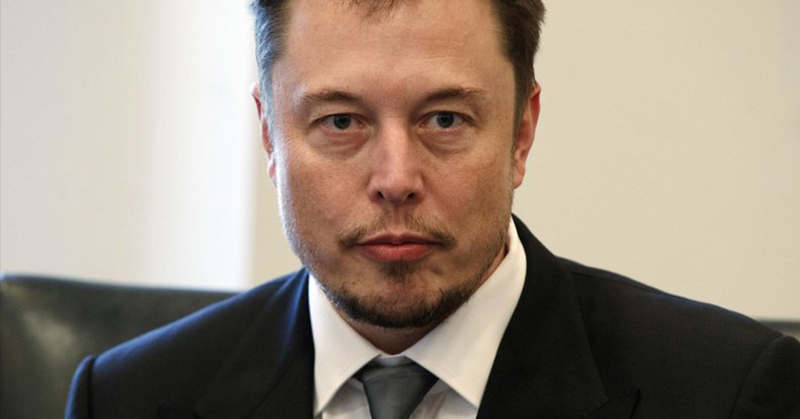

Something unusual happened on a Friday morning in April 2026. One of the wealthiest people on earth, a man who leads companies building the very technology under discussion, posted two sentences on his own social media platform that racked up more than 68 million views within days. The subject was not a new product launch, a regulatory battle, or a geopolitical conflict. It was a policy idea. A sweeping, federally funded income proposal aimed at every American worker who might soon find their job absorbed by a machine.
The idea landed like a flare fired over a conversation that Washington has largely refused to have. Artificial intelligence is already reshaping the labor market in ways that are visible, documented, and accelerating. Layoffs attributed to AI are rising. Entry-level roles are disappearing quietly. And the workers most exposed to displacement are often the ones least equipped to absorb it. Against that backdrop, a proposal from a tech billionaire, however controversial, is at minimum a signal that something in the economy needs a policy response, and soon.
What Musk actually proposed is more ambitious than anything currently on the legislative table, and the gap between his vision and the political reality of funding it is enormous. Understanding both sides of that gap is essential for anyone trying to make sense of where the American economy is heading.
What Musk Actually Proposed
Musk turned heads when he suggested that the federal government paying citizens a “universal high income” is the best way to combat AI-related job losses. “Universal HIGH INCOME via checks issued by the Federal government is the best way to deal with unemployment caused by AI,” he wrote in a post on X.
His proposal takes the existing concept of universal basic income a step further, suggesting not just a basic income to cover necessities, but a high level of income distributed broadly across society. That distinction matters. While universal basic income (UBI) is generally designed to cover basic living costs while people continue working, a universal high income could reduce the need for work altogether.
Universal HIGH INCOME via checks issued by the Federal government is the best way to deal with unemployment caused by AI.
— Elon Musk (@elonmusk) April 17, 2026
AI/robotics will produce goods & services far in excess of the increase in the money supply, so there will not be inflation.
The proposal rebutted the idea that such payments would be inflationary. “AI/robotics will produce goods & services far in excess of the increase in the money supply, so there will not be inflation,” Musk wrote. He went further in follow-up posts. He described a future in which “AI/Robotics will mean everyone can have a penthouse if they want. The output of goods & services will be several orders of magnitude higher than today’s economy.”
His inflation counterargument rests on a straightforward ratio: “If the rate of growth of goods and services exceeds the rate of growth of the money supply, then you will have deflation,” he said. That means more products, more services, and lower prices even as governments issue regular payments to citizens, effectively flipping the traditional fear of “too much money chasing too few goods” into the opposite scenario.
The post on universal high income generated more than 68 million views and 195,000 likes on X. That level of engagement reflects genuine public anxiety, not just curiosity about a billionaire’s opinions. To understand why the proposal resonated so quickly, you need to look at the data behind it.
The Labor Market Disruption Already Underway
The job losses tied to AI are not hypothetical. They are already appearing in real labor market data, and the trend is steepening.
According to Challenger, Gray & Christmas, the global outplacement and executive coaching firm that tracks U.S. layoffs, AI was cited for 54,836 announced layoff plans in 2025 alone. That figure represents a measurable turning point. Companies are becoming more explicit about using AI to do work once handled by people, particularly in repetitive, high-volume tasks such as customer support, scheduling, and data entry, a notable shift from earlier in the AI boom, when firms were reluctant to link layoffs to automation.
In March 2026, AI led all stated reasons for job cuts, with 15,341 announcements during the month, accounting for 25% of total cuts. Through the first quarter of 2026, AI had been cited in 12,304 job cut announcements. The rate is accelerating even as the total volume of announced cuts fell from 2025’s extraordinary peak.
The Companies Doing the Cutting
Some of the biggest names in technology have explicitly connected their layoffs to AI-driven reorganization. In October 2025, Amazon announced the largest round of layoffs in its history, slashing 14,000 corporate roles, citing plans to invest in its “biggest bets” including AI. Microsoft cut a total of around 15,000 jobs through 2025. Salesforce CEO Marc Benioff confirmed in September 2025 that 4,000 customer support workers had been cut with the help of AI. IBM’s CEO Arvind Krishna told the Wall Street Journal that AI chatbots had taken over the jobs of several hundred human resources workers.
These are not small companies in narrow sectors. They are the employers that define what white-collar career trajectories look like for millions of Americans.
The Entry-Level Crisis
The deeper structural problem may be even more significant than the raw layoff numbers. Big Tech’s hiring of new graduates has fallen over 50% from pre-pandemic levels, according to the SignalFire State of Tech Talent Report. The jobs that once served as the first rung of a professional career, roles in data analysis, legal research, financial modeling, document review, and basic coding, are exactly the roles AI systems now perform fastest and cheapest.
Anthropic CEO Dario Amodei told Axios that AI could eliminate half of all entry-level white-collar jobs within five years, a shift he said could push U.S. unemployment to between 10% and 20%. When asked about timing, Amodei said, “I would not be surprised if somewhere between one and five years we start to see big effects here.” The industries most at risk, he explained, are finance, consulting, law, and tech.
The historical narrative about how technological advancement works is that automation would displace lower-paying, lower-skill jobs, and displaced workers could be trained to take more lucrative positions. If Amodei is correct, AI could wipe out more specialized white-collar roles that required years of expensive education, and those workers may not be easily retrained for equal or higher-paying alternatives.
Amodei has also noted the structural wealth problem this creates: “If AI creates huge total wealth, a lot of that will, by default, go to the AI companies and less to ordinary people,” he said, adding that a tax on AI companies “shouldn’t be a partisan thing.”
That observation sits at the heart of the policy challenge Musk’s proposal ultimately cannot escape.
The Economics of Universal High Income: The Optimistic Case
Musk’s inflation argument has at least partial support from economic theory. He is almost certainly right that AI will put downward pressure on prices, as one would expect of any productivity-enhancing technology. History offers precedents: mechanized agriculture, mass manufacturing, and the internet all expanded the supply of goods and services dramatically, and in each case, the long-run impact on living standards was broadly positive.
The “Jevons Paradox,” a 19th-century economic observation named for British economist William Stanley Jevons, holds that efficiency gains tend to expand demand rather than contract it. Applied to AI and labor, the logic runs like this: if AI makes a lawyer 10 times more productive, legal services become cheaper; cheaper legal services mean more people and businesses use them; more demand for legal services means more lawyers, not fewer. Proponents of Musk’s vision argue that a fully automated economy could generate so much surplus output that the fiscal arithmetic of a generous universal income becomes manageable.
Andrew Yang, who ran for the 2020 Democratic presidential nomination and made UBI central to his platform, offered measured support. Yang, who proposed a $1,000 monthly “Freedom Dividend” for every adult American during his campaign, tweeted: “It’s clear that AI will wind up funding universal income. Let’s make that happen ASAP.”
The proposal also aligns with Bill Gates’ thinking on AI and jobs, a future in which certain human roles persist not because machines can’t touch them, but because society chooses to protect and value them differently.
The Economics of Universal High Income: The Skeptical Case
The objections to Musk’s proposal are substantial, and they come from multiple directions.
The Fiscal Problem
The most immediate challenge is funding. A universal high income, by definition, is not a targeted safety net. It is a payment to every citizen regardless of employment or income status. The cost of a program at scale would dwarf any existing federal social spending, and the question of where the revenue comes from remains entirely unanswered in Musk’s framing.
Critics argue that it is not appropriate to offload the costs of automation onto the government. “If what you are doing is taking jobs away, then own it, acknowledge it, and pay people from your own pocket, not my pocket,” wrote Brian Hamilton, founder of fintech company Sageworks, in The Hill. “After all, you created the technology.”
Economist Sanjeev Sanyal, a former advisor to India’s finance ministry, was more blunt. “He is so wrong on this,” Sanyal wrote on X. He warned of potential total fiscal collapse if the plan were enacted: “Elon Musk’s universal high income will bankrupt any government that attempts it.”
Pratyush Rai, co-founder and CEO of Merlin AI, raised a related concern: giving everyone a high income could intensify competition for housing, education, and other limited resources, potentially driving prices higher regardless of what AI does to goods production.
The Wealth Distribution Problem
Even accepting Musk’s supply-side optimism, there is a structural problem with how AI-driven wealth actually accumulates. As Amodei noted, the gains from automation flow primarily to the companies that own the technology. Amodei suggested that lawmakers may need to consider levying a tax on AI companies specifically to redirect that wealth. Without such a mechanism, the tax base available to fund universal income programs could shrink even as AI expands aggregate economic output.
The Jevons mechanism that underpins Musk’s optimism depends on time, time for markets to recognize new demand, for workers to retrain, for employers to expand rather than simply contract. The ATM offers a cautionary example: it didn’t eliminate bank tellers immediately, but over two decades, teller employment fell sharply as branch activity shifted. AI is not operating on a two-decade timeline.
The Work Incentive Question
Even in a future where AI does revolutionize the economy, some economists argue we will not see the technologically driven mass unemployment that Musk’s proposal assumes is inevitable. A universal income at a “high” level could actually produce more of the joblessness it is meant to mitigate, by reducing the financial incentive to seek work.
This tension was laid bare by the most significant real-world experiment ever conducted on universal income. OpenAI CEO Sam Altman helped raise a total of $60 million, including $14 million of his own capital, to fund the largest UBI experiment of its kind through his nonprofit research organization, OpenResearch, which distributed cash payments to low-income groups in Texas and Illinois. Some 3,000 participants received $1,000 monthly for three years beginning in 2020. The study found that while cash payments didn’t significantly dampen work motivation, their impact on improving health and overall welfare was minimal.
That result appears to have shifted Altman’s own thinking. In an interview with The Atlantic, Altman said, “I no longer believe in universal basic income as strongly as I once did,” explaining that while a fixed cash payment “can be useful and in some ways is a good idea,” what is needed in the next phase is “a collective alignment around shared gains.” Instead, Altman is focused on ideas like shared ownership, whether through equity, access to computing power, or other ways for people to benefit directly from AI-driven growth.
The Political Reality
Beyond the economic arguments, there is a political dimension that makes Musk’s proposal even harder to evaluate. The economics may eventually support what he is describing. But the policy, the funding, and the timing would all need to align in ways that governments have historically struggled to coordinate.
Some commentators have framed the issue not as an economic problem but a political one, arguing that the real challenge is whether governments have the will to implement such a bold policy. That is a fair reading of the American political context, where even modest social spending is politically contested. A program of the scale Musk describes would require sustained bipartisan consensus on both the size of payments and the funding mechanism, a combination that does not currently exist anywhere in Washington’s legislative calendar.
The anxiety among workers is real and growing. A 2026 Mercer Global Talent Trends report, which surveyed 12,000 people worldwide, found that 40% of employees feared losing their jobs to AI, up from 28% in 2024. That gap, between the scale of public concern and the absence of any federal policy response, is precisely the vacuum that Musk’s proposal, however impractical, rushed in to fill.
Read More: Pope Leo Calls Out Extreme CEO Pay, Cites Elon Musk as Example
What This Means for You
Elon Musk’s Universal High Income proposal is not a legislative blueprint. It has no dollar figure attached, no proposed funding mechanism, no phased implementation plan. What it is, unmistakably, is a signal, from one of the most consequential actors in the AI industry, that the displacement being driven by that industry is real, accelerating, and demands a policy response that current governments are not prepared to give. The conversation it triggered has real value, even if the proposal itself is incomplete.
The practical answer available right now, before any government program materializes, is to invest in skills that AI complements rather than replaces. That means roles requiring judgment, emotional intelligence, complex decision-making, and human relationships. Research has found that employment is growing in professions where AI is used to augment workers rather than automate their tasks, and that workers who use AI to learn or validate their work seem less susceptible to being replaced than those asked to delegate entire tasks to AI. That distinction is worth building a career around.
The deeper tension in this debate is not between Musk’s optimism and his critics’ pessimism. It is about timing. The rebalancing that AI optimists predict may not arrive fast enough to matter for the workers caught in the transition. Any policy response, whether a universal income, a targeted retraining program, a tax on AI companies, or shared ownership of AI infrastructure, needs to be designed with that transition period in mind. Research from Goldman Sachs warns that AI-driven job losses may not just make it harder for affected workers to find employment in the short term, but could leave a yearslong “scarring,” marked by depressed income, delayed homeownership, and even lower probability of marriage. A safety net that arrives after millions of displaced workers have already exhausted their savings is not a safety net at all. The time to build the floor is before people start falling.
AI Disclaimer: This article was created with the assistance of AI tools and reviewed by a human editor.
Read More: Analysis Finds AI Could Impact Over Half of U.S. Jobs