
Every summer, the same crisis plays out quietly behind closed doors across New York. An elderly woman in the Bronx sits in a sweltering apartment, unable to afford the electricity bill that an air conditioner would add. A grandfather in Brooklyn with COPD (a chronic lung disease that makes breathing difficult in extreme heat) keeps the windows shut because his unit is a decade old and long past working. A child in Queens, too young to tell anyone how bad the heat feels, sits flushed and listless while temperatures climb past 95°F.
For households like these, the question of how to survive a New York summer is not rhetorical. It is logistical, financial, and in many cases, urgent. The dangers of a poorly cooled home during a heat wave are well-documented and well-understood by public health officials. What remains less understood by many New Yorkers is that the state has a program specifically designed to fix this problem, and right now, for the summer of 2026, applications are open.
Funding is limited and distributed on a strict first-come, first-served basis. When the money is gone, it is gone. What follows is everything you need to know about whether you qualify, what the benefit actually covers, and how to apply before the window closes.
What the HEAP Cooling Assistance Benefit Actually Is
The Home Energy Assistance Program, known as HEAP, is a federally funded program that helps low-income homeowners and renters heat and cool their homes. Most New Yorkers who have heard of it associate it with winter heating assistance. Far fewer know about its summer counterpart.
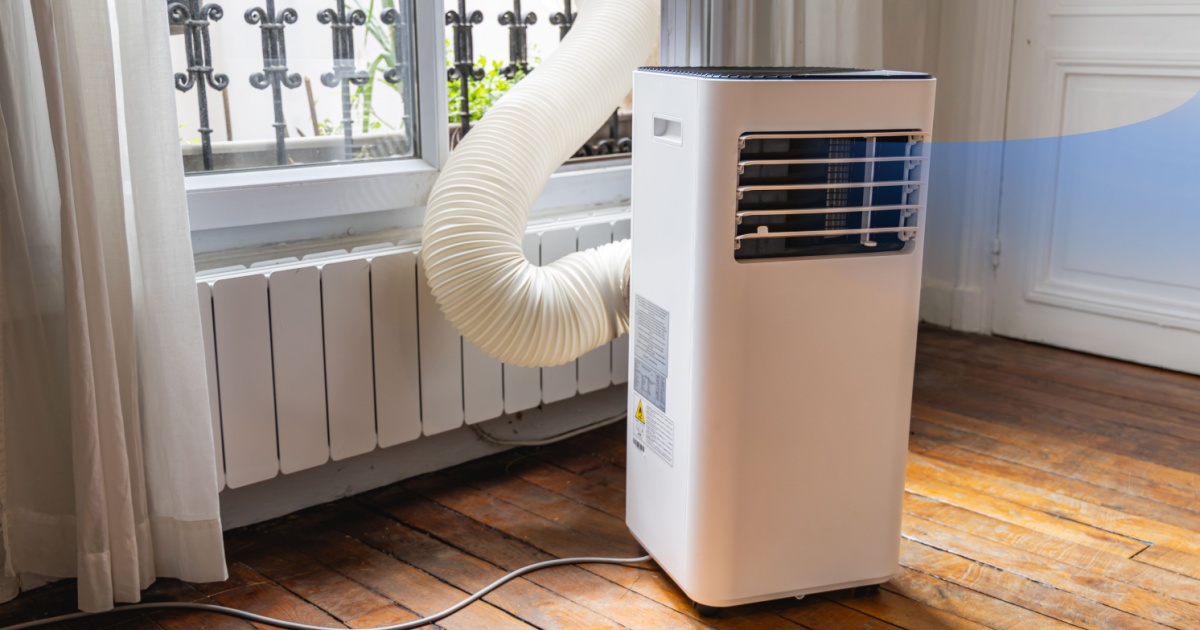
The 2025-2026 HEAP Cooling Assistance Benefit opened April 15, 2026, and eligible households may receive one benefit per applicant household for the purchase and installation of an air conditioner or a fan to help the home stay cool. In circumstances where an air conditioner cannot be safely installed, a fan will be provided instead.
Benefits include installation services, minor repairs needed for safe setup, removal of old units, and related program costs, meaning this is not just a voucher toward a purchase. The state coordinates delivery and installation through approved contractors. An eligible household does not need to arrange anything beyond submitting their application and documentation.
How Much Does the Benefit Cover?
Only one air conditioner or fan, not to exceed $800 with installation for a window, portable air conditioner, or fan and not to exceed $1,000 for an existing wall sleeve unit, will be provided per applicant household. A wall sleeve unit refers to the style of air conditioner that fits into a permanent rectangular opening in a wall, common in older NYCHA buildings and pre-war apartments.
The benefit covers only the purchase and installation of the unit. It does not provide additional funds to cover monthly electricity costs of running it. For NYC residents who receive SNAP, Temporary Assistance, or SSI, it’s also worth knowing that ConEd’s Energy Affordability Program may provide a separate monthly bill credit for eligible households, and both programs can be used together.
The HEAP Cooling Assistance Benefit will stay open until August 31, 2026, or until funds run out. In past years, the funds have run out earlier. That end date is a ceiling, not a guarantee.
Who Qualifies: The Three Conditions You Must Meet
Eligibility for the HEAP Cooling Assistance Benefit is not a single test. It requires meeting three separate conditions simultaneously. Many households assume they won’t qualify without actually checking the criteria. That assumption costs them.
Condition 1: Income or Automatic Eligibility
The income limits for 2026 set the maximum gross monthly household income at $3,473 for a single-person household, $4,542 for two people, and $5,611 for three people, with limits increasing by approximately $687 for each additional household member, according to the ACCESS NYC program page.
For many households, the income calculation is bypassed entirely. You are automatically income-eligible if your household currently receives SNAP benefits, Cash Assistance, Code A Supplemental Security Income (SSI), or received a regular HEAP benefit of more than $21 in the current season.
Condition 2: A Vulnerable Household Member
This condition is where many households either qualify or don’t, and it’s frequently misunderstood. At least one person in the household must have a documented medical condition that is exacerbated by extreme heat, or the household must contain a vulnerable member based on their age, specifically 60 years or older, or under age 6.
You do not need to provide medical documentation if there is someone in the household who is 60 years or older, or under age 6. If qualifying based on a medical condition rather than age, applicants need a letter signed by a physician, physician’s assistant, or nurse practitioner dated within the last 12 months. This requirement is waived if someone in the household is 60 or older or under 6. Conditions that typically qualify include asthma, COPD, heart disease, hypertension, and other chronic illnesses that become more dangerous in extreme temperatures.
Condition 3: Equipment Status
The household must currently not have a working air conditioner, or the air conditioner they have must be at least five years old. The household also cannot have received a HEAP-funded air conditioner in the past five years.
This third condition is often the one that surprises applicants who assume they are ineligible because they already own a unit. If that unit is five or more years old, it counts. If it is no longer functional, it counts. The program is designed to address real cooling needs, not just the total absence of any equipment on the premises.
The Federal Funding Threat Every Applicant Should Understand
There is a dimension to this program’s 2026 season that goes beyond routine eligibility paperwork. The federal funding source that underwrites HEAP has been under significant political pressure, and that pressure has direct consequences for how much money is available this summer.
The Trump administration fired the entire LIHEAP program staff at the Department of Health and Human Services on April 1, 2025, and proposed eliminating funding for the program in fiscal year 2026. This is the federal program behind HEAP, and its elimination would strip away the financial backbone of cooling assistance programs across the country. Federal LIHEAP staff have not been rehired, and states are now expected to run their programs with no federal training or guidance.
Congress has historically resisted these elimination attempts. Senators Reed, Collins, and Murkowski successfully led bipartisan efforts to secure $4.045 billion for LIHEAP in FY 2026, a $20 million increase over the previous year. However, the program’s situation remains precarious. The President’s Fiscal Year 2027 budget proposal would eliminate $4 billion in funding for LIHEAP.
According to the National Energy Assistance Directors Association, about 21.5 million U.S. households, roughly 1 in 6, are behind on their energy bills, and those numbers are expected to worsen as families face the double impact of costly winter heating and summer cooling.
The practical implication for 2026 applicants: funding is tighter than in prior years, advocates are warning eligible households to apply now rather than wait for the peak of summer, and the August 31 deadline is a ceiling, not a guarantee.
Why the Health Stakes Are So High
The urgency behind this program is not administrative. It is grounded in a consistent body of public health evidence about what happens when vulnerable people spend summers in poorly cooled homes.
In the United States, extreme heat is the leading weather-related cause of death, claiming more lives annually than hurricanes, floods, and tornadoes combined. The CDC reports that the number of heat-related deaths increased from 1,156 in 2020 to 2,415 in 2023, before slightly declining to 2,394 the following year.
Older adults bear the heaviest burden. According to the CDC’s heat and older adults resource, people aged 65 or older are more prone to heat-related health problems, do not adjust as well as younger people to sudden changes in temperature, are more likely to have a chronic medical condition that changes normal body responses to heat, and are more likely to take prescription medicines that affect the body’s ability to control temperature or sweat.
The physiology of aging makes the problem worse. A 2025 systematic review published in PMC found that aging is associated with reduced sweating capacity, blunted cardiovascular responses, and diminished perception of environmental temperature. These changes limit the ability to dissipate heat and increase the risk of hyperthermia, dehydration, and cardiovascular or respiratory events during prolonged heat exposure. This vulnerability is compounded further by the high prevalence of chronic conditions such as heart failure, COPD, diabetes, and dementia, as well as frequent use of medications that interfere with sweating, vasodilation, or fluid balance.
According to Banner Health, adults over age 65 have a higher rate of heat-related illness hospitalizations compared to younger adults.
Heat-related mortality data from New York City specifically illustrate how chronic conditions multiply risk, with 89% of heat-related decedents having at least one documented chronic health condition and 62% showing evidence of cardiovascular disease or hypertension. Critically, the data also show that most of those deaths occur indoors, not outside in the sun. The home itself becomes the hazard when it cannot be cooled.
The National Institute on Aging specifically recommends that older adults spend time in air-conditioned spaces during extreme heat, and flags that people without functional cooling in their homes face the greatest danger during heat events.
Read More: After Daughter Gets Heatstroke in her Bedroom, Mom Warns of Danger
How to Apply: A Step-by-Step Breakdown
The application process varies depending on where in New York State you live. Both renters and homeowners are eligible, and you do not need landlord permission to apply, though installation will require building access.
If You Live in New York City
The fastest application method is through the ACCESS HRA portal. Applicants create an account, complete the HEAP Cooling Assistance application, and upload required documents. The HRA mobile app lets users scan and submit documents directly from a smartphone.
By phone, call 718-557-1399 to request an application be mailed or to get assistance with the process. In-person applications can be submitted at a HEAP office or outreach location, which can be found through ACCESS NYC.
Once an application is approved, a contractor will be scheduled to deliver and install the air conditioning unit or fan. During the height of summer, installation lead times can stretch to several weeks, which is another practical reason to apply early rather than waiting until temperatures become severe.
If You Live Outside New York City
Low-income New Yorkers outside the city can apply for cooling assistance through myBenefits.ny.gov or by contacting their local Department of Social Services. The statewide OTDA hotline is available Monday through Friday, 9:00 AM to 5:00 PM. Each county also maintains its own HEAP Local District Contact, which can be found through the New York State OTDA website.
What Documents to Prepare
Applicants should have the following ready before starting their application. Proof of income for the prior month, such as pay stubs, benefit award letters, or Social Security statements, is required unless automatic eligibility applies through SNAP, Temporary Assistance, or SSI. If qualifying on the basis of a medical condition, documentation must include a letter signed by a physician, physician’s assistant, or nurse practitioner dated within the last 12 months. Applicants will also need identification for household members and proof of residence.
Getting the medical documentation form signed by a provider before starting the application is strongly advisable. This is the single most common reason applications stall mid-process.
Apply Now, Not in August
The HEAP Cooling Assistance Benefit for 2026 is a substantive, fully funded program that covers not just the cost of an air conditioner but also delivery, installation, and removal of old units. For qualifying New Yorkers, the out-of-pocket cost is zero.
The eligibility criteria are broader than many people expect. Households currently receiving SNAP, Cash Assistance, or SSI qualify automatically on the income side, removing what is often assumed to be the highest barrier. The vulnerability requirement covers any household with a member aged 60 or older, under age 6, or with a documented heat-sensitive medical condition. And if your current air conditioner is five or more years old, you don’t need to be without one to qualify.
The current LIHEAP funding level of $4.1 billion is, according to NEADA, not enough. Families are facing mounting pressure from all sides, with home energy costs increasing at more than two and a half times the rate of overall inflation. That pressure makes the case for acting early in the season, before demand peaks and the available pool shrinks.
For New York City residents, the application starts at ACCESS NYC. For residents outside the five boroughs, the starting point is myBenefits.ny.gov or the New York State OTDA HEAP page. The phone number for NYC residents with questions is 718-557-1399. For all other New Yorkers, the statewide number is 1-800-342-3009.
If anyone in your household checks even one of the age or medical eligibility boxes, and your income is anywhere near the thresholds listed above, it costs nothing to check. The program was built for exactly this moment, and the earlier you apply, the better your odds of receiving a unit before the heat arrives in force.
AI Disclaimer: This article was created with the assistance of AI tools and reviewed by a human editor.
Read More: 12 Tips to Keep Your Air Conditioner Running Efficiently Without Breaking the Bank