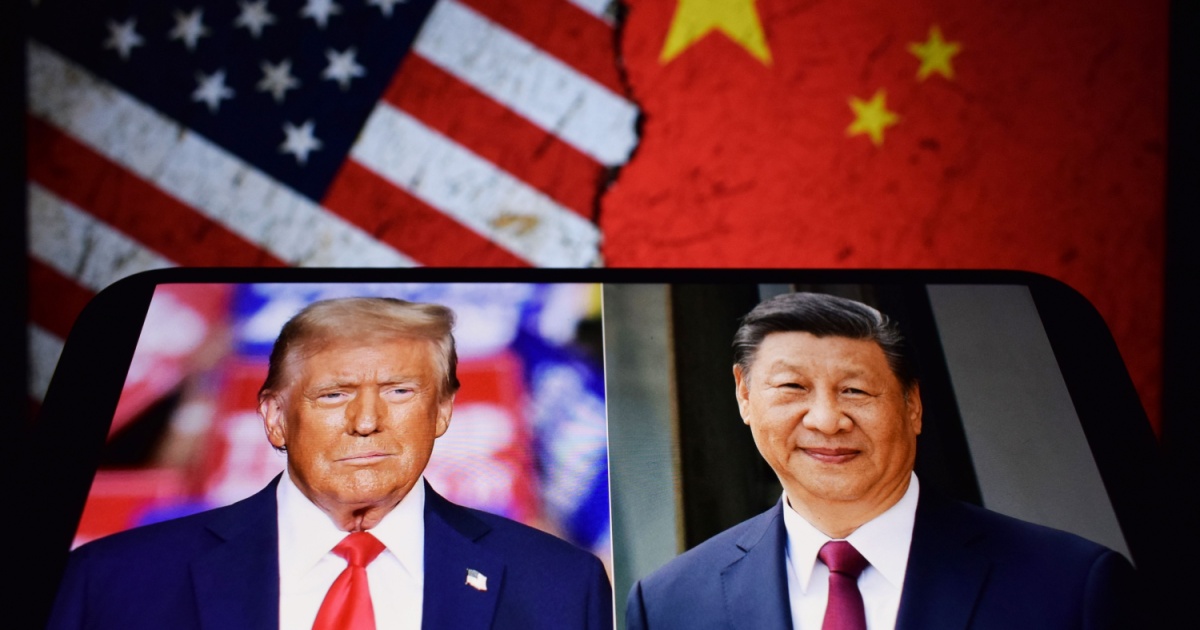

Trump arrived in Beijing this week for the first presidential visit to China in nearly a decade, carrying the weight of a bruising trade war, an ongoing conflict with Iran, and a domestic economy still feeling the aftershock of years of tariff battles. The White House framed the trip as a defining diplomatic moment. Markets watched. Allies watched. And for a few days, so did just about everyone else. Then the summit ended, and the picture that emerged was a lot more complicated than the fanfare suggested.
The pageantry was real. There was a 21-gun salute, children waving flags, a state banquet, and a carefully choreographed stroll through the Temple of Heaven. But beyond the ceremony, the harder question kept surfacing: what did the United States actually walk away with? And increasingly, the answer from analysts, foreign policy experts, and some members of Congress is: not much that Washington had hoped for when it boarded the plane.
The story of this summit is one of expectation running up against reality. For ordinary Americans whose grocery bills, energy costs, and economic futures are quietly shaped by how these two powers choose to deal with each other, that gap matters more than most diplomatic post-mortems acknowledge.
How the Stage Was Set
This visit to China is the first by a sitting U.S. president in nearly a decade. Much has changed since then, including an escalation in trade tensions and U.S. restrictions on Chinese technology. “China comes into this meeting far more confident than in 2017, when it feared even a small rise in U.S. tariffs. In the last year, Xi has been able to push back and neutralize much of Trump’s actions,” said Scott Kennedy, senior adviser and Trustee Chair in Chinese Business and Economics at the Center for Strategic and International Studies.
Trump’s three-day visit came at a fraught moment. His approval ratings have been dragged down by the protracted war on Iran and a surge in inflation, which economists attribute in part to the disruption of global energy supplies. The war has led to the effective closure of the Strait of Hormuz, stranding oil and natural gas tankers and causing energy prices to spike to levels that could sabotage global economic growth.
Trump and Xi had last met in October on the sidelines of an APEC summit in South Korea, ending a long-standing trade war. Since then, the U.S. and China have been engaged in what analysts call a trade truce. “The top goal really is to maintain the relative stability that they were able to achieve in South Korea last year,” said William Yang, Northeast Asia analyst at International Crisis Group, according to NPR.
Going into this week’s summit, then, the bar had already been quietly lowered. This was not a meeting designed to produce a sweeping new era in bilateral relations. In this sense, the summit can be understood more for what it aims to avoid, such as a breakdown in the relationship, than what it seeks to achieve. The Atlantic Council put it plainly before the trip began: expectations were modest, and even those modest hopes faced obstacles.
Taiwan Dominates, Trade Disappoints
What struck observers most about the first day of talks was how quickly Xi seized control of the agenda. Chinese President Xi Jinping warned U.S. President Donald Trump that the U.S. and China “will have clashes and even conflicts” if the long-standing issue of Taiwan’s independence is mishandled. If that issue is not handled “properly,” Xi said, it could put “the entire relationship in great jeopardy.” China does not recognize Taiwan’s sovereignty and has repeatedly opposed Washington’s support for Taipei.
Meanwhile, the White House readout of the meeting did not mention Taiwan at all and instead focused heavily on trade. That disconnect between the two official accounts tells its own story. Beijing wanted to talk about the island it claims as its own. Washington wanted to talk about soybeans and aircraft orders. Neither side fully got what it came for.
On the trade front, no major trade deals were announced, including a potential deal on rare earths or investments in artificial intelligence. Trump did reveal that Xi had agreed to order 200 jets from Boeing. “One thing he agreed to today, he’s gonna order 200 jets, that’s a big thing, Boeing,” Trump told Fox News. And in what was seen as a gesture of goodwill ahead of the Trump-Xi meeting, Beijing on Thursday restored beef trade with Washington, issuing new import licenses for hundreds of U.S. suppliers.
These are real announcements. But analysts were quick to put them in context. “These are all considered as the price China can easily absorb and pay in a way to appeal to Trump’s appetite for a deal,” said Northeast Asia analyst William Yang.
China’s Leverage: Rare Earths and the Iran War
Two of the biggest structural pressures on the U.S. side heading into Beijing were China’s grip on rare earth minerals and Washington’s need for Beijing’s cooperation on Iran. On both fronts, the summit produced limited movement.
Of all of the tools in China’s trade war arsenal, perhaps its most potent is its grip over rare earths, the materials that underpin technologies ranging from semiconductor chips to F-35 fighter jets. Since the fragile October 2025 trade truce, U.S.-China tensions had cooled just enough to stabilize markets. But the United States headed to the summit facing an uncomfortable reality: its rapid expenditure of advanced weapons systems in the Middle East and Ukraine had compounded deep vulnerabilities in supply chains tied to rare earth elements and permanent magnets, inputs overwhelmingly dominated by China.
This gave Beijing real leverage, and Xi appeared comfortable using it. Xi came looking for U.S. concessions on technology export controls, Taiwan, and tariffs. Trump came looking for large Chinese purchases of U.S. goods, more U.S. access to China’s rare earths, and progress on fentanyl cooperation. Neither side appears to have walked away fully satisfied.
On Iran, the picture was similarly mixed. U.S. officials had suggested that China should play a greater role in pushing Iran to reopen the Strait of Hormuz, but analysts said Beijing would require concessions from the U.S., likely over Taiwan, if it were to aid in resolving the crisis. Trump told Fox News that Xi agreed not to send military equipment to Iran during the bilateral meeting, a statement Trump himself called “a big statement.” But China’s broader stance toward the Iran conflict remained unchanged, and no formal agreement on Hormuz emerged from the meeting.
The Council on Foreign Relations had described the meeting beforehand as an effort to stabilize the relationship rather than resolve long-standing disputes, and that assessment proved accurate.
For American households already feeling the effects of this economic friction, the summit’s thin results are not just abstract geopolitics. As we covered recently in our reporting on Trump’s agricultural tariffs and their effects across all 50 states, the downstream costs of U.S.-China trade tensions have been showing up at the grocery store for well over a year.
A Confident China, a Weakened Negotiating Position
One of the clearest takeaways from the Beijing summit is the degree to which the power balance between these two countries has shifted since Trump’s first visit to China in 2017. Anti-Beijing sentiment inside the Trump administration hasn’t been matched by actual China expertise, which has been gutted from the State Department. It hasn’t helped that Trump’s favorite diplomatic tool, tariffs, was blunted by a February 2026 U.S. Supreme Court decision against his use of the International Emergency Economic Powers Act.
In recent months, Trump also made significant concessions to Beijing, agreeing to sell Nvidia’s advanced AI-powered semiconductor chips to China while suspending a $13 billion arms sale to self-ruling Taiwan. These moves before the summit weakened the U.S. hand before talks even started.
By October 2025, China had outsmarted the United States in its fentanyl diplomacy, absorbing Trump’s early-2025 tariffs while retaliating with counter-tariffs, export controls on critical minerals, and boycotts of sensitive imports like soybeans. On fentanyl specifically, the issue remains significant in U.S.-China relations, but the Trump administration has weakened its leverage.
Like every president who goes to Beijing, Trump faced outsized expectations against the backdrop of a much more complex and challenging relationship. China feels confident enough to stand up to Trump on many key issues, including sanctions, technology controls, critical minerals, and Iran.
Steve Tsang, director of the SOAS China Institute at the University of London, put it bluntly in a pre-summit assessment for Time: “When you get down to real, serious issues, whatever concessions China makes will be nominal and not necessarily implemented.” He added a pointed observation about Trump’s incentives: winning, for this president, is something he can post on Truth Social.
Goodwill, But No Reset
Both leaders publicly stressed their personal warmth and the importance of the bilateral relationship. Trump described Xi as a “friend” and said the relationship was one of the most consequential in world history. Both countries, he added, had an opportunity to “create a future of greater prosperity, cooperation and happiness.” He also invited Xi to visit the U.S. on September 24.
Beijing’s account of the meetings framed the two countries as entering a “new orientation” in their relationship, one it dubbed “constructive strategic stability.” Xi said the two countries agreed to maintain this posture for at least three years, describing it as an era of cooperation and stability “with competition within proper limits.”
That framing, however, did not appear in U.S. accounts of the meeting, and a White House readout released Thursday focused on how the two sides discussed “ways to enhance economic cooperation between our two countries” and some areas of consensus on the war in Iran.
Analysts suggest Trump’s visit is unlikely to lead to major policy changes, but is instead focused on building trust between the two countries. Whether that trust translates into anything concrete over the coming months remains an open question.
Read More: Trump’s Agricultural Tariffs Are Hitting All 50 States
What This Means for You
The Trump-Xi summit in Beijing will be studied for months, but its immediate result is not encouraging for anyone hoping for a clean diplomatic win. China got to set the agenda on Taiwan. Washington got a Boeing jet order and restored beef imports – the kind of deals analysts describe as concessions Beijing could afford to make without giving up anything structural. No rare earth agreement materialized. No Iran breakthrough was announced. The White House readout was thin, and the two sides’ official accounts of the meeting diverged noticeably on key issues.
For ordinary Americans, the consequences are real and ongoing. The global economy continues to feel the effects of soaring oil and gas prices from the Strait of Hormuz blockade and the fragile trade truce between the two countries. While the relationship has stabilized since the two leaders met in South Korea last year, it remains fragile, defined more by an absence of friction than any affirmative agenda or deep dialogue on the substantial differences between the two powers. The summit did not change that picture in any fundamental way. What it did do is keep the conversation going, which, given the alternative, may be the most honest thing that can be said about it.
AI Disclaimer: This article was created with the assistance of AI tools and reviewed by a human editor
Read More: People Are Only Just Discovering Trump’s Bizarre Link to Erica Kirk