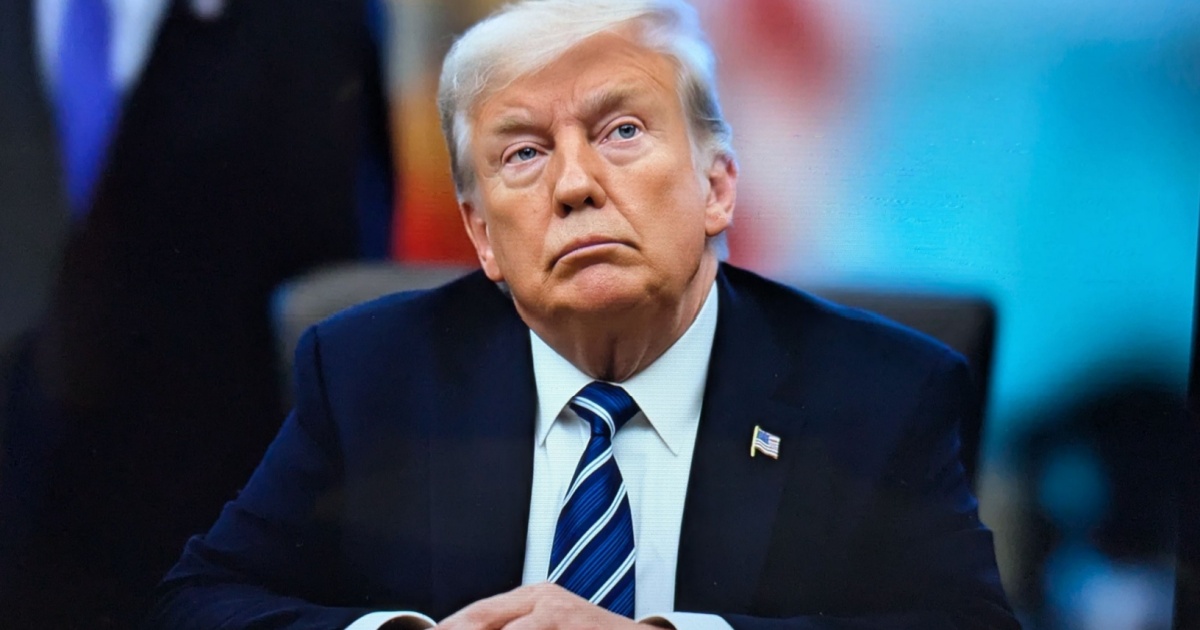

On the second full day of his presidency, Donald Trump signed a document that would have seemed unthinkable to many legal observers just a few years earlier. With the stroke of a pen, a man convicted of running what federal prosecutors once called the most sophisticated criminal marketplace in internet history walked free. Within hours of that announcement, cryptocurrency analysts independently scanning the blockchain noted that tens of millions of dollars were sitting in old, untouched digital wallets. These wallets may have been associated with him or Silk Road activity. However, there is no confirmed evidence that these wallets are controlled by Ross Ulbricht personally.
The wallets held roughly $47 million in Bitcoin. And the story of how both things came to exist at the same moment raises questions that go well beyond the politics of pardons.
To understand what happened in January 2025, you need to go back to the early days of the internet’s hidden underworld – to a time when Bitcoin was barely worth tracking, and when one man believed he could build a free market beyond the reach of any government on earth.
The Rise and Fall of Silk Road
Ulbricht created the Silk Road site, accessible only using specific software that could connect to the dark web, in January 2011. The dark web, for those unfamiliar, is a part of the internet that requires special anonymizing software to access – it’s not indexed by Google and is deliberately designed to obscure the identities of both visitors and operators.
In its nearly three years of existence, Silk Road became an international drug marketplace, facilitating more than 1.5 million transactions, including sales of heroin, cocaine, and other illicit substances. The site generated over $200 million in revenue, according to authorities. It became a place for people to buy and sell illicit drugs, weapons, poisons, and services such as computer hacking.
The Silk Road website relied on the Tor network to communicate anonymously and accepted Bitcoin as payment, which prosecutors said allowed users to conceal their identities and locations. Prosecutors said Ulbricht ran Silk Road under the alias “Dread Pirate Roberts” – a reference to a character in the 1987 movie The Princess Bride.
Ulbricht’s early writings on the ideas behind Silk Road emphasized his desire to create a free and anonymous marketplace, to “use economic theory as a means to abolish the use of coercion and aggression amongst mankind,” according to a public LinkedIn post cited by NPR. Libertarian ideology ran through the project’s DNA from the beginning – a vision that would later become central to his cult following.
His arrest brought to an end what prosecutors described as a global, black market bazaar that for two years starting in 2011 was used by more than 100,000 people to buy and sell $214 million worth of illegal drugs and other illicit services. During his trial, prosecutors said at least six deaths were traced to overdoses from drugs bought on Silk Road.
Conviction and Sentence
He was convicted of distributing narcotics, engaging in a continuing criminal enterprise, conspiring to commit computer hacking, and conspiring to create fake identities and launder money. He was sentenced to life in prison. More precisely, on May 29, 2015, he was sentenced to double life imprisonment plus 40 years, without the possibility of parole, to be served concurrently. Ulbricht was also ordered to pay about $183 million in restitution, based on the total sales of illegal drugs and counterfeit IDs through Silk Road.
At his sentencing in Federal District Court in Manhattan, a judge called Ulbricht “the kingpin of a worldwide digital drug-trafficking enterprise” and said that his actions were “terribly destructive to our social fabric.”
The sentence was severe, and deliberately so. Yet it also generated immediate controversy. In 2017, the federal appeals court for the Second Circuit, in affirming Ulbricht’s conviction, acknowledged the severe nature of the punishment, stating that “although we might not have imposed the same sentence ourselves in the first instance,” on the facts of this case a life sentence was within the range of permissible decisions the district court could have reached.
The Investigators Who Broke the Law
Adding a significant layer of complexity to the Ulbricht case was the conduct of the federal agents who investigated him. In the background of the case against Ulbricht was the investigation and prosecution of two federal agents who were assigned to work the Silk Road case: then-DEA Special Agent Carl Force IV and then-U.S. Secret Service Agent Shaun Bridges. During the investigation of Ulbricht, Force and Bridges were alleged to have created unsanctioned profiles online for personal benefit, committed money laundering using Bitcoin, and stolen funds from Silk Road users. In 2015, a case was brought against the two federal agents which eventually resulted in their conviction.
In April 2015, just seven weeks after Ross’s trial concluded, it was revealed that two federal agents at the core of the Silk Road investigation were charged with corruption directly related to their involvement in Silk Road. The two agents had been under investigation for nearly a year, but Ulbricht’s prosecutors fought to keep their existence under seal until after the jury had convicted him.
The second agent, former DEA Special Agent Carl Force, pleaded guilty to extortion, money laundering, and obstruction of justice and was sentenced to six and a half years in prison. The corruption in the very investigation used to convict Ulbricht became a rallying point for those arguing his trial had been fundamentally compromised.
The Political Road to the Pardon
For years, Ulbricht’s case sat at the intersection of libertarian politics and the growing cryptocurrency movement. Libertarian activists supported Ulbricht’s release for years, organizing around the banner “Free Ross” and painting Ulbricht as a young, “peace-loving” former Eagle Scout who made mistakes, rather than “a dangerous kingpin.” Over the years, more than 600,000 people signed a petition demanding his pardon, and the campaign was backed by crypto influencers, libertarians, and various public figures.
The deal that made the pardon possible began taking shape in late 2023. According to reporting by the Seattle Times, Angela McArdle, then chair of the Libertarian Party, flew to Mar-a-Lago in December 2023 to meet with Donald Trump. She told him Ulbricht was the victim of prosecutorial overreach – drawing explicit parallels to Trump’s own legal battles – and that freeing Ulbricht was essential to winning the libertarian vote.
Trump acted on that calculation publicly. In May 2024, Trump pledged in remarks to the Libertarian Party’s national convention in Washington, D.C., to commute Ulbricht’s sentence immediately upon taking office. “If you vote for me, on Day 1 I will commute the sentence of Ross Ulbricht to a sentence of time served,” Trump said at the convention, according to CNN.
In doing so, Trump fulfilled a promise that he made repeatedly on the campaign trail as he courted political contributions from the crypto industry, which spent more than $100 million to influence the outcome of the election.
When the pardon came, it went further than a commutation. Federal documentation – an “Executive Grant of Clemency” signed by Trump – confirmed he granted a “full and unconditional pardon” to Ulbricht. Ulbricht was released from a federal prison in Arizona late on Tuesday following Trump’s announcement, according to federal Bureau of Prisons records.
Trump’s own framing of the decision was striking. On his Truth Social platform, he wrote that “the scum that worked to convict him were some of the same lunatics who were involved in the modern day weaponization of government against me. He was given two life sentences, plus 40 years. Ridiculous!”
The Libertarian Calculus
Ulbricht’s case had been held up as an example of government overreach by libertarians and cryptocurrency enthusiasts, who argued that he was unfairly prosecuted since he had not sold illegal goods himself and was being held responsible for the transactions of people who used the site.
Libertarian National Committee Chair Angela McArdle celebrated the announcement, calling Ulbricht “a libertarian political prisoner for more than a decade.”
Not everyone shared that view. Senator Tim Kaine of Virginia, speaking from the Senate floor, called it “the pardon of drug kingpin Ross Ulbricht.” He noted that Silk Road facilitated over 1.5 million transactions, generating more than $200 million in revenue from the sale of heroin, methamphetamine, cocaine, and other drugs, and that at least six deaths were attributed to drugs bought on Silk Road. Kaine concluded: “I would assert that the pardon of Mr. Ulbricht undercuts the legitimacy of the claim that what Mr. President Trump is worried about is drug trafficking.”
Critics also observed that Trump didn’t just commute Ulbricht’s sentence – which might have been defensible – but issued a total pardon to a man convicted of facilitating the sale of an estimated $200 million of illegal drugs and illicit goods.
The pardon did not erase Ulbricht’s conviction from the record. A presidential pardon does not erase a federal conviction. But it restored his civil rights and ended his incarceration entirely.
The $47 Million Question
Within hours of Trump’s announcement, something caught the attention of the cryptocurrency community. Conor Grogan, Director of Product Strategy and Business Operations at Coinbase, revealed that Bitcoin wallets left behind by Ross Ulbricht when he was imprisoned for his underground online marketplace Silk Road were still holding tens of millions of dollars worth of BTC.
The U.S. government seized tens of thousands of Bitcoin tied to Silk Road, but Grogan said they weren’t able to get their hands on 100% of the coins: “I found ~430 BTC across dozens of wallets associated with Ross Ulbricht that were not confiscated by the U.S. government and have been untouched for 13-plus years. Back then these were probably dust wallets, now, collectively, they are worth about $47 million.” “Dust wallets” is a term for small Bitcoin holdings that, at the time of creation, were worth almost nothing and therefore overlooked.
According to Arkham Intelligence data reported by Decrypt, fourteen Bitcoin addresses linked to Silk Road collectively hold $47 million in Bitcoin, confirming the figure from Grogan. The cluster of wallets identified as “Silk Road” on Arkham includes one account alone that holds over $9 million in Bitcoin.
Can He Access Them?
The discovery raised an immediate question: does Ulbricht still hold the private keys to those wallets? A private key is essentially the password to a cryptocurrency wallet – without it, the funds are permanently inaccessible.
According to Grogan’s analysis, the wallets believed to be linked to Ulbricht still hold around 430 BTC. These funds have remained untouched for over 13 years, and it’s unclear whether Ulbricht has access to the private keys.
If the wallets do belong to Ulbricht, it’s unknown if he still holds the private keys to any of them. The money could be unretrievable – as much as 20% of the total supply of Bitcoin is believed to be in wallets whose owners lost the keys, died, or disappeared, including the wallet of Bitcoin inventor Satoshi Nakamoto, which holds approximately $115 billion worth.
There’s also the question of whether any government might come after the funds. Crypto legal experts told Decrypt that federal authorities could come after any Silk Road-related Bitcoin: “If the authorities find assets later that they can link to the original crime(s), they could try to seize these even after release, assuming the statute of limitations has not expired,” said Eli Cohen, General Counsel at tokenized asset platform Centrifuge.
Meanwhile, a question also arose about Ulbricht’s original Bitcoin fortune – the massive holdings the government had seized during his arrest. When FBI agents arrested Ulbricht in a San Francisco library in 2013, they seized his open laptop, which allowed them to obtain the huge trove of Bitcoins he had amassed while running his website. The U.S. Marshals Service arranged a series of auctions to sell off over 144,000 Bitcoins. The Marshals sold the Bitcoins in early 2014 at a time when the currency had recently fallen sharply. Today, those 144,000 Bitcoins would be worth around $14 billion but, at the time, fetched a little over $48 million – less than 0.5% of their present-day value.
According to Renato Mariotti, a former federal prosecutor who now works in white-collar defense at Paul Hastings, a pardon undoes the forfeiture of property – unless, as is the case with Ulbricht’s Bitcoin, it has already been sold and the proceeds spent.
A $31 Million Anonymous Donation
The $47 million in dormant wallets wasn’t the end of Ulbricht’s cryptocurrency story in 2025, though the connection between those wallets and Ulbricht himself remains unproven. The biggest financial moment for Ulbricht after his release came on May 30, 2025, when a wallet associated with him received a 300 BTC transaction – worth approximately $31.4 million at the time. Analysts from Arkham Intelligence confirmed the transfer and noted that the funds were routed through a Bitcoin mixer. A Bitcoin mixer is a service that pools and shuffles transactions to obscure their origins – making it extremely difficult to trace where funds came from.
After initial speculation, blockchain analysis firm Chainalysis told reporters that the funds likely originated from a person connected to AlphaBay, another defunct dark web market once described by the FBI as the largest of its kind. The exact identity of the donor and their motivation remains unknown.
Security expert Taylor Monahan told Wired that large donations like this can stem from personal reasons, such as inspiration, gratitude, or even remorse.
Life After the Pardon
Since his release from a federal facility in Tucson, Arizona, in January 2025, Ulbricht focused on reintegrating into society and connecting with the crypto community, which regards him as a pioneer. However, aside from a few public speeches, he largely maintained a low profile while spending time with his family.
His first major public appearance was at one of the cryptocurrency world’s largest gatherings. His first public appearance took place on the main stage of Bitcoin 2025 in Las Vegas – one of the largest events in the industry. The crowd gave him a standing ovation, and from the stage, Ulbricht thanked everyone who supported him during his time in prison and urged the community to stay true to the values of decentralization and freedom.
Ulbricht also attended Trump’s speech in front of a joint session of Congress on March 5, 2025, writing on X afterwards: “From a prison cell to the halls of congress […] It was an honor to meet these men who supported my campaign for freedom and to applaud [Trump], who set me free.”
Ulbricht also held an auction of personal items through the NFT platform Scarce City. The lots included prison ID cards, paintings created behind bars, and the clothes he wore when released. Other items included a sleeping bag, backpack, locker padlock, and a djembe drum. The total proceeds exceeded $1.8 million in Bitcoin. The most expensive item was a prison ID card featuring Ulbricht smiling, which sold for 5.5 BTC – over $580,000.
The Forfeiture Agreement
Beyond the $47 million wallets and the anonymous donation, there was one more significant financial dimension to Ulbricht’s legal situation. In 2021, Ulbricht’s prosecutors and defense agreed that Ulbricht would relinquish any ownership of a newly discovered fund of 50,676 Bitcoin – worth nearly $5.35 billion in 2025 – seized from a hacker in November 2021. That Bitcoin had been stolen from Silk Road in 2013. The U.S. government traced and seized the stolen Bitcoin, and Ulbricht and the government agreed the fund would be used to pay off Ulbricht’s $183 million debt in his criminal case, while the Department of Justice would take custody of the Bitcoin.
That agreement, reached while he was still behind bars, effectively closed out his financial liability to the government – though it required him to walk away from any claim to one of the largest Bitcoin seizures in history.
What This Means
The Ulbricht pardon is one of the most layered decisions in American criminal justice history, and the events of January 2025 didn’t simplify it. Whether you see it as justice delayed or a politically convenient deal depends heavily on which facts you choose to center – but the full picture includes all of them.
On the legal question, the pardon was full and unconditional. It released Ulbricht after more than 12 years in federal prison for convictions that included drug trafficking, money laundering, and computer hacking. It was explicitly tied to Libertarian political support and the crypto industry’s growing pull over the Republican Party. Sitting senators, including Kaine, argued it directly contradicted the administration’s stated commitment to fighting drug trafficking. Supporters countered that the sentence had always been disproportionate for a first-time offender – particularly one whose investigators were themselves convicted of corruption. Both arguments have merit, and neither cancels the other out.
On the financial side, the $47 million in dormant Bitcoin wallets stands as one of the more remarkable footnotes in the story. Small holdings from over a decade ago, forgotten or inaccessible, grew into tens of millions of dollars simply because Bitcoin’s price exploded over time. Whether Ulbricht can access those funds remains unknown. What is clear is that, between the dormant wallets, the anonymous $31.4 million donation in May 2025, the NFT auction proceeds, and the settled forfeiture agreement, Ulbricht’s financial position in freedom is vastly different from anything he could have anticipated when he was sentenced in 2015. For readers trying to make sense of what the Ulbricht case reveals about presidential power, crypto politics, and criminal justice in the United States, the honest answer is that no single lens is wide enough to hold all of it at once. The public record exists. What matters now is that people keep reading it.
AI Disclaimer: This article was created with the assistance of AI tools and reviewed by a human editor
Read More: Obama warns on democratic institutions