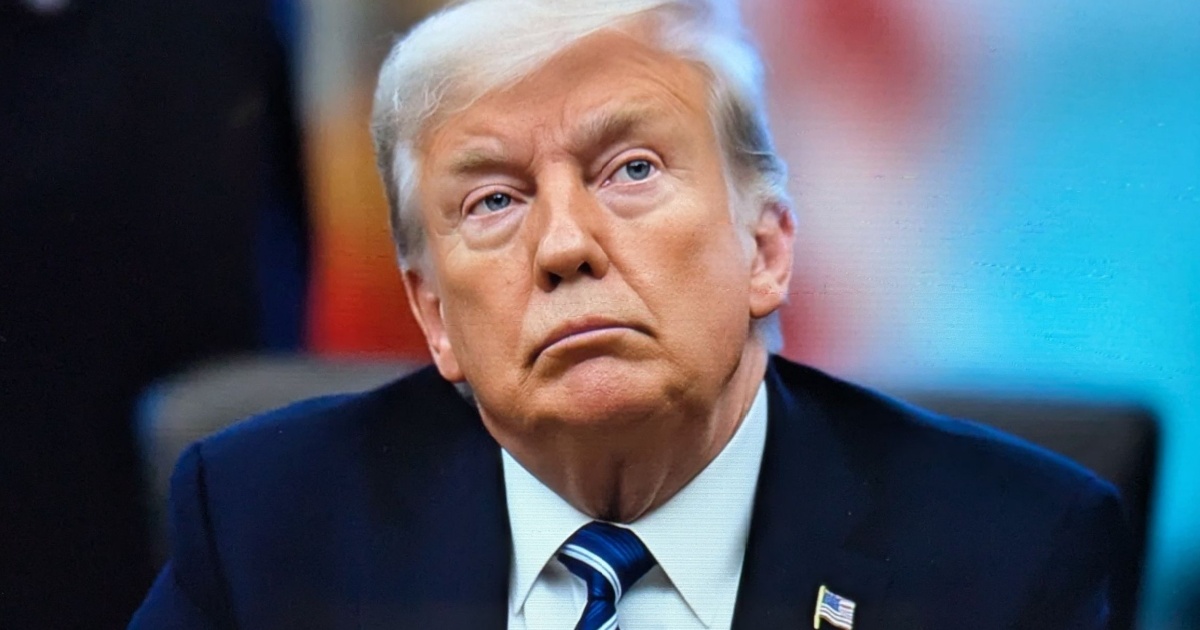

Something about watching a second-term president sink steadily in the polls – not in a sudden crash, but in a slow, relentless slide – tells you something bigger is going on. These are not the jittery, week-to-week fluctuations that political analysts routinely dismiss. The numbers for Donald Trump in 2026 have been moving in one direction, across pollster after pollster, month after month.
What makes it striking is the consistency. Online panels. Telephone surveys. Republican-leaning polling firms and centrist ones. They’re all arriving at roughly the same conclusions, at roughly the same time. When that happens, it signals something real shifting in public opinion, not a blip tied to a single bad news cycle.
And the groups moving against Trump aren’t fringe critics or hardened opposition voters. The erosion is happening inside his own coalition – among the young voters who helped carry him back to the White House in 2024, among independents whose support is essential in competitive races, and even among Republicans who were enthusiastically behind him when he was inaugurated just 16 months ago. Here’s what the data actually shows.
1. Overall Approval Has Hit Second-Term Lows Across Multiple Polls
Americans’ assessments of President Trump have declined steadily over the last several months. His job approval rating now stands at 34%, the lowest mark of his second term, according to a Pew Research Center survey of 5,103 U.S. adults conducted April 20 – 26, 2026.
That number is not an outlier. A Reuters/Ipsos poll found that Trump’s overall approval rating stands at 34% among all respondents and 37% among registered voters, both second-term lows for the president. The Reuters/Ipsos poll was conducted April 24 – 27, 2026. A separate AP-NORC poll found Trump’s approval rating on the economy dropped to 30% in April from 38% in March, with a similarly low share of U.S. adults – 32% – approving of the president’s leadership on Iran.
Trend data shows approval falling from 47% in late January 2025 to the mid-30s by late April 2026, while disapproval climbed from the low 50s to 64% over that same period. When Donald Trump began his second term, approval at 47% was already the second-lowest start for any modern president – second only to his own first term. A president who entered with already-subdued public support has since shed another 10 to 13 points, and that trajectory is the defining characteristic of this period.
2. His Disapproval Rating Just Reached an All-Time High
It’s one thing for approval to fall. It’s another for active disapproval to keep climbing. Trump’s overall approval rating has held at 35%, one point off his all-time low in CNN polling. More recent data puts disapproval even higher. The president’s job performance rating sunk to a new low of 36% approval in the Reuters/Ipsos survey, with 62% of respondents saying they disapproved of Trump’s performance.
Among U.S. adults specifically, Trump’s net approval sits at -20.6 according to the Silver Bulletin polling average tracked by Nate Silver. About 48% of Americans strongly disapprove of his job performance. Strong disapproval – not just lukewarm dissatisfaction – is a harder sentiment to reverse, because it reflects settled conviction rather than temporary frustration.
A Reuters/Ipsos poll taken from May 8 to May 11 shows the president’s overall approval rating at 36% versus a 63% disapproval rating, resulting in a net approval of -27%. Depending on the polling organization and methodology, the range of net approval is consistently and deeply negative – not a borderline case.
3. His Net Approval Has Matched Biden’s Record Low
The political comparisons have become hard to ignore. An Economist/YouGov poll found Trump’s overall approval at 36% with 58% disapproving, for a net approval of -22.
An Economist/YouGov poll conducted in January 2025 showed Trump with a net positive rating of +5 among voters aged 18 to 29. By May 2026, that had dropped to -42, representing a 47-point collapse in Trump’s net approval among Gen Z in the YouGov series.
YouGov’s Allen Houston told Newsweek: “Trump’s average net approval over the past three weeks of -22 is a record low for his two terms. Trump’s average net approval of -22 over the last three weeks also matches the lowest net approval Joe Biden ever averaged over three consecutive weeks in his term in office.” That comparison matters because Biden’s approval floor was itself a major political liability that contributed to his party’s struggles. Trump, who won in 2024 in part by drawing contrast with Biden’s low standing, now finds himself at an equivalent level.
The trend predated this moment. Despite periodic bumps in individual surveys, the president’s approval has not exceeded disapproval over a full 12-month stretch – an unusually prolonged period for a second-term president – results that analysts say could carry significant consequences heading into the 2026 midterms.
4. The Economy Is His Biggest Vulnerability
Ask Americans what is pulling down their view of the president, and economics comes back as the leading answer in survey after survey. A CNN poll conducted by SSRS from April 30 to May 4, 2026, among 1,499 U.S. adults found Trump’s approval on the economy at 30%, with 70% disapproving – a net rating of -40. That represents the lowest economic approval recorded for Trump across either of his terms in CNN polling.
The CNN/SSRS poll found that 77% of Americans – including a majority of Republicans – say Trump’s policies have increased the cost of living in their communities. That last detail is particularly notable. Republican voters routinely give the president the benefit of the doubt on economic management, making majority disapproval within the party’s own base an unusual finding.
For more context on how inflation is reshaping American households, see our coverage of rising cost-of-living pressures and practical steps readers are taking to manage them.
Only 22% of respondents backed Trump’s performance on the cost of living, according to the Reuters/Ipsos poll. The consumer price index climbed 3.3% in March from a year ago, and inflation is slightly higher than the 3% that Trump inherited upon returning to the White House. U.S. gasoline prices have surged more than 40% to roughly $4.18 a gallon since the U.S. and Israel launched strikes on Iran on February 28, triggering a response that shut down a fifth of the global oil trade.
5. Healthcare Disapproval Has Hit a Century High
Economics isn’t the only issue dragging Trump down. His numbers on healthcare have reached a level not seen for any president in modern polling history. CNN’s chief data analyst Harry Enten described Trump’s standing on healthcare in stark terms, noting that 65% disapprove of him on healthcare, calling it “the highest for any president this century” and placing Trump above previous peaks for Barack Obama and George W. Bush.
The dynamic is unfolding alongside tensions tied to “MAHA” – or “Make America Healthy Again” – the populist health agenda associated with Health and Human Services Secretary Robert F. Kennedy Jr. The framework blends anti-establishment messaging around vaccines with more broadly popular proposals such as removing certain food additives. But polling suggests the coalition it once helped build is fracturing.
That combination – record disapproval on both the economy and healthcare simultaneously – creates a double-drag effect that’s difficult for any administration to counteract before a major election. These are the two issues that consistently rank highest when voters are asked what matters most to them personally.
6. Gen Z Has Turned Sharply Against Him
Perhaps the most striking shift involves a voter bloc that was crucial to Trump’s 2024 victory. Trump’s approval rating among young voters has fallen sharply in multiple national polls conducted in April and May 2026, with declines of up to nearly 60 points since the start of his second term. Major national surveys show a consistent pattern of collapse, with Trump’s net approval among Gen Z falling from positive or moderately negative territory in early 2025 to deeply negative ratings of between -42 and as low as -76 in recent polling.
An Economist/YouGov poll conducted in January 2025 showed Trump with a net positive rating of +5 among voters aged 18 to 29. By May 2026, that had dropped to -42 – representing a 47-point collapse in Trump’s net approval among Gen Z in the YouGov series.
Ben Leff, CEO and co-founder of polling firm Verasight, told Newsweek: “It comes back to what Trump promised these groups. Particularly Gen Z Americans were concerned about inflation, prices and avoiding new wars, and I think a lot of them feel betrayed on both those issues.” Leff added: “If you’re younger, you have less disposable income, so you really feel changes in prices.”
Now, Gen Z appears to be breaking decisively against him, reshaping a critical battleground demographic ahead of the 2026 midterm elections. Trump did not win young voters outright in 2024, but he made significant gains within the group compared to 2020, making them a more important part of his coalition. A sharp reversal in that bloc risks weakening a key pillar of his electoral strategy and could have ripple effects in competitive congressional races in November.
7. Independent Voters Are Pulling Away Too
In polarized modern American politics, the views of self-identified independents carry outsized weight. They are the voters most likely to determine outcomes in competitive congressional districts, and they are moving steadily away from Trump. Sixty-nine percent of independents disapprove of his job performance, up from 62% in January, according to the same Economist/YouGov data. Forty-seven percent of independents said his policies have hurt them personally, up from 41% last fall.
The shift matters because it reflects simultaneous movement away from Trump across multiple voter blocs rather than weakness concentrated in a single demographic. Young voters, independents, and core Republican supporters are all moving in the same direction at the same time, tightening the political space Trump has to recover lost ground.
Despite efforts to tout last year’s tax cuts and brush off economic concerns, Trump’s economic approval remains low among independents and has even eroded among Republicans. The share of Republicans who strongly approve of his job performance has dropped to 43%, from 52% in January. Trump’s economic approval rating is down 8 points overall since January and a larger 14 points among Republicans.
8. Even His Own Voters Are Drifting
The erosion inside the Republican base is perhaps the most politically consequential trend in the data. Declines in Trump’s standing have come at least as much from Republicans as from Democrats, according to the Pew Research Center survey. Still, Republicans continue to offer generally positive views of the president, though among Republicans and Republican-leaning independents, 68% approve of the way Trump is handling his job – down from 73% in January.
While most Trump voters still approve of the way he is handling his job as president, that share is shrinking: 78% of the president’s 2024 voters currently approve of him, down from 83% in January and 95% in the early days of his term.
Trump’s younger and Hispanic voters are now substantially less likely than his older and White voters to approve of his job performance: 57% of Trump voters under 35 and 70% of those ages 35 to 49 now approve, compared with 87% of his voters ages 50 and older. Analyst Ben Leff cautioned that declining approval does not automatically translate into voters crossing party lines, noting that disapproval is more likely to show up in turnout decisions than vote switching. That distinction matters enormously heading into a midterm year, where turnout gaps routinely decide close races.
Read More: All It Took Was One Email: How Trump Exempted 180 Polluters From Clean Air Rules
9. Border Security Remains a Lone Bright Spot
Not every metric points downward. Across the sea of negative polling, one issue still registers net approval: border security. Trump continues to receive stronger marks for his handling of border security, a longtime signature issue, and voters still trust his party more than Democrats to handle both border security and immigration, according to a national NBC News poll.
While 53% of voters approve of Trump’s handling of border security, 54% disapprove of Trump’s handling of immigration more broadly, amid pushback on mass deportation policies. The distinction matters: approval is higher when the question is framed around securing the border itself, and lower when it extends to the specific tactics being used to do so.
The economy remains by far the most important issue to voters at 37%, followed by immigration and border security at 13%, healthcare at 11%, and political division at 11%, according to Fox News polling. That gap points to a structural problem for the White House: Trump’s strongest issue is not the issue voters care most about, and his weakest issue – the economy – is the one that dominates the national conversation heading into November.
What This Means for November
The November 2026 midterm elections are now roughly six months away, and the polling data present a clear picture of political risk for the Republican Party. Historically, the party in the White House loses seats in the midterms under any conditions. When a president is running 13 points below his own inauguration approval, with record lows on the economy and healthcare simultaneously, the exposure is amplified. These numbers are partially why Democrats are on track for a strong performance in the midterms, even given their recent setbacks on the redistricting front, according to the Silver Bulletin analysis by Nate Silver. Democrats lead the generic 2026 midterm election ballot 50% to 39%, with their advantage stretching to 18 points among independent voters.
The question for Republicans is not simply whether these numbers improve – it’s whether they can improve fast enough. Ben Leff of Verasight cautioned that disapproval among base voters is more likely to show up in turnout decisions than vote switching. “These folks are still Republicans – they’re not going to switch who they vote for,” he said. “The concern is whether they turn out in the midterms.” In a chamber where the GOP holds a razor-thin House majority, a turnout gap among younger Republicans and disenchanted independents could be enough to flip competitive seats without a single voter changing their party affiliation.
For voters watching these numbers, the practical takeaway is straightforward. The drivers currently pulling approval down – gas prices, cost of living, the conflict with Iran, healthcare concerns – are not abstract. They are felt daily, at the pump and at the grocery store. The current second-term trajectory is different from Trump’s first term. The numbers have trended slowly but steadily downward, and that trend predated the Iran war. Ask Americans what is pulling down their view of the president, and economics comes back as the leading answer in survey after survey. Until that changes in a way voters can feel in their wallets, the polling is unlikely to reverse.
AI Disclaimer: This article was created with the assistance of AI tools and reviewed by a human editor.
Read More: How The Supreme Court’s Trump Tariffs Ruling Set Off a $166B Refund Scramble