
Most people think of liver disease as something that happens to heavy drinkers. Or maybe to people managing obesity or diabetes for years. The idea that a chemical sitting in a spot remover on your shelf, or lingering in the fibers of a freshly dry-cleaned suit, could be quietly damaging your liver feels like a stretch. It isn’t.
Researchers have now found a striking connection between a common industrial solvent and serious liver scarring in people who may have no obvious risk factors at all. The chemical has been in wide commercial use for decades. Millions of people encounter it in some form without realizing it. And for a meaningful portion of those with measurable exposure in their blood, the findings suggest the liver may be paying a steep price.
The question isn’t whether this chemical can cause harm. The science has been pointing in that direction for years. The question is how much harm, and who’s being exposed. The answers, drawn from a national sample of U.S. adults, are more concerning than most people would expect.
What PCE Is and Where It Hides
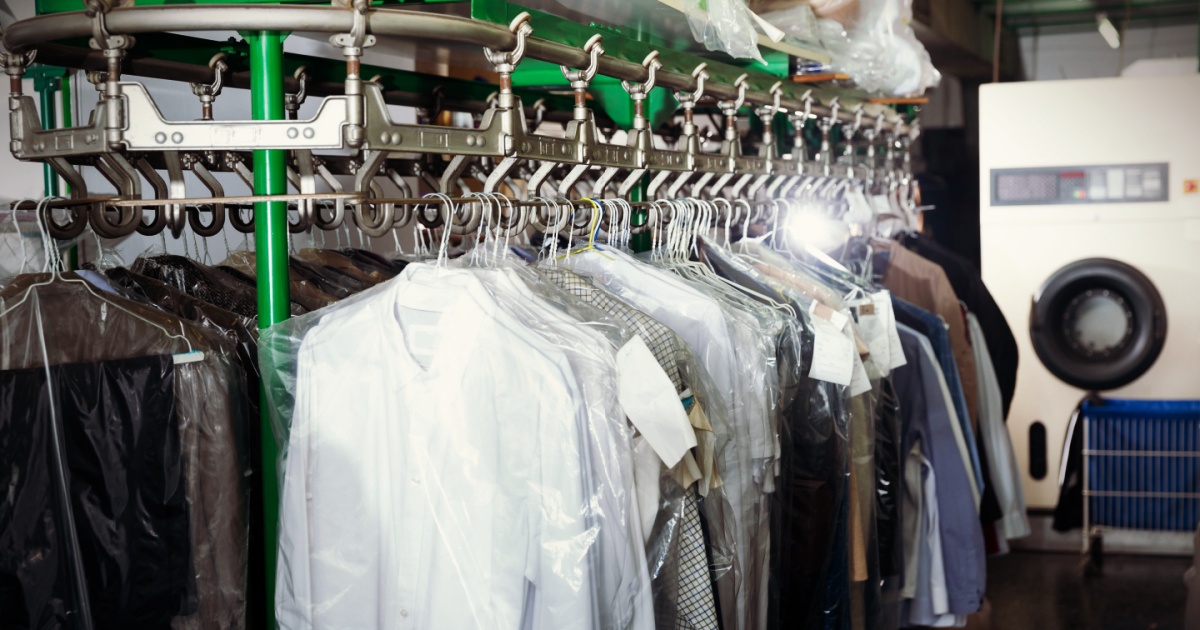
Tetrachloroethylene, also known as perchloroethylene or PCE, is a nonflammable colorless liquid used in dry cleaning operations and as a starting material to synthesize other compounds. For most of the 20th century, it was the workhorse of the dry cleaning industry, prized for its ability to dissolve grease and lift stains from delicate fabrics without the use of water. But dry cleaning shops are only part of the story.
PCE is also present in everyday products like craft adhesives, stain removers, and stainless steel polish. It shows up in brake cleaners, some aerosol degreasers, and industrial metal treatments. It’s a human-made, colorless liquid used in dry cleaning, household goods, and industrial settings to remove grease, among other purposes. When it evaporates, which it does readily at room temperature, it becomes airborne. You can breathe it in without knowing it’s there.
That’s the insidious part. PCE doesn’t announce itself. There’s no visible residue, no obvious warning sign on the label of a spot remover, no smell detectable at levels that can cause harm. For workers in dry cleaning facilities who spend hours each day near active machines, the exposure is significant. For ordinary consumers who use the occasional craft glue or pick up dry cleaning on the way home, it accumulates slowly.
The Study That Changed the Conversation
Liver disease is most often linked to three main causes: heavy alcohol use, fat buildup in the liver associated with obesity, diabetes, and high cholesterol, or infection with hepatitis B or C. The new research from Keck Medicine of USC, published in the journal Liver International, challenges that limited view by adding a fourth, largely overlooked category: environmental chemical exposure.
Researchers analyzed data from 1,614 adults in the National Health and Nutrition Examination Survey (NHANES) from 2017 to 2020 and found that about 7% of participants had detectable levels of PCE in their blood. Those with measurable exposure were three times more likely to develop significant liver fibrosis than those without.
Liver fibrosis, to be clear, is not a mild inconvenience. It is an excessive amount of scar tissue in the liver that can lead to liver cancer, liver failure, or death. Unlike the liver’s normal regenerative capacity, fibrosis represents damage that compounds over time, and significant fibrosis is the tipping point after which serious disease becomes far more likely.
The study also revealed a clear dose-response relationship: the greater the exposure to PCE, the higher the likelihood of developing liver fibrosis. More specifically, the risk increased five times for every one nanogram per milliliter rise in PCE concentration in the blood. That kind of gradient, where more exposure reliably produces worse outcomes, is one of the stronger signals researchers look for when assessing a chemical’s danger.
The results held steady independent of factors such as age, sex, race, ethnicity, and education level. This matters because it means PCE’s association with liver fibrosis wasn’t simply explained by other demographic risks. The researchers also controlled for alcohol consumption and obesity-related liver fat, and other health factors such as alcohol consumption and obesity-related liver fat accumulation did not seem to contribute to significant liver fibrosis when PCE was detected in the blood.
The lead author, Brian P. Lee, a hepatologist and liver transplant specialist at Keck Medicine, described the findings as significant for precisely this reason. He called it “the first study to examine the association between PCE levels in humans and significant liver fibrosis,” noting the underreported role environmental factors may play in liver health.
Who Is Being Exposed
The exposure pattern in this study surprised some observers. People from higher-income households were most at risk of PCE exposure, the study found. “People with higher incomes may be more likely to use dry cleaning services, which could increase their exposure to PCE,” said Lee.
However, people who work in dry cleaning facilities may also face elevated risk due to prolonged, direct exposure to PCE at work. The difference is one of duration and concentration. Customers of dry cleaners encounter PCE mostly through residual vapors on returned garments or brief visits to the shop. Workers breathe it in for full shifts, sometimes over years or decades, without adequate ventilation or protective equipment.
There’s also a passive exposure pathway that rarely gets discussed. When clothing treated with PCE is brought into a home, the chemical off-gasses, meaning it slowly evaporates into the indoor air, particularly in the hours and days after pickup. In enclosed spaces or poorly ventilated rooms, this can produce measurable indoor concentrations. A 2025 study in Liver International described in the Keck Medicine findings suggests this ambient, chronic exposure is enough to show up in blood tests, and to correlate with liver damage.
As Lee noted, prior studies have mainly focused on people exposed to PCE through their work, but this research shows people may be surprised by their exposure even when they don’t directly work with PCE.
A Broader Web of Health Risks
The liver findings are serious enough on their own. But PCE’s track record runs considerably deeper. In addition to liver disease risk, long-term PCE exposure has been linked to neurological impairment, mood and behavior changes, kidney damage, developmental and immune system effects, and heightened cancer risk, according to the Environmental Protection Agency (EPA).
Studies in humans suggest that exposure to tetrachloroethylene may lead to a higher risk of getting bladder cancer, multiple myeloma, or non-Hodgkin’s lymphoma. On the cancer classification front, the EPA has classified tetrachloroethylene as likely to be carcinogenic in humans by all routes of exposure, and the International Agency for Research on Cancer (IARC) also considers tetrachloroethylene probably carcinogenic to humans.
Short-term exposure isn’t risk-free either. It has been associated with mild side effects after short-term exposure such as upper respiratory irritation, reversible mood changes, dizziness, sleepiness, headaches, and coordination impairment. These symptoms are easy to dismiss or attribute to unrelated causes, which is one reason PCE exposure often goes unrecognized in clinical settings.
The Regulatory Response
Regulators have known about PCE’s risks for years, and the pace of action has been a persistent source of frustration for health advocates. That began to change meaningfully in late 2024.
In December 2024, the EPA issued a final rule regulating PCE. The final rule bans all PCE uses in consumer products as well as many commercial and industrial uses within a three-year time frame. The EPA has also set a 10-year phaseout for the use of PCE in dry cleaning to eliminate the risk to people who work or spend considerable time at dry cleaning facilities. Use of PCE in newly acquired dry-cleaning machines is prohibited after six months.
The ruling came with significant caveats, though. On July 30, 2025, the EPA published a Federal Register notice inviting comments on its final rule for PCE as the agency began the process of reconsidering it. As lead author Lee told Fox News Digital, “In 2024, the EPA announced a ban on PCE for consumer and commercial uses with a 10-year phaseout, however, this ban is now being reconsidered.” He added that the study’s data is intended to inform policymakers as that reconsideration moves forward.
Many dry cleaners have already begun this transition to non-PCE solvents, and for most of the uses of PCE that the EPA is prohibiting, the agency’s analysis found that alternative products with similar costs and efficacy are reasonably available.
The Limits of What We Know
This research is genuinely significant, but intellectual honesty requires flagging what it can and can’t tell us. Because it was cross-sectional and looked at PCE levels at one point in time, it couldn’t prove a causal relationship between chemical exposure and liver fibrosis. In practical terms, this means the study shows a strong statistical association, not an airtight chain of cause and effect.
The findings also may not apply to people in other countries, as the study included only U.S. adults, and more research is needed to confirm the role of environmental toxins in liver disease risk.
What the study does establish clearly is that PCE belongs in the conversation about liver disease risk, alongside alcohol, obesity, and viral hepatitis. As Lee put it, “No doubt there are other toxins in our environment besides PCE that are dangerous to the liver.” The hope from the research team is that identifying PCE as a specific contributor will sharpen both clinical attention and public awareness.
The liver disease picture in the U.S. is already a significant public health issue. Despite lower overall rates of fatty liver disease in recent years, the prevalence of clinically significant fibrosis, advanced fibrosis, and cirrhosis has been rising. Liver cirrhosis is the fifth leading cause of adult mortality. Adding a widespread industrial chemical to the list of contributing factors gives researchers and clinicians another variable to track, and consumers another reason to pay attention to what’s in their cleaning products.
Read More: Is Poor Liver Function Making You Gain Weight?
What to Do Now
If you use dry cleaning services regularly, the risk is real but also actionable. When you pick up dry-cleaned garments, remove the plastic cover immediately and let the clothing air out outdoors or in a well-ventilated space before bringing it inside. Don’t store freshly dry-cleaned items in a small closet with poor airflow, especially not in a bedroom.
Check the product labels on spot removers, craft adhesives, and metal polishes in your home. PCE or tetrachloroethylene may be listed as an ingredient, or the product may note it contains chlorinated solvents. Safer alternatives exist for most of these applications, and the EPA’s own analysis has confirmed that substitutes with comparable performance are widely available.
If you work in a dry cleaning facility, talk to your employer about ventilation, air monitoring, and personal protective equipment. NIOSH recommends that workplace exposure to tetrachloroethylene be minimized due to concerns about its carcinogenicity. That guidance predates the new liver fibrosis findings, which only strengthen the case for proper workplace protections.
Finally, if you have unexplained liver enzyme elevations on a routine blood test and your doctor can’t pin them to alcohol, obesity, or hepatitis, it’s worth raising the question of environmental or occupational chemical exposure. PCE is unlikely to be the first thing on a clinician’s checklist, but this research makes a case for widening that list.
Disclaimer: This information is not intended to be a substitute for professional medical advice, diagnosis, or treatment and is for information only. Always seek the advice of your physician or another qualified health provider with any questions about your medical condition and/or current medication. Do not disregard professional medical advice or delay seeking advice or treatment because of something you have read here.
AI Disclaimer: This article was created with the assistance of AI tools and reviewed by a human editor.
Read More: Common Dry Cleaning Chemical Linked to 500% Increased Risk of Parkinson’s Disease