![[draft][brand alignment] Woman Without Limbs And Her Husband Finally Address The Question People Keep Asking](https://theheartysoul.com/wp-content/uploads/2026/05/05192026_part01_01.jpg)

Some people carry a story so layered, so quietly extraordinary, that it takes the rest of the world a while to catch up. Briel Adams-Wheatley has been living hers out loud for years, on camera, in comment sections, on talk show couches, and most people still can’t quite believe it’s real. Born without any limbs, adopted across continents, raised in a family of fourteen, married, transitioned, and now commanding an audience in the millions. At 26, she has lived more chapters than most people write in a lifetime.
And yet, the question people ask most isn’t about her medical history or her advocacy work. It isn’t even about the makeup videos that made her famous. The question that floods her comment sections, the one that follows her across platforms and keeps resurfacing no matter what she posts, is about her husband. How did he handle it? What did he actually say when she told him?
Recently, Briel and her husband Adam sat down and finally answered it. What they said is worth paying attention to, not just as a story about one couple, but as a genuinely uncommon portrait of what it looks like when someone loves a person, not a version of them.
Who Is Briel Adams-Wheatley?
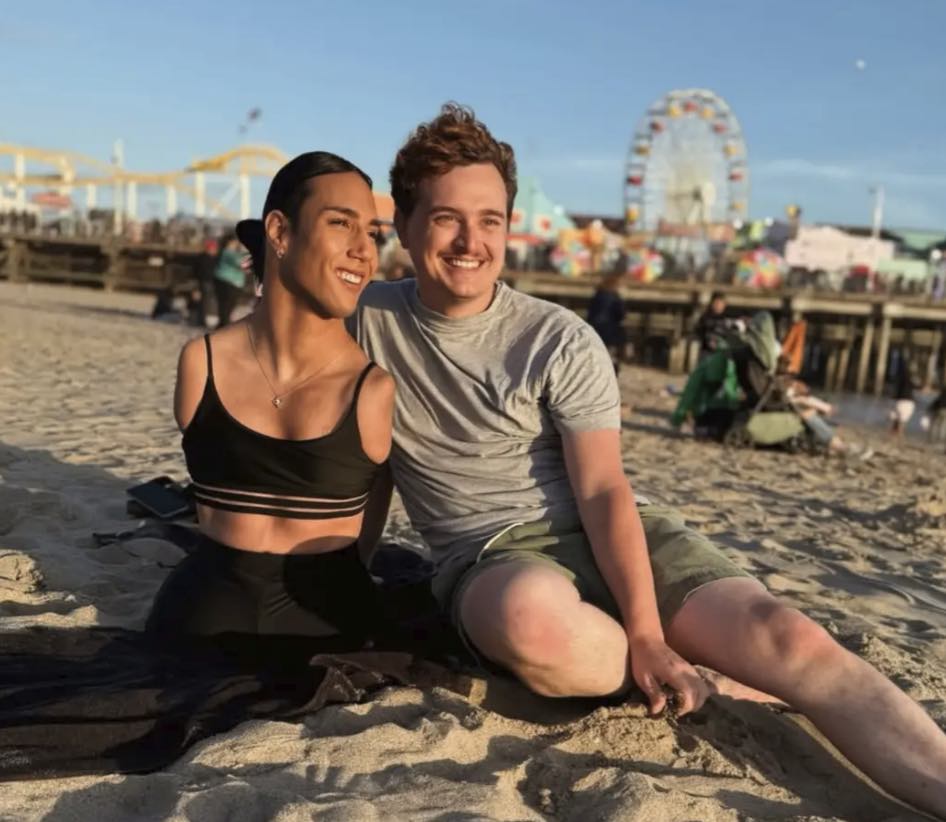
Briel was born in São Paulo, Brazil, without any limbs due to Hanhart Syndrome, a rare congenital condition characterized by malformed or absent arms and legs, among other physical features. Her parents had attempted an abortion too late, and she survived. Unable to financially support her, her mother put her up for adoption, and at just nine months old, a family in Utah adopted her into a household that would eventually include 14 children.
Hanhart Syndrome comes in five distinct types, with severity varying widely between individuals, and it is extraordinarily rare, with only approximately 30 medically confirmed cases reported between 1932 and 1991. Early theories suggested genetic causes, while a more recent hypothesis points to hemorrhagic lesions (small bleeds) during prenatal development disrupting blood flow to the developing limbs. For Briel, the result was complete absence of arms and legs, a presentation severe even by the condition’s already rare standards.
Growing up in Kaysville, Utah, the approach of Briel’s adoptive mother shaped everything. Her mother banned her siblings from doing things for her, insisting that Briel figure out how to do things herself, a decision that looked harsh to many people on the outside. Doctors eventually concluded there wasn’t really anywhere to attach prosthetics anyway, and Briel has said she believes she became more independent without them. That enforced self-reliance became the foundation she’d stand on for the rest of her life.
Her adoptive mother encouraged her to climb stairs on her own and take part in dance at school, and Briel went on to compete in dance competitions in high school, where she also began experimenting with makeup, on and off stage. That combination of movement and artistry would eventually build her entire public identity.
The Makeup Videos That Changed Everything
When the COVID-19 pandemic hit, a motivational speaking tour Briel had been preparing for was abruptly canceled, leaving her without the path she’d spent years building. So she picked up her phone. She decided to film a makeup video, just from the chest up, and it did really well.
What viewers saw was something they’d never quite encountered before. In her beauty videos, she applies makeup by using her mouth to apply color onto brushes, and uses her shoulder against table edges to apply and blend cosmetics onto her face. The technique was entirely her own. Nobody taught her. She invented it.
Viewers flooded her comments asking why she wasn’t using her hands, and that curiosity, sometimes blunt, sometimes unkind, turned into an audience. She now has 5.3 million followers on TikTok and 1.3 million on Instagram. Her content spans cooking, beauty, mukbang (a video format where creators eat on camera), her journey as a transgender woman, and day-to-day life with her husband Adam.
She has also visited the White House for a Pride celebration and sat in the front row at New York Fashion Week. She started her public career at 15 as a motivational speaker at events including medical conferences before pivoting to online platforms during the pandemic.
The Question Everyone Asks
The moment millions of people wanted to understand came when Briel publicly came out as transgender. She publicly came out in 2023, sharing the news online in a video that she described as a major turning point: “Once I finally posted it, it felt like I could actually breathe. Like, okay, now the world sees the real me.”
But what about Adam? The two had matched on Tinder in February 2020, gotten married in 2021, and were preparing to celebrate their fifth wedding anniversary in June 2026. He had proposed and married her before she publicly identified as a woman. So the question that every new viewer eventually lands on is: what did he say when she told him?
In a video addressing the question directly, Briel explained that she had told Adam a little before they got married that she was having feelings about her gender identity, but wasn’t sure if it was something she was comfortable fully exploring. Adam was the first person she told, and she waited a few months before making it public.
Adam himself was direct about where he stood. He said he “really couldn’t care less” about her transitioning, that he was happy she found who she is, and that he had seen a big difference in her happiness and confidence, but that ultimately, he fell in love with her, not what she was, just who she was.
It sounds like a simple statement. It isn’t. For many people, it answers something they’ve been quietly wondering about for years.
Read More: Couple marry again after husband with dementia proposes to wife he thought was his girlfriend
What the Adjustment Actually Looked Like
Briel and Adam have been candid that the transition period wasn’t seamless, even with full love and support on both sides. Adam described the challenge of managing pronouns across different social contexts, having to use one set of pronouns at home while reverting to another in public, because he was keeping track of who Briel had and hadn’t told yet. Just when he had the pronouns down, she changed her name and started wearing wigs. He described it as “a lot of learning,” but said it was a good journey.
That kind of honest accounting, acknowledging the confusion while standing firmly on the side of support, is part of what makes their content resonate so widely. They don’t package the story as effortless. Briel has acknowledged that their public relationship attracts a lot of scrutiny online, and that they try not to let the noise from haters dictate what their love looks like behind closed doors. Despite that, she says Adam has been a constant source of support.
Their first date, for what it’s worth, said a lot. They talked for about a week after matching on Tinder before meeting at a coffee shop set up for games. Briel, who has no hands, was immediately uncomfortable at the idea of touching shared game pieces in a public setting. Before she could say anything, Adam had already asked a staff member for a cup she could use to roll the dice. She noticed. She has never forgotten it.
From the Bathroom Floor to the Talk Show Couch
The relationship with online hate has been its own arc. When Briel first started posting, she let everything affect her. She’d be crying in the bathroom over comments. Over time, she realized she had to protect herself mentally, and her perspective shifted: “Thanks, you’re paying my bills.”
Speaking on the Tamron Hall Show in May 2026, she made clear she doesn’t let online hate bother her anymore, noting that people can say whatever they want behind a screen, but they rarely consider the effect it has on the person receiving it. The audience applauded. Her point was simple but sharp: she had done the internal work to get to a place where the cruelty no longer touched her the same way.
The only thing she has said she is physically not able to do is drive herself. She successfully runs a household and looks after two dogs while Adam is at work or studying. She is, in almost every practical sense, the independent person her mother insisted she become.
Being there for each other
Briel Adams-Wheatley’s story is not really about what she can’t do. It never was. It’s about how identity, physical, emotional, and personal, gets shaped by the people who either help you grow into yourself or hold you back from it. Her adoptive mother’s insistence on independence looked harsh. It became her greatest gift. Adam’s four-word answer to the question everyone asks, “just who she was,” sounds almost too simple. It isn’t.
There’s a broader lesson that applies beyond the specific circumstances of Briel’s life: the hardest parts of being fully seen tend to come before the relief does. She has said that even before marriage, she told Adam she was having feelings about her gender identity but wasn’t sure she was comfortable going into it fully, or suppressing it, and she needed to know if he was comfortable with it too. That conversation, she said, changed everything. Telling one person the truth before telling the world is often where real courage actually begins.
Whether what moves you about her story is the rare medical condition she was born with, the marriage that quietly became something other people needed to see, or simply a 26-year-old applying a full face of makeup with her shoulder and calling her haters her paying customers, Briel Adams-Wheatley is, above almost everything else, a person who decided to stop shrinking. That decision, made early and held firmly, is the thread that connects every chapter of her story.
AI Disclaimer: This article was created with the assistance of AI tools and reviewed by a human editor.
Read More: She Smelled Her Husband’s Illness Years Before Diagnosis, Now Scientists Are Studying Her