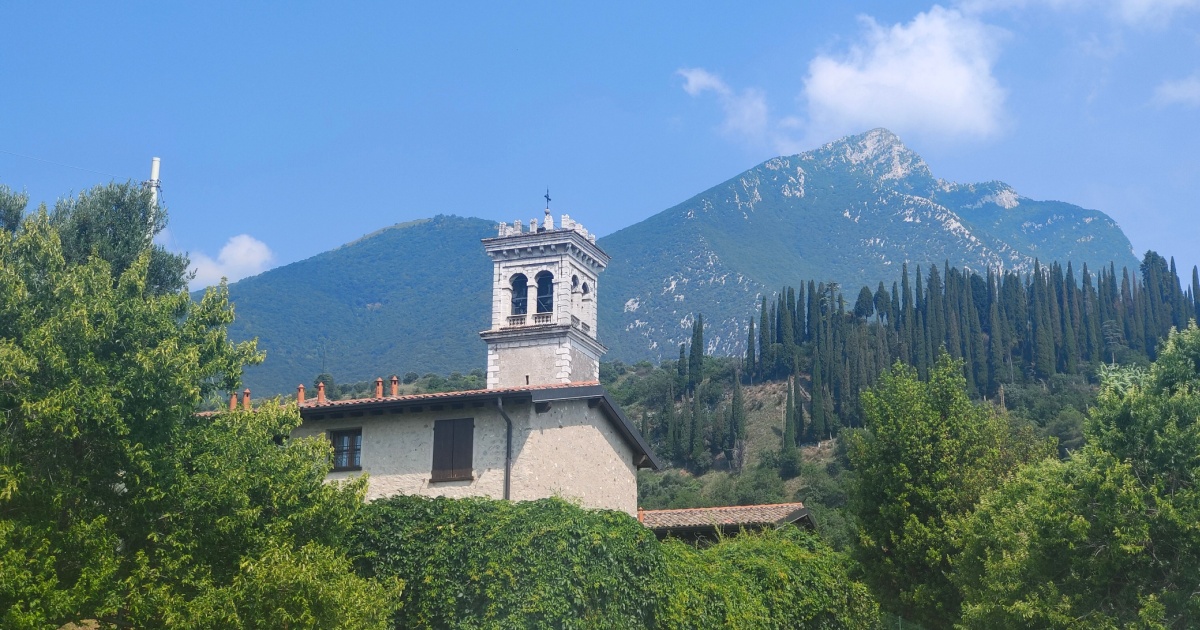

Imagine living a five-minute walk from a ski lift, surrounded by the kind of mountain scenery that stops people mid-sentence. Now imagine the local government handing you more than $100,000 to make it happen. That’s not a fantasy property listing. That’s a real move to Italy incentive that has drawn global headlines and, for thousands of people already dreaming of a different kind of life, raised a very simple question: what’s the catch?
The answer is more layered than most coverage suggests. There are real restrictions, real commitments, and real strings attached. But the program is also more substantial and better-funded than any of Italy’s previous attempts to coax newcomers into its shrinking rural towns. If you’ve been loosely watching Italy’s wave of relocation schemes with one eye, this one deserves your full attention.
The region behind it is Trentino, officially called the Autonomous Province of Trento. It sits in the northern Italian Alps, where the dramatic peaks of the Dolomites meet the Alps, and it looks nothing like the crumbling southern villages typically associated with Italy’s famous $1 house schemes. Think ski resorts, vineyards, thermal springs, and forests. The scenery is genuinely stunning. The problem, as with so much of rural Italy, is that the people who once lived there have largely left.
Why Italy Is Paying People to Move In
The numbers behind Italy’s depopulation crisis are hard to ignore. Italy’s resident population at January 1, 2025 stood at 58,934,000, a drop of 37,000 on the previous year, according to ISTAT, Italy’s national statistics agency. Projections from ISTAT forecast the population will drop further, declining to 54.7 million by 2050, and to 45.8 million by 2080, according to the median projection scenario – a fall confirmed in ISTAT’s 2025 population projections report. ISTAT attributes the long-term decline to persistently low birth rates, high life expectancy, and changing family structures, with Italy’s fertility rate sitting at just 1.2 children per woman, well below the 2.1 threshold needed for population replacement.
The rural fallout from those national trends is even sharper. An aging population combined with younger people moving to larger cities has left many small villages struggling to survive. Schools close when there are no children left to fill them. Grocery stores shutter. A town with an entirely elderly population can end up losing amenities like grocery stores and gas stations. At that point, a village doesn’t just decline. It starts to disappear.
Italy has tried various fixes over the years. What started with “one-euro” homes has expanded into a multifaceted approach designed to entice people to relocate to depopulated towns throughout Italy, including lower tax rates, renovation subsidies, and rent deductions. The Trentino program is the latest effort to counter that depopulation, falling under a 2024 national budget law that created a fund of €30 million to distribute to municipalities with fewer than 5,000 inhabitants that have been identified as suffering economically and socially because of depopulation. Trentino is taking a bigger swing than most.
What the Grant Actually Covers
The Province of Trento has launched a plan to fight depopulation in its mountain towns, offering grants of up to €100,000 for those who buy and renovate a home in one of 33 selected villages. The money is split into two parts. The grant consists of €80,000 toward renovation and €20,000 toward the cost of the property purchase.
The renovation portion isn’t a blank check. It covers 40 percent of eligible renovation costs for properties in historic centers and 35 percent for those located outside them, up to a maximum renovation budget of €200,000. That ceiling is intentional – the cap makes it impossible for someone to come in and build a massive villa that is not in keeping with the local village.
As for the purchase grant, there is no cap on the purchase price, but the €20,000 grant is designed to cover 35 to 40 percent of the buying cost. In practice, that means properties in these areas tend to be modestly priced, and the grant is designed to make a meaningful dent rather than cover the full cost.
The Autonomous Province of Trento has allocated €5 million for 2025 and a further €5 million for 2026, confirming that the program continues beyond its initial launch phase. With a total budget of €10 million over two years, the Province aims to incentivize both the purchase and renovation of existing homes, hoping to inject economic power into the construction industry and supply chain. The plan is to support around 100 new households.
The Villages on the List
Gorgeous mountain areas like Val di Non, where depopulation has exceeded 11 percent, are expected to make the list. In the equally picturesque Val di Sole, the villages of Rabbi and Vermiglio are all but certain to be included.
Vermiglio may sound familiar to film enthusiasts. The 2024 drama film of the same name, written and directed by Maura Delpero, premiered at the 81st Venice International Film Festival, where it won the Grand Jury Prize. The film was subsequently designated as Italy’s candidate for the Best International Feature Film category of the 2025 Academy Awards.
Maurizio Fugatti, president of Trento, said the initiative is an “experimental action” aimed at “strengthening social cohesion in the Trentino area.” The project is strictly meant for abandoned homes that are often eyesores or even dangerous to neighboring properties. These aren’t weekend retreats waiting for a fresh coat of paint. Many have sat empty for years, sometimes decades. The region wants them brought back to life by people who intend to actually live in them.
For those considering the lifestyle alongside the finances, Trentino offers a lot beyond its mountains. The region hosts some of the country’s most celebrated winter sports destinations, including ski resorts in Madonna di Campiglio, Val di Fiemme, and Val di Fassa. There are also thermal spring resorts for those who prefer their mountains without the snow, including Terme di Comano, whose springs have a history stretching back to 1826, and Levico Terme, known for its iron-rich thermal springs that have been used therapeutically since 1860.
If the idea of building a life in a dramatically different setting resonates with you, it’s worth knowing what others have already discovered. You can read about how other Italian regions are paying people to relocate for a broader picture of what’s on offer across the country.
Who Can Apply – and Who Cannot
This is where the program gets more specific, and where a few people will find themselves ruled out.
The scheme is open to private individuals who purchase and renovate a property in one of the eligible municipalities. While there is no explicit nationality restriction, applicants must meet the program’s conditions, which typically include committing to establish residency in the municipality or renting the property out long-term, completing renovation works within a set timeframe, and respecting spending and documentation requirements. Foreign buyers can apply, provided they are legally able to purchase property in Italy.
One eligibility rule often surprises people. People under 45 who already live in the region are prohibited from applying for the program. The whole point is to attract newcomers, not to subsidize existing residents’ renovation projects.
Applicants can apply for up to three housing units, as long as they are part of the same renovation project – for example, an entire building being restored. That said, each individual is limited to three real estate units, meaning no one can come in and buy up the whole village.
Applications are being accepted through scheduled application windows. The official program page from the Autonomous Province of Trento lists current submission periods and full eligibility criteria.
The Real Catch
The main condition is straightforward, but it’s a serious commitment. Anyone who signs up to the deal must live in the home or rent it to a long-term tenant for 10 years, or risk having to repay the money.
Properties must be renovated according to provincial guidelines, and beneficiaries must comply with strict timelines and usage conditions. Failure to meet the requirements can result in repayment of the grant.
The 10-year residency or rental requirement is the program’s backbone. It prevents the money from flowing to people who want a holiday villa they’ll visit twice a year. Beneficiaries can request contributions for a maximum of three properties in each village and must keep rental prices at a “moderate” rate. That closes the door on using the grant to set up an Airbnb.
What This Means for You
Trentino’s move to Italy incentives program is one of the most financially substantial rural relocation offers in Europe right now. With funding secured through 2026, the initiative remains one of Italy’s most substantial rural revitalization programs. The combination of a grant covering renovation plus purchase costs, a stunning natural setting, and world-class outdoor amenities makes it genuinely attractive for the right person.
But “right person” is doing a lot of work in that sentence. You need to be eligible to purchase property in Italy, prepared to commit a decade to living or long-term renting in a remote Alpine village, and ready to take on a renovation project. Real estate experts have warned that daily life in these areas can be more complex due to the distance from main services. That’s not a reason to dismiss the idea. It’s a reason to go in with clear eyes.
If you’ve been looking for a structured reason to actually make the move rather than just browse property listings on a Sunday afternoon, this program offers exactly that. Visit the official Province of Trento website to check current application windows, confirm which towns are participating, and review the full eligibility rules before making any financial decisions. The mountains aren’t going anywhere. But a grant pool of €10 million spread across 100 households does have a bottom.
AI Disclaimer: This article was created with the assistance of AI tools and reviewed by a human editor.
Editor’s Note: Lead image for representational purposes only.
Read More: Italy Opens Cabin Access to Larger Dogs, Transforming Pet Travel