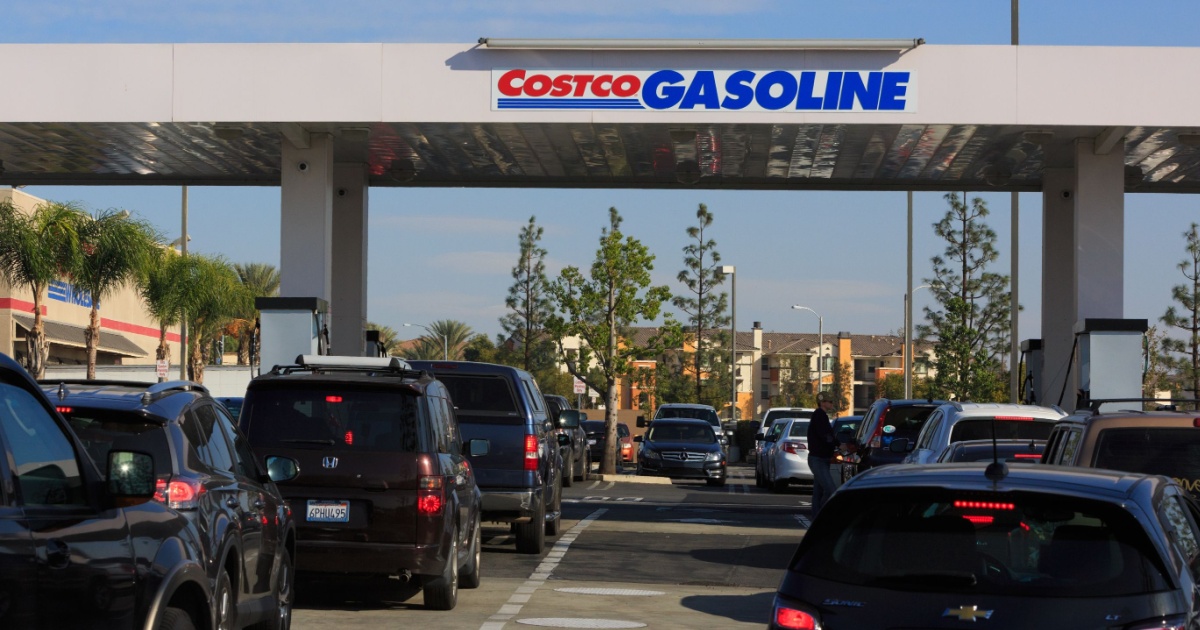

Something shifted at Costco gas stations in the spring of 2026, and it wasn’t subtle. Lines that used to snake through the parking lot on weekends started forming on Tuesday mornings. Tanker trucks pulled up to refill pumps not once a day, but multiple times. Members who had owned their Costco cards for years and never once pulled into a gas lane suddenly found themselves doing exactly that.
If you’ve driven past one of those stations recently and thought the crowd looked different from usual, you weren’t imagining it.
Panic buying gas prices have returned to America, and this time, they’re sending millions of drivers straight to the nearest Costco. The behavior has triggered something the retailer had never seen before in its 50-year history, and what it reveals about the way ordinary households are managing their money right now is worth paying close attention to.
Why Gas Prices Exploded in 2026
The trigger was geopolitical, but the pain landed squarely on American household budgets. When the U.S. and Israel launched joint military operations against Iran in late February 2026, the Strait of Hormuz, a narrow waterway that normally handles roughly a fifth of the world’s global oil supply, was effectively closed to traffic. Global oil markets reacted immediately.
The national average price for a gallon of gas hit $4.50 on May 12, 2026, a 43.6% jump compared to just one year earlier. Prices had already climbed steadily through the spring, rising from $2.91 per gallon in February to $3.64 in March, then surging to $4.10 in April before crossing the $4.50 mark in May.
For drivers on the coasts, those numbers look like a bargain. California was averaging $6.15 per gallon, Washington $5.77, and Hawaii $5.64. Fuel tracking service GasBuddy has forecast that prices will average $4.80 per gallon nationally across the summer travel season, from Memorial Day to Labor Day, with the possibility of all-time record highs if the Strait remains closed for much of the season.
The cost shock has been swift and broadly felt. Gas prices rose by double digits in every single state between May 2025 and May 2026, with some states like Ohio seeing increases of more than 57%. For many families, this hasn’t been an abstract headline – it has been a visceral, weekly budget disruption. A nationwide CNBC survey of 1,000 Americans found nearly 80% had already changed their spending habits in response to higher gas prices. About 60% cut back on dining and entertainment, more than 50% planned to travel less, and around 40% were spending less on essential items like groceries and medical care.
The Costco Gas Rush: Records Nobody Expected
Against that backdrop, something remarkable happened inside Costco’s quarterly numbers. The company reported “record-breaking volumes” of gas in its fiscal third quarter, with the final five weeks of the quarter – ending May 10 – becoming Costco’s top five highest-volume weeks for gasoline ever.
Each individual month of the quarter had set a successive all-time company volume record. The demand was so extreme that Costco’s logistics teams had to scramble. CEO Ron Vachris said on the earnings call that managing the unprecedented demand “requires multiple daily gas deliveries to many locations.”
What’s particularly striking is who was showing up. Vachris noted that “the high consumer price sensitivity, which fueled these record volumes, also drove many members to use our gas stations for the very first time in the third quarter.” These weren’t habitual Costco gas buyers stocking up early – they were brand-new converts, people who had owned a membership for years without ever pulling into the fuel lane.
The math for those first-timers is pretty straightforward. Costco’s gas prices trend around 10 to 30 cents cheaper per gallon than the competition, and the company’s strategy is to keep prices low by driving volume rather than maximizing margin per transaction. When fuel is at $4.50 nationally, a 30-cent discount adds up fast, especially for households filling up multiple vehicles every week.
How Costco Actually Makes This Work
Here’s the part that surprises most people: Costco doesn’t make much money on gas itself. The retailer actually earns only a few cents per gallon on fuel – substantially less than the 25 to 35 cents that most independent gas stations typically mark up. Unlike traditional gas stations that rely on fuel sales and a convenience store for profit, Costco can lean on its massive scale and membership model – last year, membership fees accounted for roughly two-thirds of the company’s profit.
Access to Costco’s gas stations requires an annual membership, which costs $65. That fee structure is what allows the company to undercut competitors at the pump without bleeding money. Gas is essentially a service designed to make the membership worth paying for.
According to U.S. News, Costco operates 747 gas stations, which together brought in 10% of its overall sales in 2025. The stations aren’t just revenue contributors in their own right – they’re traffic drivers for the warehouses. About half of customers who fill up at a Costco gas station end up walking into the warehouse. Vachris told analysts, “We believe this will drive even greater loyalty with these members in the future, as members who use our gas stations typically spend more with us in the warehouse.”
This model explains why Costco extended other loss-leader deals alongside its cheap fuel. Among the company’s best-known bargains is its rotisserie chicken, priced at $4.99, well below what most grocery chains charge. Costco extended discounts on meat and eggs to members as well, doubling down on the strategy of using affordably priced staples to increase foot traffic and build loyalty among budget-conscious shoppers. For more on how the broader inflation squeeze is hitting household budgets, our breakdown of rising grocery prices in 2026 covers the full picture.
A Bigger Pump Picture
The panic-buying behavior showing up at Costco mirrors what’s happening at gas stations across the country, just in a more concentrated form. A growing number of customers are buying just enough to top off their tanks, anxious about what prices might look like tomorrow. Ship traffic through the Strait of Hormuz has largely stalled due to the Iran war, driving up global oil prices and creating a backdrop of sustained uncertainty.
According to Fortune, the Conference Board’s consumer confidence index slipped in May 2026, following a separate University of Michigan sentiment gauge that fell to a record low. That same Fortune report found that inflation climbed to 3.8% in April, its highest reading in three years and well above the Federal Reserve’s 2% target.
Fuel costs are rippling through household budgets in ways that don’t stop at the pump. The same Fortune data shows that two-thirds of Americans are cutting back spending in response to higher prices, with most reducing purchases and delaying larger ones.
What Costco’s Numbers Say About the Rest of the Economy
The gas station lines are just one thread in a larger story. In its fiscal third quarter, Costco reported net sales of $69.15 billion, up 11.6% from the same period last year. Paid memberships grew 4.1% to reach 82.9 million, with total cardholders reaching 148.5 million.
Digital sales were up nearly 21% for the quarter, a number that points to members becoming more engaged with the Costco ecosystem overall, not just at the pump. All of this comes as consumer sentiment has hit record lows amid inflation concerns, with Vachris saying Costco’s approach of offering “quality goods and services at the lowest possible price” is resonating with consumers.
The membership fee line itself reflects that strength. Membership fees came in at $1.37 billion for the quarter, slightly above what Wall Street had expected.
What Costco’s performance shows, in numbers that are hard to argue with, is that when financial pressure squeezes households, people don’t stop spending – they redirect. They become intentional. They seek out the places that offer genuine savings rather than the perception of them.
What This All Means
The surge in panic buying gas prices has a practical edge that’s worth understanding, because it affects how much you actually save. If you already have a Costco membership and haven’t been using the gas stations, the current price gap between Costco fuel and local competitors makes it worth the detour. Analysts have noted that long wait times and longer drives can eat into savings, so route and timing matter. Heading to a Costco pump during off-peak hours on a weekday will almost always be a better experience than a Saturday afternoon visit right now.
If you don’t have a membership, the math depends on how much you drive. According to Kiplinger, a Costco Gold member needs to fuel somewhere between 260 and 1,300 gallons per year just to break even on the $65 membership fee from gas savings alone – and that’s before any savings on groceries, household goods, or pharmacy items. For a two-car household commuting regularly, that threshold is usually crossed quickly.
More broadly, the behavior showing up at Costco is a signal that Americans are adapting to a sustained period of elevated fuel costs, not a temporary spike. More than 50% of Americans surveyed by CNBC believe the increase in gas prices will last six months or longer. Planning around that reality – consolidating errands, choosing fuel stops strategically, and reducing discretionary spending in other areas – is what household resilience looks like when the macroeconomic forces driving prices are largely outside your control. The people standing in those Costco lines aren’t panicking, exactly. They’re problem-solving.
Disclaimer: This information is not intended to be a substitute for professional financial advice, investment advice, tax advice, or legal advice, and is provided for informational purposes only. Always seek the guidance of a qualified financial advisor, accountant, or other licensed professional regarding your personal financial situation or investment decisions. Do not make financial, investment, or tax decisions based solely on information presented here. Past performance is not indicative of future results, and all investments carry risk, including the potential loss of principal.
AI Disclaimer: This article was created with the assistance of AI tools and reviewed by a human editor.
Read More: Walmart, Amazon, Target, Kroger: Who’s Warning You About Higher Prices in 2026