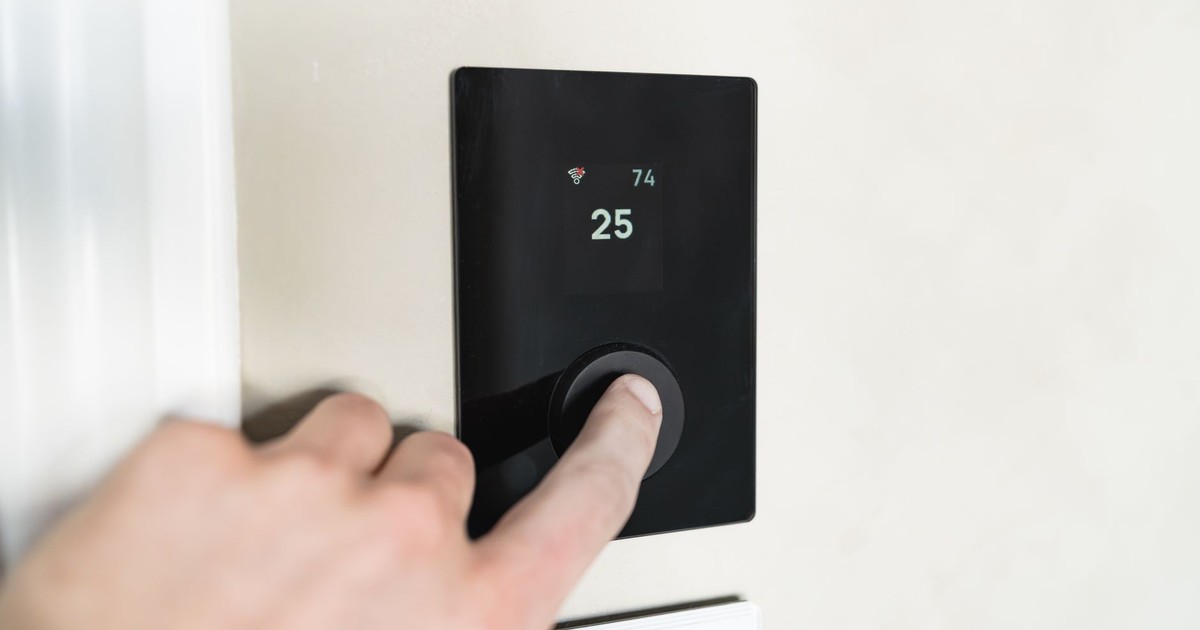

Turning your AC down to 68°F on a sweltering afternoon feels like the obvious move. It also happens to be one of the most counterproductive things you can do to your home cooling system during a heat wave. The colder you demand your AC to run, the harder it fights just to maintain that gap between the indoor air and the brutal temperature outside, and the more likely it is to run continuously without ever actually winning. The number that HVAC professionals actually recommend is much higher than most homeowners expect.
The real goal during a heat wave isn’t to make your home as cold as possible. It’s to keep the AC running efficiently enough that it can maintain any reasonable indoor temperature without overtaxing the system or sending your electricity bill into shock. Nearly half of the energy used in a typical American home goes to heating and cooling – and during a heat wave, that share climbs significantly. Getting the thermostat number right, and pairing it with a few supporting habits, is the difference between a system that keeps up and one that gives out.
The stakes go beyond comfort and cost. More than 700 people die from extreme heat every year in the United States, and the CDC identifies older adults, young children, and people with chronic medical conditions as being at especially high risk for heat-related illness. Globally, heat-related mortality has risen dramatically, with the World Meteorological Organization reporting that annual deaths climbed from roughly 335,000 in the 1990s to 546,000 by the early 2020s – an increase of more than 60%. Your air conditioner isn’t just an appliance. During a serious heat event, it’s infrastructure.
Here’s what HVAC professionals actually recommend, and why each piece of advice works the way it does.
1. Set Your Thermostat to 75 – 78°F When You’re Home
The U.S. Department of Energy recommends keeping your home warmer than normal during summer and setting the thermostat as high as comfortable when you’re home – with archived guidance specifically citing 75 to 78°F as the target daytime range. That window might feel warmer than what many people are used to, but it’s where the system can run efficiently without constantly chasing a target that’s unreachable in extreme heat.
The math on that range is meaningful. For every degree you lower the thermostat below the optimal range, your air conditioner uses more energy to compensate – according to the U.S. Department of Energy, the smaller the difference between indoor and outdoor temperatures, the lower your overall cooling bill will be. Setting your thermostat at 78°F instead of 72°F could reduce your cooling energy consumption by a meaningful margin over a multi-week heat wave.
The 75 – 78°F window also reflects how air conditioners are engineered to perform. Most residential systems are designed to maintain indoor temperatures roughly 20°F cooler than the outdoor temperature. When a heat wave pushes outdoor temps past 100°F, demanding 68°F or 70°F indoors forces the unit into a deficit it can’t recover from. Keeping the target realistic protects the equipment and keeps the air moving.
2. Raise the Thermostat 7°F When You Leave the House
Leaving a house empty and fully cooled is one of the most common sources of unnecessary energy waste during summer. ENERGY STAR, the EPA’s government-backed energy efficiency program, recommends increasing the AC temperature setting by 7°F when homes are unoccupied. If you normally keep the home at 76°F, setting the thermostat to 83°F while you’re at work is the target.
The logic is straightforward. Your home retains cool air reasonably well when it’s unoccupied, especially if blinds are closed and doors are sealed. A programmed setback to a higher temperature doesn’t let the house get genuinely hot – it simply reduces the gap between indoor and outdoor air, which cuts the amount of work the compressor has to do. When you return home, a smart or programmable thermostat can begin cooling 30 minutes before your arrival.
Turning the AC completely off during a heat wave is the common mistake this tip exists to prevent. A house that climbs to 95°F indoors takes far more energy to bring back down to a comfortable level than one that was held at 83°F. The 7-degree setback is calibrated to capture meaningful savings without creating a recovery problem. According to the U.S. Department of Energy, you can save as much as 10% a year on heating and cooling by turning your thermostat back 7 – 10°F for 8 hours a day – which means a consistent 7-degree setback during work hours can represent significant daily cooling savings.
3. Adjust Upward 4°F While You Sleep

Sleep is often where people over-cool. The instinct to drop the thermostat before bed is understandable, but the body actually needs a slightly cooler environment to fall asleep – and most people cool off naturally once they’re horizontal and still. ENERGY STAR recommends a 4°F upward adjustment during sleep hours. If you sleep comfortably at 76°F, setting the thermostat to 80°F while asleep captures savings without waking you up at 3am drenched in sweat.
A ceiling fan set to run counterclockwise in summer (pushing air straight down) can make a room feel up to 4 degrees cooler without changing the actual air temperature, according to the U.S. Department of Energy. That means an effective 80°F can feel like 76°F or 77°F to a sleeping body – a meaningful way to extend the thermostat setback without sacrificing comfort. The fan uses a fraction of the electricity that the AC compressor does, so the combination delivers real savings.
The 4-degree nighttime rule is also easier to implement with a programmable or smart thermostat, which can be set to return to your daytime preference 30 to 45 minutes before you wake up. If you’re still using a manual thermostat, a simple written reminder works – the habit takes about two weeks to stick.
4. Keep Up With AC Filter Replacement
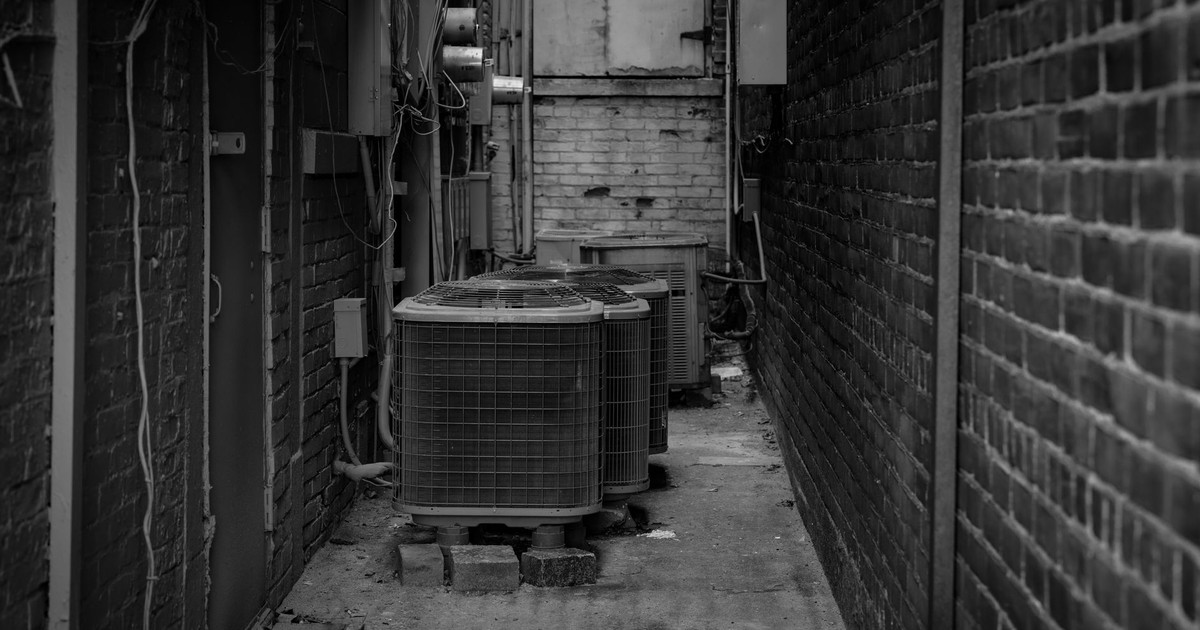
A dirty filter is one of the most reliable ways to make a heat wave worse, and one of the cheapest problems to fix before it starts. A dirty filter slows down airflow and forces the system to work harder – and the U.S. Department of Energy notes that replacing a clogged filter with a clean one can reduce air conditioner energy use by 5 to 15%.
Standard 1-inch HVAC filters need replacement every 30 to 90 days, according to Xtreme Air Services’ 2026 HVAC maintenance guide. During a heat wave, when the system is running near-continuously, lean toward the shorter end of that window. A filter that’s been in place for 60 days in October and one that’s been in place for 60 days during a July heat wave are not in the same condition. Run time accelerates clogging.
Replacing a filter costs between $5 and $30 depending on size and quality. A system that struggles through clogged airflow for weeks runs hotter, works harder, and fails sooner. During a heat wave is exactly when you can’t afford a system failure – and a fresh filter is the lowest-effort preventive measure available to any homeowner.
5. Block Heat Through Your Windows
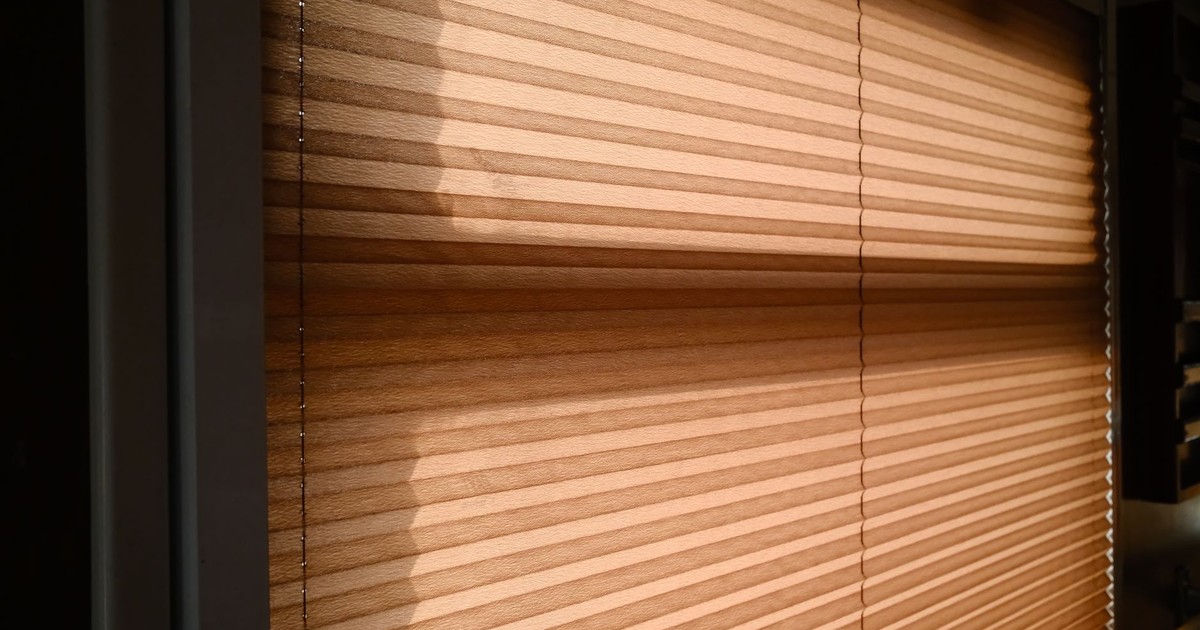
Windows are where a significant amount of a home’s battle against summer heat is lost. Heat gain and loss through windows accounts for roughly 25 to 30% of residential heating and cooling energy use, according to the U.S. Department of Energy. On a 100°F day with full sun hitting west-facing glass, that’s an enormous amount of heat being poured into a room the AC is already working to cool.
Closing shades or drapes keeps homes cooler during the day, a straightforward step confirmed by AOL’s 2026 AC guide. The best approach is to close blinds on whichever side of the house faces the sun – south- and west-facing windows in the afternoon bear the heaviest solar load. Blackout curtains perform significantly better than standard blinds, and cellular shades (honeycomb-shaped window coverings designed to trap air) add a layer of insulation on top of light blocking.
For homeowners who want a longer-term solution, window film is worth considering. It’s an installation that costs a few hundred dollars per window but pays back in lower cooling bills over multiple summers. During an active heat wave, the immediate answer is simpler: close the blinds by 9am and don’t open them until after 6pm.
6. Stop Running Fans When Indoor Temps Cross 90°F
Fans are an efficient cooling tool – but they have a temperature ceiling that most people don’t know about. The CDC warns that in temperatures above 90°F, a fan can actually increase body temperature rather than lower it, a finding from the CDC’s heat health resource page. The mechanism is straightforward: fans cool by evaporating sweat off the skin. When air temperature exceeds body temperature, a fan moving hot air across the skin actually accelerates heat transfer into the body rather than away from it.
This is one of the more counterintuitive facts in heat safety. People in homes without air conditioning sometimes rely on fans as their only cooling option during a heat wave – and on the hottest days, that strategy can make things worse. If indoor temperatures climb above 90°F, the priority shifts from fans to finding a cooled space. Cooling centers are designated air-conditioned locations that provide safety during extreme heat events, and the CDC’s ATSDR maintains resources for finding them. Most municipalities open cooling centers at libraries, community centers, and recreation facilities during declared heat emergencies.
Below 90°F, fans remain an effective complement to AC – not a replacement, but a way to feel comfortable at a higher thermostat setting. A ceiling fan running while the thermostat is set to 78°F can feel equivalent to setting the thermostat at 74°F, without the energy cost that comes with the lower setpoint.
Read More: 12 Tips to Keep Your Air Conditioner Running Efficiently Without Breaking the Bank
7. Avoid Heat-Generating Appliances During Peak Hours

The oven is the most obvious culprit, but the dryer, dishwasher, and even a desktop computer running at full load all contribute heat to a space that’s already struggling to stay cool. Running the oven on a 100°F afternoon can raise kitchen temperature by 10°F or more – and since the AC has to remove that heat to maintain the thermostat setpoint, every degree of added indoor heat translates directly into more compressor run time.
The practical fix is timing. Running the dishwasher overnight instead of after dinner, air-drying dishes when possible, and shifting laundry to early morning all reduce heat load during the afternoon hours when outdoor temperatures peak and the AC is working hardest. Swapping the oven for a slow cooker, air fryer, or microwave during a heat wave is a meaningful change. Florida Power & Light energy expert Bianca Soriano specifically recommends swapping traditional ovens for smaller appliances like air fryers or microwaves during peak heat, noting that it prevents throwing unnecessary ambient heat into the kitchen, as reported by Palm Beach Daily News.
Lighting generates heat too – incandescent bulbs especially. If your home still has incandescent or halogen fixtures, a heat wave is a good moment to appreciate that switching to LEDs reduces heat output by up to 80% per bulb. It’s a marginal contributor, but every incremental reduction in indoor heat generation adds up when the AC is running for 14 hours straight.
Read More: These States Are Most Likely to See Blackouts This July – Are You Ready?
What to Do Now
The single most actionable number from all of this is 78°F. Set the thermostat there when you’re home and awake, raise it to 85°F when you leave, and raise it again to 82°F when you sleep. That three-number system – aligned with U.S. Department of Energy and ENERGY STAR guidance – keeps the AC running efficiently without abandoning comfort. Pair it with a clean filter replaced within the last 30 days, blinds closed by mid-morning, and appliances shifted to off-peak hours, and the system can hold up through a multi-week heat event without burning out.
Heat stroke, the most serious heat-related illness, can cause permanent disability or death if not treated – and the CDC’s National Institute for Occupational Safety and Health reports that body temperature can rise to 106°F or higher within 10 to 15 minutes of onset. Getting the AC temperature right during a heat wave is not just about the electricity bill. For elderly people, for young children, and for anyone with a heart or respiratory condition, a functioning and well-managed cooling system is a direct safety measure. Find out where your nearest cooling center is before you need it – and check on neighbors who may not have working AC.
AI Disclaimer: This article was created with the assistance of AI tools and reviewed by a human editor.
Read More: Why Your Car’s Air Recirculation Button Matters More Than You Think