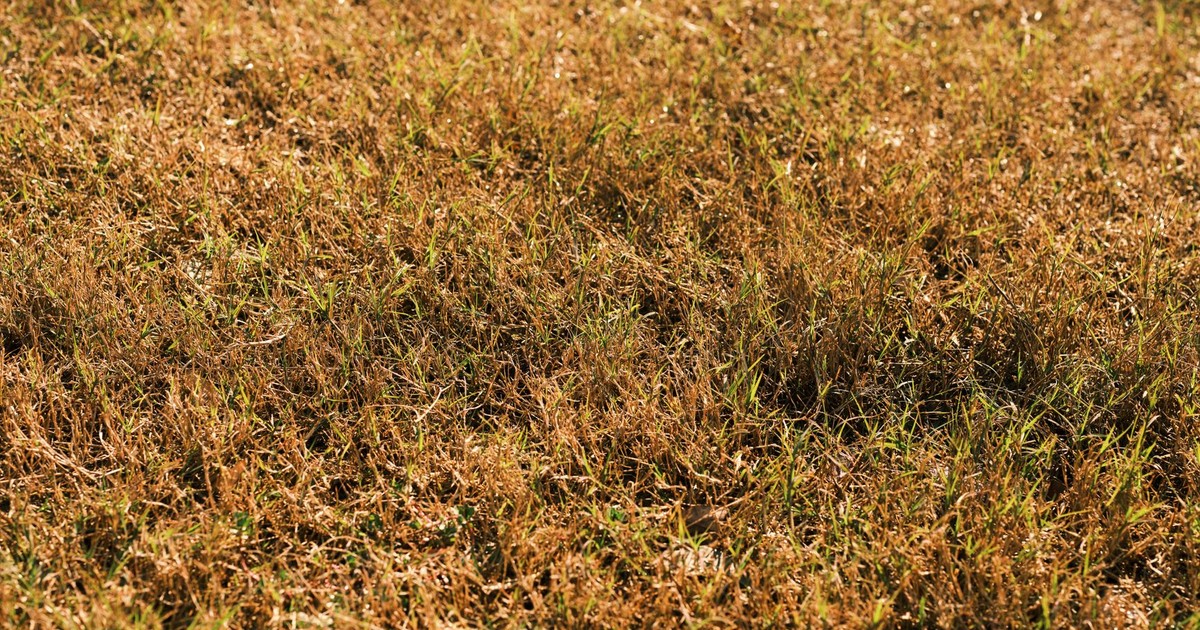

Grass that turns brown right after you’ve watered it is one of the more baffling things a lawn can do. Even more confusing: watering more often sometimes makes it worse. The reason comes down to something most people never check – the conditions just below the surface, where roots either thrive or quietly die.
Browning and dying aren’t the same thing. Cool-season grasses like fescue and Kentucky bluegrass, as well as warm-season varieties like Bermuda and Zoysia, can go brown as a survival mechanism rather than a sign of permanent damage. Dormancy is the lawn’s way of rationing energy during temperature extremes. But when it’s mid-summer, you’re running the sprinklers faithfully, and the grass still looks scorched, something else is going on. The most common brown lawn causes have nothing to do with drought – and the fixes are specific enough that treating the wrong one will make the problem worse.
Understanding what’s actually happening below those dead-looking patches starts with the most counterintuitive possibility of all: that you might be giving your lawn too much of the one thing you think it needs.
1. You’re Watering Too Much, Not Too Little
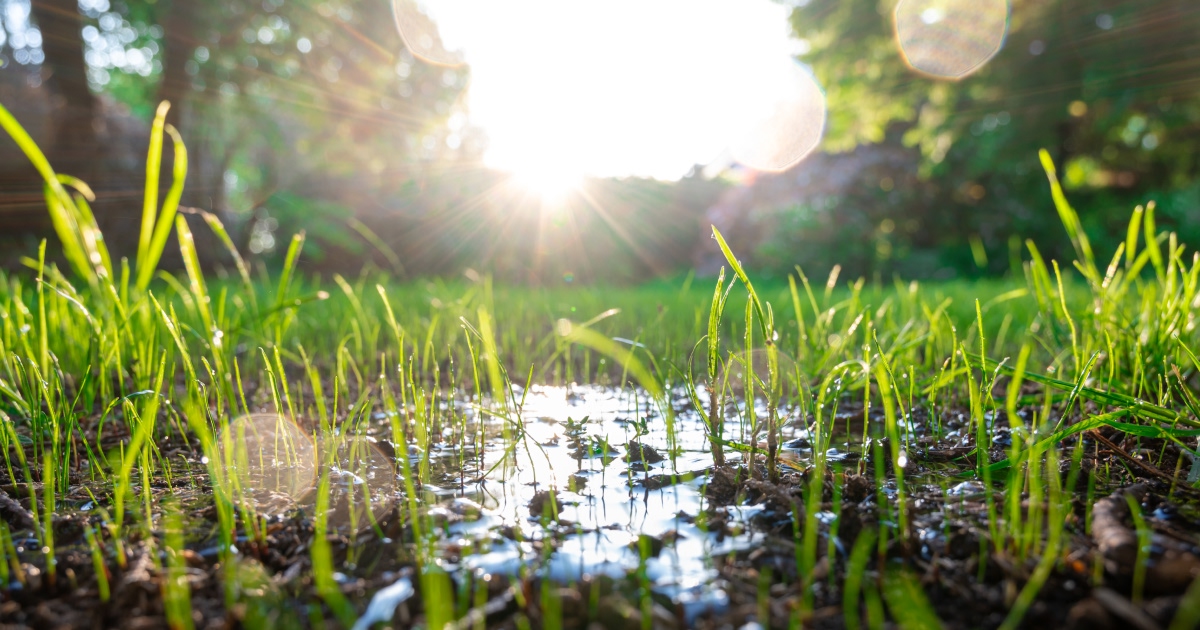
Overwatering is one of the most reliable ways to produce a brown, struggling lawn. Constantly saturated soil prevents roots from accessing oxygen. As roots weaken, the grass struggles to absorb nutrients and water efficiently – producing the same visual symptoms as drought stress.
Overwatering keeps grass blades damp, and steady moisture is exactly what the wrong organisms need to thrive. A waterlogged root system looks, from the surface, almost identical to drought damage: the grass goes yellow or brown, blades droop, and the lawn stops bouncing back under foot traffic. Many homeowners respond by watering even more, which deepens the damage.
Turfgrass generally benefits from about an inch of water per week during its growing season. Spreading that over two to three sessions a week rather than daily shallow watering pushes moisture deep enough for roots to follow it downward. The practical test: push a standard screwdriver into the soil. If it slides in easily, the soil has enough moisture and drought likely isn’t the issue. If it sinks like mud, you’re overwatering.
2. Brown Patch Fungus Is Already in Your Soil
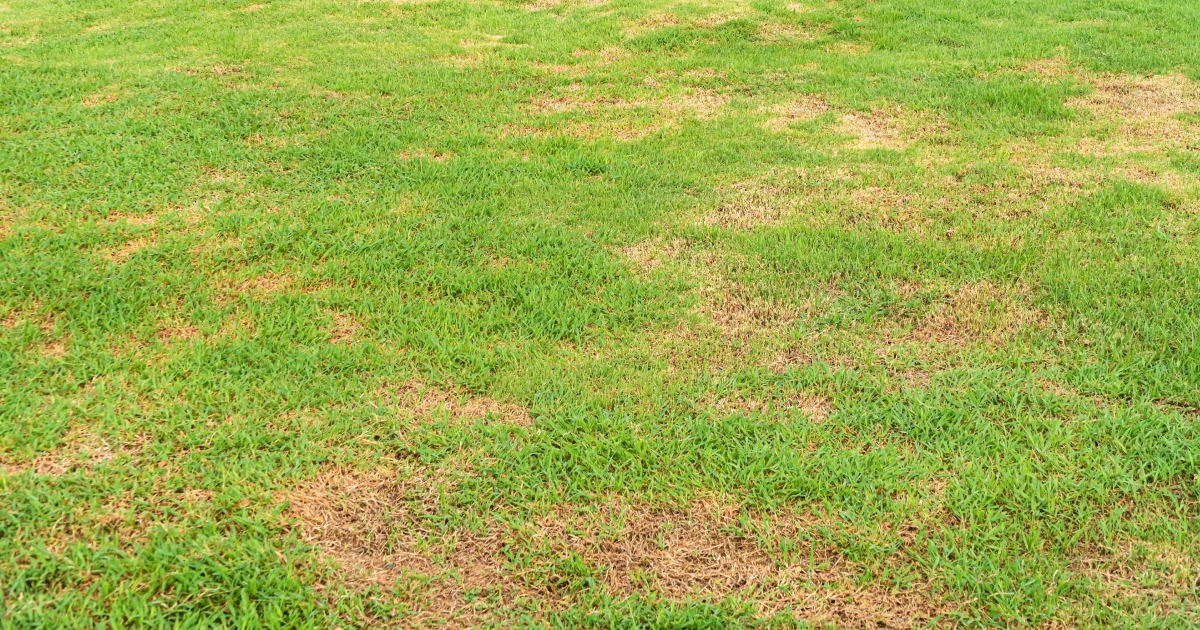
Brown patch is one of the most common brown lawn causes, and it strikes hardest when conditions look ideal for grass. The fungus becomes active when air temperatures rise above 80°F and nighttime temperatures stay in the 70s, with high humidity. That describes a typical humid summer night after an evening watering session.
Brown patch is a major summer foliar disease of home lawns, caused by the fungus Rhizoctonia solani, according to Penn State Extension. The causal fungus survives from year to year in the form of resting structures within infected grass tissue, plant debris, or in the soil, activating when given moisture and warmth.
Two practices reliably reduce risk. First, water early in the morning so grass blades dry by midday. Second, watch your fertilizer. Disease severity can increase when soil pH is below 6.0, according to Clemson Extension, and excessive nitrogen during warm, humid stretches produces the lush, tender growth that Rhizoctonia solani exploits most aggressively.
3. Soil Compaction Is Blocking Water at the Surface
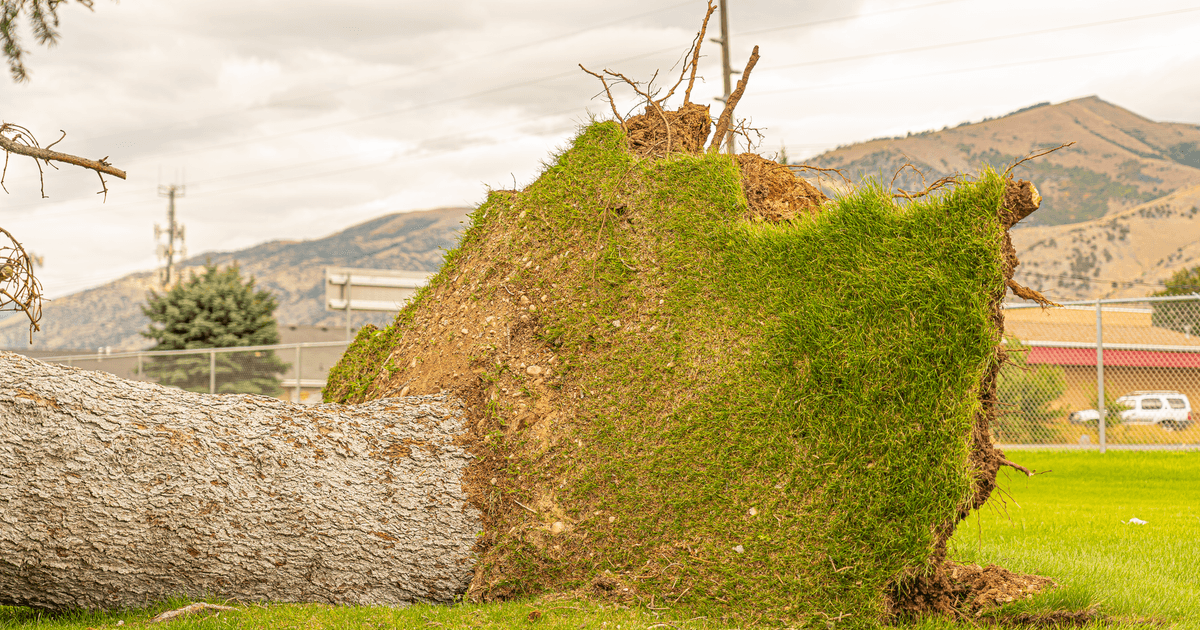
Heavy foot traffic, clay-heavy soil, and repeated mowing with a full lawn tractor can all compress soil into a dense barrier that water can’t penetrate. When that happens, moisture pools on the surface or runs off rather than soaking down to where roots need it – creating drought-like browning even when the sprinkler runs on schedule.
The fix is core aeration, a process where a machine removes small plugs of soil so that air and water can reach the root zone directly. Clemson Extension recommends core aeration specifically to correct soil compaction that builds up in home lawns. For most yards, aerating once a year during the growing season keeps compaction from accumulating. High-traffic areas – around driveways, play zones, and garden paths – benefit from twice-yearly treatment. After aerating, leave the soil plugs on the surface. They break down over a few weeks and feed the lawn as they decompose.
4. Thatch Has Built Up Between the Grass and the Soil
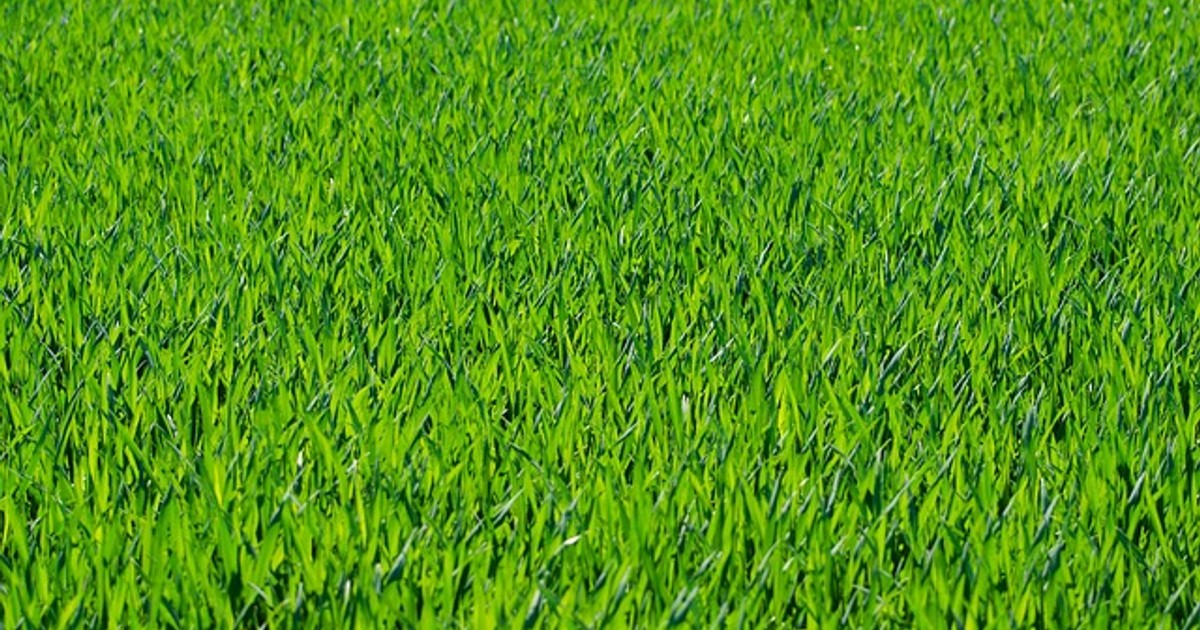
Thatch is the spongy layer of dead grass stems, roots, and organic debris sitting just above the soil surface. A thin layer is harmless. A shallow thatch layer up to half an inch thick actually benefits the lawn by helping to retain moisture and stabilizing soil temperature, according to Clemson Extension. Once the thatch layer exceeds half an inch in thickness, it becomes a problem that warrants dethatching.
There’s a secondary effect that makes things worse. When thick thatch dries out in hot weather, it becomes hydrophobic – meaning it actively resists wetting rather than absorbing moisture. Water from a sprinkler hits the thatch surface and rolls off the sides, creating dry spots even when the rest of the lawn gets adequate irrigation. Dethatching with a mechanical rake or a power dethatcher in early fall or spring removes this barrier and restores direct contact between water and the root zone.
5. Soil pH Is Preventing Nutrient Absorption

A lawn can be fertilized on schedule, watered correctly, and still turn brown if the soil pH is off. Soil pH is a measure of acidity or alkalinity on a scale of 1 to 14, and the number controls whether grass can access nutrients already present in the soil. Even if you apply fertilizer on schedule, your grass cannot absorb nitrogen, phosphorus, or potassium properly when the pH falls outside the ideal range.
For turfgrass specifically, the optimal pH range runs from approximately 6.0 to 7.0 – within this range, the major nutrients (nitrogen, phosphorus, and potassium) and most micronutrients exist primarily as available ions. Acidic soil locks up nutrients, leaving grass starved even after fertilizing, and promotes moss and weed growth that crowds out healthy turf. A basic soil test kit from a garden center costs under $20 and gives you pH and basic nutrient readings in about 10 minutes. If pH is below 6.0, applying agricultural lime raises it gradually. If it’s above 7.5, sulfur-based amendments bring it down.
6. Insects Are Feeding on Your Roots
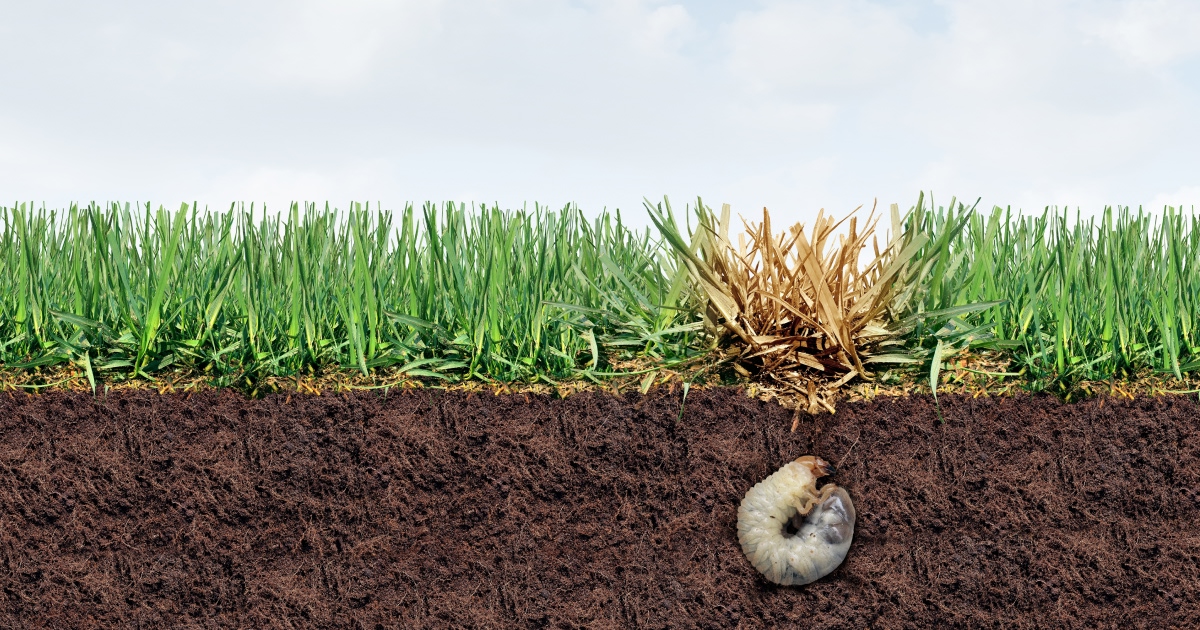
Two insects are responsible for the majority of pest-related brown lawn causes: grubs and chinch bugs. They operate differently but produce similar damage patterns.
White grubs are immature scarab beetles that injure turfgrasses by feeding on the roots. Japanese beetle larvae feed on the roots of grasses in a manner similar to other white grubs; these injuries produce root pruning that limits the plant’s ability to acquire water. Heavy infestations can destroy grass roots, causing the affected area to become spongy and allowing the sod to be rolled back like a piece of carpet. To check for grubs, pull back a section of affected turf and examine the top two inches of soil. Healthy turfgrass can typically tolerate up to 10 grubs per square foot, according to the University of Minnesota Extension, so finding three or more concentrated in one spot is worth investigating further.
Chinch bugs work above ground. Chinch bugs damage your lawn by inserting their sharp mouthparts into grass blades and sucking out the nutrients; as they feed, they introduce a toxin that blocks the plant’s root system from absorbing water – and because their feeding methods dehydrate grass, the initial damage closely mimics drought effects. Chinch bugs are most damaging in open, sunny areas, which is why infestations typically begin near driveways or sidewalks where heat radiates and sun exposure is highest. To check, press a metal can with both ends removed into the edge of a brown patch, fill it with water, and watch for small black-and-white insects floating to the surface within a few minutes.
7. The Sun Is Burning Your Grass Directly
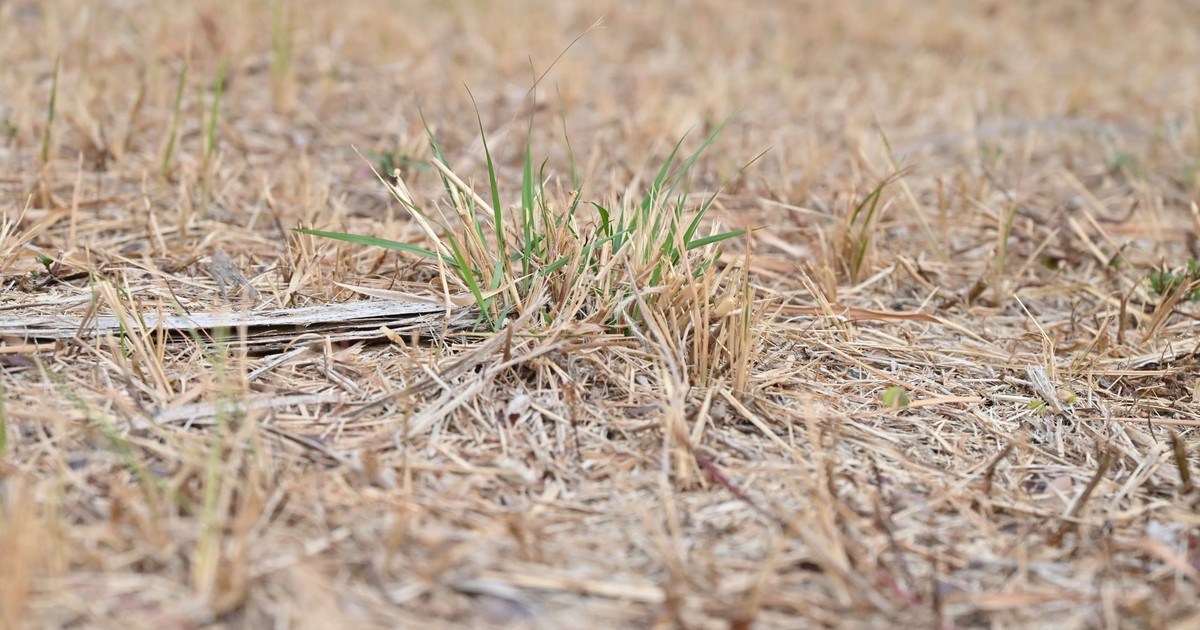
Direct, intense afternoon sun can scorch grass blades – a phenomenon often called heat-burn or sun-scorching. It tends to appear in open, south-facing sections of the lawn that receive uninterrupted afternoon sun during peak summer heat, often alongside pavement or reflective surfaces that amplify temperatures further.
Heat stress worsens significantly when grass is cut too short. Grass mowed below two inches has less blade surface to shade the soil, which causes the ground to dry faster and heat up more during the day. Mowing the lawn lower than the optimum height can increase disease severity; Clemson Extension recommends not mowing fescue lawns shorter than 2.5 inches or higher than 3.5 inches. Raising your mower deck to leave most cool-season grasses at 3 to 4 inches provides natural shade for the soil surface, slows moisture evaporation, and gives individual blades more capacity to withstand temperature extremes. Watering in the early morning rather than during peak afternoon hours also reduces evaporative loss and lets grass enter hot weather with a full supply of moisture at root level.
Read More: Why Your Garden Soil Matters More Than You Think
What This Means for Your Lawn
Identifying the specific brown lawn cause matters more than applying a generic fix. The screwdriver test takes 30 seconds and tells you whether watering is the real issue. A soil test tells you whether pH or nutrients are the problem. Peeling back a corner of damaged turf tells you whether grubs have been working underneath. Each of these costs almost nothing and can rule out the most common causes in a few minutes.
Deep, infrequent watering in the early morning addresses more of these problems simultaneously than any other single habit. It pushes roots deeper into the soil, builds drought resistance, reduces the surface moisture that fungal diseases need, and prevents the shallow root systems that make compaction and thatch damage worse. Most lawns need no more than two or three watering sessions per week during the growing season, totaling one to one-and-a-half inches, according to the University of Missouri Extension.
If browning persists after correcting watering habits, work through the remaining causes systematically: thatch thickness, soil compaction, soil pH, then pest presence. Each has a straightforward diagnostic test and a targeted fix. Adding more water to a problem rooted in compaction, fungi, or insects won’t help – and in many cases, it will make things measurably worse.
AI Disclaimer: This article was created with the assistance of AI tools and reviewed by a human editor.
Read More: Coffee Grounds for Garden Pests: 6 Science-Backed Uses