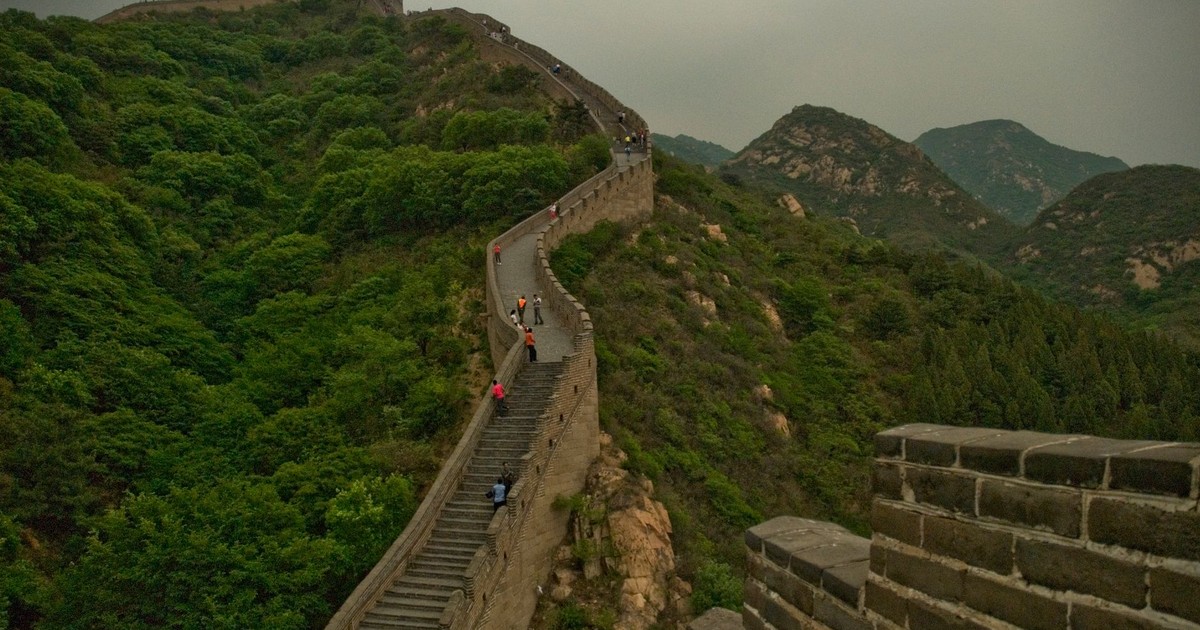

The trees that China’s engineers planted in the 1980s along the edges of the Gobi Desert were chosen for one reason: speed. They grew fast, which was exactly what a crumbling landscape needed. The problem was that a lot of them died anyway, unable to survive in the harsh, semi-arid conditions they’d been placed in. That early failure set up one of the most striking ecological experiments of the modern era.
Decades later, those same planted forests are behaving in a way that researchers didn’t fully expect. Scientists tracking the canopy density of the so-called “Great Green Wall” found that these human-planted trees are growing their leaf cover significantly faster than natural forests across China. A surprising result, but the explanation behind it carries a warning that policymakers and climate scientists can’t ignore.
China’s tree planting program is the largest artificial forest project ever attempted. The Great Green Wall project began in 1978 and is expected to be completed by 2050. The program was proposed with the goal of raising northern China’s forest cover from 5 to 15 percent, thereby reducing desertification. Officially called the Three-North Shelter Forest Program, the project is a series of human-planted windbreaking forest strips in China, designed to hold back the expansion of the Gobi Desert.
The Scale of China’s Tree Planting Project
Over the past five decades, China has planted 66 billion trees in a massive wall that spans the Gobi and Taklamakan deserts. Plans call for 34 billion more by mid-century, according to Live Science. The numbers are staggering, but they reflect a genuine ecological emergency. The original intent was to slow the desertification of the country’s grasslands, of which the Gobi devours over a thousand square miles every year.
According to the Global Forest Resources Assessment 2025 released by the Food and Agriculture Organization of the United Nations, China added an average of 1.69 million hectares of forest annually between 2015 and 2025, the largest and fastest increase in forest coverage worldwide. That achievement didn’t come easily. In more recent years, officials have focused more on planting native drought-tolerant shrubs. There has also been a growing emphasis on preserving existing vegetation and restoring degraded grasslands, which are often more effective than planting new trees in desert-prone regions.
The results on the ground are measurable. Forest cover in the regions the wall touches has ballooned from 5 percent in 1978 to 14 percent in 2023, according to Futurism. That shift has helped cut down on dust storms and improve the air quality in downwind cities, including Beijing. Sandstorm frequency across China dropped by roughly one-fifth between 2009 and 2014, as reported by CGTN. Lilin Zheng, a researcher in geographical information systems at Shanghai Jiao Tong University’s School of Design, and colleagues found in a 2026 Nature analysis that the project is succeeding where other green-wall initiatives around the world are struggling.
Why China Tree Planting Forests Are Growing Faster Than Expected
Trees planted in large reforestation projects in China are increasing their leaf area at a faster rate than observed in natural forests, according to a 2026 study in Geophysical Research Letters. The team was led by Yuhang Luo, a landscape ecologist at the Shenzhen Graduate School of Peking University, who used satellite data to track the leaf area index, a measure of canopy density that scientists use to estimate a forest’s capacity to absorb carbon. That study found that planted forests increased their leaf area nearly 66 percent faster than natural forests nationally.
That gap sounds enormous, and it partly is, but the researchers dug into why it exists. The research attributes this difference to factors such as tree age, human management, selection of fast-growing species, and the response to increased carbon dioxide in the atmosphere.
Age is the biggest factor. A significant part of this difference is related to the fact that the reforested areas are, on average, much younger. Young trees grow faster than old ones, so a forest planted in the 1990s will naturally outpace an old-growth stand that has been accumulating carbon for centuries. The Great Green Wall was designed to slow soil erosion and sand deposition that had been increasing since the 1950s due to large-scale urbanization and farmland expansion, meaning these forests are all relatively new by ecological standards.
Species selection and active management also play a major role. Planted forests tend to feature fast-growing species like eucalyptus and poplar and are often actively managed, with workers removing competing vegetation and applying fertilizer. Those interventions reduce competition for light, water, and nutrients. They also amplify how strongly the trees respond to rising atmospheric CO2 levels, according to Live Science.
Even when the researchers controlled for these variables, comparing planted forests to natural forests of similar age growing in similar conditions, the planted ones still grew about 4.6 percent faster. That stronger leaf area trend in planted forests held after controlling for environmental and age differences, with a younger age structure and enhanced CO2 response acting as key drivers.
The growth advantage in planted forests peaks at around 30 to 40 years old before declining, according to Greek Reporter. Many of China’s oldest planted sections are now entering or past that window, which means the growth edge is already beginning to fade in the regions planted earliest.
The Carbon Question Nobody Wants to Answer
The leaf area findings matter because canopy density is one proxy for a forest’s carbon-absorbing power. Thicker, lusher canopies absorb more sunlight and pull more CO2 out of the air. So on the surface, faster-growing planted forests sound like great news for the climate.
The reality is more complicated.
Natural forests, despite often producing leaves at a slower rate, accumulate massive stores of carbon over centuries within trunks, branches, roots, and surrounding soils. A plantation of 20-year-old poplars is not the carbon equivalent of an ancient mixed forest, even if its canopy is expanding quickly.
A separate 2025 study published in Communications Earth & Environment found this gap precisely. At comparable ages, young planted forests show lower aboveground carbon accumulation rates than young natural forests, mainly due to differences in tree density. Although young planted forests currently sequester more carbon in total, projections indicate that by 2060 their total aboveground carbon stock will be lower than that of young natural forests.
Luo’s team came to a similar conclusion from a different angle. “Planted forests can be a powerful short-term tool for carbon uptake, but this advantage is temporary,” Luo said. “For long-term carbon storage and resilience, natural forests remain irreplaceable.”
Luo also told Live Science that “planted forests are widely used in climate mitigation strategies, but most global ecosystem models do not distinguish between forest types or represent age-related dynamics adequately,” adding that clarifying how these factors interact is critical “for improving the models and assumptions that underpin real-world forest policy and carbon accounting.”
This matters for climate math globally. If carbon models treat planted forests and old-growth forests as interchangeable, they’re likely overstating how much carbon is actually being locked away.
What the Great Green Wall Actually Gets Right
The project’s real success story isn’t carbon. The wall is actually strips and patches of trees planted in vast swathes across the north of China. These trees act as windbreaks to the dust storms that frequently blow across the area from the Gobi and Taklamakan deserts, storms that break up soil and reduce the area’s farming capacity.
On that original mission, the results have been substantial. Forest cover has nearly tripled in the wall’s zones since the project launched. Dust storms reaching Beijing have become less frequent. And the project has demonstrated something that other large-scale reforestation attempts have struggled to prove: that sustained, government-backed planting can actually survive and grow, rather than dying off in the early phases.
The Zheng team’s Nature analysis notes that the project is succeeding where other green-wall initiatives are struggling, including Africa’s Great Green Wall, which has faced persistent setbacks. Efforts to boost tree cover and restore degraded land globally need stable funding and time to learn from failure. China’s program has had both.
The challenges that remain are real, though. The biological and ecological integrity of the region is called into question by academics who are wary of the long-term impacts of planting trees in a region where they would not naturally occur, as well as the common misconception that trees have a greater power to slow desertification than drought-resistant shrubs and grasses. Planting fast-growing species in arid zones without accounting for water availability has caused problems in some areas, particularly where groundwater is already scarce.
What the recent research by Luo and colleagues adds to this picture is a clearer understanding of the relationship between planted forests and rising CO2. They respond more strongly to it than natural forests do, which is part of why their canopies are expanding so quickly right now. But that heightened sensitivity may not be a stable, long-term feature. As those forests age past their 30- to 40-year growth peak, the advantage narrows.
For anyone curious about what large-scale forest restoration can achieve, and what its limits look like, there are striking parallels in other reforestation stories. How orange peels accidentally created a forest in Costa Rica shows a fundamentally different approach to restoration, one driven by native soil enrichment and natural regeneration rather than top-down planting, and it produced a very different kind of ecological result.
Read More: Canadians Unite In a Fight to Save an Ancient Tree Older Than the Country Itself
What This Means for Climate Action
China’s Great Green Wall has done what it was designed to do: push back the desert. That achievement is genuine, measurable, and hard-won. The fact that the trees are now growing faster than natural forests is an interesting finding, but the takeaway from the science isn’t that planted forests are better than natural ones. They’re different, in ways that matter for how we account for them in climate policy.
The results reinforce the need to differentiate between planted and natural forests in climate policies and carbon models, according to the authors of the study published in Geophysical Research Letters. Counting planted eucalyptus and poplar as equivalent to centuries-old forest in a carbon ledger inflates the apparent impact of reforestation programs worldwide.
The practical lesson, which Luo has described as a guide for forest-based climate action, is about timing and composition. Planted forests deliver real carbon benefits in the short term, especially in their first few decades. But protecting and expanding natural forests, which accumulate carbon slowly, steadily, and for far longer, remains the more durable strategy. China’s own planted forests, now aging out of their growth peak in some regions, are a live demonstration of that principle. The wall is green and it is growing. What it cannot do is substitute for the slower, deeper work of nature left to recover on its own.
AI Disclaimer: This article was created with the assistance of AI tools and reviewed by a human editor.
Read More: Ancient Forestry Technique Produces Lumber Without Cutting Down Trees