
Most people know Damon Wayans Sr. as the man who made generations laugh – from In Living Color to My Wife and Kids, his career has been built on the ability to find comedy in everyday life. But there’s a chapter of his story that isn’t funny at all, and for a while, it looked like it might be his last. He’s talking about it now, and the reason he’s speaking up goes far beyond his own health.
Wayans recently revealed the full weight of what happened when he was 47 years old. What he went through wasn’t a close call in the vague, Hollywood sense of the phrase. It was a real medical emergency, the kind that puts doctors into emergency mode and leaves a person wondering, in a very clear-headed way, whether they’ll walk out of the hospital.
He’s 65 now and healthy by most accounts. But the path from that hospital visit to where he stands today involved a complete rebuild of how he eats, moves, and thinks about his own body – and a new sense of purpose that’s pointing toward something he believes is costing people their sight.
A Blood Sugar Number That Couldn’t Be Ignored
When Wayans’ condition reached a breaking point at 47, it led to a hospital visit that nearly claimed his life. His blood sugar levels had spiked to 535 mg/dL. To put that in context, a healthy blood glucose level for someone without diabetes is 70 to 99 mg/dL, according to the Cleveland Clinic. At more than five times that upper limit, medical professionals consider such numbers a “triage” situation, as sustained high glucose can lead to organ failure, coma, or death.
That health scare forced Wayans to immediately adopt a rigorous medical regimen. Now 65, he relies on insulin treatments, a strictly controlled diet, and a commitment to physical fitness as part of his daily routine. In a conversation on The Big Podcast with Shaq, he described growing fresh vegetables and eating primarily his own produce, while also leaning heavily on strength training. “I work out lifting heavier weights because that’s what the scientists say really helps you burn the sugar before you burn the fat,” he said, adding that the approach had helped him gain control over his diabetes.
That kind of personal discipline took years to build. But the knowledge that drove it didn’t come all at once. Wayans has been candid about the fact that he didn’t fully understand the link between diabetes and vision loss when he was first diagnosed – and that’s exactly why he felt compelled to get involved in raising awareness.
What Diabetes Does to Your Eyes
Type 2 diabetes is widely known for its effects on blood sugar, weight, and heart health. What gets far less attention is what chronically high blood glucose does to the eyes – quietly, over years, often without any obvious symptoms until the damage is already done.
High blood sugar weakens the blood vessels in your eyes, making them leak or grow out of control in your retina. This is called diabetic retinopathy. When fluid seeps into the retina, it can cause diabetic macular edema (DME). The leaking makes the retina swell, which hampers the work of the macula – the part of the eye that gives you sharp central vision.
DME is specifically a swelling in the macula, the central part of the retina, which sits at the back of the eye and houses the light-sensing cells. The macula is what allows you to see fine details. When it swells due to fluid leaking from damaged blood vessels, everyday tasks like reading, recognizing faces, or driving can become difficult or impossible.
Diabetes is the leading cause of new blindness in the United States, with DME contributing greatly to this vision loss. And yet many people living with diabetes – even those managing the condition actively – don’t know it’s a risk they need to watch for. About 1 in 14 people with diabetes develops diabetic macular edema. The condition can develop at any stage of the disease, but the longer someone has lived with diabetes, the greater their risk. The risk of developing a diabetic eye disease increases by up to 20% for people who have had diabetes for more than 20 years.
Early symptoms can be easy to brush off or explain away. Signs of DME can include blurry or double vision, difficulty seeing colors, dark spots, and straight lines that appear bent or curved. The problem is that by the time these symptoms are noticeable, the condition may already be advanced. If caught early, there’s a chance to stop long-term damage.
That detail matters in understanding why Wayans grew frustrated with a habit he’d noticed in his community. “Someone would go get some eyeglasses from the drugstore… and think that that’s enough, and it’s not,” he said in a recent interview with People. The impulse to reach for a quick fix rather than understand what’s actually happening inside the body is exactly the pattern he wants people to reconsider.
For anyone living with diabetes, a yearly dilated eye exam isn’t optional – the American Academy of Ophthalmology’s guidelines recommend that patients with type 2 diabetes be screened for diabetic eye disease upon diagnosis and then annually, or more often depending on the severity of their condition. Keeping blood sugar levels under consistent control is one of the most powerful tools available for reducing this risk, since the damage begins with chronically elevated glucose levels.
Why This Hits Harder in Some Communities
Wayans shared in a People interview that diabetes-related vision loss affects Black and brown people two to three times more than other groups. “It’s something that is not really discussed in those communities,” he said. “It’s nice to be able to maybe have a voice and lend it to something that’s important.”
The numbers behind that statement are stark. According to the U.S. Department of Health and Human Services’ Office of Minority Health, in 2024, Black and African American adults were 24% more likely than U.S. adults overall to have diabetes. In 2022, Black and African Americans died from diabetes 78% more often than the U.S. population overall.
Many people ignore early warning signs of diabetes due to fear or a lack of access to healthcare. By sharing his personal brush with death, Wayans hopes to help destigmatize the condition and encourage proactive testing.
“We have a lot of fears where I come from, with hospitals and doctors and taking care of your health,” he told People. “We tend to like to do things ourselves.” That reluctance, while understandable given the complex history of many minority communities with the medical system, comes with a very real cost. At a health panel Wayans participated in, a woman shared that she had symptoms for some time and then one day blinked and couldn’t see anymore – a moment that stuck with him deeply.
The Campaign Behind the Message
Now 65, Wayans has not only learned to manage his condition – he’s using his platform to advocate for change. He is the spokesperson for All Eyes on DME, a public awareness campaign launched by biotechnology company Genentech in partnership with the diabetes advocacy organization diaTribe.
The campaign was developed specifically to use the power of humor to destigmatize and bring attention to diabetes-related vision conditions. It features Wayans’ iconic comedy style and his personal diabetes journey, alongside patient perspectives, to create a meaningful cultural connection and drive real conversations about protecting vision.
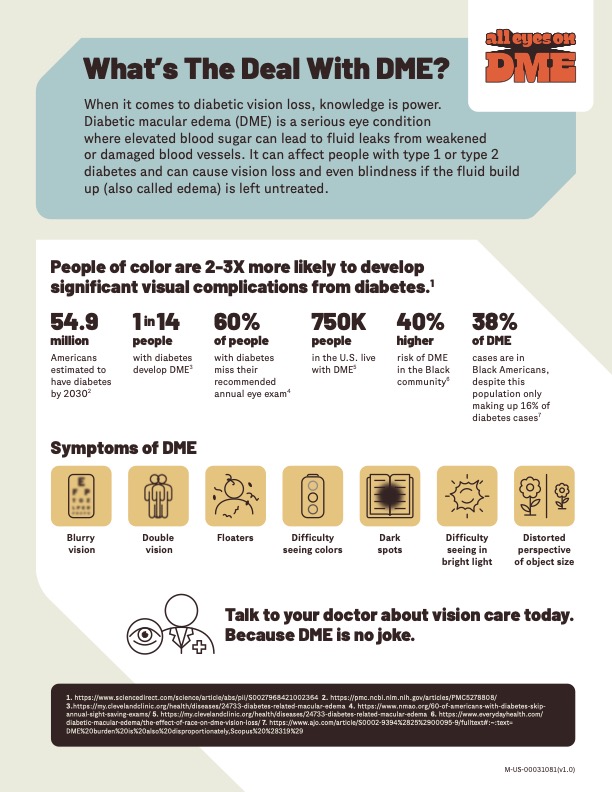
The use of humor is deliberate. Wayans believes laughter lowers people’s defenses in a way that a list of medical statistics never can. He put it plainly: “I think if you can laugh, it’s not that bad. That is the beautiful thing about this country – we laugh at ourselves, and once we laugh at ourselves, then we can start going, ‘maybe I should just go see a doctor.'”
The All Eyes on DME campaign features firsthand accounts from Wayans alongside other individuals living with diabetes. On AllEyesonDME.com, people impacted by or at risk for DME can find information on symptoms, risk factors, and causes, as well as patient and caregiver tools to prepare for productive conversations with doctors.
Read More: Type 2 Diabetes Reversal: What You Need to Know
What This Means for You
Wayans’ story isn’t a celebrity health confession – it’s a practical warning with a clear message. Diabetes can be managed and, in some cases, significantly controlled through lifestyle changes, but only if you actually know you have it and understand what it can do to your body beyond blood sugar numbers. Type 2 diabetes symptoms often develop over several years and can go on for a long time without being noticed. Sometimes there aren’t any noticeable symptoms at all, which is precisely why regular testing and check-ups matter so much.
If you’re living with type 2 diabetes, vision health needs to be part of your ongoing care plan, not an afterthought. Patients with diabetes should generally get a dilated eye exam every year – and if you haven’t had one recently, that’s the most actionable step you can take today. DME’s effects can be delayed or even reversed if caught and treated early enough. Waiting until you notice blurry vision or dark spots means waiting until the condition has already progressed. As Wayans said plainly: “Inaction is not an option.” You can fear what a doctor might find, or you can get the information you need to do something about it. Only one of those choices protects your health.
If you or someone you love is living with diabetes, schedule that dilated eye exam, ask your doctor specifically about DME, and don’t assume that a pair of reading glasses from the drugstore is telling you everything you need to know about your vision.
Disclaimer: This information is not intended to be a substitute for professional medical advice, diagnosis or treatment and is for information only. Always seek the advice of your physician or another qualified health provider with any questions about your medical condition and/or current medication. Do not disregard professional medical advice or delay seeking advice or treatment because of something you have read here.
AI Disclaimer: This article was created with the assistance of AI tools and reviewed by a human editor.