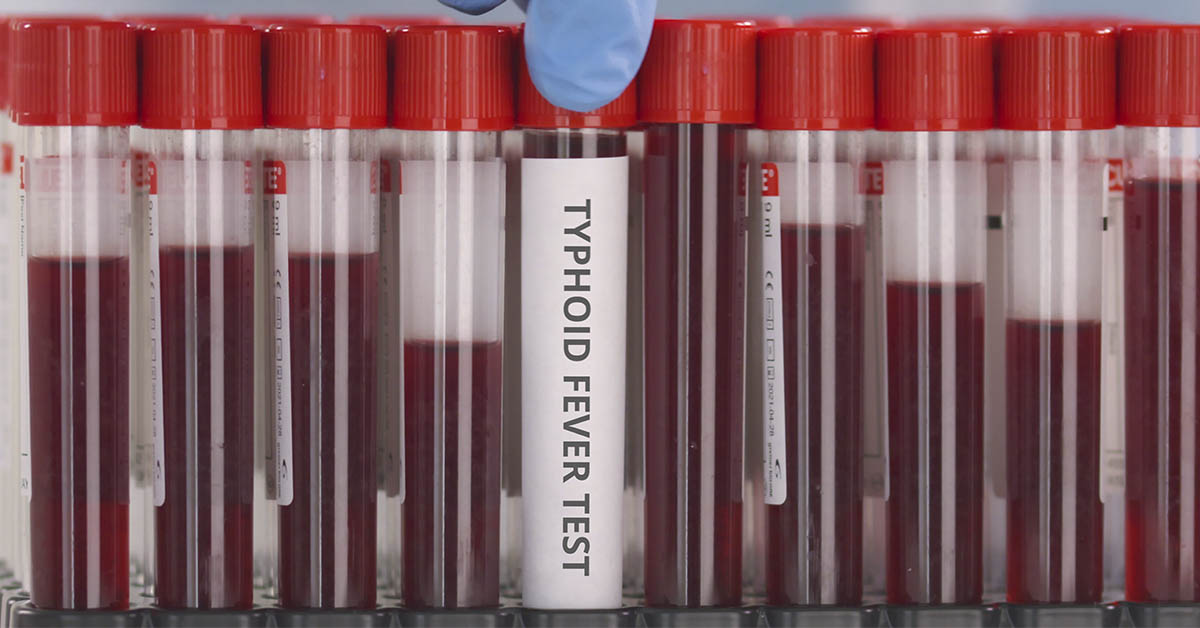

A recent report released by the UK Health Security Agency has seen a concerning rise in typhoid cases in parts of the United Kingdom. Typhoid fever threatens global health as antibiotic-resistant strains spread rapidly worldwide. The disease is caused by Salmonella Typhi bacteria, now kills over 150,000 people yearly across the globe. Provisional data captured 702 cases of typhoid in 2024, which is an 8% increase of cases from the previous year. This is also the highest annual total ever recorded.
Typhoid is spread through contaminated food or water, making developing countries most vulnerable to infection. It is a highly contagious bacterial infection that can affect vital organs. Without proper treatment, typhoid can be fatal. There are an estimated 13 million cases of typhoid fever every year, mainly affecting school-aged children in Asia and Africa.
How Typhoid Fever Spreads and Kills

Salmonella Typhi bacteria exists only in human bodies, making infected people the sole source of transmission of the diseases. The disease spreads through contaminated food and water in areas with poor sanitation and limited access to clean water. Typhoid carriers can infect others even when they show no symptoms.
Symptoms include prolonged high fever, severe headaches, and abdominal pain lasting weeks. Without proper antibiotic treatment, typhoid fever can cause serious complications including death. The bloodstream infection affects multiple organs and can lead to internal bleeding.
The Silent Spread of Drug-Resistant Typhoid

The sole defence and treatment for typhoid fever are antibiotics. The Lancet Microbe published an article in 2022 that revealed alarming findings about drug-resistant strains of typhoid. Extensively drug-resistant (XDR) typhoid strains have begun developing and emerging across South Asia with alarming speed. The strain, S. Typhi showed a developing resistance to older antibiotics like ampicillin and chloramphenicol completely. They also show increasing resistance to newer treatments including fluoroquinolones and third-generation cephalosporins.
The study conducted a genomic analysis of 3,489 typhoid samples from Nepal, Bangladesh, Pakistan, and India. These strains were collected between 2014 and 2019. This is concerning as these highly resistant strains could rapidly replace current strains which could make typhoid fever untreatable in many regions.
South Asia Becomes the Epicenter of Resistance
The majority of drug-resistant typhoid cases stem from South Asia. Pakistan, India, Bangladesh, and Nepal now serve as breeding grounds for the drug-resistant strains. Poor sanitation, overcrowding, and inappropriate antibiotic use accelerate resistance development in these regions. Recent surveys in Ahmedabad, India, discovered the largest cluster of ceftriaxone-resistant typhoid cases ever documented.
These South Asian strains have spread internationally nearly 200 times since 1990. Global travelling, import and export of goods act as carriers for the disease to proliferate internationally. Southeast Asia, East Africa, and Southern Africa show increasing numbers of resistant cases.
Read More: She Smelled Her Husband’s Illness Years Before Diagnosis, Now Scientists Are Studying Her
Western Countries Face Growing Threat
Drug-resistant typhoid cases now appear regularly in developed nations including the United States, Canada, and United Kingdom. Most infections occur in travelers returning from endemic regions, particularly South Asia. Approximately 85% of US typhoid cases involve international travelers. Travelers visiting often consume local food and water without proper precautions and without understanding the risks during their visits. Short trips to high-risk countries like Bangladesh, India, and Pakistan can still result in infection.
Medical Breakthrough Offers New Hope
Cornell researchers recently identified rifampin as a potential solution to drug-resistant typhoid fever. This FDA-approved antibiotic shows 99.9% effectiveness against Salmonella Typhi strains according to the researchers. The drug remains effective against over 99.4% of clinical isolates tested globally.
Rifampin appears on the World Health Organization’s list of essential medicines for treating various infections. Doctors currently use it for travelers’ diarrhea and other bacterial diseases. The practical implementation of rifampin treatment for typhoid fever could happen quickly to combat the rapid mutation of S. Typhi.
Prevention Strategies Show Promise
The World Health Organization recommends typhoid conjugate vaccines for children in endemic countries. These newer vaccines provide longer-lasting immunity than older typhoid vaccines available previously. Gavi, the Vaccine Alliance, now funds typhoid vaccination programs in eligible countries.
Improved sanitation and access to clean water remain the greatest preventative measure for typhoid fever infection. Better urban planning, improving access to sanitation in rural communities and health and safety education can reduce the spread of typhoid. International cooperation becomes essential as resistant strains cross borders regularly.
Read More: Dysautonomia: The Hidden Illness Impacting Millions Globally
The Race Against Bacterial Evolution
Antibiotic resistance develops faster when patients stop treatment early or receive incorrect prescriptions. Some typhoid strains now require thousand-fold higher antibiotic doses to achieve the same effect. This evolution makes outpatient treatment nearly impossible in many cases.
Mathematical models suggest antibiotic switching strategies could slow resistance development. This approach involves changing between different antibiotics to prevent bacterial adaptation. However, implementation requires careful coordination between healthcare systems and international health organizations.
Future Outlook and Global Response
Scientists estimate current surveillance systems capture only a fraction of actual typhoid cases globally. This underreporting of regions like Africa and parts of Asia means cases and international spread rates are likely much higher than documented.
The typhoid crisis requires global cooperation rather than isolated national responses. International travel and trade ensure that resistant strains will continue spreading across borders. Coordinated prevention, treatment, and surveillance strategies offer the best hope for controlling this ancient killer’s modern evolution.