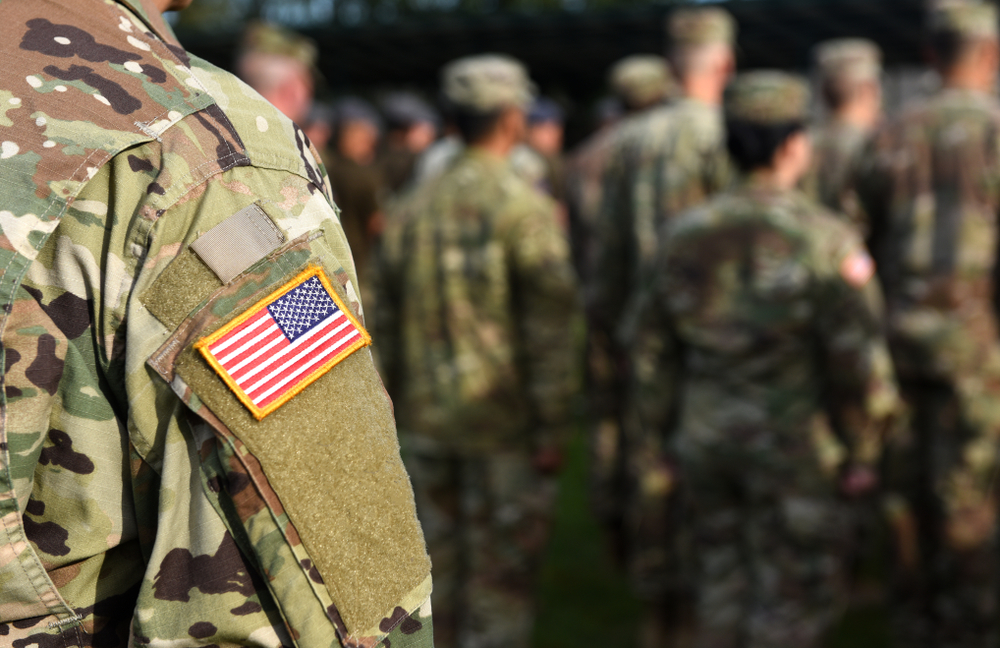

For the first time since 1980, the United States is overhauling how it registers men for a potential military draft. President Donald Trump signed the fiscal year 2026 National Defense Authorization Act (NDAA) into law on December 18, 2025, and buried within it was a provision that permanently changes the Selective Service System (SSS) – the federal agency that maintains a database of men who could be called to serve in a national emergency. Under Section 535 of that law, the government will automatically register eligible men for the draft, rather than requiring them to sign up themselves. The system must be fully operational by December 18, 2026, replacing the existing self-registration requirement for male U.S. residents ages 18 through 25, with a deadline for the agency to have it running by December 18, 2026.
The Selective Service System is not the same as the military. Registering with the SSS does not mean joining the armed forces. In a national emergency, the Selective Service System uses its registry to provide personnel to the Department of War, and to arrange alternative service for conscientious objectors – but only if authorized by the President and Congress. The United States has operated an all-volunteer military since 1973. No draft is currently active, and no draft has been activated since the final years of the Vietnam War. Registration is simply the mechanism that would allow a draft to happen quickly if Congress and the President ever authorized one.
The 2026 NDAA’s automatic draft registration provision marks the biggest structural shift in this system in more than four decades. Analysts have described it as the largest change in Selective Service law since 1980. Understanding what it means – and what it does not mean – is important for any family with a son, brother, or partner between the ages of 18 and 26.
What the 2026 NDAA Actually Changes
Under the previous system, which has been in place since President Jimmy Carter reinstated the registration requirement in 1980, the legal burden of signing up rested entirely with the individual. Men had to self-register within 30 days of their 18th birthday, though the law allowed late registration without penalty up until their 26th birthday. Many men completed that process through the Free Application for Federal Student Aid (FAFSA), through state driver’s license offices, or directly via the SSS website.
The 2026 NDAA removes that individual obligation. The new statutory change transfers responsibility for registration from individual men to the SSS through integration with existing federal data sources. In practice, that means the agency will pull information from databases like those maintained by the Social Security Administration to build and verify its registry without any action required from eligible men themselves. Under the new provision, the Selective Service System will tap into government data such as Social Security Administration records to build its registry of potential draftees, then cross-reference that data to identify and locate eligible men.
Regulations implementing and establishing the procedures for automatic registration – including notices required for data collection, data matching, and data use – will be issued by the SSS in 2026. That rule-making is already underway. According to Military Times, the SSS submitted a proposed rule to the Office of Information and Regulatory Affairs in March 2026, and that rule was under review as of early April 2026. The agency is moving toward a December 2026 implementation date.
Is Automatic Selective Service Registration Now Required by Law?
Yes. Automatic registration is now required by federal law. On December 18, 2025, the President signed the FY 2026 NDAA into law, mandating automatic Selective Service registration. The law itself does not require men to do anything – the point is precisely that the government takes over the task. But the legal requirement for registration to exist has not gone away. The SSS is now legally obligated to find and register eligible men itself.
Until December 18, 2026, all male U.S. citizens between 18 and 25 years of age are still required to register within 30 days of their 18th birthdays under the existing rules. That means the current self-registration system stays in effect for now. Young men turning 18 before December 18, 2026, must still register through the existing process. The automatic system does not apply retroactively or early. Because the automatic system does not take effect until December 18, 2026, 18-year-olds turning 18 before that date must still comply with existing self-registration rules.
This is a point many families are getting wrong. The law has been signed, and it is real – but its operative date is not until late 2026. Any young man who turns 18 between now and then must still register manually to avoid the penalties that apply to non-registrants under current law.
Who Is Affected by the NDAA Draft Registration Changes?
The law covers nearly all male U.S. residents between the ages of 18 and 26, including both citizens and most non-citizen residents. All undocumented males aged 18 through 25, except those admitted on non-immigrant visas, must register, regardless of whether they have a green card. That scope does not change under the new system – the automatic process will simply apply to the same population that was previously required to self-register.
There are narrow exemptions. Men who are not required to register – for example, those with certain medical conditions or those present in the country on nonimmigrant visas – will have a process available to remove themselves from the rolls once automatic registration takes effect. This “opt-out” mechanism is a key feature of the new system and a direct response to concerns about men being incorrectly registered. The SSS has also stated it will notify men when they have been registered and inform them of the opt-out process if applicable.
Women are not affected by this law. Women remain ineligible for the draft despite repeated legislative efforts to expand the registration requirement. Various versions of recent defense bills have included proposals to require women to register, but none of those measures became law. The Military Selective Service Act as currently written refers only to “male persons.”
For families of men in the draft-eligible age range, it is also worth remembering that registration and conscription are two entirely separate things. Being registered does not mean anyone will be called to serve. A draft would require a separate act of Congress and a presidential directive. It has not happened since 1973.
What Happens If You Don’t Register for Selective Service?
Under the current system – which remains in effect until December 18, 2026 – the penalties for failing to register are serious and lasting. If required to register, failure to do so is a felony punishable by a fine of up to $250,000 and/or five years imprisonment. Criminal prosecutions have been rare: no one has faced federal prosecution for non-registration since 1986. But the administrative consequences are another matter entirely.
A man who fails to register with Selective Service may be ineligible for opportunities that may be important to his future, including state-funded student financial aid in many states, most federal employment, some state employment, security clearance for contractors, job training under the Workforce Innovation and Opportunity Act, and U.S. citizenship for immigrant men. Those consequences can follow a person for life if they miss the window before age 26.
There is one important update for men who relied on the FAFSA to register. The SSS annual report noted that declining registrations were “largely driven by the loss of the requirement for men to register with SSS to receive Federal student aid and the removal of the option to register on the FAFSA form,” calling them “outcomes of the passage of the FAFSA Simplification Act in 2020.” Before that change, the FAFSA form accounted for roughly 20 percent of all annual registrations. Men who assumed their FAFSA filing covered their registration obligation after 2022 should verify their registration status directly at sss.gov.
In 2024, 81% of eligible men registered – a slight decrease from the 84% of men who registered in 2023. That downward trend is part of the reason Congress moved toward automatic registration. After December 18, 2026, registration rates will become effectively irrelevant because the government will handle enrollment directly.
Why Registration Has Been Declining – and Why Congress Acted
The sharp drop in registrations since 2022 alarmed lawmakers and SSS officials. Registration for the draft has dwindled in recent years, partly because the option to register was removed from federal student loan forms in 2022, which had accounted for nearly a quarter of all previous registrations. That single change – the removal of a checkbox from the FAFSA – cost the SSS hundreds of thousands of annual registrations almost overnight.
The strong compliance rate that remained was driven by laws in 46 states and territories that automatically register men for the Selective Service when they obtain a driver’s license, learner’s permit, or state identification card, according to the agency. Without that driver’s license pipeline, compliance in states without automatic license-linked registration has been significantly lower. In some states, registration rates fall well below the national average.
Supporters of automatic registration framed the new law in practical terms. Representative Chrissy Houlahan of Pennsylvania, a member of the House Armed Services Committee who championed the provision, argued that it “simply moves the burden of filing the registration paperwork from the individual to the government, where it belongs,” adding that it would save taxpayer money and make compliance easier. In May 2024, lawmakers worked to incorporate language about automatic registration into the annual defense authorization bill, citing cost savings and legal challenges with the old approach.
This is not the first time Congress has tried to make this change. In 2024, the proposal for automatic draft registration was initially approved by both the House and Senate but was removed from the final version of that year’s NDAA after influencers, including rapper Cardi B, spread misinformation on social media that the legislation meant Congress would reinstate the draft. The panic was unfounded. Registration and conscription are legally distinct. The automatic provision was reintroduced in 2025 and ultimately signed into law.
The Privacy and Civil Liberties Concerns
Not everyone views automatic registration as a bureaucratic improvement. Critics have raised questions about what data the government will collect, how it will be stored, and who might access it.
The Friends Committee on National Legislation, the lobbying arm of the Quakers, warned that “this extensive data gathering poses a significant risk of weaponization and misuse, particularly with the potential for targeting the most vulnerable, such as immigrant and transgender young adults.” The data collected through database matching will likely include sex assigned at birth, immigration status, and current address. For immigrant communities, that combination raises legitimate questions about how that information might be used outside the registration context.
Opponents also argue that allowing the SSS to access other government databases is an invasion of privacy that would deny conscientious objectors – those with moral or religious objections to war – the ability to refuse to register. Under the old system, a man could decline to submit a registration form as an act of conscience. Under automatic registration, that path essentially closes, because the government handles enrollment without individual consent or action.
In the current self-registration system in effect through 2026, a person cannot indicate when they register that they intend to seek classification as a conscientious objector to war, but they may be able to make such a claim if drafted, depending on the law and regulations in effect at that time. Civil liberties organizations have raised concerns that automatic registration may complicate that pathway further, since registrants will have no opportunity to note their status at the point of enrollment.
Read More: People Furious Over This ‘Medical Reason’ That Would Prevent Barron Trump From a Military Draft
Does Automatic Registration Mean a Draft Is Coming?
This is the question most families are asking. The direct answer is no. Automatic registration does not activate a draft, authorize conscription, or signal that the U.S. military is planning to force anyone into service. Analysts describe this change as the largest in Selective Service law since 1980 – one that moves the United States closer to being able to activate a draft on demand than at any point in the past half century – even as the country continues to rely on an all-volunteer military with no current plans for conscription.
The United States has not had a draft since 1973, and Congress and the president would both have to authorize one. That remains true after this law. Automatic registration simply means the SSS database will be more complete and more current than it has been. If a draft were ever authorized, the government would have a more accurate list to draw from. That is the entire practical effect of this change.
Registration is not the same as enlisting with the U.S. Armed Forces. Being on the SSS rolls does not alter anyone’s relationship with the military in any way. It does not affect employment, benefits, travel, or any other aspect of daily life for men who are already registered or who will be automatically registered under the new law.
What to Do Now
The clearest action items depend on where you are in the age window.
If you are a male U.S. resident who turned 18 before December 18, 2026, and you have not yet registered, you are still legally required to do so. Register at sss.gov/register or at a U.S. post office. Late registration is accepted up until your 26th birthday, but not after. Failing to register before that cutoff can cost you access to federal employment, certain state-funded student aid, federally funded job training programs, and, for immigrant men, the path to U.S. citizenship.
If you are already registered, no action is needed. Your registration stands. Once the automatic system launches in December 2026, the Selective Service intends to register eligible men itself by mining federal databases, but the SSS’s implementing rules will determine whether anyone still must take action, claim exemptions, or respond to agency notices – and those rules should be read closely when published. Watch for official guidance from the SSS through 2026 as implementing regulations are finalized.
If you believe you qualify for an exemption – due to a medical condition or because you hold a nonimmigrant visa – document that status clearly and monitor the SSS website for the formal opt-out process once it is published. The Selective Service System will also be tasked with notifying men they have been registered, asking for any missing contact or biographical information, and informing them of the process to unregister if they are not actually required to register.
What This Means for You
The 2026 NDAA’s automatic draft registration provision is a real, signed, federal law. It fundamentally changes who is responsible for putting men on the Selective Service rolls – shifting that duty from the individual to the government. The deadline for the new system is December 18, 2026. Between now and then, the old rules remain in force.
For parents of teenage sons, the practical priority is straightforward: if your son turns 18 before December 2026, make sure he registers within 30 days of his birthday. The failure to do so carries consequences that can linger for years – denied federal jobs, lost access to state financial aid programs, and complications for immigrant men seeking citizenship. After December 18, 2026, the government takes over that task. But the window for the old system to matter has not closed yet. Keep an eye on updates from the Selective Service System as implementing regulations move toward finalization – those rules will determine exactly what the automatic process looks like in practice.
A.I. Disclaimer: This article was created with AI assistance and edited by a human for accuracy and clarity.
Read More: Who Would Be Drafted in The US in a New World War?