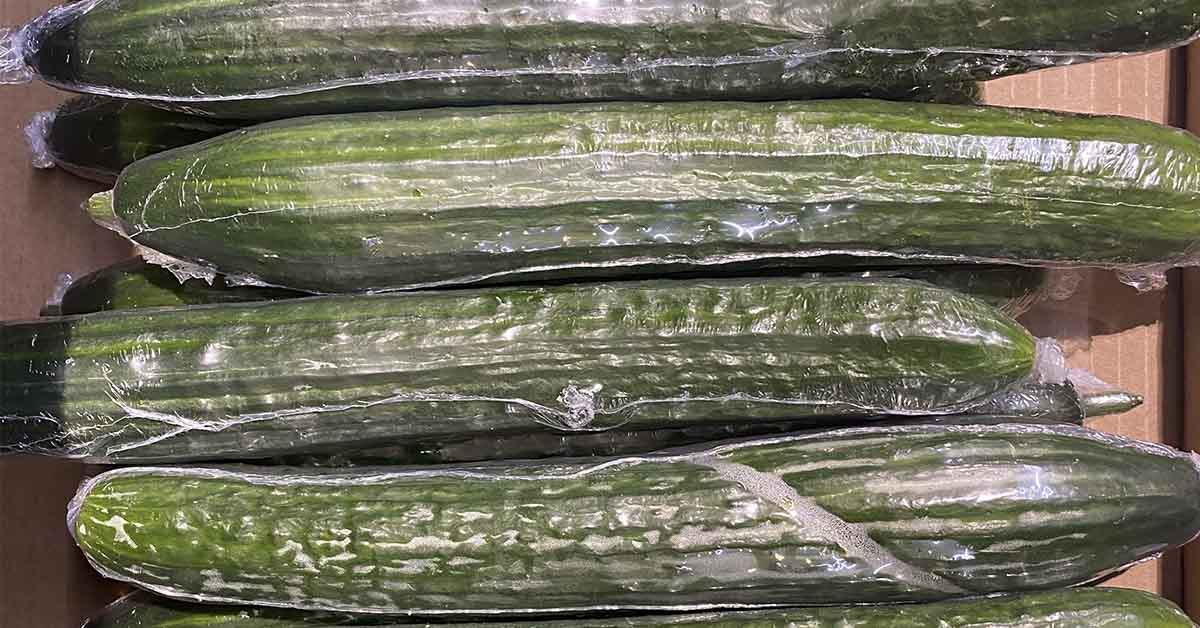

Walk through the produce aisle at any grocery store and the English cucumber stands out. While its neighbors sit loose in bins or stacked in open crates, this long, slender variety arrives sealed head-to-toe in a tight sleeve of plastic. For years, shoppers have peeled it off without a second thought. But once you understand what’s actually going on beneath that wrap, you’ll look at it – and the cucumber itself – very differently.
It turns out the plastic isn’t a marketing gimmick, an industry habit, or a quirk of modern packaging culture. There’s a real biological reason this particular vegetable needs that extra layer, and it comes down to something the cucumber simply cannot do for itself.
The story starts with skin, or more precisely, with the lack of it.
The Cucumber That Can’t Protect Itself
English cucumbers are wrapped in plastic because their skin is too thin to protect them from drying out. Unlike standard American cucumbers, which have a thick, tough skin that acts as a natural barrier, English cucumbers lose moisture rapidly once harvested. We’re not talking about a slight difference here. English cucumber skin measures approximately 0.5 to 1mm thick, thin enough to bite through easily without chewing. By contrast, regular cucumber skin can be 2 to 3mm thick with a distinct waxy coating.
That wax coating on a standard grocery store cucumber isn’t just cosmetic. It does a decent job sealing in moisture on its own, though many grocery store varieties also get a wax coating applied after harvest to further extend shelf life. English cucumbers have neither of those advantages. English cucumbers have such delicate skin that wax coatings can create an uneven, unappealing look and change the texture of the peel. Since one of the main selling points of English cucumbers is their pleasant, edible skin, applying wax would undermine the very quality people pay a premium for.
So without thick skin, without wax, and without any natural armor to speak of, these cucumbers are essentially defenseless from the moment they’re harvested. You could probably scrape their green outer skin off with just a fingernail. That makes them especially vulnerable once they’re harvested, packaged, shipped, and finally stacked at the grocery store, where dozens of shoppers pick them up and put them back.
What the Plastic Actually Does
The shrink wrap on an English cucumber does three distinct jobs, and all three matter.
Plastic prevents moisture loss, so cucumbers stay crisp and snappy rather than limp and floppy. Plastic also keeps excess oxygen out, which is a very good thing if you like green cucumbers over brown ones. And third, the plastic protects from injuries that can let in agents of rot, such as bacteria, fungi, and fruit flies, while also locking in moisture and blocking out oxygen, a main culprit in accelerating decay.
The moisture piece is especially critical. Cucumbers are roughly 96% water. Without a barrier, an English cucumber left exposed in a refrigerated grocery display will start to soften, shrivel, and develop rubbery patches within just a couple of days. The plastic wrap essentially replaces the protection that a thicker skin or wax coating would provide, trapping humidity right against the surface.
This also explains why English cucumbers – also known as hothouse, European, or burpless cucumbers – cost more than their garden-variety cousins. Price differences reflect growing methods and shelf life. English cucumbers cost 50 to 100% more than regular cucumbers because they require controlled greenhouse environments and plastic wrap for protection. They’re also grown differently. Unlike cucumbers grown in open fields, hothouse cucumbers are cultivated in a protected environment, providing them with optimal growing conditions. That controlled environment produces a more delicate, refined fruit – but one that needs babysitting from the moment it’s picked.
The Shelf Life Numbers Are Striking
Here’s where the data gets genuinely surprising. Studies have reported that cucumbers wrapped in plastic have a shelf life almost three times longer than unwrapped cucumbers, due to reduced moisture loss. At the retail level, packaging can increase shelf life from 3 days to 13 to 17 days.
That’s not just convenient for grocery stores. It connects to a much larger question about food waste and environmental impact, one where the answer is more complex than you might expect.
A 2022 study published in Frontiers in Sustainable Food Systems ran the numbers on the full environmental picture. The plastic wrapping accounts for only about 1% of the total greenhouse gas emissions across an English cucumber’s life cycle, from growing to transporting to selling. The more striking figure: every single cucumber that gets thrown away carries the same carbon footprint as the plastic needed to wrap 93 cucumbers. Growing, irrigating, heating greenhouses, and shipping a cucumber that ends up in the trash generates roughly 0.99 kg of CO₂ equivalent. The plastic wrap for one cucumber generates about 0.01 kg.
If the use of plastic wrapping brings down food loss at retail from 9.4% to 8.3%, it already makes environmental sense to use it. Plastic wrapping the cucumbers imported from Spain to Switzerland in the case study lowered food waste at retail by an estimated 4.8%, with a net lower environmental impact of 125 kg CO₂-equivalent per tonne of cucumber sold.
That said, not everyone agrees. A study by WRAP, the British sustainability nonprofit, found that plastic packaging “makes little or no difference to shelf life” for most produce tested at the household level – and can even encourage people to buy more than they need. The key distinction is where in the supply chain you’re measuring. The benefits of wrapping appear to be strongest between farm and store shelf, not necessarily in your kitchen drawer.
Why Not Just Skip the Plastic Altogether?
You might wonder why producers don’t simply grow a hardier cucumber. The answer is that the traits that make English cucumbers so appealing to eat – the thin, edible skin, the mild flavor, the near-seedless interior – are precisely what make them fragile. The bitterness in regular cucumbers comes from cucurbitacin, which plants produce as a natural defense mechanism. English cucumbers have been bred to minimize those compounds, which makes them gentler on the palate and easier to digest, but also strips them of some of their natural toughness.
You also can’t simply move more of them into local, short-supply-chain distribution and skip the wrapping. That tradeoff is especially stark for English cucumbers imported over long distances, where spoilage rates without wrapping would be significantly higher.
The Future: Plastic-Free Cucumbers Are Coming
Some newer alternatives are starting to appear. Plant-based edible coatings, like the product developed by Apeel, slow moisture loss and oxidation by creating an invisible layer on the surface. Apeel is already being used on English cucumbers sold in some conventional grocery stores.
Apeel Sciences, the California-based food tech company behind the coating, developed it by studying the natural oils found in plant materials. Apeel’s thin, edible coating is made from ingredients naturally found in the peels, seeds, and pulp of plants – the same kinds of substances already present in foods including avocado oil, butter, bread, and even infant formula. Once applied, Apeel’s invisible barrier works by slowing down dehydration and oxidation, the two natural processes that cause produce to spoil.
The scale of what this replaces is real. In a 16-week trial in 56 retail stores using the edible coating on cucumbers, Apeel eliminated the equivalent of 3.75 million plastic straws, or more than 190,000 plastic bottles.
Akorn Technology, another company in this space, recently launched a new edible coating for cucumbers to extend their shelf life, positioning the coating as a move toward more sustainable packaging. Consumer appetite for the change is also there. More than 80% of 800 surveyed American and Canadian consumers stated a preference for purchasing an English cucumber without plastic wrap over one wrapped in plastic.
These coatings aren’t universally available yet. The primary application of Apeel’s edible coating covers fresh produce including avocados, citrus fruits, and cucumbers. These products typically have a short shelf life and are prone to spoilage due to water loss and oxidation. By applying the coating, producers and retailers can significantly extend the shelf life of these items, reducing the need for frequent restocking and decreasing waste.
Read More: Things you need to know when you see ‘Apeel’ on your produce at the grocery stores
What This Means for You
So what should you actually do with this information the next time you come home from the grocery store?
Even with their plastic wrap armor, cucumbers don’t last forever. If you’re not planning on using them right away, your best bet is to leave them wrapped and stash them in the fridge. Because cucumbers are sensitive to the cold, they actually keep better on the top shelf or the side doors, which tend to be the warmest parts of the fridge. Stored this way, they’ll usually hold up for four to seven days, although their shelf life ultimately depends on how fresh they were when you bought them. Once you’ve cut into one, rewrap the remainder with the plastic sheath to maintain freshness – or wrap the cut end tightly in fresh plastic to slow moisture loss from the exposed flesh.
The bigger takeaway is about packaging in general. The plastic wrap on an English cucumber isn’t there because someone in a boardroom decided it looked more premium. It’s doing a genuinely functional job that the cucumber itself cannot do. The plastic wrap on English cucumbers is one of those packaging choices that looks wasteful but turns out to be surprisingly efficient – at least within the current supply chain. The industry is actively working to replace it, and plastic-free options are now appearing at major retailers. When you see an English cucumber without its sleeve, coated instead in an invisible plant-based layer, you’ll know the science has caught up with consumer demand. For now, keep it wrapped until you’re ready to eat it – that modest sleeve is doing more work than it looks.
AI Disclaimer: This article was created with the assistance of AI tools and reviewed by a human editor.
Read More: 10 Hacks to Keep Your Produce Fresh