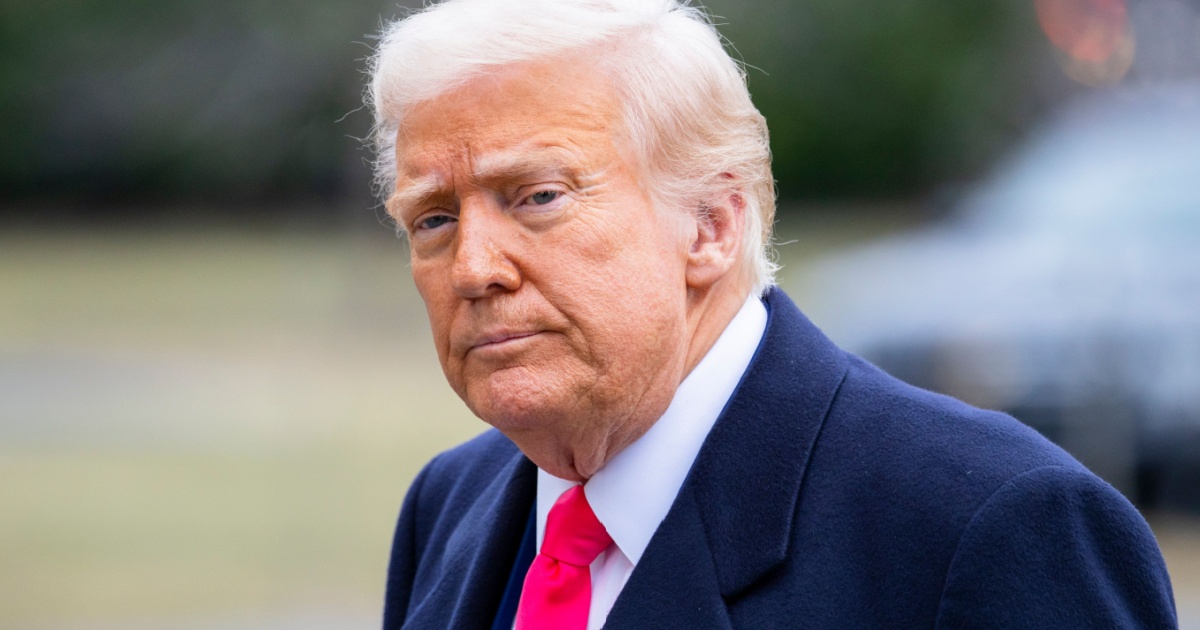

A licensed physical therapist posted on Instagram on June 5 claiming he had identified what he believed was a stroke happening on live television – and the man at the center of his analysis was the President of the United States. Adam James, who operates under the handle @epistemiccrisis and specializes in geriatrics, posted a detailed, point-by-point medical-style analysis of Trump’s behavior during an Oval Office press briefing on “clean coal” that took place on June 4. The post ignited a fresh wave of public debate about what the public is actually seeing when they watch Trump appear on camera – and about whether they’d recognize a stroke if they saw one happening in their own lives.
James, who holds a doctorate in his field and brings 14 years of professional experience, argued that Trump had experienced “a stroke-like event or a stroke on camera” – an assessment he made after Trump had remained largely out of public view for six consecutive days, from May 27 to June 3. The timing of that absence, James suggested, was not incidental. He stated plainly: “He suffered a stroke and they were trying to get him to recover enough to go back on camera.”
That is a striking claim from anyone. From a credentialed clinician with a background in treating neurological decline in elderly patients, it raises a pressing question: what are the clinical warning signs James flagged – and what does a stroke actually look like in real time? Because the same Trump stroke signs he cataloged are ones any adult could encounter in a family member, a neighbor, or themselves.
What James Saw – and What He Said It Meant
During the briefing, Trump addressed journalists before handing over to Interior Secretary Doug Burgum and EPA Administrator Lee Zeldin. While Burgum and Zeldin delivered their remarks, Trump reclined in his chair and appeared to shut his eyes, with online observers suggesting he seemed to be nodding off.
James did not stop at the apparent drowsiness. He cataloged three specific physical observations and framed each through a clinical lens developed over more than a decade treating geriatric patients.
The first was posture. He pointed to Trump’s leaning as his opening red flag, noting that many of his stroke patients over the years have had their muscle strength and tone affected on one side of the trunk, making it impossible for them to hold an upright position – and that when someone with such damage is very fatigued and falling asleep, they will lean toward the weaker side.
The second was facial asymmetry. In his post, James highlighted what he described as a “right-sided facial droop” and a subtle but persistent shift in Trump’s jaw. “The more that his jaw shifts to his right, the more asleep he is,” James claimed, insisting that the jaw appeared to slip “in and out of awake, asleep, awake, asleep” as Trump sat largely silent.
The third, and the one he flagged most forcefully, was speech. James described what he witnessed as “the worst instance of expressive aphasia, a common symptom of left-sided stroke on the left side of the brain where your language centers are, I have ever seen from him to date,” asking, “Did you hear him mumble through those words?”
James had also previously flagged changes in Trump’s gait, including a swinging leg motion and balance problems, which he said could suggest weakness on one side of the body or a stroke-like event.
At one point, he said, “I am so delighted because this is the worst I have ever seen him,” before concluding, “At this point, he’s on 43 days of borrowed time.” That timeline was not explained, and there is no independent evidence underpinning the specific “43 days” claim, which should therefore be treated with caution.
No Official Confirmation – What the White House Has Said
It has never been officially confirmed that Trump has experienced a stroke, dementia, or any other neurological condition, despite ongoing claims circulating online. The White House and Trump’s medical team have consistently dismissed such assertions, stating public speculation lacks medical evidence.
Adam James is a physical therapist, not a neurologist, and he has not examined Trump. His analysis is based entirely on observing publicly available video footage. Diagnosing a stroke – or a stroke-like event – requires clinical assessment, brain imaging such as an MRI or CT scan, and neurological evaluation by a qualified physician. No such assessment by an outside party has been made, or made public.
What James’s analysis does provide, regardless of whether his conclusions about Trump are accurate, is a window into the observable warning signs that neurologists and emergency medicine professionals use to identify strokes in real time. Those signs are well-documented, consistent across medical literature, and useful for every reader to know.
What Expressive Aphasia Actually Is
Expressive aphasia is the neurological term for a specific kind of language breakdown. In most cases, it is caused by a stroke in or near Broca’s area, a region located in the lower part of the premotor cortex in the brain’s language-dominant hemisphere, which is responsible for planning the motor movements of speech.
People with expressive aphasia can only produce some incomplete phrases or sentences with much effort – and in severe cases, not at all. The condition is sometimes called Broca’s aphasia or non-fluent aphasia. The person has difficulty finding the right words, may say the wrong word or create new, non-existent words, may switch letter sounds, repeat words or phrases, or use single words instead of communicating with full sentences.
The condition differs from simply stumbling over words or speaking while tired. Aphasia results from damage – usually from a stroke or traumatic brain injury – to areas of the brain responsible for language. For most people, those areas are on the left side of the brain. Stroke is the leading cause of aphasia. Slowed speech from fatigue sounds different from the effortful, broken output of expressive aphasia, and knowing the difference could determine how quickly someone gets help.
The Full Picture of Trump Stroke Signs – and What Doctors Use to Spot Them
In one survey, 93% of respondents recognized sudden numbness on one side as a symptom of stroke – but only 38% were aware of all major symptoms and knew to call 9-1-1 when someone was having a stroke, according to CDC stroke awareness data.
Medical professionals now use a framework called BE FAST to help the public catch strokes in progress. According to the CDC’s stroke signs and symptoms page, BE FAST covers: B for balance loss (ask if the person feels off-balance or dizzy), E for eye or vision changes (ask if they have trouble seeing normally), F for face drooping (ask the person to smile – does one side droop?), A for arms (ask the person to raise both arms – does one drift downward?), S for speech (ask the person to repeat a simple phrase – is it slurred or strange?), and T for time (if you see any of these signs, call 9-1-1 right away).
Speech difficulty is the sign James pointed to most aggressively in his analysis of Trump. The stroke treatments that work best are available only if the stroke is recognized and diagnosed within 3 hours of the first symptoms. That time constraint makes real-time recognition of speech problems, facial asymmetry, and postural changes not just medically useful – it makes them potentially life-saving.
Two other signs fall outside the BE FAST framework but carry equal urgency. Sudden numbness or weakness in the face, arm, or leg – especially on one side of the body – is a classic warning, as is sudden confusion or trouble speaking. A sudden severe headache with no known cause is also listed as a key stroke symptom.
On average, 1.9 million brain cells die every minute that a stroke goes untreated, according to the American Stroke Association – a figure first calculated in a landmark study published in the journal Stroke by researchers at the University of California, Los Angeles. That rate of cell death is what makes the recognition window so small and the public’s partial awareness so consequential.
Stroke’s Scale – and Why Age Changes the Equation
Each year, about 795,000 people in the United States have strokes, according to the National Institute of Child Health and Human Development. The CDC puts that same figure in starker terms: someone in the United States has a stroke every 40 seconds, and someone dies from one every 3 minutes and 14 seconds.
Age is a significant driver of stroke risk. Trump turns 80 this month. Silent strokes – in which a blood vessel blockage in the brain causes cells to die without any warning signs or obvious symptoms – become increasingly common with age. They occur when a blood vessel blockage in the brain causes cells to die, but no warning signs or symptoms are obvious. About one-fourth of people over age 80 have at least one such area of tissue death, known as a “silent infarct,” in the brain, according to the American Stroke Association. Despite being called “silent,” these infarcts have been linked to subtle problems in a person’s movement and mental processing – and they are associated with future risk for both stroke and dementia.
More than a third of people who have a TIA (transient ischemic attack, or “mini-stroke”) and don’t get treatment have a major stroke within 1 year. As many as 10% to 15% of people will have a major stroke within 3 months of a TIA, according to the CDC.
The clinical picture James was sketching – a person of advanced age, with observed postural asymmetry, possible facial droop, and apparent speech difficulty – maps directly onto the risk profile that emergency medicine teams are trained to treat as urgent until proven otherwise.
Read More: Silent Signs Of Stroke Everyone Should Know
What to Do With This Information
Three observations drove James’s analysis of the June 4 briefing: postural leaning to one side, facial asymmetry, and sudden difficulty producing coherent speech. Those are exactly what emergency physicians and neurologists flag when assessing a patient for stroke – and none of them require a medical degree to notice. What they require is knowing what you’re looking at.
If stroke symptoms disappear after a few minutes, the person may have had a transient ischemic attack, which is a serious warning sign requiring immediate medical evaluation, not a reason to wait and see. Any sudden onset of face drooping, arm weakness, or speech difficulty lasting even a few minutes should be treated as a medical emergency. Call 9-1-1. Note the time the symptom started. Do not drive – call for an ambulance so that medical personnel can begin treatment on the way to the emergency room.
Most people watch someone struggle with speech, slouch in a chair, or lose control of one side of their face without recognizing it as a medical emergency with a treatment clock running. Stroke kills or permanently disables partly because bystanders wait. Knowing the BE FAST framework and understanding what expressive aphasia actually sounds like means you don’t have to be one of them.
Disclaimer: The author is not a licensed medical professional. The information provided is for general informational and educational purposes only and is based on research from publicly available, reputable sources. It is not intended to constitute, and should not be relied upon as, medical advice, diagnosis, or treatment. Always consult a licensed physician or other qualified healthcare provider regarding any medical condition, symptoms, or medications. Do not disregard, avoid, or delay seeking professional medical advice or treatment because of information contained herein.
AI Disclaimer: This article was created with the assistance of AI tools and reviewed by a human editor.
Read More: Warning Signs of Stroke You Might Be Missing – Know Every One