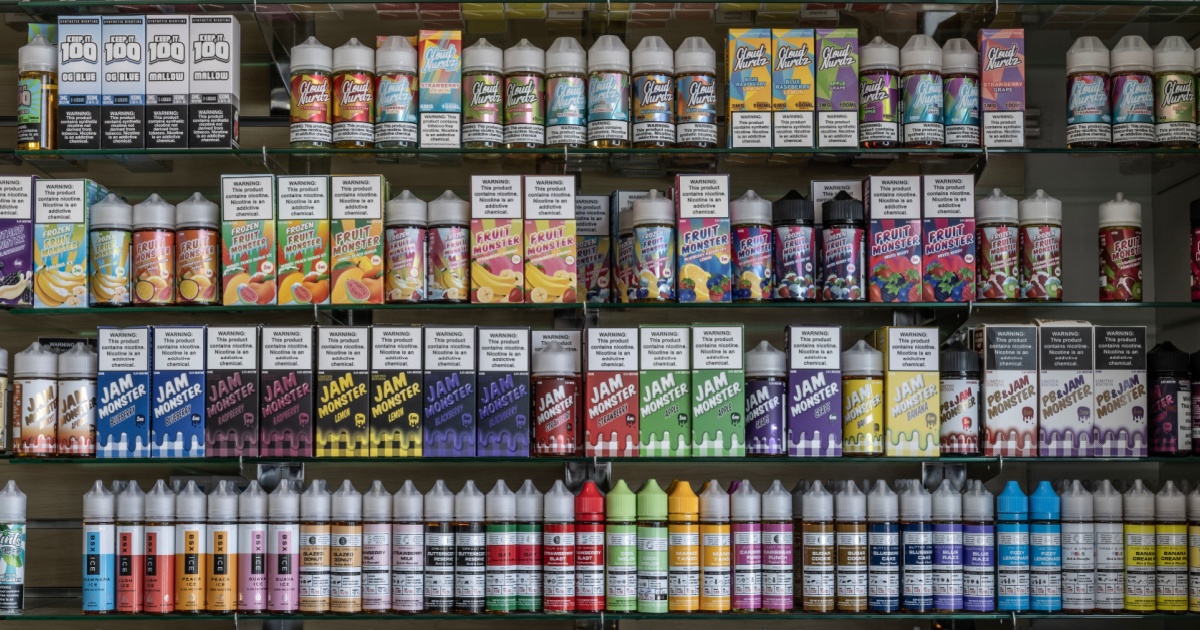

Something unusual happened in Washington in the first weeks of May 2026. A federal health agency reversed a years-long policy position on FDA flavored vapes, the official who had resisted that reversal was pushed out of his job, and a previously undisclosed campaign finance filing showed one of the world’s biggest tobacco companies had written a multimillion-dollar check to the president’s super PAC just days before it all unfolded. Whether those events are connected is a question people across the political spectrum are now asking out loud.
The story starts with money, ends with a resignation, and runs straight through the FDA’s most consequential regulatory shift in a generation. For anyone who has watched youth nicotine use inch downward over the past few years, the implications of what happened are hard to ignore.
This isn’t a story about whether vaping is safer than smoking cigarettes. That debate is settled enough. This is about who gets to decide what’s on the shelf, how those decisions get made, and what role, if any, a $5 million check played in shaping federal health policy for millions of Americans.
The $5 Million Check and What Followed
On April 30, a subsidiary of tobacco giant Reynolds American cut a $5 million check to MAGA Inc., the main super PAC backing President Donald Trump. That donation brought the subsidiary’s total contributions to MAGA Inc. to $8 million. The donation was revealed in a campaign finance report filed Wednesday night. The filing surfaced publicly on May 20, but the donation itself had landed weeks earlier, right before a cascade of events that critics say is too neat to be coincidental.
Two days after the donation, a top Reynolds executive and two of the company’s lobbyists had lunch with Trump at his golf club in Jupiter, Florida. Also attending were two executives from Altria, another tobacco company. At the lunch, the tobacco industry representatives expressed dissatisfaction with the way the Food and Drug Administration was regulating the industry, as The New York Times reported.
Three people briefed on the meeting said Trump interrupted the discussion and called FDA Commissioner Marty Makary. When Makary did not answer, Trump reportedly contacted Health Secretary Robert F. Kennedy Jr. and Centers for Medicare and Medicaid Services Administrator Mehmet Oz. According to the same New York Times report, Trump complained to them about the agency’s regulation of e-cigarettes.
Reynolds, the company behind Camel and Lucky Strike cigarettes, has become one of several major tobacco interests maintaining close financial ties to Trump. According to campaign finance records cited in recent reporting, the same subsidiary previously contributed $10 million to another super PAC supporting Trump’s presidential campaign. Reynolds also contributed to fundraising efforts connected to Trump’s planned White House ballroom project, and a company executive was invited to a White House donor dinner reserved for individuals who had contributed at least $2.5 million.
MAGA Inc. reported raising a total of $9.6 million last month. The super PAC also received contributions of $1 million each from a division of the private prison firm Geo Group, Republican megadonor Marlene Ricketts and two other donors.
What the FDA Actually Authorized
The FDA authorized the marketing of four Glas electronic nicotine delivery systems through the premarket tobacco product application pathway on May 5, 2026, marking the first time it had authorized nontobacco, nonmenthol flavored vaping products for sale in the US. On that date, five days after Reynolds’ donation, the FDA authorized four Glas pods: Classic Menthol, Fresh Menthol, and mango and blueberry flavors sold as “Gold” and “Sapphire.”
It was the agency’s first-ever authorization of non-tobacco, non-menthol e-cigarettes. The authorization is a shift from years of aggressive regulation against flavored vapes, after the FDA had previously rejected marketing approvals for more than 1 million fruit-, candy-, and dessert-flavored products.
The FDA justified the decision largely on technological grounds. The agency’s review found that Glas’s device access restriction technology, combined with FDA-required marketing restrictions, is expected to mitigate the ability of youth to use the product. The technology requires the user to verify their age and identity with a government-issued ID and pair the device with a smartphone via Bluetooth. The device will not operate if separated from the phone, and the app conducts random biometric check-ins to confirm the registered user is the one using it.
The FDA also said the decision opens a path for other manufacturers. A non-tobacco flavored product may be authorized where the application demonstrates its benefit in helping adults quit cigarette smoking outweighs its potential risks. Critics, however, point out that the Glas authorization arrived via guidance rather than through the agency’s standard rulemaking process. Days after that $5 million donation, the FDA issued new guidance opening the door to flavored vapes, bypassing the agency’s normal rulemaking process.
The Commissioner Who Said No – and the FDA Flavored Vapes Pressure Campaign
For months before the May authorization, Dr. Marty Makary was at odds with officials in the Trump administration as pressure mounted to allow the flavored vape products. According to a Reuters report citing the Wall Street Journal, Trump rebuked Makary for not moving quickly enough to approve flavored vapes and nicotine products. Trump sought advice from his advisers about Makary and the importance of flavored vaping to young “Make America Great Again” voters. Those advisers described the FDA commissioner as a problem for the administration and told Trump that Makary had blocked the president’s effort to “save” vaping, a pledge Trump made in September 2024 on Truth Social during his presidential campaign.
In the days that followed the Jupiter meeting, Trump reportedly berated Makary, who hesitated to reverse the policy due to the potential impact on children. Makary ultimately resigned less than a week later, along with RFK Jr.’s chief spokesperson, Rich Danker, citing disagreement about the e-cigarette policy change as the reason.
After the departure, Kyle Diamantas was named acting FDA Commissioner. Diamantas had been the deputy commissioner for food, overseeing nutrition and human food safety. He is a lawyer, not a medical doctor.
The broader picture of Makary’s tenure is complicated. Under Makary’s leadership, the FDA initiated efforts to speed up drug approvals and clinical trials, reduce regulatory burdens, crack down on ultraprocessed foods, and phase out artificial food dyes. He pleased no one entirely, but on the specific question of fruit-flavored vapes, the reporting is consistent: he resisted, the White House pushed, and the products got authorized anyway.
What the Data Says About Kids and Flavored Vapes
Public health advocates didn’t object to the FDA decision on abstract principle. They objected because the numbers on youth flavored vape use are hard to argue with.
The FDA’s new guidance opens up the roughly $6 billion U.S. e-cigarette market, currently dominated by illegal Chinese disposables, to major American tobacco companies looking to sell flavored vapes. That market overlap with youth users is what concerns pediatric health researchers most.
According to survey data from the Centers for Disease Control and Prevention, the vast majority of middle- and high school-aged e-cigarette users prefer flavored products. Specifically, a 2024 CDC report found that fruit is the most popular flavor category among young users, accounting for 62.8% of preferences, followed by candy flavors. And according to Campaign for Tobacco-Free Kids, nearly 90% of youth who use e-cigarettes report using flavored products.
The good news, if there is any, is that overall youth vaping numbers have been falling. CDC data shows e-cigarette use among middle and high school students dropped from 2.13 million students in 2023 to 1.63 million in 2024. Public health advocates credit years of strict flavor restrictions as a key driver of that decline, and they worry the new policy direction reverses that progress.
The vast majority of U.S. teens who vape continue to use unauthorized fruit- and candy-flavored products. Those products are technically illegal but remain widely available in cheap, disposable brands typically imported from China. The FDA’s position is that authorizing a tightly age-gated American product is better than ceding the market to illegal imports. Critics counter that adding more authorized flavored options signals to the broader market that flavor restrictions are weakening. For a closer look at what vaping does to the body even without nicotine, a doctor’s warning based on recent research is worth reading.
Bipartisan Pushback and the White House Response
The political opposition to the FDA’s move hasn’t broken cleanly along party lines. Sen. Dick Durbin of Illinois, the top Democrat on the Senate Judiciary Committee, has been pressing the FDA on flavored vape approvals for weeks, joined by Sens. Elizabeth Warren of Massachusetts, Cory Booker of New Jersey, Ed Markey of Massachusetts and six other Democrats on letters demanding the agency reverse course.
One Republican has broken with the administration on the underlying policy: Sen. Susan Collins of Maine co-signed a May 5 letter with Durbin warning the FDA that “kids are drawn to what flavors are most available to them” and urging the agency to reconsider.
White House spokesman Kush Desai told reporters that Reynolds’ $5 million donation had nothing to do with the administration’s policy shift, saying “the only guiding factor behind the Trump administration’s health policymaking is gold standard science,” as well as “recent evidence that has found vapes can help adults quit smoking.”
The Times found no definitive evidence linking the guidance to the donation, the lunch, or specific lobbying, but called the policy a win for an industry that has spent years on the defensive.
That caveat matters. Correlation is not proof. But the timeline is striking: a tobacco giant donated $5 million to a Trump-aligned super PAC on April 30, the tobacco giant’s executive and lobbyists got an in-person lunch with Trump on May 1, Trump interrupted that lunch to call the FDA commissioner and other leading officials at the Department of Health and Human Services echoing the industry’s line, and on May 8 the FDA bypassed its regular rulemaking process and delivered the policy the tobacco giant wanted.
On his second full day in office, Trump withdrew a proposed federal ban on menthol cigarettes and his team set aside a Biden-era proposal to sharply restrict nicotine levels in cigarettes. And separately, the Public Health Law Center noted that the Trump administration, just days after taking office in January 2025, withdrew proposed rules to ban menthol cigarettes and flavored cigars that the Biden administration had advanced.
Read More: Doctor Warns of Terrifying Effect Vaping Has on the Body
What This Means for You
Whether or not you have children in the house, the FDA’s decision on FDA flavored vapes matters because of what it signals about how health policy is being made. The agency reversed a multi-decade position, skipped its standard process, pushed out a commissioner who objected, and did it all within days of a $5 million donation from the industry that stood to benefit. No direct quid pro quo has been proven, and the White House explicitly denies one. But the sequence of events deserves scrutiny, and informed readers are right to apply it.
For parents of teenagers especially, the practical reality hasn’t changed: unauthorized flavored vapes are still illegal and still everywhere. The new FDA authorization applies only to Glas products with verified age-gating technology. The fruit-flavored disposables that dominate school hallways and gas station shelves remain banned. What has changed is the direction of travel. A regulatory wall that held for years has now developed its first crack, and public health advocates are watching closely to see whether that crack widens.
The most useful thing any adult can do right now is stay informed and talk openly with the young people in their lives about nicotine. The science on what flavored vapes do to developing lungs and brains hasn’t changed just because the regulatory posture has. And if this story troubles you, contacting your senators, especially those already on record pushing back, is a direct way to make that known. This story is far from over.
Disclaimer: This information is not intended to be a substitute for professional financial advice, investment advice, tax advice, or legal advice, and is provided for informational purposes only. Always seek the guidance of a qualified financial advisor, accountant, or other licensed professional regarding your personal financial situation or investment decisions. Do not make financial, investment, or tax decisions based solely on information presented here. Past performance is not indicative of future results, and all investments carry risk, including the potential loss of principal.
AI Disclaimer: This article was created with the assistance of AI tools and reviewed by a human editor.
Read More: Largest Study Yet Suggests Medical Cannabis May Help Combat Cancer