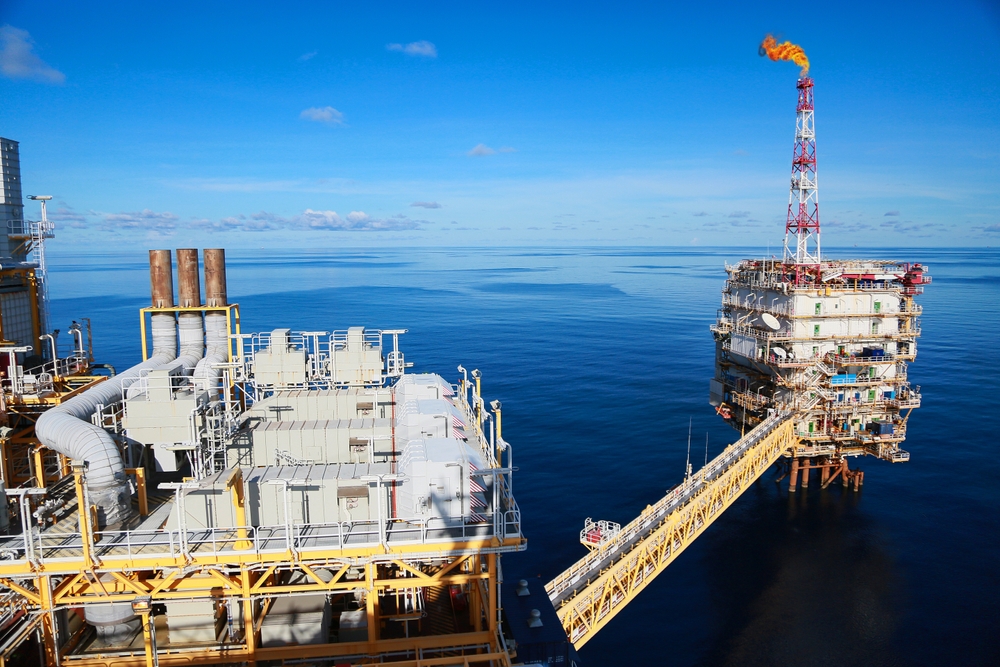

Energy market analysts and economists issued fresh warnings this week that the ongoing Strait of Hormuz closure – triggered by the US-Israeli military campaign against Iran that began on February 28, 2026 – will push any meaningful recovery in global fuel prices back by months, not weeks. The US Energy Information Administration (EIA) raised its average oil price forecast for 2026, saying that disruptions in the Strait of Hormuz, which was effectively closed following US and Israeli strikes on Iran, have adversely affected global energy supply. For American households already stretched by post-pandemic inflation, the timing could not be worse. The average price per gallon of retail gasoline hit $4.14 by early April, while diesel reached $5.64 per gallon – nearing its 2022 all-time high of $5.82.
The Strait of Hormuz is a narrow channel of water sitting between Iran to the north and Oman to the south. Just 21 miles wide at its narrowest point, it forms a seaway between Iran and Oman through which roughly 20 million barrels of oil per day normally transit – representing approximately 20% of global seaborne oil trade, primarily from producers like Saudi Arabia, the United Arab Emirates, Iraq, and Qatar. When the strait closes – or even slows significantly – the effects ripple across every fuel-consuming economy on the planet. That includes yours.
This matters to ordinary consumers because crude oil prices feed directly into what people pay at gas stations, in grocery stores, and on utility bills. Roughly half the price at the pump pays for crude oil, the main ingredient in gasoline, according to the US Energy Information Administration, with about 20% going to refiners who turn crude into gas. When crude prices spike, everything downstream follows.
How the Strait of Hormuz Closure Affects Gas Prices
The answer to how a Strait of Hormuz closure affects gas prices lies in simple supply-and-demand mechanics – but the scale of this particular disruption goes far beyond what most previous crises produced. The crisis has been described as the largest disruption to the energy supply since the 1970s oil crisis and the largest in the history of the global oil market. Iran effectively shut the strait to commercial shipping after the February 28 strikes, deploying naval mines, drone swarms, and direct attacks on tankers to keep vessels out.
A complete cessation of oil exports from the Gulf region amounts to removing close to 20% of global oil supplies from the market, about 80% of which is shipped to Asia. Oil importers unable to access oil from the Persian Gulf have to turn to other oil suppliers, putting upward pressure on oil prices worldwide. When a fifth of the world’s oil stops moving, every remaining barrel becomes more valuable – and traders reprice accordingly, instantly. Gas stations price fuel based on replacement costs, causing prices to rise quickly even before higher-cost fuel arrives – a pattern known as the “rockets and feathers” effect, which explains why prices surge rapidly but decline slowly.
The price trajectory has been steep. Brent crude spot prices averaged $103 per barrel in March, up $32 from February, with daily prices climbing to nearly $128 on April 2. As of early April, the US West Texas Intermediate contract closed at $112.41 per barrel, while international benchmark Brent settled at $109.77 per barrel. Beyond crude benchmarks, the impact on refined fuels has been even sharper. On March 30, the US average retail gasoline price of $3.99 per gallon and average diesel price of $5.40 per gallon were the highest in real terms in over two years, and while gasoline prices increased substantially, jet fuel and distillate prices increased significantly more, because disruptions to Middle East exports of these fuels hit those markets far harder.
How Much of the World’s Oil Passes Through the Strait of Hormuz?
To understand why this closure hits so hard, the volume numbers need context. The Strait of Hormuz – the narrow passage between Iran and Oman through which approximately 20% of global oil trade and 20% of liquefied natural gas (LNG) supply flows – has been effectively closed to commercial shipping since late February. The scale of disruption is without modern precedent. Roughly 20 million barrels of oil, alongside 10.8 billion cubic feet of LNG per day, ordinarily transit the strait.
LNG, or liquefied natural gas, is natural gas that has been cooled into liquid form so it can be loaded onto ships and exported. It powers electricity grids, heats homes, and feeds industrial processes across Asia and Europe. The IEA’s emergency oil release does nothing to address the 20% of liquefied natural gas exports that are unable to reach the global market due to the strait’s closure. That means the energy crunch is broader than crude oil alone – gas prices for heating and power generation are also under pressure.
In 2024, an estimated 84% of crude oil and condensate shipments through the strait were destined for Asian markets, with China receiving a third of its oil via the strait. Europe gets 12% to 14% of its LNG from Qatar, through the Strait. The ripple effect is genuinely global – and it lands on consumers in the form of higher fuel bills, pricier groceries, and steeper airfares, because transportation costs for goods run on diesel and jet fuel that all trace back to the same disrupted supply chain.
For context on how this affects everyday Americans, rising commodity costs and geopolitical supply shocks have already been tightening household budgets before this latest crisis unfolded.
How Long Would a Strait of Hormuz Closure Last?
This is the question energy market analysts are wrestling with most intensely right now, and the honest answer is that nobody knows with certainty. The Federal Reserve Bank of Dallas modeled scenarios in which the closure removes close to 20% of global oil supplies during the second quarter of 2026, raising the average West Texas Intermediate price to $98 per barrel and lowering global real GDP growth by an annualized 2.9 percentage points.
Surfaces analyst commentary and forecasts on the timeline for global fuel price recovery.
The subsequent effects depend entirely on when oil shipments resume. If the strait reopens after one quarter, the oil price drops to $68 per barrel and growth increases by 2.2 percentage points in the third quarter of 2026 – but even then, the level of real GDP remains 0.2% below its pre-closure level by year-end 2026. That last detail is important: even a relatively swift resolution carries lasting economic damage.
The emerging view from oil industry executives and analysts is that the economic and market fallout from the war could escalate sharply if the strait is not reopened within roughly the next one to three weeks. Even then, enough damage may have been done already to leave energy and many other prices higher for longer. Even if the Strait of Hormuz situation is resolved, there is every expectation in the market that an enhanced risk premium will remain embedded in oil prices, as other Middle East nations have shut in production, facilities across the region are damaged, and it will take some time to restore production to previous levels. That timeline gets extended the more damage that is done to oil and gas operations.
Rapidan Energy Group’s Bob McNally noted that the expectation that this crisis could last for months instead of weeks likely means that markets are underestimating the disruption to global energy markets. That assessment from Rapidan, one of the leading energy consultancies, aligns with what analysts at Société Générale have also stated – warning that the situation has bifurcated into two scenarios: a fragile de-escalation leading to gradual supply recovery, or a protracted conflict driving structurally higher risk premiums as countries respond with extreme stockpiling.
The Emergency Response – and Why It’s Not Enough
Governments did not stand idle. The 32 member countries of the International Energy Agency unanimously agreed to make 400 million barrels of oil from their emergency reserves available to the market to address disruptions stemming from the war in the Middle East. This was, by a wide margin, the largest coordinated emergency oil release in history. The proposed release is larger than the 182 million barrels of oil that IEA member countries released in 2022 after Russia launched its full-scale invasion of Ukraine.
The problem is arithmetic. The US Energy Information Administration estimates world consumption of petroleum at roughly 105 million barrels per day in 2026. At that rate, 400 million barrels would theoretically cover just four days of global consumption. Compared with normal traffic through the Strait of Hormuz – around 20 million barrels per day – the released oil equals only about 20 days of typical flows.
Bob McNally of Rapidan Energy Group put it bluntly: “Traders are now doing the math and realize that IEA drawdowns can at best only offset a fraction of the roughly 15 million barrels per day net supply loss of crude and refined products due to the ongoing halt to most tanker transits of the Strait of Hormuz.” He added that oil prices were likely to keep rising until either a ceasefire or the military degradation of Iran’s attack capabilities occurs, allowing tanker traffic to resume.
The US portion of the release – 172 million barrels spread over a 120-day period – implies a flow of approximately 1.4 million barrels per day, which amounts to just 15% of the supply lost due to the Hormuz closure. Pipeline alternatives exist, but face hard physical limits. The International Energy Agency estimates that even with full utilization of available pipeline bypasses, approximately 16 million barrels per day of oil flows remain at risk from a full closure.
When Will Fuel Prices Recover After a Hormuz Closure?
The question of when fuel prices will recover after a Hormuz closure is the one most consumers want answered. The data suggests patience – a lot of it. The US Energy Information Administration forecast retail gasoline prices peaking at a monthly average of close to $4.30 per gallon in April, with diesel prices projected to “peak at more than $5.80 per gallon in April.”
The EIA’s Short-Term Energy Outlook raised the average Brent crude price forecast to $96 per barrel for 2026, up from a pre-crisis forecast of $78.84, while West Texas Intermediate was revised to $87.41 per barrel from $73.61. For 2027, the EIA expects Brent crude to average $76.09 per barrel. That 2027 figure is telling: full price recovery is not a weeks-long process. It is projected to take well into next year even under relatively optimistic assumptions about when the strait reopens.
Analysts from institutions like Barclays and Goldman Sachs have highlighted risks of sustained high oil prices if the strait is restricted over a longer period. The disruptions have also raised concerns over inflation and potential economic downturns in oil-importing nations. The key mechanism behind the delay in fuel price recovery is infrastructure. When tankers stop moving, Gulf producers physically run out of storage space and are forced to curtail production. From the point of view of oil producers in the Gulf, once local storage fills up, producers have no choice but to shut in their oil wells if the oil cannot be stored or exported. This is why many oil producers, starting with Iraq and Kuwait, began curtailing production in early March 2026.
Restarting that production and rebuilding supply chains takes time – weeks at minimum, likely months. Damaged energy infrastructure across the Gulf states adds further delay. OPEC+ warned that repairing energy infrastructure damaged by Iranian attacks “is both costly and takes a long time, thereby affecting overall supply availability.”
The Ripple Effects Beyond the Gas Pump
The oil supply disruption from the Hormuz closure extends far beyond what drivers pay per gallon. The fertilizer market is one example most households never think about until grocery prices reflect it. The UN World Food Program and various analysts warn that disruptions to Gulf fertilizer exports are driving long-term increases in global food prices, threatening a scenario similar to the 2022 food crisis.
The price shock and shortage of fertilizer during the spring planting season could reduce planting and yields of corn in the US – the main feedstock for US beef, poultry, and dairy – and potentially increase global food prices into 2027. Unlike oil, the fertilizer sector has no internationally coordinated strategic reserves, making supply disruptions more difficult to manage. Global fertilizer prices could average 15-20% higher during the first half of 2026 if the crisis continues.
Airlines are passing costs on quickly. United Airlines has raised the price of checked luggage and warned that 5% of routes could be cut over the next two quarters as a result of the war with Iran, which pushed fuel prices significantly higher. After weeks of war-driven pressure on fuel prices and supply chains, businesses are starting to pass those higher costs to consumers via new fees or through less obvious changes, according to Rahul Shahani, a partner at McKinsey leading the company’s North American supply chain practice. Shipping surcharges from major logistics companies like FedEx and Maersk have also risen, meaning goods that move by road or sea are quietly getting more expensive to transport – and those costs end up in retail prices.
Low- and middle-income earners spend larger shares of their wealth on essentials, including transportation, food, and housing, meaning their ability to spend in the economy gets squeezed faster when prices for the basics rise. As Moody’s analysts note, “higher gasoline and utility costs act like a tax on households by reducing real disposable income.” In the month since the war began, Americans paid an extra $8.4 billion on gasoline alone, according to an analysis by Democratic members of the Joint Economic Committee, a standing congressional body.
What Experts Say About the Energy Market Outlook
The energy market outlook from analysts across major institutions shares a common thread: the situation is structurally different from past oil shocks, and the path back to normal will be longer than officials initially suggested. The head of the International Energy Agency described the situation caused by the war as “the greatest global energy security challenge in history.”
In conversations with more than three dozen oil and gas traders, executives, brokers, shippers, and advisers over a single week, analysts said the world still hasn’t grasped the severity of the situation. Many drew parallels with the 1970s oil shock, warning that a prolonged closure of the Strait of Hormuz would threaten an even bigger crisis. The 1973 Arab oil embargo – which analysts are frequently comparing to the current crisis – lasted five months and caused years of economic disruption, including stagflation (a combination of stagnant economic growth and rising prices). Major oil supply shortfalls driven by geopolitical events such as wars or revolutions previously occurred following the Yom Kippur War in 1973, the Iranian Revolution in 1979, the outbreak of the Iraq-Iran War in 1980, and the Persian Gulf War in 1990.
There is a rising probability of global recession, as warned by institutions like the International Monetary Fund and economists such as Mohamed El-Erian, due to the combined impact of inflation and slowing growth. The US economy is particularly dependent on consumers continuing to spend. At the end of last year, consumer spending accounted for 68% of GDP, according to the Federal Reserve. A sustained fuel price shock directly erodes that engine.
Meanwhile, futures markets are pricing in some hope of resolution. Market expectations of a near-term resolution are reflected in the shape of Brent crude oil futures pricing: the front-month contract has traded near $87 per barrel, the third-month at $82, and the sixth-month at $77. But those expectations have been consistently tested by new escalation. The EIA’s own April forecast for retail gasoline prices peaking above $4.30 per gallon suggests any optimism in futures markets has not yet translated into relief at the pump.
Read More: The Price of Milk is Rising. Here’s Why It May Become Unaffordable
What This Means for You
For anyone trying to plan household spending during this period, a few things are clear. First, assume elevated fuel costs will persist through at least mid-2026 under even the most optimistic scenarios for when the strait reopens. Even if the Strait of Hormuz reopens after one quarter, the oil price drops to around $68 per barrel – but the level of global GDP remains below its pre-closure baseline by the end of 2026. The economic damage from this kind of supply shock is not erased the moment a waterway reopens. It lingers.
Second, the spillover into grocery prices and airfares is real and will grow. Experts warn that when gas prices go up, so does everything else, from groceries to airfare to utilities. As Michael McAuliffe, founder of Family Credit Management, puts it: “Rising fuel prices don’t just hit us at the gas pump – they often push grocery prices higher, too, making finances even harder.” Consumers who want to reduce exposure to the most direct fuel cost increases can reduce highway speeds (fuel efficiency drops sharply above 55 mph, according to both AAA and Consumer Reports), consolidate errands into single trips, and consider whether a gas rewards credit card makes sense for regular fill-ups. For those whose driving needs allow it, Morgan Stanley estimates that with gas at around $4 per gallon on average, it is 60% cheaper to power an electric vehicle than a traditional gas-powered car.
The broader lesson this crisis reinforces is that global energy markets are deeply interconnected, and no country – not even the world’s largest oil producer – is fully insulated from a chokepoint disruption of this scale. Monitor the AAA national fuel price tracker and the EIA’s monthly Short-Term Energy Outlook for the most reliable real-time signals on when fuel price recovery is getting closer. Those two free resources will tell you more than any headline will.
A.I. Disclaimer: This article was created with AI assistance and edited by a human for accuracy and clarity.