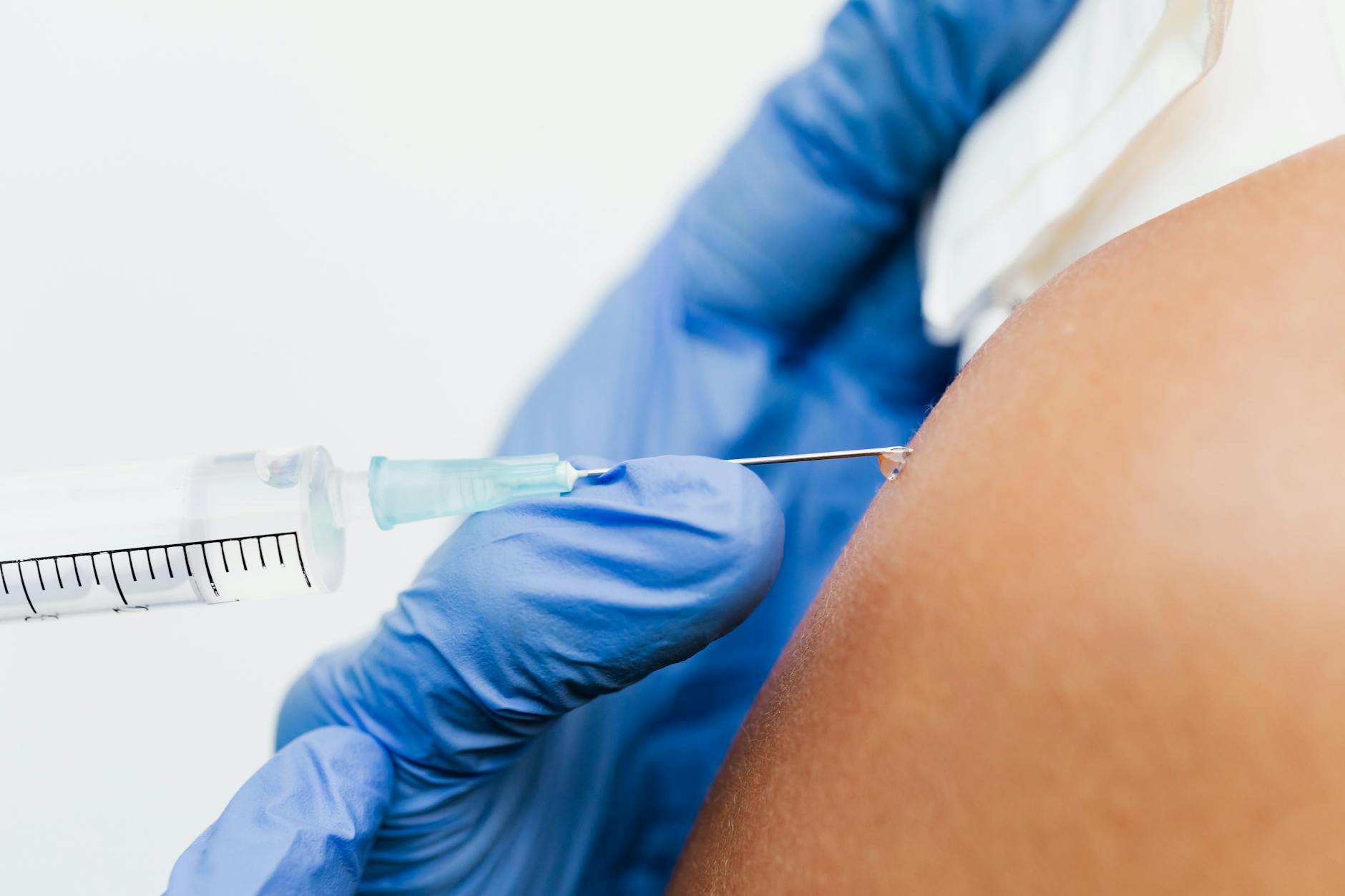

A routine shingles shot – the kind your pharmacist offers alongside a flu vaccine – appears to lower the risk of developing dementia by 20% over the following seven years. That’s not a tentative observation from a small lab trial. It comes from one of the most methodologically rigorous natural experiments in recent medical history, and it’s just one of several findings that have quietly rearranged what researchers thought they knew about preventing age-related disease.
The Wales study worked because of a bureaucratic quirk. On September 1, 2013, Wales launched a shingles vaccine program where residents who were 79 on that date could receive the vaccine, while those who were 80 or older were not eligible – a cutoff that researchers recognized as a near-perfect natural experiment. Led by Stanford Medicine, the analysis of Welsh older adults found that those who received the shingles vaccine were 20% less likely to develop dementia over the next seven years than those who did not. A follow-up study published in the journal Cell went further: researchers found that shingles vaccination also reduces mild cognitive impairment diagnoses and, among patients already living with dementia, deaths due to dementia. The protective effect held steady across multiple analyses and was even stronger in women.
The prevailing assumption has long been that dementia is primarily a disease of genetics and aging – slow, largely inevitable, and resistant to intervention. These findings challenge that directly. They suggest the herpes zoster virus (the same virus responsible for shingles) may be quietly accelerating brain decline in some people, and that blocking it can make a measurable difference. For anyone 50 or older, two doses of the shingles vaccine are already recommended by U.S. health guidelines for adults in that age group – meaning this cognitive benefit may be available to millions of people who simply haven’t yet made the appointment.
The GLP-1 Surprise: Beyond Weight and Blood Sugar
Ozempic and Wegovy have dominated health headlines for years, mostly framed as weight-loss drugs. The research community is now building a far more complicated picture. A massive study of more than 600,000 U.S. veterans found that GLP-1 drugs such as semaglutide may do far more than help with diabetes and weight loss – people taking these medications were less likely to develop substance use disorders involving alcohol, nicotine, cannabis, cocaine, opioids, and other drugs, while those already struggling with addiction experienced fewer overdoses, hospitalizations, emergency visits, and drug-related deaths.
In that study of over 600,000 U.S. veterans with type 2 diabetes, GLP-1 use was associated with a 14% lower overall risk of developing alcohol, cannabis, cocaine, nicotine, and opioid use disorders. The mechanism isn’t fully understood, but researchers believe GLP-1 receptors in the brain’s reward pathways may dampen the craving signals that drive addictive behavior – not just the signals that drive overeating. Separately, a 2025 systematic review found signals suggesting antidepressant effects among GLP-1 users, alongside a 2024 observational study in Scientific Reports that found elevated depression risk in some patients – underscoring that the mental health picture for GLP-1s remains genuinely mixed.
There are important caveats. A 2025 cohort study analyzing health records of approximately 200,000 VA patients with diabetes found that people prescribed GLP-1s had a lower relative risk of developing dementia compared to those on other diabetes medications. But Novo Nordisk later reported disappointing results in two large randomized trials – the EVOKE studies – testing semaglutide in patients with existing mild cognitive impairment or dementia, with no meaningful difference in cognitive decline after three years. That data is still forming. GLP-1s may protect against dementia when taken early, but appear ineffective once significant cognitive decline is already underway.
New data also show the vast majority of people who start a GLP-1 drug quit treatment within two years, raising important questions about what stopping the medication – which is intended for lifelong use – may mean for long-term health outcomes. These aren’t drugs you take until you feel better. The health gains observed in trials appear contingent on continued use, which makes questions of access and coverage all the more consequential.
What the Gut Is Telling Researchers
Gut microbiome research has been generating promising but often poorly translated findings for a decade. The 2025-2026 wave of studies is starting to move past correlation into something more mechanistic. Research published in 2025 revealed mechanisms by which key gut microbial metabolites promote plaque build-up in arteries and prevent fat accumulation by adjusting bile acid metabolism. This isn’t abstract – it means the specific bacteria living in your intestines may be actively influencing your cardiovascular risk in ways that diet alone doesn’t explain.
The largest study ever conducted on coffee and the gut microbiome revealed that regular coffee drinkers may have more of a beneficial gut bacterium called Lawsonibacter asaccharolyticus, a little-known microbe that produces butyrate – a metabolite that aids in proper digestion and nutrient absorption. This finding, as reported by Scientific American, doesn’t prove that coffee creates this bacterium or that the bacterium is solely responsible for coffee’s known health associations – but it offers a plausible biological pathway that researchers are now actively investigating.
A separate discovery published in early 2026 identified a previously unknown gut bacterium called CAG-170. Using advanced computational techniques, researchers searched for CAG-170’s genetic fingerprint in gut microbiome samples from more than 11,000 people across 39 countries – and healthy individuals consistently had more of this bacterium than people with conditions such as inflammatory bowel disease, obesity, and chronic fatigue syndrome. Further genetic analysis showed that CAG-170 produces large amounts of Vitamin B12 and carries enzymes that help break down carbohydrates, sugars, and fibers in the gut. Researchers believe the Vitamin B12 it produces likely supports other beneficial gut bacteria rather than directly benefiting the host – these microbes may help maintain balance within the broader gut ecosystem, suggesting CAG-170 could eventually serve as a marker of gut microbiome health.
For practical purposes, the research on probiotics and specific bacteria is becoming more targeted. A 2025 clinical trial published in Cell Metabolism introduced an important nuance: the effectiveness of Akkermansia supplementation (a bacterium linked to metabolic health) was strongly dependent on baseline Akkermansia levels. Participants who started with low levels saw significant metabolic improvements; those who already had adequate levels showed essentially no response. The takeaway for anyone considering probiotic supplementation: it may only benefit you if you’re actually deficient – which requires stool microbiome testing to determine.
Cancer Research: Two Findings That Shift the Picture
Pancreatic cancer has historically been one of the most resistant cancers to treat, partly because a mutation called KRAS drives the majority of cases – and for decades it was considered essentially “undruggable.” A new drug called daraxonrasib directly targets the KRAS mutation that fuels most pancreatic cancers, with early results showing the ability to nearly double survival in a subset of patients. This is early-stage data, and broader clinical trials are ongoing, but the principle is significant: a molecular target that was considered off-limits for 30 years has a working drug candidate.
On the dietary side, a June 2026 study produced a result that complicates some longstanding nutritional assumptions. Research published this month found that when it comes to pancreatic cancer, the kind of fat consumed may matter more than how much – with oleic acid, the main fat in olive oil, appearing to speed up tumor growth in laboratory conditions. This finding is from preclinical research, meaning it was not conducted in humans, and it does not overturn decades of evidence supporting olive oil’s cardiovascular benefits. It does suggest that the relationship between dietary fats and cancer may be more tissue-specific than previously appreciated.
Separately, a large study tracking more than 205,000 people for nearly 40 years found that eating three servings of fries per week was linked to a 20% higher risk of developing type 2 diabetes, while baked or boiled potatoes showed no such association – reinforcing that preparation method, not the food itself, often drives the health outcome.
Read More: The Gut-Brain Connection: What Science Now Knows
AI in Medicine: What It’s Actually Doing Right Now
In a 2025 study published in Nature, researchers trained an AI called EchoNext on over a million heart scans, with the result that the system outperformed cardiologists at detecting heart disease from electrocardiograms. Stanford researchers also unveiled CRISPR-GPT, an AI that can design gene-editing experiments in months rather than years, and scientists administered the first fully personalized CRISPR treatment to a six-year-old child – dramatically reducing the child’s need for medication.
Researchers at Mass General Brigham warned in 2026 that medical AI is moving from inflated expectations toward a more grounded phase – as real-world evidence grows, many AI tools are falling short, exposing issues like algorithmic bias and poor workflow integration, which is ultimately expected to accelerate clinically validated, trustworthy systems. A study published in Nature Medicine found that ChatGPT under-triaged about half of health care emergencies in a simulated test. AI in medicine is advancing rapidly, but the gap between benchmark performance and real-world clinical reliability remains significant.
What to Do With All of This
The through-line across this research isn’t that medicine has all the answers – it’s that several modest, accessible actions are stacking up more compelling evidence behind them. Getting the shingles vaccine if you’re 50 or older is no longer just about avoiding a painful rash. Paying attention to your gut microbiome through fiber-rich food and, if warranted by testing, targeted probiotics reflects where the metabolic science is pointing. Being skeptical of GLP-1 hype while staying open to their genuinely expanding evidence base is the balanced position the data supports.
The pancreatic cancer and AI findings are earlier-stage and primarily matter to researchers right now – but they signal the direction medicine is heading. KRAS-targeting drugs and AI diagnostic tools that genuinely outperform specialists are not decades away. They are in trials and in clinics today. For the health-conscious adult, the most actionable of these findings remain the vaccine, the gut research, and an honest reckoning with what GLP-1 drugs can and cannot do – not as a category to dismiss, but as a class of medication that rewards careful, medically supervised decision-making rather than a shortcut pursued in isolation.
Disclaimer: This information is not intended to be a substitute for professional medical advice, diagnosis, or treatment and is for information only. Always seek the advice of your physician or another qualified health provider with any questions about your medical condition and/or current medication. Do not disregard professional medical advice or delay seeking advice or treatment because of something you have read here.
AI Disclaimer: This article was created with the assistance of AI tools and reviewed by a human editor.
Read More: 5 Scientific Discoveries About Marijuana That Change What We Know