
There are very few places on Earth that feel genuinely untouched. Gabon, tucked into the western belly of Central Africa, is one of them. Almost 90 percent of the country is covered by dense rainforest, a cathedral of green so thick that sunlight barely reaches the ground. In those forests, the ordinary rules of the wild seem to operate at a different, older frequency. Animals that have never learned to fear humans share territory with some of the continent’s last great herds.
On April 17, 2025, a 75-year-old man from a small California wine town walked into that forest and did not walk back out. What happened to him in the space of a few terrifying minutes has since traveled around the world, landing in newsrooms from London to Sydney and reigniting a debate that never really goes away: what is the real cost, and the real value, of big-game hunting in some of the planet’s most fragile ecosystems?
The man was Ernie Dosio. He was not a tourist. He had been hunting since boyhood, had traveled across Africa multiple times, and had amassed one of the largest private trophy collections in the United States. By any measure of the hunting world, he was experienced, well-connected, and well-prepared. None of it was enough.
A Hunt That Turned Fatal
Ernie Dosio, 75, was killed by elephants during a hunting expedition in Gabon’s Lope-Okanda rainforest. He had been hunting yellow-backed duikers, a species of small forest antelope, when the fatal encounter unfolded on April 17.
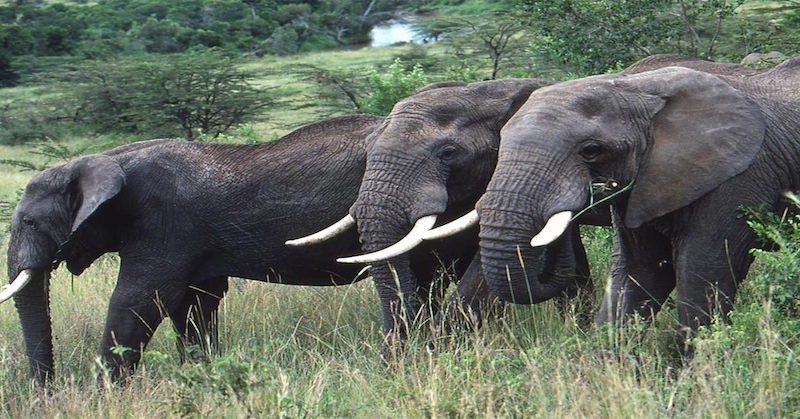
Dosio and two professional hunters were tracking the duikers when they were surprised by a group of female elephants with calves. According to accounts shared with The New York Times, the group initially backed away from the animals, which are known to be particularly aggressive when calves are present. The elephants charged toward the hunting party, reportedly attempting to drive them away.
The herd charged a second time, closing the distance rapidly. During the attack, one of the professional hunters was seriously injured. Another member of the group attempted to pull Dosio to safety behind a tree, but one of the elephants attacked again, fatally goring him with its tusk.
The dense forest played a critical role in how events unfolded. In open terrain, a hunting party can often see an elephant herd at a distance and change course. In the Lope-Okanda, visibility can drop to just a few yards. Under the strict licensing laws that governed this particular trip, Dosio could not bring his own firearms. The hunting company supplied a shotgun and cartridges for the duiker hunt. A shotgun is not a weapon designed to stop a charging elephant, and with his professional guide already down and separated from his gun in the thick brush, the situation escalated beyond any reasonable point of control.
Collect Africa, the safari operator, confirmed Dosio’s death. His body was being repatriated to America with assistance from the U.S. Embassy.
Who Was Ernie Dosio?
Dosio was the owner of Pacific AgriLands Inc., which has its own 12,000-acre vineyard in Modesto but specializes in providing management for local wine farms. His son Jeff serves as president of the company, which also supplies custom vine harvesting equipment throughout the region.
Beyond business, Dosio was a figure of some standing in his community. A longtime Elks member, Dosio received a tribute from Tommy Whitman, the secretary of Lodi Lodge 1900, who wrote on Facebook: “May all of our thoughts and prayers go out to his family and loved ones.” Whitman said Dosio had held the rank of “great Elk” and had been a “pillar in our community.”
Dax McCarty, head of hunting operations at Wagonhound Outfitters in Wyoming and a close friend, said Dosio had become a regular hunting client of Wagonhound’s over a decade ago, and that they had last hunted together just months before his death, tracking white-tailed deer in Wyoming.
Over the decades, Dosio had hunted elephants, leopard, rhino, buffalo, and lion across Africa, and had hunted almost every species of wild deer in the United States. A retired hunter in Cape Town who knew him personally told reporters that “Ernie has been hunting since he could hold a rifle and has many trophies from Africa and the US. Although many disagree with big-game hunting, all Ernie’s hunts were strictly licensed and above board and were registered as conservation in culling animal numbers.”
McCarty said Dosio, whose home was filled with stuffed exotic animals, had been well aware of the dangers of big-game hunting and “knew the risks,” though he couldn’t recall any close encounters that Dosio had experienced in the past.
Why Elephant Cows With Calves Are So Dangerous
Understanding why this encounter turned fatal so quickly requires understanding what makes female elephants with young so uniquely dangerous. Female elephants are extremely protective of their young. Their space must be respected because if they or their calf feel threatened, a determined charge will follow. If a female charges, it will always be with intention.
If elephants feel that their calves or group members are in danger, they may become defensive and aggressive toward perceived threats, including humans. This can happen if humans come too close to their calves, surprise them, or enter their territory.
The dense forest adds another layer of danger specific to Gabon’s environment. Forest elephant groups tend to be smaller and more fluid than savanna herds, often comprising just a mother-calf unit or a small family group. Smaller groups may use more direct aggression when threatened rather than the massed defensive formations seen in large savanna herds. In thick brush, there is almost no time to identify the type of charge – bluff or genuine – before the animals are already on top of you.
The forest elephant is also a distinct species in its own right, recognized separately only since 2021. It is smaller than its savanna cousin, but that does not make it less formidable. Dosio’s hunting party stumbled into five cows with a calf. In that configuration, in that terrain, there was very little room to maneuver.
Gabon’s Elephants: A Critically Endangered Population
The Lope-Okanda forest where Dosio was killed is not just any patch of African jungle. It sits in the heart of one of the planet’s most important remaining strongholds for a species that is, in the full scientific sense of the word, on the edge.
Following population declines over several decades due to poaching for ivory and loss of habitat, the IUCN lists the African forest elephant as Critically Endangered on its Red List of Threatened Species. The African forest elephant population has declined by more than 86 percent over the past three decades.
Central Africa remains the species’ stronghold, home to nearly 96 percent of forest elephants, with densely forested Gabon hosting approximately 95,000 individuals. According to the Wildlife Conservation Society, Gabon holds roughly 60 percent of the remaining global population of African forest elephants, making it the single most important country on Earth for the species’ survival.
The most recent population assessment, published by the IUCN African Elephant Specialist Group using improved DNA-based survey techniques, counted approximately 135,000 African forest elephants across the species’ range. The headline number sounds hopeful, but the IUCN is clear that the animals remain Critically Endangered and are under continued threat from poaching and habitat destruction. The species’ slow reproductive rate means it cannot bounce back from population losses the way faster-breeding animals can.
Gabon’s commitment to its elephant population is, by regional standards, genuine. In 2016, Gabon’s national parks agency created a 240-strong special forces unit to tackle poaching and other wildlife crimes in national parks. That investment has helped Gabon maintain its position as the one country where forest elephant numbers have remained relatively stable, which makes the setting of Dosio’s death in those same forests particularly sharp.
If you want to understand the longer history behind big-game hunting and elephant conservation in Africa, this prior elephant hunting case covered by The Hearty Soul explores exactly that tension in detail.
The Conservation Debate: Hunting Always Triggers
Every time a high-profile hunting death reaches global media, it restarts a conversation that has no easy resolution. Dosio’s associates were careful to describe his hunts as fully licensed and framed within conservation frameworks. The retired Cape Town hunter quoted in media reports described all of Dosio’s Africa trips as “strictly licensed and above board and were registered as conservation culls to manage animal numbers.”
That argument has supporters in some conservation circles, particularly in regions where legal hunting revenue funds anti-poaching operations and community livelihoods. But it sits uneasily when applied to a Critically Endangered species living in one of its last remaining strongholds.
Poaching for the illegal ivory trade remains the most immediate threat to African forest elephants, according to WWF. At the same time, as human populations expand and more land is converted for agriculture and infrastructure, conflict between people and elephants is growing significantly. That growing conflict is partly what makes Gabon’s forest so volatile. Animals exposed to poaching and sustained human pressure respond differently to sudden encounters. Repeated negative interactions with humans can sensitize populations to react more aggressively and escalate to defensive behavior far more quickly than animals in lower-pressure environments.
The elephants that killed Ernie Dosio were doing exactly what generations of survival pressure had taught them to do.
Read More: African Elephant Kills Big Game Hunter
What This Means for You
For most people reading this, a hunting trip to a Central African rainforest is not on the agenda. But the story carries lessons that reach well beyond hunting, touching on how we think about wild animals, personal risk, and the precarious state of some of the world’s most extraordinary creatures.
Gabon is a stronghold for the African forest elephant, a species the IUCN Red List of Threatened Species classifies as Critically Endangered. The animals living there have not been domesticated, habituated to tourism vehicles, or managed for human comfort. They are, in every meaningful sense, wild. A group of cows with a calf is not a photo opportunity. It is one of the most dangerous configurations in nature, regardless of how experienced the person approaching them might be.
Dosio was not reckless. He was, by all accounts, a knowledgeable and safety-conscious hunter with decades of field experience. The encounter still killed him. That fact alone is a blunt reminder of the limits of preparation when instinct and terrain and bad timing converge. For anyone planning wildlife travel in Central Africa, whether as a hunter, a photographer, or a nature tourist, the message is simple: the forest sets the terms, not you.
For the elephants themselves, the picture remains fragile. The latest science confirms they are still present in meaningful numbers in Gabon, but the margins are thin. Poaching pressure has not disappeared, and habitat loss is accelerating. Commercial logging, mining, and the expansion of large-scale infrastructure projects are cutting up what were once continuous forest landscapes. Their survival depends on decisions made in boardrooms and government offices, not just in the forest itself.
Ernie Dosio went out doing something he had loved all his life, in a place he had chosen deliberately, surrounded by people who knew the risks. The elephants that killed him were protecting something they had carried across millions of years of evolution: the life of a calf. Both of those things can be true at the same time.
A.I. Disclaimer: This article was created with AI assistance and edited by a human for accuracy and clarity.
Read More: Food Shortage Kills Tens of Thousands of Penguins Off African Coast