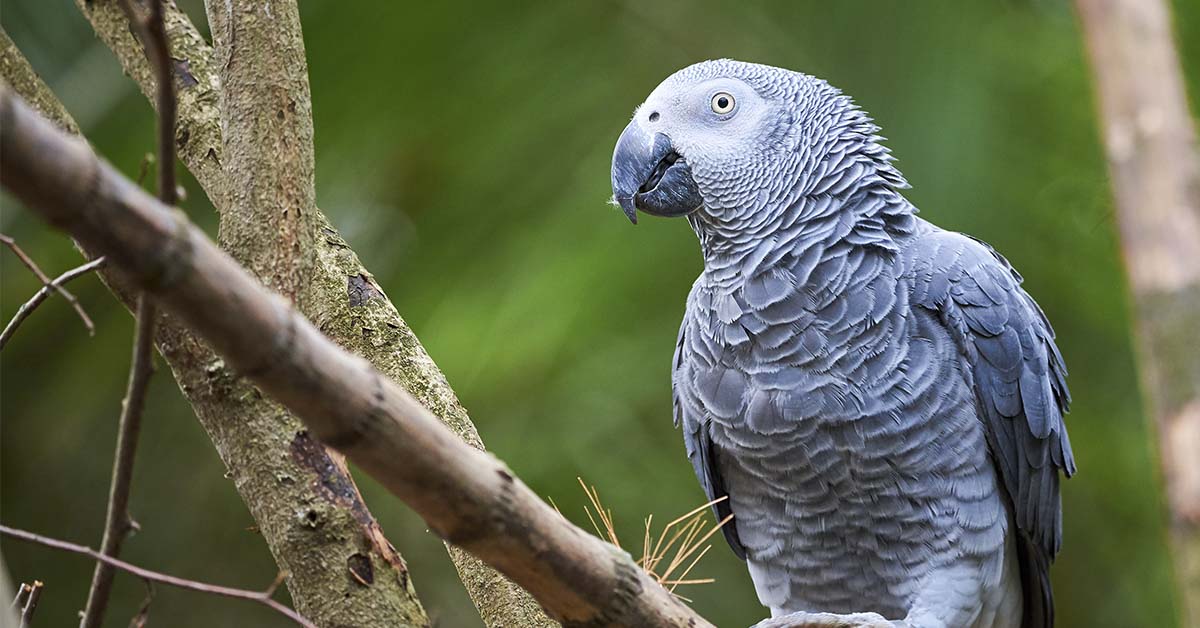

After missing for 4 years, a British parrot was miraculously reunited with its owner, but with a little change. Darren Chick was doubtful he would ever see his avian companion ever again. Nigel, an African Grey parrot, had vanished from his Torrance, California home 4 years earlier. The reunion took place in 2014 after a local veterinarian from Southern California, Teresa Micco, tracked Nigel’s microchip back to Chick. She initially mistook Nigel for her own missing parrot but discovered he was not and tracked down Chick to return Nigel to him. The reunion brought immense joy, but Nigel came back a little different.
Nigel no longer spoke with the British accent. Instead, the parrot now spoke in Spanish, mimicking phrases from a language Chick had never spoken. The transformation left Chick stunned. “It’s really weird. I knew it was him from the minute I saw him,” Chick told reporters. Nigel had somehow adopted an entirely language and accent in his travels and absence.
How a Microchip Led to an Unexpected Reunion
Teresa Micco thought she had found her own missing parrot when a woman brought in a bird matching her lost pet’s description. However, a quick scan of the microchip embedded in the parrot contained a unique identification number, linked to the owner. Micco traced the number through a registry database and discovered that Nigel’s owner was Darren Chick, a British-born citizen currently residing in Torrance. According to Micco, when she introduced herself to Chick, she initially asked him ‘Have you lost a bird?’ to which he initially denied. “He looked at me like I was crazy,” she stated.
However, after verifying Chick’s name and explaining that a woman named Julia Sperling found Nigel, the confusion was cleared. The chip helped reunite Nigel with his original owner after four long years. Without this technology, the parrot might never have found his way home.
Four Years Gone
Julia Sperling discovered the chatty parrot and quickly realized he was special. She explained that the bird sang constantly and mimicked everything around him, from dog barks to Spanish phrases. “He was the happiest bird. He was singing and talking without control,” Sperling said. Born in Panama, Sperling immediately identified that Nigel was uttering Spanish words his beak. “I’m from Panama and he was saying, ‘What happened?’ in Spanish,” she recalled. The parrot had clearly spent significant time with Spanish speakers. His vocabulary reflected hours of exposure to a new language and culture. Research shows parrots learn by absorbing sounds from their environment. They pick up words, phrases, and even emotions from the people around them.
The Heartwarming Truth Behind Morgan’s Story
After the story made headlines over 10 years ago, a family contacted Darren Chick with surprising news. They believed Nigel was actually Morgan, a parrot they had purchased at a garage sale a few years earlier. It is believed that while Nigel was missing, he had been adopted by a new family and they named him Morgan. After his disappearance earlier that month, the family was left heartbroken.
Liza Smith, who said her grandparents purchased Nigel, explained that her Guatemalan-born grandfather had formed a bond with Morgan. After Smith’s grandmother had passed away 2 years prior, the only companion her grandfather had was Morgan. The grandfather had taught Morgan Spanish phrases during their time together. “My grandma passed away about two years ago, and he is one of the last mementos for my grandpa,” Smith shared. “Morgan’s loss has been hard on him. They have a very special bond”. Faced with this emotional reality, Chick made a compassionate decision. He returned Nigel to the family who had cared for him in his time of absence.
Understanding African Grey Parrots
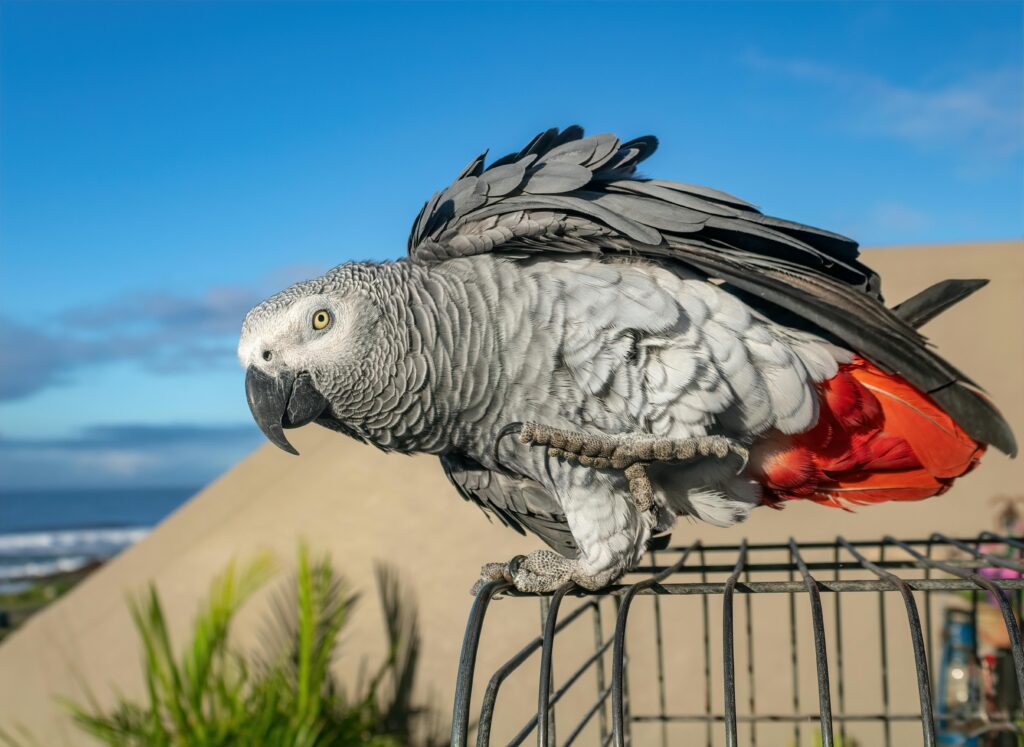
African Grey parrots rank among the world’s smartest birds. These medium-sized birds originate from the rainforests of Central and West Africa. Their distinctive grey plumage and striking red tail feathers make them easy to identify. African Greys typically weigh between 400 and 600 grams and measure about 13 inches long. These remarkable birds can live 25 to 50 years in captivity with proper care. Some parrots have been recorded living up to 80 years old. Their impressive lifespan means owning an African Grey requires a lifelong commitment. The birds form strong emotional bonds with their human companions. They thrive on social interaction and need several hours of mental stimulation daily.
The Science Behind Parrot Intelligence
African Grey parrots possess cognitive abilities comparable to those of 4 to 6-year-old children. Scientists have documented their capacity for problem-solving, counting, and understanding abstract concepts. The famous parrot Alex, studied by Dr. Irene Pepperberg for decades, learned over 100 words. Alex could identify colors, shapes, and materials with remarkable accuracy. He even demonstrated understanding of zero and basic arithmetic.
Research shows African Greys have proportionally larger brains than many primates. They can use tools to solve problems and understand cause and effect. Studies reveal these parrots can perform inference by exclusion, a complex reasoning skill. They also create new words by combining known vocabulary, such as calling an apple a “banerry” because it looked like a cherry but tasted like a banana.
Read More: 30 Smartest Animals in the World
How Parrots Learn and Mimic Human Speech
Parrots possess specialized brain structures that enable vocal learning. Scientists have identified a unique “core and shell” structure in parrot brains. The core controls basic vocal functions, while the outer shell region enhances their imitation abilities. This shell region is larger in species known for excellent mimicry, including African Greys. The structure resembles areas in the human auditory cortex.
Parrots use a highly developed vocal organ called the syrinx to produce sounds. This organ allows them to mimic a wide range of frequencies and tones. However, mimicry does not always correlate to understanding. Without training, most parrots will not grasp the full meaning of words they repeat. They do understand context and timing, knowing when to use certain phrases appropriately. Research shows parrots can learn meaningful vocabulary through careful, social training methods.
Can Parrots Really Learn Multiple Languages?
Parrots can learn words from any language they hear regularly. African Greys have the largest mimicry repertoires, averaging about 60 words. Some individuals learn hundreds or even thousands of words. Cockatoos, Amazons, and Macaws also excel at mimicry, typically learning 20 to 30 words. The birds absorb vocabulary just like human children do. They hear sounds repeatedly, form memories, and practice reproducing those sounds.
Environmental exposure drives language acquisition in parrots. Nigel learned Spanish because he spent 4 years with a Spanish-speaking family. Research confirms parrots adapt their vocalizations to match their social groups. In the wild, they adopt the calls of flock members to strengthen bonds. Pet parrots view their human families as their flock. They learn the sounds most frequently used by their caregivers.
The Power of the Human-Parrot Bond
Parrots form powerful emotional connections with their human companions. These intelligent birds recognize individual voices and faces. They express joy, fear, love, and even jealousy. African Greys are particularly sensitive to their owner’s emotions and moods. They seek affection and actively participate in family life. The bond between a parrot and its owner provides significant mental health benefits for both.
Parrots offer companionship and reduce feelings of loneliness. Caring for a parrot creates structure and purpose in daily routines. The Smith family’s grandfather found comfort and companionship in the bird after losing his wife. Darren Chick’s decision to return Nigel showed profound respect for that bond. “We’re just over the moon,” Smith said when reunited with the parrot. These connections transcend simple pet ownership and become genuine family relationships.
Read More: Parrots in wildlife park moved after swearing at visitors