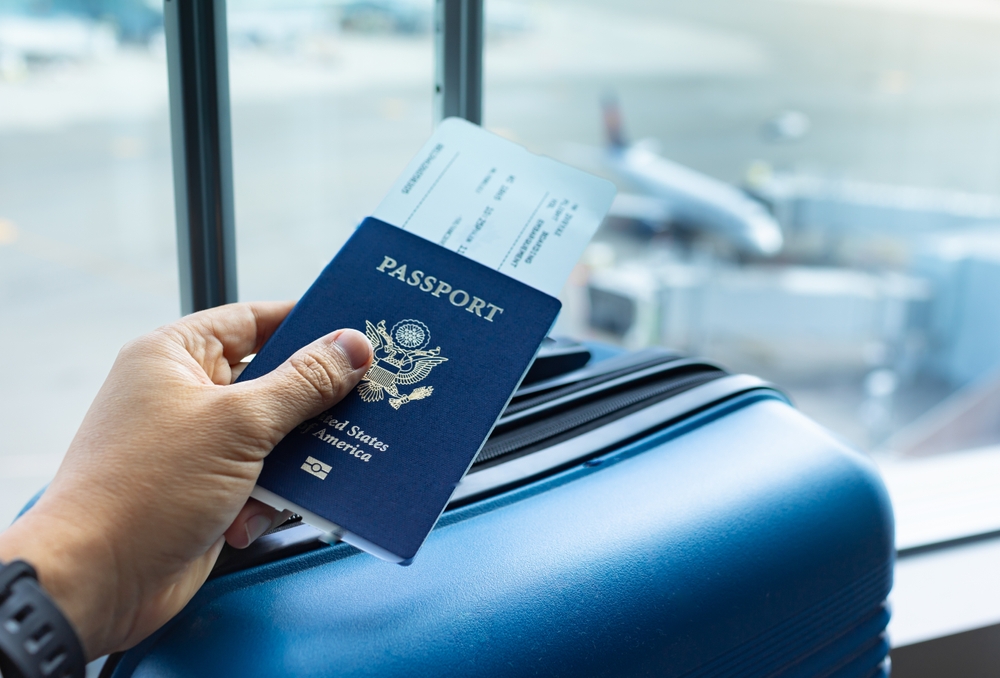

Tens of millions of Americans haven’t thought about their passport in years. It sits in a drawer somewhere, maybe a little dog-eared, maybe close to its expiration date, and mostly forgotten until a trip is a few weeks away. That’s precisely when the complications begin.
Right now, in the spring of 2026, new rules, record-breaking application volumes, and active government enforcement are making the U.S. passport system considerably more complex than most travelers realize.
The rules governing who can get a passport, who can keep one, and what happens when you apply have moved more in the past 12 months than in any comparable period in recent memory. Some changes directly affect millions of people. Others are procedural but carry real consequences if you don’t know about them. Whether you’re renewing, applying for the first time, or simply checking that your document is still valid, a lot has changed.
This report breaks down every major development in the U.S. passport system as of May 2026, from updated fees and photo requirements to a new government enforcement campaign that could strand some Americans abroad before they even know there’s a problem.
Record Demand Is Putting the System Under Pressure
The starting point for understanding almost everything else about the current passport environment is demand. The U.S. Department of State issued 27.3 million passports in Fiscal Year 2025, surpassing the previous record of 24.5 million by nearly 3 million documents. That figure, reported by U.S. Passport Service Guide, reflects the cumulative effect of post-pandemic travel recovery, REAL ID enforcement, and a growing American appetite for international travel.
The State Department’s April 2026 data indicates demand is still at an all-time high, with the Bureau of Consular Affairs forecasting an unprecedented 24.6 million applications for the current fiscal year, surpassing the 23,308,976 applications filed in FY 2025. That volume creates practical pressure immediately: the system is strained, and applicants who don’t plan ahead are the ones who pay for it.
Applicants currently wait about four to six weeks for routine processing, according to Matt Pierce, the State Department’s deputy assistant secretary for passports, speaking at Federal News Network’s CX Exchange 2026. Pierce clarified that published processing windows cover only the period an application sits under review at a passport agency or center, and exclude the time applications spend in transit by mail in either direction. During peak periods, those extra steps can add several weeks, pushing total renewal timelines to as long as three months for otherwise straightforward cases.
State Department guidance indicates that passport processing runs fastest from October through December, when international travel volumes drop. Processing lengthens from late winter through summer as applications surge ahead of spring break, summer vacations, study-abroad programs, and overseas family travel.
Updated Fees: What You’ll Pay in 2026
New U.S. passport fees took effect on April 8, 2026: adults pay $165 for first-time passport books, $130 for renewals, and children pay $135. Those figures come from Visa Verge’s reporting on the State Department’s updated fee schedule.
To understand the real cost, it helps to know how the fee structure works. Adults applying for the first time now pay $165 total for a Passport Book, $65 total for a Passport Card, or $195 total for both. Those totals apply to applicants age 16 and older using Form DS-11. Each first-time adult total combines an application fee with a separate $35 execution fee: for a Passport Book, the breakdown is $130 application fee plus $35 execution fee.
Renewals filed by mail or online do not include the $35 execution fee. The State Department’s 2026 passport renewal fee is $130 for an adult book, $30 for a card, or $160 for both. Verified against the State Department’s official schedule in May 2026 by GovPlus, those base fees are only part of the picture. Optional costs add up: a passport photo runs $0 to about $17, expedited service costs an extra $60, and 1-to-3-day delivery on the return mailing is $22.05. Most renewers end up paying between $145 and $215 once photo and shipping choices are factored in.
One fee worth flagging: the $60 expedited service fee may be refundable if the agency fails to meet the stated processing time, according to U.S. Passport Service Guide’s 2026 fee chart. Many applicants don’t know this protection exists.
Child Passports
Passports for children under age 16 are valid for five years, while adult passports are valid for 10 years, according to the Bureau of Consular Affairs. Minors under 16 cannot renew a passport and must apply in person. The cost of a minor passport without expedited services is $100 plus a $35 execution fee. Both parents generally need to appear for a child’s application, or a notarized consent form must be provided if one parent cannot attend.
Online Renewal: Who Qualifies
One of the more significant operational shifts of recent years is the expansion of online passport renewal. Eligible U.S. citizens who want routine service can renew their passports online, but the only official, authorized portal is opr.travel.state.gov. Other websites or companies claiming to renew your passport online may be fraudulent.
The eligibility criteria are specific. The passport being renewed must have been valid for 10 years, and it must be expiring within 1 year or have expired less than 5 years ago. Applicants must also be age 25 or older, not changing personal information such as name or sex, and not traveling for at least 6 weeks from the date of application submission. You must also be located in a U.S. state or territory at the time you apply.
If you don’t meet all those conditions, renewal by mail or in person is required. Applying when your passport has 9 to 12 months of validity remaining is the recommended approach to ensure a comfortable buffer. For online renewal specifically, you must wait until your passport is within 1 year of expiry, or has already expired less than 5 years ago.
Stricter Photo Requirements
The State Department has tightened passport photo enforcement significantly over the past 12 months, and those changes are fully in effect. Beginning October 2025, the department implemented enhanced restrictions on digital editing, AI filters, and image manipulation. More than 300,000 applications were rejected in 2024 due to non-compliant photos, prompting these new enforcement measures.
Starting January 1, 2026, photos digitally altered by AI tools face automatic rejection, according to Passport Factory’s April 2026 renewal guide. All passport photos must have been taken within six months of the application submission date to reflect current appearance. For online renewals specifically, digital photos must be between 600×600 pixels and 1200×1200 pixels as JPEG files sized 240 KB or less.
Smartphone selfies rank as the top cause of passport photo rejections, according to biometric security researchers. A professional photo or a carefully prepared compliant image from a photo booth remains the safest option. Getting the photo wrong doesn’t pause the application clock – it holds up the entire process.
The Six-Month Validity Rule
Millions of Americans get caught off guard by a rule the U.S. government doesn’t enforce but that foreign countries and airlines do. The six-month rule requires your passport to remain valid for at least six months from the date of your entry to the country you’re visiting. That buffer exists because many countries won’t accept a passport that’s close to expiring, regardless of whether it technically hasn’t expired yet.
Most countries, and many airlines, deny boarding if your passport expires within six months of your travel date. This is not a U.S. rule. Destination countries and airlines enforce it independently. If your passport expires in December 2026 and your trip departs in July 2026, you may face boarding denial even though your passport is technically valid on the departure date.
The Schengen Zone in Europe operates under a three-month rule instead, requiring your passport to be valid for at least three months from the date of entry. That’s a somewhat more lenient threshold, but it still catches travelers who assume a technically valid passport is automatically good to go.
The practical takeaway: if your passport has less than six months of remaining validity, renewing before you travel is the right move regardless of whether it has technically expired.
Special Passport Acceptance Fairs: What They Are and Who They’re For
In direct response to the volume surge, the Bureau of Consular Affairs announced on February 26, 2026, that passport acceptance facilities around the country would hold hundreds of special acceptance fairs through May to meet soaring demand ahead of the summer travel season.
Special passport acceptance fairs run on evenings and weekends, or at special locations. Passport acceptance facilities such as post offices, clerks of court, and libraries host them, offering passport services outside of regular hours. Passport agencies may also host events. These fairs target first-time applicants, children, and anyone who must apply in person using Form DS-11. Events at passport agencies may accept renewals as well.
The Bureau of Consular Affairs has scheduled more than 80 special fairs at post offices, libraries, and county offices nationwide through late May. The Department posts an updated list each Monday, and travelers can check the current schedule at travel.state.gov.
To be clear about who these fairs help: they are not for adult travelers renewing their passports, since renewal can be done conveniently online. They are specifically for first-time adult applicants and children under 16, both of whom must apply in person using Form DS-11. Applicants need to bring an original long-form birth certificate or naturalization certificate, a photocopy, photo ID, and two 2×2-inch photos. Many sites require appointments booked by phone; others operate first-come, first-served.
For anyone who needs a passport urgently, in less than two weeks, the State Department operates 26 special agencies and centers. Appointments at those locations are limited and generally reserved for documented urgent travel.
Passport Revocations for Child Support Debt
This is the development that will affect the most people who don’t see it coming. In May 2026, the State Department significantly expanded a passport enforcement program that has existed since 1996 but was rarely applied to existing passport holders.
Until recently, only people who actively applied to renew their passports faced this penalty. Under the expanded policy, HHS informs the State Department of all past-due payments of more than $2,500, and parents in that group who hold valid passports can have them revoked. PBS NewsHour’s reporting confirmed the scale and mechanics of the change.
Revocations began with parents who owe $100,000 or more in past-due child support, a group that includes about 2,700 passport holders according to figures from the Department of Health and Human Services. The program will expand further. Under federal law, anyone with more than $2,500 in unpaid, court-ordered child support can face passport denial or have an existing one revoked, as confirmed by the State Department’s official child support guidance.
The consequences are severe and immediate. A revoked passport cannot be used for travel even after child support debt has been paid. Once payment is made, the state must update HHS, and HHS must then update the State Department – a process that takes at least two to three weeks, which can seriously affect urgent travel plans, according to the State Department’s own guidance.
Any American abroad at the time of revocation must visit a U.S. embassy or consulate to obtain an emergency travel document to return to the United States.
Since the inception of the Child Support Enforcement Passport Denial Program, combined collections have reached nearly $621 million, with $30 million collected in 2024 alone, according to Congressional Research Service data. The May 2026 expansion will push those numbers higher.
The 250th Anniversary Commemorative Passport
One final development is less a rule change and more a historical first. In late April 2026, the State Department announced a limited run of commemorative passports to mark America’s 250th birthday. According to Politico, the department plans a limited release featuring a picture of President Donald Trump. The concept had been under consideration for months before approval, and the design is a notable departure from the standard booklet Americans are used to.
Between 25,000 and 30,000 of the new passports will be available to applicants at the Washington, D.C., passport office beginning shortly before July 4. This is a deliberately limited rollout, not a nationwide policy change. The commemorative passport will be the default document for people applying in person at the Washington office, although anyone who wants a standard passport can get one by applying online or outside Washington. There will be no additional fee for the commemorative version.
Read More: Thousands Of Americans To Be Stripped Of U.S. Passports From May 8 Under Newly Enforced Debt Rule
What to Do Before Your Next Trip
The U.S. passport system in 2026 is operating at record volume, with new rules layered on top of already-stretched processing capacity. The good news is that every risk here is manageable if you act early.
Start by pulling out your passport and checking the expiration date today. If you have less than six months of validity remaining before a planned trip, begin the renewal process now. Applying at least three to six months before your departure date gives you a buffer that covers routine processing time, mailing delays, and any correction requests. For online renewal, confirm you meet all five eligibility criteria before starting, and submit a compliant photo – not a smartphone selfie, and nothing touched by an AI editing tool. For in-person applicants and parents applying for a child’s passport, check the Bureau of Consular Affairs’ updated list of acceptance fairs at travel.state.gov each Monday, since those evening and weekend slots can cut weeks off your timeline.
If you carry any child support debt, this is the most urgent item on your list. Under the expanded May 2026 enforcement program, the State Department can revoke an existing passport for arrears above $2,500. Contact the relevant state child support agency to resolve any outstanding balance before that balance resolves itself by taking your travel document. Once a passport is revoked, clearing it takes a minimum of two to three weeks even after you’ve paid in full, according to the State Department’s official guidance. That’s not a delay most travel plans can absorb.
AI Disclaimer: This article was created with the assistance of AI tools and reviewed by a human editor.
Read More: New US Passport for 250th Anniversary Revealed: What to Know