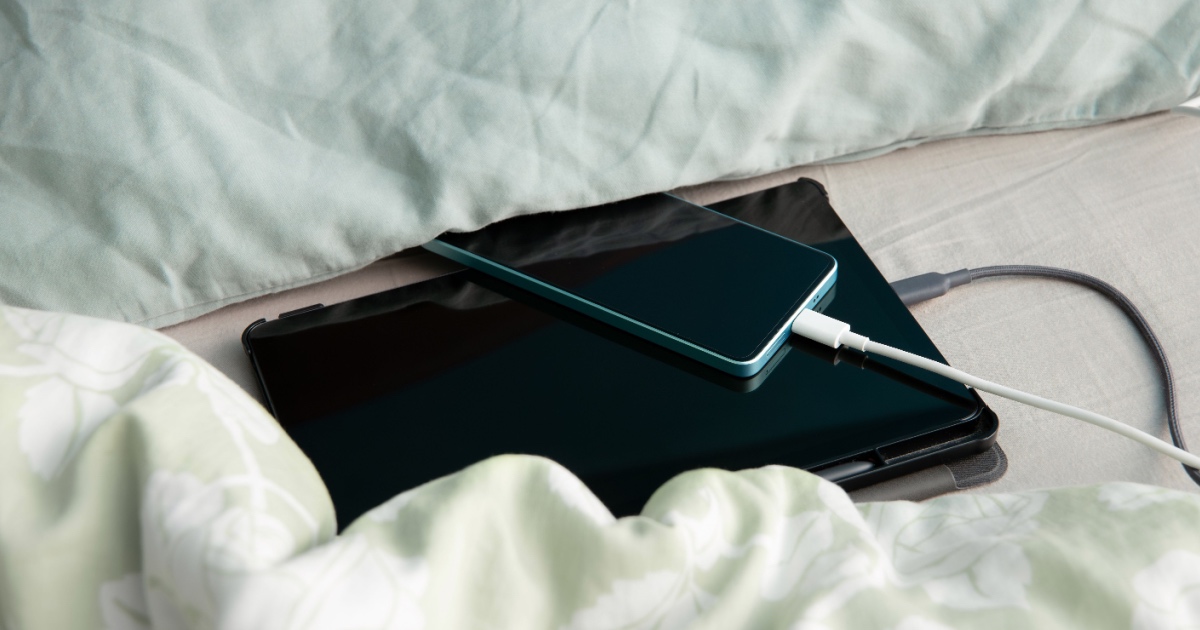

Your phone passed its radiation safety tests on a desk. Not in your pocket, not pressed against your chest, and certainly not tucked inside a bra. The gap between those two scenarios is exactly where the problem begins, and most people have no idea the gap even exists.
Phone manufacturers test radiofrequency (RF) radiation absorption at a standardized distance from the body, typically 5 to 15 millimeters. Place your device flush against your skin and the absorption rate climbs fast. The rapid global increase in mobile phone use has raised concerns about the potential long-term health effects of radiofrequency electromagnetic fields. Independently, the International Agency for Research on Cancer (IARC) classifies RF electromagnetic fields as a possible carcinogen. The science isn’t settled, and there’s legitimate debate about the risk levels involved. But the phone storage locations covered below go beyond radiation alone. Heat, bacteria, spinal mechanics, and disrupted sleep chemistry all have a role to play, depending on where you stow your device.
These are the eight phone storage locations you should rethink, starting today.
1. Your Front Pants Pocket

The front pocket is the default choice for hundreds of millions of men, and it turns out to be one of the worst options from a reproductive health standpoint. Radiofrequency electromagnetic fields are classified by the IARC as “possibly carcinogenic,” but the fertility concern operates through a different mechanism: heat and direct RF exposure to sensitive tissue.
Some animal studies have observed biological effects after prolonged exposure to high-intensity RF radiation, though these involve levels well beyond typical human exposure. Human data is more directly relevant here. A 2023 study published in Fertility and Sterility – a nationwide cross-sectional study of 2,886 Swiss men aged 18 to 22 – found that frequent mobile phone use was associated with lower sperm concentration and total sperm count. Researchers at the University of Geneva, who conducted the study, noted that men who used their phones more than 20 times per day showed the most pronounced declines in sperm concentration.
Sperm quality aside, there’s also a straightforward heat issue. Lithium-ion batteries generate warmth during normal operation, and the groin runs warmer than most body regions to begin with. The combination of device heat and ambient body temperature near reproductive organs is one reason fertility specialists routinely advise men to keep phones out of their front pockets during prolonged sitting.
2. Your Back Pocket
The back pocket problem has little to do with radiation and everything to do with mechanics. This occurs so often it’s beginning to take on a name: “cell-phone sciatica.” The sciatic nerve is located in the lower back and runs through the buttocks and legs, extending all the way to the foot. It is the longest and widest nerve in the human body.
While any object in the back pocket can cause the issue, wallets, tool belts, and phones all apply pressure to the sciatic nerve when sat on routinely, causing pain and potential damage to the back. The nerve sits directly beneath the piriformis muscle in the buttock. A phone wedged beneath that area while you sit for an hour at a desk, in a car, or at a restaurant applies consistent compression at exactly the wrong spot.
Pain, tingling or numbness in the legs, or discomfort made worse by sitting can all indicate a pinched sciatic nerve. Disc MD Group, a national spine surgery and sports medicine practice, notes that any object in the back pocket “can apply pressure to the sciatic nerve and cause pain and potential damage to the back.” Beyond sciatica, sitting asymmetrically on a raised object tilts the pelvis, which throws spinal alignment off through the lumbar and thoracic regions over time. The fix is simple: move the phone to a bag or jacket pocket before sitting down.
3. Your Bra

This is one of the most debated phone storage locations, and the evidence is far from settled. A handful of case reports have described women developing breast cancers in the same area where they routinely carried their phones in their bras. While these reports raised questions for researchers, case reports cannot determine whether the phones caused the cancers.
Some observational studies have also suggested a possible association between prolonged, close contact with cell phones and breast cancer risk. For example, one meta-analysis reported an increased risk among women who stored phones in their bras, while another study found higher breast cancer risk among participants who habitually kept smartphones closer to their bodies. These findings have limitations, however, and do not establish a cause-and-effect relationship.
Major health organizations, including the American Cancer Society and the National Cancer Institute, state that there is currently no definitive scientific evidence that the radiofrequency (RF) energy emitted by cell phones damages DNA or causes breast cancer. At the same time, because RF exposure decreases rapidly with distance, some experts recommend avoiding prolonged, direct contact with the body as a simple precaution.
Cell phone manufacturers often advise keeping phones a small distance away from the body to ensure RF exposure remains within regulatory testing limits, though many users are unaware of these recommendations. The American Academy of Pediatrics also advises avoiding carrying a phone directly against the body, such as in a pocket, sock, or bra. If you’re accustomed to storing your phone in your bra, a purse, jacket pocket, or other bag is an easy alternative.
4. Under Your Pillow
Sleeping with a phone under the pillow is surprisingly common, particularly among younger adults who use their devices as alarm clocks. Two separate problems converge here: sleep chemistry and fire risk.
Turning your phone to airplane mode with Bluetooth off shuts off the radiation, but most people don’t do that. More immediately, the screen itself becomes an issue if checked during the night. WiFi and Bluetooth signals have been linked to poorer sleep quality. Blue light from screens disrupts melatonin production, but electromagnetic signals may also play a role in affecting sleep patterns. A 2024 study in Brain Communications concluded that “avoiding smartphone use in the last hour before bedtime is advisable for adolescents and young adults to prevent sleep disruption.”
The fire risk is more concrete. Using wired computers and keeping devices away from soft surfaces during charging is consistently recommended by safety experts. Charging under a pillow traps heat that the phone’s cooling system cannot dissipate, and according to battery safety researchers, “tucking your phone under a pillow or letting it get buried under blankets causes heat buildup to dangerous levels.” The solution: charge on a hard, flat nightstand surface, and if you need an alarm, put the phone across the room.
5. In a Hot Car
A phone left on a car dashboard or front seat in summer can reach internal temperatures well above what the battery is designed to tolerate. Car interiors can exceed 70°C (158°F) on a hot day, even with windows cracked.
Lithium-ion battery degradation shows that anything over about 30 degrees centigrade will start negatively impacting a lithium-ion battery, causing accelerated capacity loss over time. This isn’t just a battery life issue. Extreme heat can cause lithium-ion cells to swell, crack their casings, and in rare but documented cases, enter thermal runaway – the process behind phone fires and explosions.
Beyond hardware damage, extreme temperature exposure degrades the adhesive layers that hold screen components together, accelerates processor wear, and can corrupt the memory chips that store your data. Regularly leaving your phone in a hot car shortens the entire device lifespan, not just the battery. Park the phone in a shaded bag or take it with you.
6. Pressed Against Your Face During Long Calls
Holding your phone directly against your ear during a long call is one of the highest-exposure phone storage locations in terms of RF radiation, simply because the antenna is as close to your brain as it ever gets.
A 2025 WHO-funded systematic review of animal studies – published by Mevissen et al. and reviewed in Environment International – found high-certainty evidence linking RF radiation exposure to gliomas (a type of brain tumor) in rodents and malignant schwannomas (tumors affecting nerve tissue) in the heart. The review authors noted that the same tumor types observed in animal studies have also appeared in human epidemiological research, though the direct causation link in humans remains under active scientific debate. Separately, skin contact during calls creates a bacterial transfer issue. A 2023 study in a peer-reviewed journal found that smartphone surfaces can come into direct contact with the face while talking, and that approximately 1.75 million bacteria exist on a single smartphone touchscreen, with activity remaining stable for at least 48 hours.
Use speakerphone, wired earbuds, or Bluetooth headsets for calls longer than a few minutes. Each option creates physical distance between the antenna and your skull, reducing both radiation exposure and bacterial skin contact simultaneously.
7. In Your Pocket While Charging via Power Bank
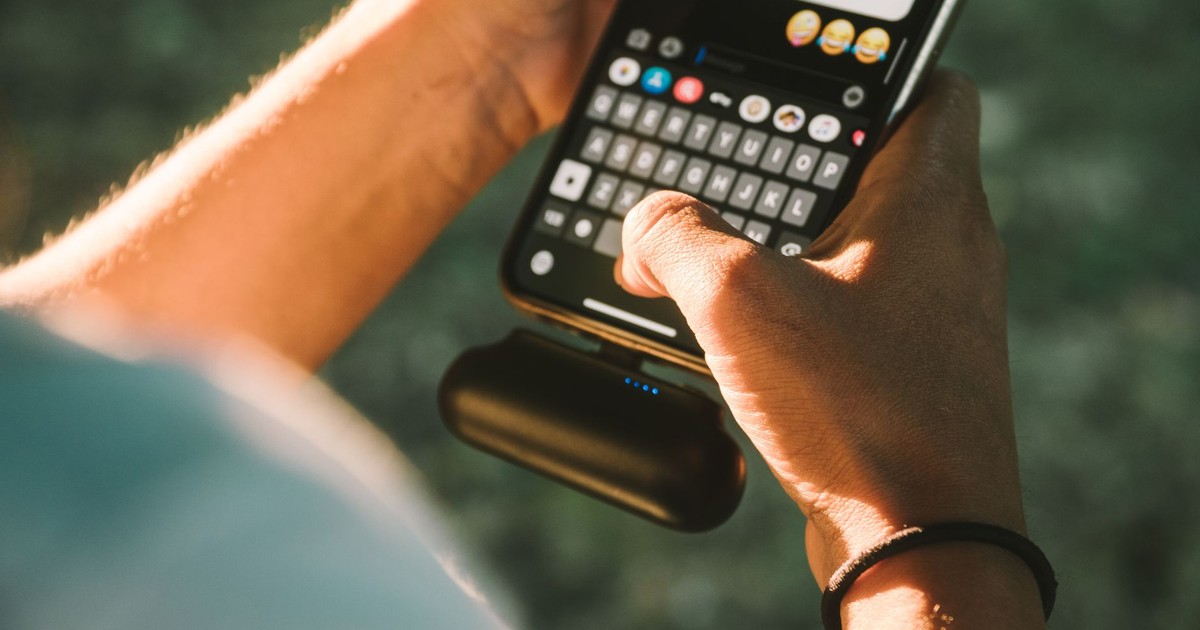
Keeping a phone in your pocket while it charges from a portable power bank is a growing habit, particularly during travel. The combination of active charging, a warm pocket environment, and restricted airflow creates heat buildup that lithium-ion batteries are not designed to handle well. Charging a lithium-ion battery at high temperatures is dangerous.
According to The Conversation, it’s recommended to keep a battery between 20% and 80% charge to preserve its health, and “once the charge drops to 99%, the battery ‘trickle charges’ to maintain the fully charged state” – a process that generates cumulative heat stress during sustained charging. Doing all of this inside a closed pocket, against body heat, eliminates the airflow a phone needs to regulate temperature.
Beyond battery wear, battery safety data shows that always charging to 100% every night can reduce a battery’s useful life by as much as 20% in just a couple of years. Consistent pocket charging accelerates this. Charge your power bank separately, then use the phone unplugged from your pocket. If you must charge on the go, keep the phone out in the open air rather than in a tight fabric enclosure.
Read More: The Real Cell Phone Risk Almost No One Talks About
8. On Your Nightstand While Charging Overnight – Right Next to Your Head
Nightstand charging sounds benign. The phone isn’t under the pillow, it’s on a hard surface. The problem is twofold: RF radiation proximity during the night and the battery damage pattern created by sustained overnight charging.
On the radiation side, phone manufacturers’ own guidelines state that they “cannot guarantee that the amount of radiation you are absorbing will be at a safe level” when devices are placed directly against the body, with instructions specifying minimum separation distances. A nightstand that puts the phone 15 centimeters from your head is meaningfully different from placing it across the room. For those who sleep deeply without moving much, this means several hours of close RF exposure every night, seven nights a week, year after year.
On the battery side, overnight charging repeatedly cycles the battery through trickle charges at 100%, creating heat stress that degrades battery capacity over time – as the same Conversation researchers noted. Notifications from the screen add another layer of disruption: screen flashes in a dark room register on the retina even through closed eyelids and can fragment sleep architecture without the sleeper realizing it. The fix is the same whether your concern is radiation, battery health, or sleep quality: charge your phone in the kitchen or hallway overnight and use a standalone alarm clock.
What to Do Instead
None of these eight phone storage locations requires a radical lifestyle overhaul to fix. The changes are mostly spatial: a bag instead of a pocket, a charger in the hallway instead of the bedroom, and earbuds instead of pressing the device to your ear. The cumulative difference in RF exposure, body heat stress, bacterial contact, and sleep quality across months and years adds up.
For calls, wired earbuds or speakerphone mode, put a meaningful distance between the antenna and your brain. For carrying, a small bag or jacket pocket keeps the phone off body tissue entirely. For sleep, charging across the room removes radiation proximity, protects the battery, and eliminates the screen light exposure that quietly chips away at sleep quality night after night. The research doesn’t demand you stop using your phone. It does suggest you stop treating it like it belongs permanently fused to your body, because guidance from institutions ranging from the IARC to the American Academy of Pediatrics consistently points in the same direction: distance is your friend.
Disclaimer: The author is not a licensed medical professional. The information provided is for general informational and educational purposes only and is based on research from publicly available, reputable sources. It is not intended to constitute, and should not be relied upon as, medical advice, diagnosis, or treatment. Always consult a licensed physician or other qualified healthcare provider regarding any medical condition, symptoms, or medications. Do not disregard, avoid, or delay seeking professional medical advice or treatment because of information contained herein.
AI Disclaimer: This article was created with the assistance of AI tools and reviewed by a human editor.