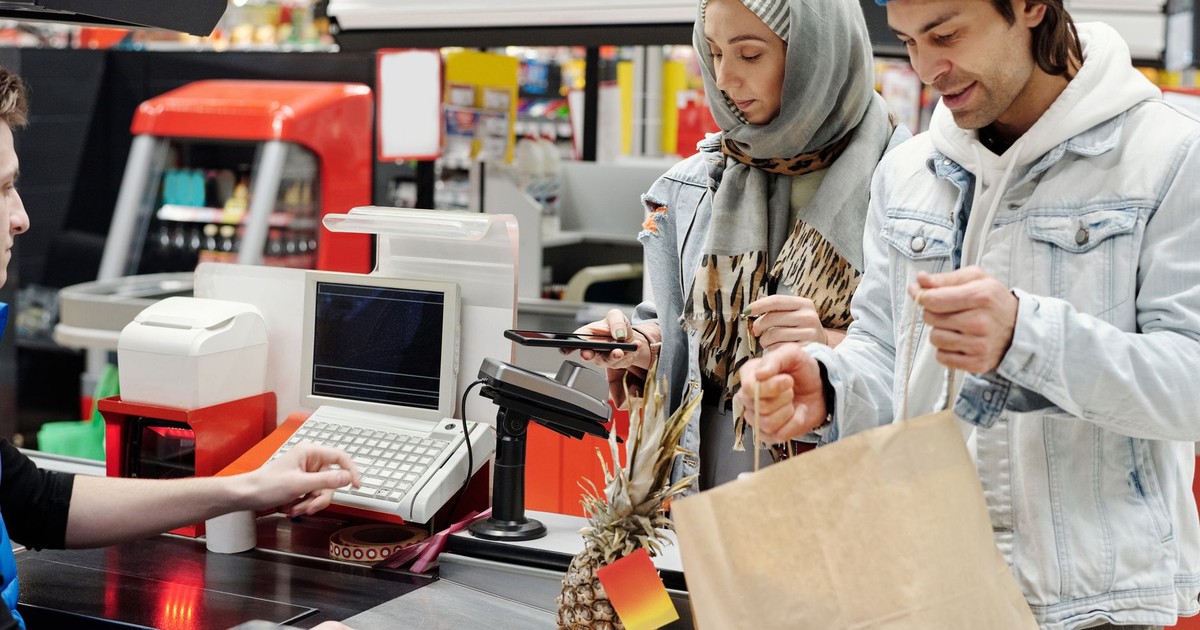

Forty percent of checkout lanes at major U.S. grocery chains are now self-checkout. That’s not a design experiment – it’s a permanent restructuring of how millions of people move through their days. And one thing quietly disappeared when those machines arrived: the last guaranteed human exchange most of us had on a Wednesday afternoon.
A man named Brock Perkins went viral for refusing to use self-checkout at the grocery store. His argument wasn’t about technology or jobs, though both apply. He suggested interacting with cashiers over using self-checkout to bolster social engagement, saying, “It’s gonna help you connect back to your community.” The internet largely agreed. The science agreed too – and the evidence runs considerably deeper than a feel-good exchange about the weather.
Researchers use the term “weak ties” for the small, casual relationships we maintain with people we don’t know well: the kind cashier who always smiles, the bus driver who recognizes your face. Toni Antonucci, the Elizabeth M. Douvan Collegiate Professor of Psychology at the University of Michigan’s Institute for Social Research, has spent decades studying how these relationships shape health across the lifespan, finding that social connections help people feel worthy, capable, and in control of their lives. Self-checkout doesn’t just save you two minutes. It eliminates one of the last reliably recurring weak-tie interactions most people still have in their day.
1. Brief Interactions With Strangers Are Measurably Good for Your Mood

Loneliness is not simply a feeling of abandonment. It manifests as anxiety driven by a lack of human connection or social interaction, leaving people feeling detached, vulnerable, and distressed. What most people don’t realize is how little it takes to push back against that.
Research shows that skipping the self-checkout lane to talk with cashiers can boost mood and help build much-needed community connections. A well-known study on this exact dynamic found that fleeting social moments play an important role in day-to-day life and measurably improve mood and sense of belonging, particularly for people who otherwise move through their days in relative isolation.
The coffee shop version of this has been tested directly. A 2023 study summarized by Psychology Today found that “coffee shop patrons who had genuine interaction with the barista reported more positive mood” compared to those who kept their transaction quick and impersonal. The grocery store cashier is the functional equivalent of that barista for millions of people, several times a week.
2. Self-Checkout Avoidance Protects Against a Real Loneliness Crisis
Despite the convenience of self-checkout kiosks, many shoppers still choose staffed checkout lanes even when lines are longer. One reason is the documented pull of “weak ties” – brief social interactions with strangers – which can improve mood and provide a sense of belonging, particularly for individuals with limited daily social contact.
The baseline is already bleak. A 2025 AARP survey of more than 3,200 U.S. adults aged 45 and older found that 40% reported feeling lonely – a 5-percentage-point increase since the last time the survey was conducted, in 2018. When researchers at the WHO Commission on Social Connection examined population health data in 2025, they linked loneliness and social isolation to 871,000 deaths annually and found that the risk extends to stroke, heart disease, diabetes, and cognitive decline.
If a 90-second conversation at a register is one of the few unscripted human exchanges in someone’s day, dismissing it as trivial misunderstands what daily life actually looks like for a large portion of the population.
3. Face-to-Face Contact Does Something Technology Simply Can’t Replicate

One reason self-checkout avoidance holds up scientifically is that in-person interaction and digital interaction are not the same thing from a biological standpoint. Research published in a 2022 journal study found that “face-to-face interactions reduced momentary stress and boosted mood” significantly more than other interaction types – a finding with direct implications for how we structure the small moments of a day.
A 2026 review of more than 1,000 studies, published in Perspectives on Psychological Science and led by Roy Baumeister at the University of Queensland and Brad Bushman at Ohio State University, found that people are less engaged and don’t experience the same positive emotional responses when using technology to connect compared to meeting in person. “If there is a possibility of meeting in person,” Bushman said, “then using technology instead is a poor substitute.” The mechanism behind this is partly neurochemical. According to Neurolaunch, “positive social contact triggers the release of oxytocin, dopamine, and serotonin” – the biological trifecta of mood regulation and bonding. The 2026 review was an observational synthesis of existing literature, not an experimental trial, but the consistency of findings across more than a thousand studies gives it considerable weight.
A self-checkout kiosk, by design, produces none of that neurochemical response. Replacing a cashier exchange with a payment screen is a subtraction, not a neutral swap.
4. Weak Ties Are a Gateway to Opportunity, Not Just Comfort

The benefits of keeping the human cashier in your routine extend past mood. Research from Stanford University found that “weak ties connect you to networks outside your own circle and give you information you wouldn’t otherwise get” – a finding that has held up across decades of social network research. The cashier who mentions that a parking lot is being repaved, the neighbor at the deli counter who tips you off to a local event – these small informational exchanges accumulate.
A 2025 piece in Psychology Today found that “higher trust in one’s local community was linked to stronger emotional connection with strangers” – suggesting that the micro-interactions people have in places like grocery stores are part of how broader civic trust gets built and maintained. According to separate findings cited by Psychology Today, “interacting with weak ties is associated with greater well-being” – not just in controlled studies, but across the texture of daily life. Self-checkout quietly erodes exactly that.
5. Self-Checkout Anxiety Is Common – and Choosing Human Lanes Sidesteps It
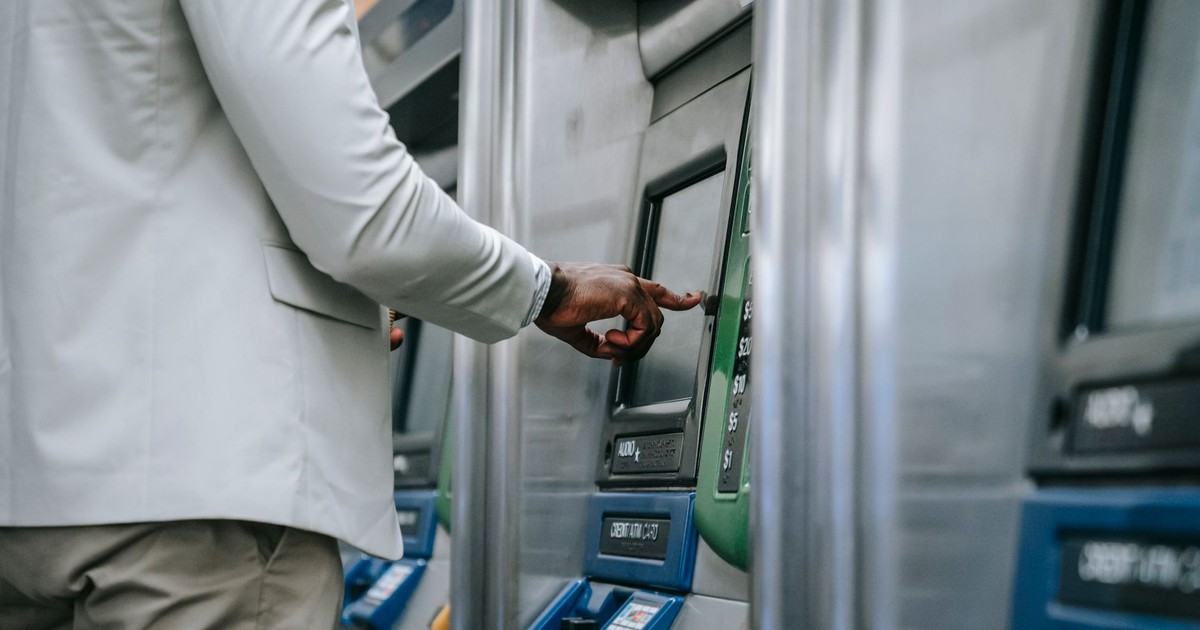
There’s one angle on self-checkout avoidance that rarely gets framed as a health consideration: the machines themselves cause stress. Roughly 60% of shoppers experience some level of anxiety when using self-checkout systems, with fear of making mistakes cited as the primary driver, according to consumer research on retail technology adoption. The “unexpected item in the bagging area” alert isn’t just annoying – for a significant portion of people, it’s genuinely stressful.
A 2023 study published in the Journal of Business Research found that “regular checkout service makes customers more loyal to the store” than self-checkout systems – suggesting that the human interaction isn’t just preferred, it’s commercially meaningful. Stores that strip it out may be optimizing short-term labor costs at the expense of long-term customer relationships.
Research published in a 2016 study on self-service technology adoption identified that customers’ need for human interaction is one of the main reasons people decline to adopt self-service technology – which means self-checkout avoidance isn’t irrational reluctance. For the majority of people who feel it, it’s a legitimate signal.
6. The Health Stakes of Social Disconnection Are Serious
The U.S. Surgeon General’s 2023 advisory framed social connection as “a human need equivalent to water, food, and shelter” – language deliberately chosen to signal urgency, not sentiment. The American Heart Association has classified social isolation and loneliness as independent risk factors for poor cardiovascular and brain health, citing a roughly 30% increased risk of heart attack or stroke in its 2022 scientific statement. These aren’t soft findings from small studies. They represent a growing scientific consensus built on decades of observational research.
People who are lonely are twice as likely to develop depression, according to the WHO Commission on Social Connection’s 2025 findings. The AARP’s December 2025 survey adds an important dimension: technology rarely creates deep connections for people already struggling with loneliness, and many lonely adults turn to solitary online activities that fail to substitute for meaningful in-person interactions. That pattern – substituting real-world interaction with technology-mediated contact, whether a chatbot or a checkout kiosk – carries measurable costs over time.
The grocery store line isn’t a therapy session. Nobody is claiming a 60-second exchange with a cashier fixes loneliness. Moments of small talk throughout the day can boost mood and improve people’s sense of belonging, and those moments have to happen somewhere. For many people, the staffed checkout lane is one of the last places they still reliably do.
Read More: 7 Signs You’re Feeling Lonely (And 10 Things You Can Do About It)
Skip the Machine – Your Body Will Thank You

The next time you’re at the store with a full cart and both lanes are open, the calculus isn’t just about time. Choosing the staffed lane adds a small brick to your sense of community trust, gives you the kind of low-stakes human contact that science consistently links to better mood and wellbeing, and keeps a cashier employed. None of that requires a conversation longer than 30 seconds or anything beyond a genuine “thanks, have a good one.”
For older adults, especially, these micro-interactions carry extra weight. A 2025 study published in JAMA tracking loneliness among U.S. adults aged 50 to 80 found that those who were not working, living alone, or in poor health faced the highest rates of loneliness – conditions that make every casual daily interaction a proportionally larger share of someone’s social world. A staffed checkout lane won’t fix a loneliness epidemic. But across millions of daily trips to the grocery store, the choice to stay in the human line is a small, concrete, repeatable act of connection – and those are exactly the kind the research says make a difference.
Disclaimer: This information is not intended to be a substitute for professional medical advice, diagnosis, or treatment and is for information only. Always seek the advice of your physician or another qualified health provider with any questions about your medical condition and/or current medication. Do not disregard professional medical advice or delay seeking advice or treatment because of something you have read here.
AI Disclaimer: This article was created with the assistance of AI tools and reviewed by a human editor.
Read More: New Stricter Self-Checkout Rules Are Making Walmart Shoppers Furious