America’s Biggest Supermarket Chain Is Taking on Costco and Walmart
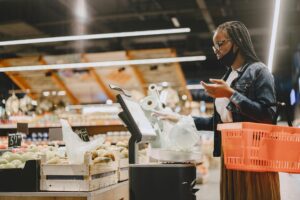
Grocery shopping hasn’t felt easy for a while. Prices have crept up, loyalty has shifted, and the battle for American wallets has turned into one of the fiercest fights in retail. In that environment, even the biggest players aren’t safe. And right now, the biggest player of all is making a move.
Kroger runs more stores than almost anyone in the country, and for most of its 140-year history it has competed quietly and methodically, growing through acquisitions rather than flashy announcements. But something has changed. The company recently brought in a new CEO with a very specific set of skills, and the strategy he’s laying out is a direct challenge to the retailers that have been eating Kroger’s lunch on price. What he’s planning, and why now, tells you a lot about where the supermarket chain competition in America is headed.
To understand the scale of what’s at stake, consider this: your grocery bill is one of the few household expenses you face multiple times a week. Every dollar saved, or wasted, adds up fast. And right now, the companies competing for that spending are moving aggressively.
Kroger’s Roots, and Why It Still Matters
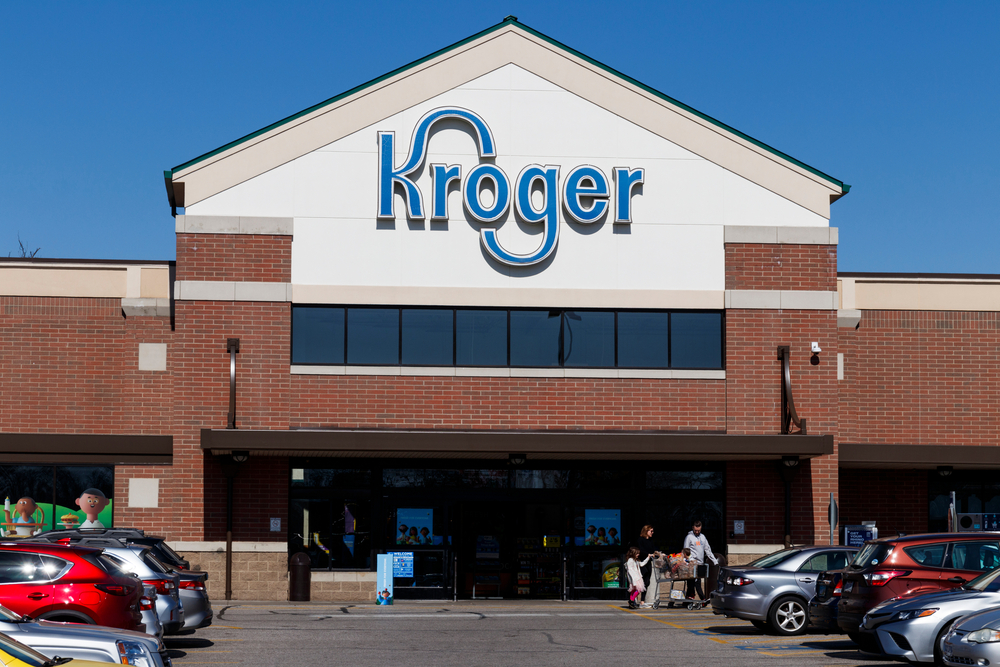
Image Credit: Shutterstock
Kroger generates nearly $150 billion in annual revenue, making it the largest conventional supermarket chain in the United States. That number alone commands attention. But the company’s story starts much smaller. According to Kroger’s official history, Barney Kroger invested his life savings of $372 to open a single grocery store at 66 Pearl Street in downtown Cincinnati in 1883.
That single store grew into a network that now operates approximately 2,700 locations across 35 states, running under 21 distinct chains, including recognizable names like Fred Meyer, City Market, Ralphs, and Harris Teeter. The company has been a pioneer almost from the start. In 1901, Kroger became the first grocer in the country to establish its own bakeries, eventually integrating meat markets too. Today, the company operates 35 food manufacturing facilities producing everything from bread and cookies to milk, soda, ice cream, and peanut butter.
That kind of vertical integration, where a company controls its own supply chain rather than buying everything from outside vendors, gives it a cost advantage that becomes especially powerful when prices are the battlefield.
The New CEO Who Knows Exactly Where He’s Going
Greg Foran took over as Kroger’s CEO in February 2026, and his background is the kind that makes grocery executives pay attention. According to Wikipedia’s profile of Foran, he was born in New Zealand, and his first job was stacking shelves in a supermarket. He never really left the industry. He climbed through retail management for decades, eventually landing one of the most high-profile operational jobs in American business.
Foran served as president and CEO of Walmart U.S. from 2014 to 2019. What he accomplished there is the reason Kroger hired him. According to Reuters, Foran is credited with turning around Walmart’s U.S. business by focusing on improving existing stores, visiting locations frequently, drilling into performance numbers, and pressing field staff on specifics. Cleaner stores, friendlier service, sharper focus on fresh food. During his tenure, a report from Talk Business & Politics notes that same-store sales improved for 20 consecutive quarters.
After leaving Walmart, Foran returned to his home country to run Air New Zealand for roughly five years. Now he’s back in American retail, this time with the keys to a much larger grocery operation, and facing a much more aggressive competitive set. He’s also the first outside hire to lead Kroger in its 143-year history, according to that same February 2026 report.
A Price War Kroger Didn’t Start, But Plans to Win
The pressure on Kroger isn’t subtle. According to the USDA’s Economic Research Service, grocery prices rose 0.7% from March to April 2026, and food-at-home costs are now 2.9% higher than a year ago – a level the agency describes as the fastest year-over-year rise for that category since August 2023. When prices go up, consumers don’t just pay more quietly. They shop differently. They go looking for whoever offers the best deal, and right now, Kroger’s sharpest rivals have been making that case very loudly.
Foran has named his competition directly. In his first interview after taking the role, he pointed to Walmart, Costco, Trader Joe’s, Aldi, and Amazon as competitors emphasizing value and pulling customers who care about price. His analogy for Kroger’s current position was blunt. “I think about our business a bit like a Formula One race,” he told Bloomberg News. “There’s a lead group of cars that are doing a very good job.” The goal, he said, is to close the gap and eventually pass them.
Walmart, which has been the dominant force in the supermarket chain competition for years, is not sitting still. According to Grocery Dive, Walmart has cut prices on 7,200 items, a more than 20% increase in price reductions compared to a year ago. That’s a significant escalation.
Kroger’s response is to rebuild from the inside. According to Reuters, Kroger plans to fund its price cuts by importing merchandise directly and using technology more effectively to reduce expenses. Direct importing cuts out intermediaries and gives the retailer more control over cost. Technology improvements mean smarter inventory, less waste, and leaner operations. These are structural changes, not one-time promotions.
It’s worth being clear about timing: the price cuts are currently in the planning and testing phase. Progressive Grocer has reported that Foran intends to test reductions across categories before phasing them in broadly. That approach mirrors what he did at Walmart: diagnose the problem store by store, fix the fundamentals, then scale what works.
For health-conscious shoppers who prioritize fresh food and clean ingredients, price pressure at Kroger could mean more affordable access to the products they care about. If you want context on what’s been pushing food costs higher, rising grocery prices in 2026 have been driven by a combination of tariffs, supply chain pressures, and energy costs that are still working their way through the system.
Where Kroger Is Headed Next
Beyond pricing, Foran is pushing an expansion strategy that signals long-term confidence. According to Investing.com, Kroger plans to open 70 to 80 new stores in 2027, double the number planned for 2026. Foran has also confirmed the company is open to acquisitions, particularly in the Northeast where Kroger currently has no presence, and in high-growth markets including Texas, the Carolinas, and parts of Florida.
In Texas, that expansion is already concrete. According to Grocery Dive’s December 2025 report, Kroger plans to break ground on three Kroger Marketplace stores in North Texas in 2026, with two confirmed locations in the cities of Fate and McKinney, and a third to be announced. Groundbreaking for the McKinney store took place in February 2026, and CultureMap Dallas confirmed the Fate groundbreaking for March 27, 2026. The company is banking on its large-format Marketplace banner, which carries general merchandise alongside a full grocery assortment, to give it a competitive edge in fast-growing markets.
Kroger’s Harris Teeter chain, based in Matthews, North Carolina, is also opening new locations in the Southeast. This kind of physical expansion is notable in an era when many retailers have pulled back from brick-and-mortar investment. Foran’s bet is that well-run physical stores in high-growth markets remain a serious competitive advantage.
The Financial Picture Behind the Strategy
Any price-cutting strategy has to be funded, and Kroger’s financials show a company with the capacity to absorb near-term margin pressure. According to Kroger’s annual results filed with the SEC’s EDGAR database, the company delivered more than $16 billion in e-commerce sales in 2025, a business line that continues to grow. The same filing also reported adjusted FIFO operating profit (a standard retail earnings measure that smooths out inventory cost fluctuations) of $4.9 billion in 2025.
That said, Kroger’s growth targets for 2026 are deliberately modest. According to Fox 13 Seattle’s reporting of Reuters figures, the company projected identical sales growth of between 1% and 2% for 2026, excluding fuel, alongside adjusted earnings per share of $5.10 to $5.30. These are the numbers of a company in transition, not a company coasting. Foran is clearly playing a longer game.
The eCommerce picture has also been reshaped. Kroger announced plans to improve its online business profitability by approximately $400 million in 2026 by shifting toward a hybrid model, using its store footprint, established third-party delivery partners, and automated facilities where they make financial sense. That pivot away from expensive dedicated fulfillment centers should free up capital to fund the in-store investments and price reductions Foran has outlined.
For everyday shoppers, the battle now playing out in supermarket chain competition is genuinely good news, at least in principle. When the largest grocery operator in America signals that it’s shifting its entire strategy toward lower prices, that creates pressure on every competitor to respond. Walmart is already cutting prices on thousands of items. If Kroger follows through on its plans, the result could be a sustained period of price competition that benefits anyone buying groceries.
Foran has done this before, in a larger company, with measurable results. The fundamentals he’s focused on – direct sourcing, cost efficiency through technology, and sharper in-store execution – are the same levers that worked at Walmart. Kroger also controls its own manufacturing for many products, which gives it an additional layer of cost control that pure retailers don’t have.
The most practical thing to watch right now: if you shop at a Kroger-owned banner, look for price changes in packaged goods and private-label products in the months ahead. Those categories typically absorb price cuts first. If you don’t currently shop at a Kroger chain, the broader competition still puts pressure on Walmart, Costco, and others to match any meaningful moves Kroger makes. In a grocery market this competitive, paying attention to where prices are moving can make a real difference to your budget.
Disclaimer: This information is not intended to be a substitute for professional financial advice, investment advice, tax advice, or legal advice, and is provided for informational purposes only. Always seek the guidance of a qualified financial advisor, accountant, or other licensed professional regarding your personal financial situation or investment decisions. Do not make financial, investment, or tax decisions based solely on information presented here. Past performance is not indicative of future results, and all investments carry risk, including the potential loss of principal.
AI Disclaimer: This article was created with the assistance of AI tools and reviewed by a human editor.