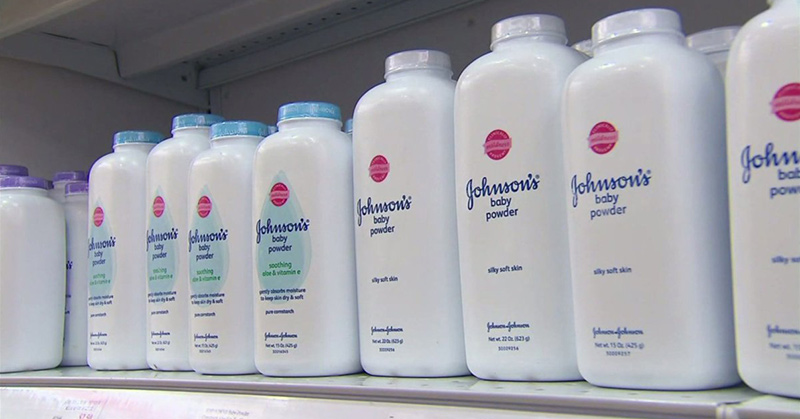

Johnson & Johnson spent most of July 2026 on a legal tightrope. Just days before announcing a $5.5 billion settlement, a federal judge had ordered plaintiffs to explain why tens of thousands of their remaining talc claims should not be dismissed outright after a key expert witness withdrew testimony that was central to proving causation. The company could have pressed that advantage. Instead, on July 27, it chose to settle.
Johnson & Johnson announced it would pay an estimated $5.5 billion to resolve tens of thousands of lawsuits alleging its baby powder and other talc products cause ovarian cancer, in a landmark deal that could end a contentious legal battle that has dogged the company for a decade. The decision represents a dramatic reversal after years of insisting – in courtrooms and in public statements – that its talc-based products were safe, that the science did not support the cancer claims, and that it would fight each case individually if necessary.
Erik Haas, J&J’s worldwide vice president of litigation, said in a statement: “While we are confident the company would have ultimately prevailed with further litigation, as it has in the vast majority of cases tried to date, this resolution allows the company to put this matter behind it and remain focused on its mission to develop medicines and devices that save lives.” The settlement’s announcement did not include any admission of wrongdoing. What it did include was a staggering sum and a deadline for the world’s largest healthcare company to finally put a 15-year legal saga to rest.
The Scale of the Talc Settlement Johnson Johnson Proposed
The deal covers about 76,000 claims, including ones consolidated in federal court in New Jersey and related cases in state court, representing nearly all of the remaining talc claims against the company. To appreciate the scope, consider that when baby powder litigation was still in its early stages, J&J faced roughly 2,500 lawsuits. By the time the settlement was announced, the Johnson & Johnson talc settlement provides $5.5 billion to resolve an estimated 76,000 ovarian cancer claims.
The drugmaker said the settlement is conditioned on at least 95% of remaining claimants participating. That threshold is not symbolic. If fewer than 95% of eligible claimants opt in, the deal collapses and litigation resumes. The condition reflects J&J’s intent to achieve total, or near-total, resolution rather than settle with a fraction of plaintiffs while continuing to fight the rest in court.
Unlike the proposed bankruptcy settlements, this agreement applies only to existing claims and does not address future lawsuits. The exclusion of future claims made more money available to current plaintiffs than the bankruptcy proposal did, and it also accelerates the payments so that all claims will be paid within 18 months instead of being spread out over more than a decade, according to lead plaintiffs’ counsel Chris Seeger.
J&J expects to pay $3 billion in 2027, with further payments following in 2028. The deal could be worth more, depending on how many people ultimately participate in the settlement. Attorney Chris Seeger, who represents approximately 2,500 talc claimants and helped negotiate the agreement, said J&J could ultimately pay $7 billion or more. The settlement assigns specific values to qualifying ovarian cancer claims but does not cap J&J’s total payout.
Individual payout amounts have not yet been made public. Compensation is expected to vary based on factors such as age, diagnosis, and length of talc product use.
Three Failed Bankruptcies: How J&J Got Here
The $5.5 billion direct settlement did not arrive in a vacuum. It is the fourth major attempt to resolve the talc litigation, and the first three all ended in rejection.
Since 2021, Johnson & Johnson has tried to use bankruptcy courts to settle the tens of thousands of claims against it, without success. The effort failed in 2021 and again in 2023. In 2021, J&J created a subsidiary called LTL Management and pulled all of the baby powder claims into it. A day after that was accomplished, LTL Management declared bankruptcy. The maneuver became known as the “Texas Two-Step,” a legal tactic in which a company restructures into two entities, loads one with its liabilities, and then has that entity file for bankruptcy to force a capped settlement on all claimants.
LTL’s first Chapter 11 petition was dismissed because LTL failed to show good faith. Although Chapter 11 doesn’t require a debtor to be insolvent, it does require that the petition be in good faith and not simply a litigation tactic. Courts found J&J, a company generating tens of billions in annual revenue, did not qualify as financially distressed enough to need bankruptcy protection.
In October 2024, Red River Talc, a new subsidiary of J&J, filed for bankruptcy to advance the company’s $8 billion settlement proposal. This marked J&J’s third attempt at resolving the claims through bankruptcy. In March 2025, a bankruptcy judge rejected that third attempt, an $8 billion offer to be paid out over 25 years, citing concerns over how claimants’ votes were collected.
A U.S. bankruptcy court judge denied a $9 billion settlement proposed by company subsidiary Red River Talc in 2025, which would have been one of the biggest mass tort settlements in history. Johnson & Johnson decided not to appeal that ruling and instead fight on in court.
The failure of the bankruptcy strategy ultimately benefited the plaintiffs who held on. Because future claims are excluded from the current settlement, the money is concentrated among a fixed group of claimants rather than spread across an open-ended pool, which is partially why individual awards are expected to be higher than under the previous bankruptcy proposals.
The Courtroom Battle That Drove Both Sides to the Table
Even after the third bankruptcy was rejected, J&J and the plaintiffs continued fighting in trial courts, producing a whipsaw series of verdicts that made the final outcome of litigation deeply uncertain for both sides.
In December 2025, a California jury awarded $40 million to two women with ovarian cancer in the first Los Angeles talc bellwether trial. Separately, in Baltimore, a jury returned a $1.5 billion verdict in favor of Cherie Craft, who alleged that prolonged use of Johnson & Johnson’s talc products led to peritoneal mesothelioma.
In January 2026, a Philadelphia jury ordered J&J to pay $250,000 to the family of a woman who died of ovarian cancer. Then the pendulum swung in the other direction. In June 2026, J&J won a six-week California bellwether trial involving three women with ovarian cancer by a 10-to-2 defense verdict, a stark reminder that juries were not predictably favoring plaintiffs.
With mixed trial results on both sides throughout 2025 and 2026, a negotiated settlement offered both parties more certainty than continuing to litigate case by case. For J&J, the exposure from tens of thousands of individual trials was theoretically unlimited. For plaintiffs, many of whom were seriously ill, the prospect of waiting years for individual trial dates was untenable.
The MDL (multidistrict litigation, a process that consolidates similar federal cases before a single judge to streamline pretrial proceedings) had been growing steadily through this entire period. About a week before the settlement announcement, a federal judge expressed doubt that patients would be able to link their ovarian cancer to talc after testimony by a key expert was withdrawn, a development that weakened the plaintiffs’ position and almost certainly accelerated settlement talks.
What the Science Shows
Parallel to the litigation, the scientific consensus on talc and ovarian cancer has been quietly shifting. Research published in a 2024 study in the Journal of Clinical Oncology found that applying talc powder to the genitals was associated with ovarian cancer, and that the association was greater for people who used the powder frequently or for long periods of time. The researchers are from the National Institutes of Health, and their findings were based on data from the Sister Study, which enrolled more than 50,000 women in the U.S. from 2003 to 2009.
A 2026 analysis synthesizing existing data found the association to be statistically consistent. According to a 2026 study indexed by the National Institutes of Health, use of genital powders is associated with a modestly elevated 30 to 32% increase in the risk of ovarian cancer.
The regulatory landscape shifted meaningfully in 2024. The International Agency for Research on Cancer re-evaluated the carcinogenicity of talc, upgrading its classification to “probably carcinogenic to humans,” placing it in Group 2A. That reclassification carries significant weight in litigation and in public health policy. Group 2A includes substances where there is strong, though not yet conclusive, human evidence of cancer risk.
Part of what complicates the science, and the lawsuits, is talc’s proximity to asbestos during mining. Talc and asbestos can naturally form so closely together in the earth that mining practices cannot keep them separated. The U.S. Food and Drug Administration detected asbestos in a sample of Johnson’s Baby Powder in October 2019, prompting a voluntary recall of nearly 33,000 bottles, a finding that supported what plaintiffs’ lawyers had long argued and what J&J had long disputed. According to internal J&J memos referenced in congressional testimony, the company was aware as early as 1971 that its talc-based baby powder potentially contained asbestos.
Dr. George Tidmarsh, an adjunct professor of pediatrics and neonatology at Stanford University School of Medicine, told an FDA expert panel on May 20, 2025: “It’s clear [talc] is carcinogenic and inflammatory and there’s very little doubt about this.”
J&J’s Product Decisions and the UK Litigation
J&J’s decisions about when to stop selling talc-based products have themselves become a focus of scrutiny. J&J stopped selling talc-based baby powder in the United States and Canada in 2020, though it has said the discontinuation was driven by shifting consumer demand rather than the litigation itself. The company stopped selling talc-based baby powder worldwide in 2023.
The American and Canadian market withdrawal, however, did not resolve the company’s global legal exposure. Between 2021 and 2025, Johnson & Johnson and its subsidiaries made three separate attempts to resolve the litigation through Chapter 11 bankruptcy, and courts rejected each attempt. The litigation has now also crossed the Atlantic.
Over 3,000 claimants in the United Kingdom filed a group action lawsuit against J&J in October 2025, valued at around £1 billion, approximately $1.3 billion. The UK lawsuit alleges Johnson & Johnson knew that their talc products contained carcinogenic fibres, including asbestos, for more than 50 years. The current $5.5 billion U.S. settlement does not cover those UK claimants.
The U.S. settlement also does not resolve all domestic exposure. Johnson & Johnson previously settled about 95% of filed lawsuits for mesothelioma, a cancer in the tissue surrounding organs like the lungs and heart, as well as all state consumer protection claims and all talc-supplier disputes. Mesothelioma cases, which involve asbestos rather than talc alone as the primary mechanism, have been proceeding separately in state courts with large verdicts on both sides.
In 2024, Johnson & Johnson also settled a separate investigation by 42 U.S. states and Washington, D.C. That settlement totaled $700 million and resolved charges that Johnson & Johnson misled consumers into believing its talc products were safe, products it had sold for more than a century before stopping.
Read More: If You’re Still Using Johnson & Johnson Baby Powder, This Might Be Enough to Make You Stop
What This Means for the 76,000 Women and Their Families
The $5.5 billion talc settlement Johnson Johnson proposed on July 27, 2026 is one of the largest products liability settlements in American legal history. Its significance extends well beyond the dollar figure.
For the approximately 76,000 women and families involved, the deal offers a concrete path to compensation after years of delayed justice. The new structure is designed to deliver payment to all claimants within 18 months, a far faster timeline than the decade-plus payout schedules envisioned under the earlier bankruptcy plans. Whether every claimant accepts that tradeoff, guaranteed but bounded compensation versus the uncertainty of a jury trial, will determine whether the deal reaches its 95% threshold and takes effect.
For J&J, the settlement closes a chapter that exposed fundamental questions about what the company knew, when it knew it, and how long it continued selling a product that internal documents suggest it knew may have been contaminated with asbestos decades before it stopped selling. The company’s three bankruptcy attempts, all rejected by federal courts, generated significant reputational and legal costs on top of the settlement itself. The direct settlement structure, by contrast, delivers finality without the procedural risks that doomed the bankruptcy route.
For public health, the saga has catalyzed a regulatory reexamination of talc well beyond baby powder. The FDA convened an expert panel in May 2025 to consider whether talc should be restricted across a broad range of consumer products, including food and pharmaceuticals. The NIH-backed Sister Study documented what researchers described as a consistent association between genital talc use and ovarian cancer, findings that informed the IARC’s 2024 Group 2A reclassification. The legal settlement does not resolve the underlying science, but it does validate, through the sheer scale of compensation, the seriousness with which tens of thousands of women and their physicians have treated that risk for decades.
Anyone who used talc-based products genitally over a long period and has since been diagnosed with ovarian cancer or mesothelioma should consult a medical-legal professional promptly. The 95% participation threshold will close the window for joining the current settlement, and anyone diagnosed after the deal closes will need to pursue claims individually.
Disclaimer: This information is not intended to be a substitute for professional financial advice, investment advice, tax advice, or legal advice, and is provided for informational purposes only. Always seek the guidance of a qualified financial advisor, accountant, or other licensed professional regarding your personal financial situation or investment decisions. Do not make financial, investment, or tax decisions based solely on information presented here. Past performance is not indicative of future results, and all investments carry risk, including the potential loss of principal.
AI Disclaimer: This article was created with the assistance of AI tools and reviewed by a human editor.