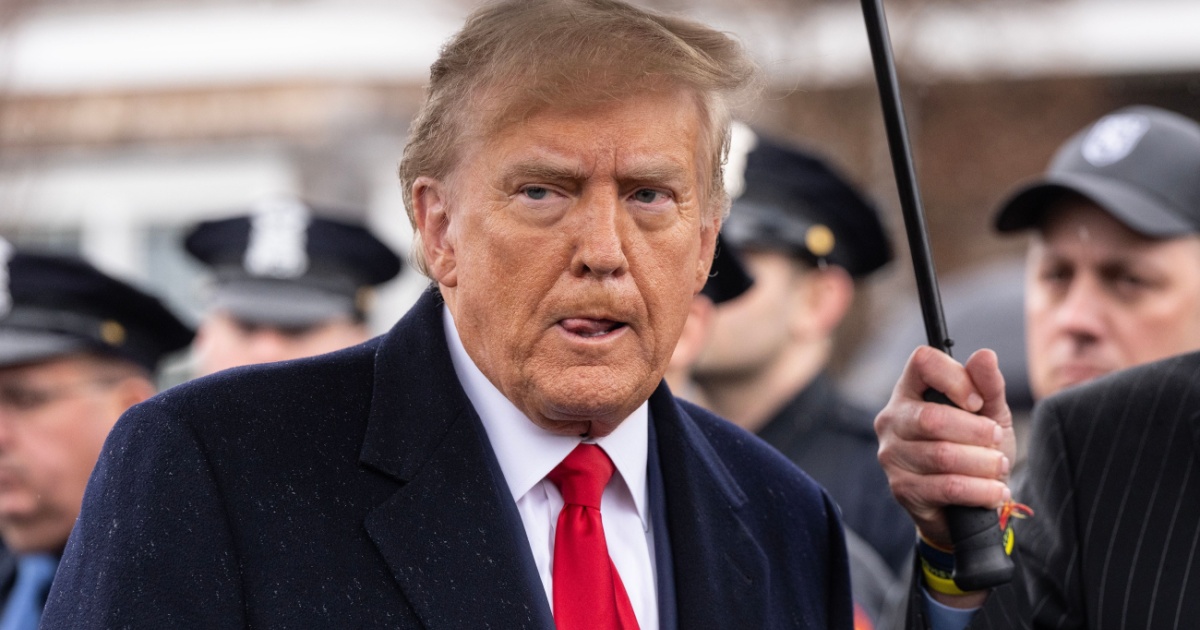

Executive Summary: In mid-April 2026, President Donald Trump posted a video of Frank Sinatra performing “My Way” on Truth Social, with no caption or context. The opening lyrics – “And now, the end is near, and so I face the final curtain” – triggered a wave of public alarm and reignited a months-long debate about the 79-year-old president’s cognitive and physical health. Against a backdrop of congressional demands for cognitive testing, mounting observations from psychologists about speech and gait changes, and a documented family history of Alzheimer’s disease, the post became a cultural flashpoint. This report examines what sparked the conversation, what clinicians have observed, what frontotemporal dementia actually is, and why the medical and ethical debate surrounding remote diagnosis remains deeply contested.
President Donald Trump sparked widespread concern after sharing an April 18th post on Truth Social about “the end being near.” He posted a video of Frank Sinatra singing “My Way,” which began with the opening lyric: “And now, the end is near, and so I face the final curtain.” There was no accompanying caption. No context. No explanation. Just the song.
For millions of people watching online, that silence said everything – or maybe nothing at all. The post landed on a Saturday in April, during a period of intense geopolitical tension, and within hours it had splintered into roughly three camps: those convinced the president was signaling something about his health, those who believed it was a veiled message about the conflict with Iran, and those who felt it simply reflected a man who has long loved that song. What nobody could do was ignore it.
In a development that quickly fueled online speculation, Trump posted the video on social media with no accompanying text or explanation. The move came just hours after he had convened a high-level meeting in the White House Situation Room to discuss the ongoing standoff with Iran over the Strait of Hormuz. That context fed both interpretations simultaneously, which is precisely why the post spread as fast as it did. But the health angle cut deepest – because it didn’t arrive in a vacuum. It arrived at the tail end of months of escalating public concern about the president’s cognitive fitness.
The Incident That Ignited the Debate
The post had no text and was just a video of Frank Sinatra singing “My Way.” The song is about a person summing up their life, and it includes lyrics like “And now the end is near, and so I face the final curtain.” For some observers, a 79-year-old president sharing that particular song with no explanation was deeply unsettling.
According to The Irish Star, one social media post reflected the mood bluntly: “The erratic behavior coming from Trump lately – the religious imagery, his lashing out at Pope, a devotion to Israeli foreign policy; this song about ‘end being near,’ has me thinking Trump may have gotten news of some terminal illness and is not long for this world.” Others disagreed, reading the post as a defiant political message. One commenter wrote: “Trump sharing those exact lines from My Way feels like a clear signal. He plans to finish the Iran situation exactly on his terms with no regrets and no bending to outside pressure – a straight message that he will see it through his own path.”
While Trump has long used the song at rallies, inaugurals, and even as Air Force One departed at the end of his first term, its sudden appearance amid rising tensions drew immediate attention. Even Frank Sinatra’s daughter Nancy weighed in. She called Trump’s use of the recording “a sacrilege,” sharing a post that read: “Trump may love Sinatra, but Sinatra did not love Trump.”
A Pattern of Concern – Long Before “My Way”
The Truth Social post did not create the health debate. It intensified one that had been building for years.
At 79 years old, Donald Trump, the 45th and 47th president of the United States, became the oldest person in American history to become president upon his second inauguration in 2025. That distinction alone invited scrutiny. But the concerns voiced by clinicians and lawmakers go beyond age alone – they center on a specific pattern of observable changes.
A clinical psychologist and former Johns Hopkins University Medical School professor, Dr. John Gartner, raised concerns following the president’s posts on Truth Social on Easter Sunday 2026, sounding the alarm over what he described as the president’s “dramatic decline.” According to The Mirror US, Gartner claimed he had noticed four areas where Trump was showing deterioration: “We’re seeing the deterioration of his thinking, of his verbal language, of his physical body, and of his behavior.”
He spelled out what he meant: “Those are the four main areas we look for in dementia,” he noted. He is not the only clinician to raise those concerns. Vin Gupta, the medical analyst for NBC News, stated that Trump’s behavior – including a letter sent to a foreign government – “crossed a line of proper adult behavior” and should have prompted “a more thorough public assessment of his neurological fitness,” adding that what he observed could be signs of early Alzheimer’s or frontotemporal dementia.
Speech Changes
In an April 2025 conversation with MindSite News, Gartner explained his conviction that “there was absolutely no doubt” that Trump has dementia. “We’ve collected dozens and dozens of Trump’s phonemic paraphrasias, in which you use sounds in place of an actual word (a hallmark of brain damage and dementia),” Gartner said. “Trump will say something like ‘mishiz’ for missiles, or ‘Chrishus’ for Christmas, because he can’t complete the word.”
Phonemic paraphasia – when a person begins a word and substitutes sounds without being able to finish it correctly – is considered a clinical marker of neurological disruption, particularly in conditions affecting the frontal lobes of the brain. Gartner has also pointed to what he calls “a strange gait,” phonemic paraphasia, and a decline in the complexity of Trump’s words and concepts, saying this limited capacity was evident in poor public performances and that there were “two more disturbing signs of decline.”
Harry Segal, a senior lecturer in psychology at Weill Cornell Medicine, agreed that “what’s alarming is how the rate of Trump’s bizarre speech and political decisions have been increasing,” pointing to a specific answer about childcare given to the Economic Club of New York that was “so incoherent that even his supporters were concerned.”
Physical Observations
The speech concerns are accompanied by physical ones. Dr. Gartner believes Trump may be suffering from frontotemporal dementia, a rare type of brain disorder. He called one of Trump’s physical traits “a dead ringer telltale sign” – specifically describing what neuropsychologists refer to as a wide-based gait, where one leg swings out in a semicircle rather than moving normally.
Gartner also identified Trump’s “wide-based gait,” a diagnosis of chronic venous insufficiency, and an incident where the president was photographed with a droopy face as “signs of psychomotor deterioration.” He noted that Trump appeared to have difficulty raising his hand to salute at a Veterans’ Day event.
Gartner stated: “Part of dementia and or stroke, because it really could be either or both of those, because it appears like it is on the right side of his body that he had the droop with the face. It’s also on the right side of his body that he has the wide-based gait, where he swings his leg in kind of a semicircle. These are signs.”
The Family History Factor
In July 2024, The Washington Post reported interviews with medical experts who believed Trump likely has an elevated genetic risk of dementia. That risk is rooted in documented family history. Fred Trump III, the son of Donald Trump’s late brother, wrote in his book about his grandfather’s battle with Alzheimer’s disease. Fred Trump Sr. died at 93 years old in 1999, eight years after he was diagnosed with the neurodegenerative disease.
Fred Trump III noted: “Donald’s cousin, John Walters, had dementia. It runs in the family,” adding of his uncle: “He looks older. And I get it – anybody who is in that office looks different than when they come out. But the things he’s spewing and the craziness, and he just can’t stick to a message. And he used to be able to stick to a message.”
Trump’s niece, Mary Trump, has also warned that when she watches his public appearances, she can see the same symptoms his father, Fred Trump Sr., exhibited during the early stages of Alzheimer’s.
For anyone wanting to understand the genetics behind this, our earlier report on Fred Trump’s Alzheimer’s and what it means for genetic risk covers the science in detail.
Congress Responds: Calls for Cognitive Testing
The debate moved from social media and podcasts into official government proceedings. In April 2026, Representative Jamie Raskin, Ranking Member of the House Judiciary Committee, wrote to White House Physician Captain Sean Barbabella demanding an immediate and comprehensive cognitive and neurological evaluation of President Donald Trump. The request followed a series of increasingly volatile, incoherent, and alarming public statements by the president regarding the ongoing conflict with Iran.
In his letter, Raskin – the top Democrat on the Judiciary Committee – wrote: “In recent days, the country has watched President Trump’s public statements and outbursts turn increasingly incoherent, volatile, profane, deranged, and threatening.”
Even several of the president’s longtime allies and supporters publicly denounced his conduct and raised questions about his fitness for office, with some explicitly calling for the Cabinet to initiate proceedings under the 25th Amendment. The 25th Amendment provides a constitutional mechanism for removing a sitting president who is deemed unable to discharge the duties of the office.
The White House physician had previously declared Trump in “excellent health” at his annual physical, and the president often boasts about acing cognitive tests. To successfully remove Trump as president, a majority of his Cabinet and his vice president would have to move to invoke the 25th Amendment – and there were no indications any Cabinet officials were considering it, or that Vice President JD Vance would be on board.
What Is Frontotemporal Dementia?
Given how frequently the term appears in this debate, it deserves a clear medical explanation. Frontotemporal dementia is not a single disease – it is a family of progressive brain disorders that attack specific regions of the brain.
Frontotemporal dementia (FTD) is a group of disorders that occur when nerve cells in the frontal and temporal lobes of the brain are lost. This causes these lobes to shrink, which leads to problems with thinking and behavior. FTD affects behavior, personality, language, and movement.
What makes it distinctly different from Alzheimer’s disease – the type most people picture when they hear the word “dementia” – is what it does not do, at least not initially. In Alzheimer’s disease, early changes are often problems with short-term memory. Many people with FTD don’t have a significant problem with their memory during the early stage of their condition. Instead, the first noticeable symptoms for a person with FTD will typically be changes to their personality and behaviour, or difficulties with language – sometimes both.
Behavior changes are often the first noticeable symptoms in behavioral variant FTD (bvFTD), the most common form of FTD. Behavior changes are also common as Alzheimer’s progresses, but they tend to occur later in that disease.
FTD and related disorders are rare and tend to occur at a younger age than other forms of dementia. Roughly 60% of people with FTD are 45 to 64 years old. The condition is progressive with no cure. There is currently no cure for FTD or related disorders, and no treatments to slow or stop the progression of the disease, though there are ways to help manage the symptoms.
According to the National Institute on Aging, frontotemporal disorders are progressive, meaning symptoms get worse over time. In the early stages, people may have just one type of symptom. As the disease progresses, other symptoms will appear as more parts of the brain are affected.
How Is It Diagnosed?
This is where the debate around Trump becomes medically critical. Frontotemporal dementia can be hard to diagnose because symptoms are similar to other conditions. Also, because these disorders are rare, physicians may be unfamiliar with the signs and symptoms.
To diagnose frontotemporal dementia, a doctor may perform a physical exam, ask about symptoms, look at personal and family medical history, use tests to help rule out other conditions, order genetic testing, conduct an assessment of the mind and behavior, and order imaging of the brain. Only genetic tests in familial cases or a brain autopsy after a person dies can definitively confirm a diagnosis of frontotemporal dementia.
There is no single test for frontotemporal dementia. This reality is central to why many neurologists and ethicists push back strongly against remote diagnoses based on public behavior alone.
Read More: 9 Daily Habits for Better Brain Health, According to Neurologists
The Ethical Limits of Diagnosing from a Distance
The health concerns about Trump have attracted significant pushback from clinicians who say that, whatever one believes about his behavior, a diagnosis cannot responsibly be made from afar.
Commentators and critics of Donald Trump have increasingly questioned his mental fitness, with some going as far as to suggest diagnoses such as malignant narcissism, Alzheimer’s disease, or frontotemporal dementia. Among these, frontotemporal dementia has gained particular traction, largely because its symptoms – changes in behavior, impulse control, and social conduct – appear, at least superficially, to align with some of Trump’s public rhetoric.
But as Modern Diplomacy noted in April 2026, frontotemporal dementia is not a catch-all explanation for controversial or erratic behavior. It is a rare, complex neurodegenerative condition that primarily affects the frontal and temporal lobes of the brain – areas responsible for personality, decision-making, and language.
There is also a stigma problem. Linking conditions like frontotemporal dementia to aggression, instability, or moral failure reinforces harmful stereotypes about people living with dementia. Every time a public figure is casually labeled with a neurological disorder to explain behavior others find objectionable, real patients living with that diagnosis are reduced to a caricature.
The psychiatric profession has long grappled with this through the “Goldwater Rule” – a principle established by the American Psychiatric Association after the 1964 election that prohibits mental health professionals from publicly diagnosing public figures without their informed consent and direct examination. Such claims have prompted discussion about the ethics and applicability of the Goldwater rule, which prohibits mental health professionals from publicly diagnosing or discussing the diagnosis of public figures without their consent and direct examination.
The likelihood that Donald Trump has Alzheimer’s disease or FTD remains indeterminate in quantitative terms: there are credible warning signs and a family history that increase concern, and a vocal set of clinicians assess the pattern as probable dementia, but there is no publicly available, standard clinical diagnosis using neurological exam, imaging, or biomarkers to confirm any pathology. Responsible medical judgment requires examinations and tests that have not been publicly released.
Dr. Gartner acknowledges that dementia doesn’t get better, and that the rate of deterioration accelerates over time. “I was predicting that about Trump, that not only was he going to get worse, but the rate of change was going to accelerate. And that’s exactly what we’re seeing,” he said. But his critics point out that this framing, however persuasive, does not constitute a clinical diagnosis.
Key Takeaways
The “My Way” post was a single event in what has become a sustained, multifront debate about whether the oldest sitting president in American history is showing signs of neurological decline. Understanding that debate requires holding several things in tension at once.
The observable concerns are real and documented. Clinicians including Dr. John Gartner of Johns Hopkins and Dr. Harry Segal of Weill Cornell Medicine have pointed to specific, nameable markers – phonemic paraphasia, psychomotor changes, gait abnormalities – that align with criteria used to assess frontotemporal dementia and other neurodegenerative conditions. Democratic lawmakers widely questioned Trump’s mental fitness for office following a series of public incidents, and Rep. Jamie Raskin formally urged the White House physician to perform a cognitive assessment, noting that “experts have repeatedly warned that the President has been exhibiting signs consistent with dementia and cognitive decline.”
At the same time, the scientific reality is that FTD cannot be diagnosed through video clips, social media posts, or behavioral observation alone. A proper diagnosis requires a physical exam, symptom review, personal and family medical history, imaging of the brain, genetic testing, and a full assessment of mind and behavior. None of that has happened publicly. The White House has stated that Trump’s MRI results confirmed “exceptional physical health,” and a cognitive test administered in April 2025 found his cognitive function to be “normal.”
What remains is a genuine, unresolved tension between a public’s right to know about the fitness of its most powerful elected official and the medical standard that says a responsible diagnosis requires far more than what any of us can observe from the outside. As president, his mental and physical fitness is America’s business. That is, in part, why the 25th Amendment exists. This does not mean Trump’s medical records ought to be fully public – he is still entitled to his privacy – but they cannot be left entirely in the president’s personal control, either.
For anyone concerned about brain health in themselves or a loved one, the signs described in this debate – changes in personality, difficulty finding words, alterations in gait and coordination – are worth taking seriously and discussing with a physician, regardless of their political context. The symptoms of frontotemporal dementia gradually rob people of basic abilities – thinking, talking, walking, and socializing – that most of us take for granted, and FTD and other frontotemporal disorders are a common cause of early-onset dementia. Early assessment, when warranted, is always the right path.
Disclaimer: This information is not intended to be a substitute for professional medical advice, diagnosis or treatment and is for information only. Always seek the advice of your physician or another qualified health provider with any questions about your medical condition and/or current medication. Do not disregard professional medical advice or delay seeking a
AI Disclaimer: This article was created with the assistance of AI tools and reviewed by a human editor.
Read More: Trump SSI Rule Change Could Cut Disability Benefits for 400K Recipients