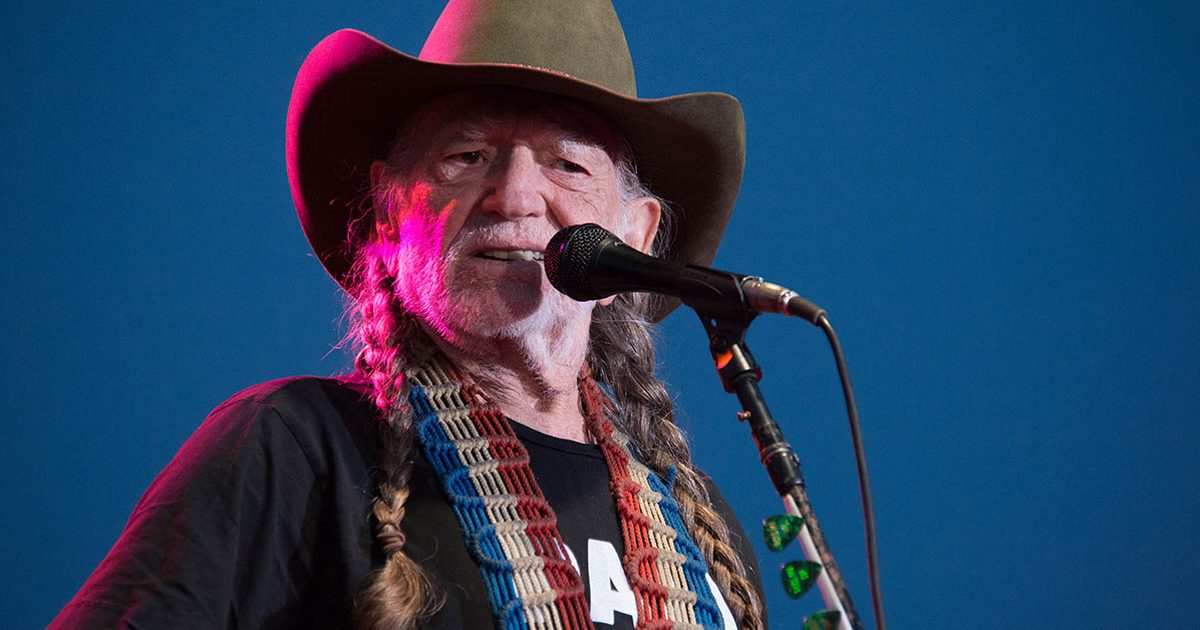

Willie Nelson turned 93 in April and reckons nobody expected him to get there, least of all himself. By his own account, he drank too much, smoked too much, and took too many pills through his younger years. He figured he’d be gone before he hit 21. That he’s sitting in Maui right now, still touring, still recording, and now publishing a memoir, is something he describes with a single word: lucky.
That memoir, The Last Leaf, arrived November 10, 2026, from Penguin Press. In the press interviews around it, including one with The Guardian, Nelson has been unusually candid about grief, mortality, marriage, and the habits that kept him upright while his closest friends didn’t make it.
The book’s title is not incidental. Nelson has watched Johnny Cash, Waylon Jennings, and Kris Kristofferson, the three men who stood beside him in the Highwaymen supergroup, all pass away. Kristofferson, the last of them, died on September 28, 2024, at the age of 88. When The Guardian asked Nelson whether he felt like the last leaf on the tree, he didn’t deflect. “Well, you know, I guess I probably am the last leaf on the tree,” he said. “I’m lucky to be here. I’ve lost a lot of my good friends along the way. You know, Johnny, Waylon and Kris. I feel fortunate that I’m still here.”
What does Willie Nelson’s memoir get honest about grief?
Nelson has spent a long time thinking about loss, and the memoir doesn’t soften it. In the book’s most quoted passage, he describes longevity with double-edged honesty: “Longevity is a blessing and also a burden. A blessing because you get to hang around to see your grandkids and maybe even your great-grandkids. But a burden because every day it seems like another friend has passed. Grieving becomes a full-time job.”
His son Billy died in 1991 at the age of 33. When a grieving friend came to him for comfort after losing his wife, Nelson offered what he knew: “The thing I know most is that you don’t get over it, but you will get through it. Best I can do is write a song.”
His view of death itself is similarly settled. “Well, you know, everybody’s gonna die, so it ain’t no big deal how long we got,” he told The Guardian. “We live and we die, and I believe we come back again.” He said it without drama, the way you’d say something you’ve thought about long enough that it stopped keeping you up at night.
Read More: 8 Habits to Help Slow Biological Aging
How did 35 years with Annie make the difference?
The memoir’s subtitle calls this his longest love affair. Nelson and his wife Annie D’Angelo met in 1986 on the set of the television film Stagecoach, where she was working as a makeup artist. They married in 1991, and by Nelson’s own count they’ve now clocked more than 35 years together, which he calls “a record for me.” His three previous marriages, to Martha, Shirley, and Connie, topped out at 17 years.
Annie appears throughout the memoir as a central figure, not a side character. When COVID-19 hit Nelson in 2022 and left him in enough pain that he reportedly begged her to let him go, she refused to give up. He credits her with saving his life during that period.
She described her own initial hesitation plainly. Her three personal rules before they got together were: don’t date a divorced man, don’t date a man with kids, and don’t date a celebrity. Nelson violated all three. She went ahead anyway because, as she put it, she felt an immediate connection. He knew he had burned three marriages partly by staying too long on the road. Annie adapted to it, raised their sons Lukas and Micah on the tour bus, and turned it into a life that worked.
What habits actually got him to 93?
Nelson is not shy about the gap between his current discipline and his earlier years. He quit drinking in 1978, a decision he has repeatedly said he believes saved his life. By his own admission, he was a “mean drunk.” The combination of heavy drinking, smoking, and drug use had him on a path that nobody around him expected him to survive.
That change didn’t mark the end of his relationship with cannabis. That continued for another four decades, until emphysema, pneumonia, and a lung collapse forced a rethink. After stopping smoking marijuana at 86 because of breathing problems, he moved to edibles. “I had a lung collapse, so I have to be really careful,” he explained. “I do edibles at night.”
The physical discipline that rarely makes headlines is the martial arts. Nelson has trained in GongKwon Yusul, a Korean martial art, for more than 20 years, and in 2014 received his fifth-degree black belt. GongKwon Yusul emphasizes striking, locking, and throwing techniques, drawing on hapkido and judo. Nelson also trained in taekwondo, reaching second-degree black belt in that discipline. His Grand Master, Sam Um, once remarked, as reported by Time, that after two decades of training, Nelson had “more stamina than I do.”
Nelson has spoken about the physical foundation behind all of it. “I’ve played softball and been a runner for years,” he told The Guardian. “I’ve also taken tae kwon do for years. It’s a mental and physical discipline that’s been good for my mental health, my strength, my breath and my music.” These aren’t things he tried for a season. They’re habits from his sixties onward, kept up across decades.
What does living after loss look like at 93?
Nelson released his 79th solo studio album, Dream Chaser, in May 2026. He still tours and continues to play Farm Aid, the benefit concert he co-founded in 1985 with Neil Young and John Mellencamp to support American family farmers. He still tours on a bus he considers home. He’s writing books.
None of this is what you’d predict for a man who was living the way he was living at 25. It also isn’t what you’d predict for a man who suffered a COVID-related health crisis in 2022 severe enough that he reportedly wanted to die from the pain. The turnaround is not mystical. It’s the result of a lot of small, sustained decisions across a long time. Some were made out of wisdom. Some were made because his body finally told him he didn’t have a choice.
What comes through in the memoir and the interviews around it is how little self-congratulation runs through Nelson’s account. He doesn’t present himself as a man who figured something out. He presents himself as a man who got lucky, made some late adjustments, and had a wife who wouldn’t let him quit.
What does Nelson want readers to take from the book?
Willie Nelson’s memoir is not a wellness manual. It still offers a lived example rather than a prescription. Quit the things that are destroying you, ideally before they destroy you. Find the physical discipline that connects your body and your mind and do it for decades. Stay married to someone who refuses to let you give up. Learn to hold grief without being consumed by it. Keep working.
The debt he nearly drowned under in 1990, when the IRS came after him for $32 million in back taxes, is now a chapter in a memoir rather than the ending. The Highwaymen are gone, one by one, and he is still here. He calls himself the last leaf on the tree, and there’s melancholy in that. But he says it with the calm of a man who has thought carefully about what comes next, and found something there worth believing in.
Disclaimer: The author is not a licensed medical professional. The information provided is for general informational and educational purposes only and is based on research from publicly available, reputable sources. It is not intended to constitute, and should not be relied upon as, medical advice, diagnosis, or treatment. Always consult a licensed physician or other qualified healthcare provider regarding any medical condition, symptoms, or medications. Do not disregard, avoid, or delay seeking professional medical advice or treatment because of information contained herein.
AI Disclaimer: This article was created with the assistance of AI tools and reviewed by a human editor.