Trump’s Attempt to End Birthright Citizenship Reaches the Supreme Court
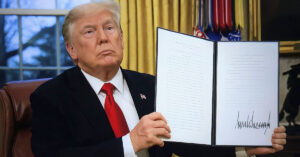
The 14th Amendment trump proposal has never actually been tested this directly before. On January 20, 2025, the same day Donald Trump was sworn in for his second term, he signed Executive Order 14160 – a directive that would end automatic U.S. citizenship for babies born on American soil to parents who are undocumented or on temporary visas. The order has never gone into effect. Every federal court that reviewed it struck it down. And yet, in April 2026, a majority of Supreme Court justices appeared ready to do the same – while the president sat in the courtroom watching.
Trump attended the April 1, 2026 oral arguments in person, becoming the first sitting president in the official record to do so. The case before the court, Trump v. Barbara, may be the most consequential citizenship ruling in more than a century. The constitutional question at its center comes down to 37 words added to the Constitution in 1868.
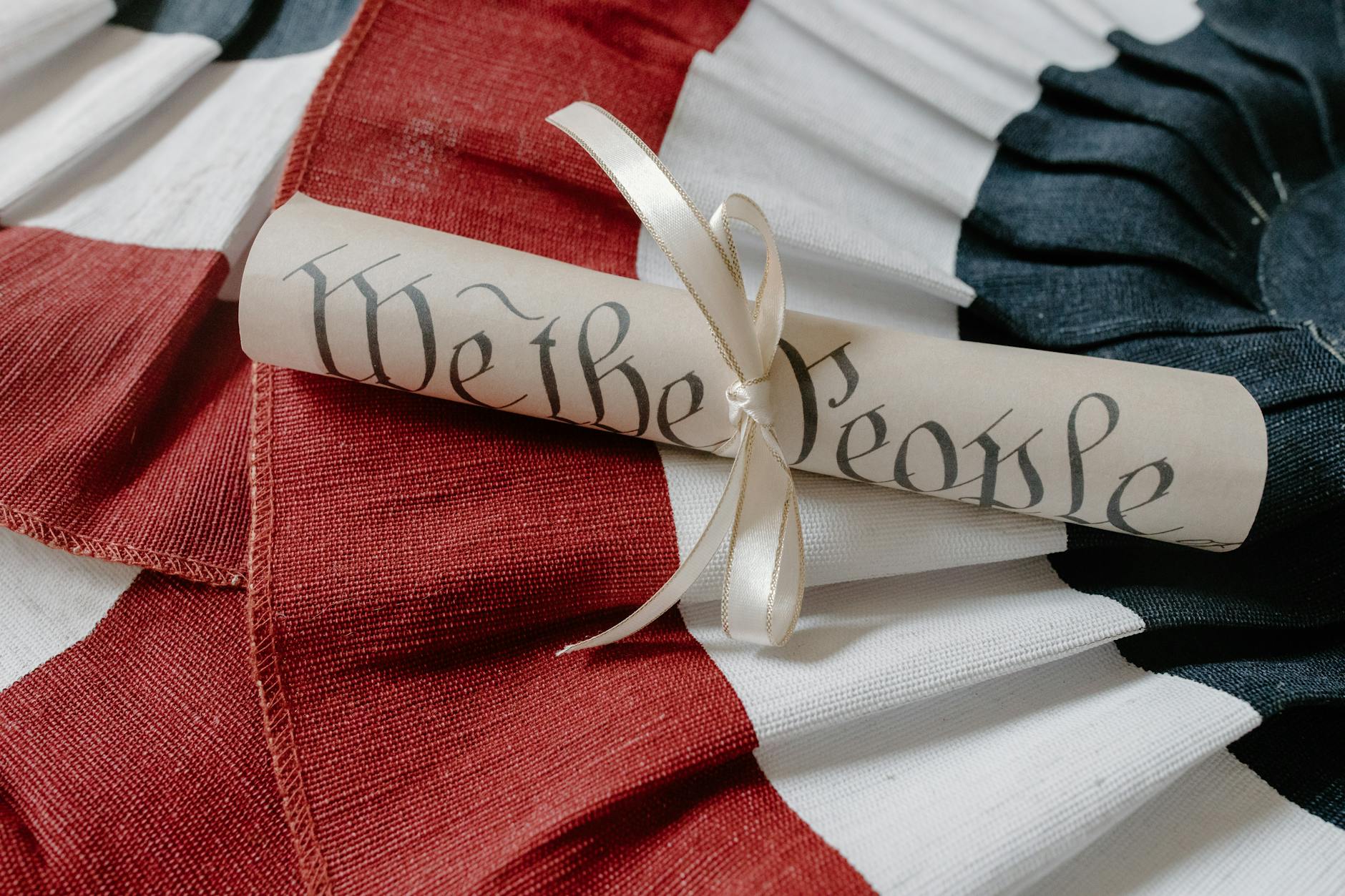
The constitutional provision at issue is the Citizenship Clause, part of the 14th Amendment ratified after the Civil War. The clause grants citizenship to anyone “born in the United States, and subject to the jurisdiction thereof” – language written specifically to overrule the Supreme Court’s 1857 Dred Scott decision, which had held that a Black person could not be a U.S. citizen. For 158 years, that language has meant one thing in practice: if you’re born here, you’re a citizen.
What the 14th Amendment Trump Proposal Actually Says
Executive Order 14160 sets out two exclusions. Under the order, a child is not a citizen at birth if their mother “was unlawfully present” in the United States and their father was not a U.S. citizen or lawful permanent resident. The second exclusion applies even when the mother is lawfully present on a temporary basis, such as on a tourist or work visa.
Beginning 30 days after signing – meaning February 19, 2025 – the order stated that babies born in the United States would not be automatically entitled to citizenship if their parents are in the country either illegally or temporarily.
This right to citizenship is so fundamental that Congress wrote it directly into federal law in 1940 and again in 1952, where it remains today in the Immigration and Nationality Act. That makes Trump’s executive order a direct challenge not just to the Constitution but to an act of Congress as well. The administration’s legal argument rests on a reinterpretation of four words: “subject to the jurisdiction thereof.”
The Trump administration’s position is that those words require more than just being physically present in the United States. Solicitor General D. John Sauer – the government’s chief courtroom lawyer, who has argued several high-profile cases for the administration – contended that the Citizenship Clause was intended to grant birthright citizenship to those newly freed from slavery, and that the clause was never meant to apply to “children of temporary visitors or illegal aliens” because, unlike formerly enslaved people, those individuals lack “direct and immediate allegiance to the United States.”
128 Years of Precedent
The administration’s legal argument runs into a 128-year-old obstacle: United States v. Wong Kim Ark.
Wong Kim Ark was born in San Francisco in 1873 to immigrant parents. In August 1895, after visiting family in China, he was denied re-entry to the United States on the claim that he was not a citizen, despite his San Francisco birth. His case went all the way to the Supreme Court.
In a 6-to-2 decision, the Court ruled in his favor. Because he was born in the United States and his parents were not employed in any diplomatic or official capacity, the Citizenship Clause of the Fourteenth Amendment automatically made him a U.S. citizen. The ruling established that birthright citizenship extends to children of foreign nationals born on U.S. soil, with only narrow exceptions: those exceptions included children of foreign ministers, enemy combatants on American soil, members of Indian tribes, and people on foreign public ships. Undocumented immigrants and temporary visa holders were not among them.
Congressional records indicate that the 14th Amendment’s broad guarantee of birthright citizenship was always intended to include the children of immigrants, regardless of their parents’ legal status. The Brennan Center for Justice notes that all three branches of government have long interpreted the Citizenship Clause to signal a broad grant of citizenship, and the Supreme Court’s 1898 ruling confirmed it applies to children of parents who are not U.S. citizens.
The Trump administration is not asking the Supreme Court to overrule Wong Kim Ark outright. Instead, Sauer argued that Wong Kim Ark actually controls the case, but that the government reads the precedent differently – specifically, that the fact Wong Kim Ark’s parents had lived lawfully in San Francisco for twenty years made them “domiciled” in the United States, and that domicile, not mere presence, is the operative legal concept.
Several justices pushed back hard on that reading. When Sauer argued about the need to adapt citizenship rules for a “new world,” Chief Justice John Roberts replied, “Well, it’s a new world. It’s the same Constitution.”
Courts Lined Up Against the Order
Trump’s executive order has never gone into effect. Every federal court that has considered a challenge to the order has struck it down.
The Supreme Court’s earlier ruling in Trump v. CASA addressed procedural questions – specifically, whether lower courts had the authority to issue nationwide injunctions blocking the order. The court did not decide whether the executive order itself was constitutional. Instead, a 6-3 majority ruled on procedural grounds, holding that the remedy issued by district courts was inappropriate.
Immediately after that ruling, the ACLU filed a new class-action lawsuit, Barbara v. Donald J. Trump. A class action is a legal tool that can broadly block harmful or unconstitutional policies by identifying a group of affected people – in this case, all children born on U.S. soil to parents who are undocumented or have temporary status – and seeking a court order protecting the entire class.
That is the case that reached the Supreme Court as Trump v. Barbara. On April 1, 2026, the Supreme Court heard arguments on whether the executive order is constitutional. The case is a class action filed in New Hampshire, with a plaintiff known only as “Barbara.” The representative plaintiff, a Honduran citizen, uses only her first name because she fears for her life and that of her family.
For families whose children would be directly affected, the practical stakes are enormous. According to an amicus brief filed by citizenship law scholars in Trump v. Barbara, hundreds of thousands of babies per year would be affected if the executive order were to take effect. A separate analysis from Wikipedia’s case summary of Trump v. Barbara, drawing on published research, puts the figure at approximately 150,000 such children born in the United States annually.
What Happened Inside the Courtroom
During oral arguments, Supreme Court justices from across the political spectrum pressed the government with tough questions, revealing deep skepticism about the legal basis for the executive order. This reflected what lower courts had already found: judges appointed by presidents of both parties, including judges appointed by Trump, had uniformly struck down the order as unlawful.
Justice Amy Coney Barrett asked Sauer directly: “How would it work? How would you adjudicate these cases? You’re not going to know at the time of birth whether they have the intent to stay or not.” Justice Ketanji Brown Jackson went further, asking whether the government planned to bring pregnant women in for depositions to determine their immigration intent.
The argument was dominated by history and questions of original meaning. Transcript analysis from SCOTUSblog found the questioning most consistent with a 7-2 or 6-3 outcome favoring the challengers, with Justices Thomas and Alito as the most probable dissents.
The challengers’ legal argument rests on two pillars. According to NPR’s coverage of the oral arguments, the justices’ questioning pointed to two possible paths for ruling against the administration: upholding the findings in Wong Kim Ark, or turning to the Immigration and Nationality Act of 1952, which codified birthright citizenship into federal law.
If lower courts are now limited to issuing rulings that apply only to the parties before them, injunctions must be narrowly tailored to give active litigants only what they personally need. The practical result could be that birthright citizenship applies in some states and not others – depending on who sues, where they sue, and whether a federal judge in a given district has issued an injunction.
The United States could face a scenario in which a baby born to undocumented or immigrant parents in California or Maryland is issued a U.S. birth certificate and recognized as a citizen, while a baby born the same day in Texas or Florida might not be, depending on the status of ongoing litigation.
That outcome would also make the U.S. an outlier in a different sense. Currently, the United States is one of the few developed countries that offers unconditional birthright citizenship by constitutional guarantee. According to a 2026 report from U.S. News & World Report, over 30 countries – nearly all in the Americas – offer birthright citizenship unconditionally, including Canada, Mexico, and Brazil. Most of Europe and Asia do not. Ending it in the U.S. would not align America with Europe; it would remove it from a hemisphere-wide tradition that predates the country itself.
What This Means
The Supreme Court is expected to issue a decision in Trump v. Barbara sometime before early July 2026. That ruling will either reaffirm a constitutional guarantee that has stood for more than 150 years, or it will allow an executive order to do what most legal scholars say no president has the power to do – rewrite the meaning of the 14th Amendment without a constitutional amendment.
A child born in the United States today is a U.S. citizen, regardless of what state they are born in or the immigration status of their parents. Active court orders protect that status right now. If the Supreme Court rules against the executive order, that protection becomes permanent and settled. If the court rules in favor of the order, immediate legal challenges are certain in every state, and any family with children born in the U.S. to non-citizen or temporary-status parents should contact an immigration attorney to confirm how their specific situation would be affected by the ruling as it applies in their jurisdiction. The decision is expected by late June or early July 2026.
AI Disclaimer: This article was created with the assistance of AI tools and reviewed by a human editor.