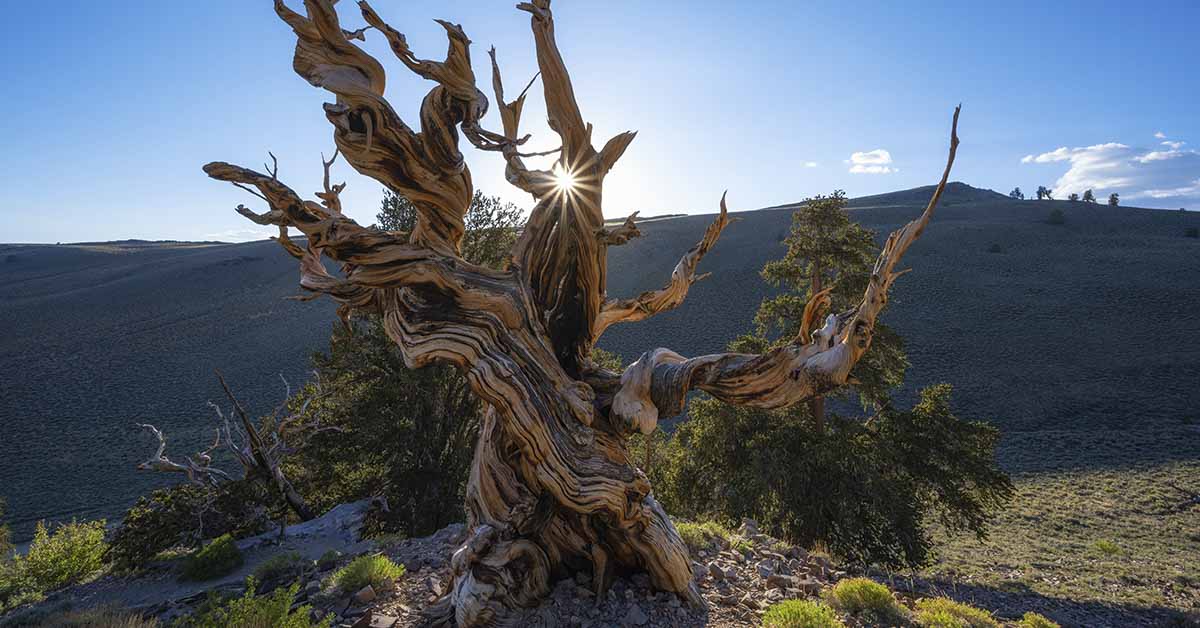

The arid mountain forest of eastern California holds an ancient secret aged beyond that of even the pyramids of Giza and the ancient city of Babylon. The Methuselah tree, hidden in the forests of California, is known as the Earth’s oldest living non-clonal organism. Non-clonal organisms are species that stem from a single organism and are not clones.
The Ancient Sentinels of Time
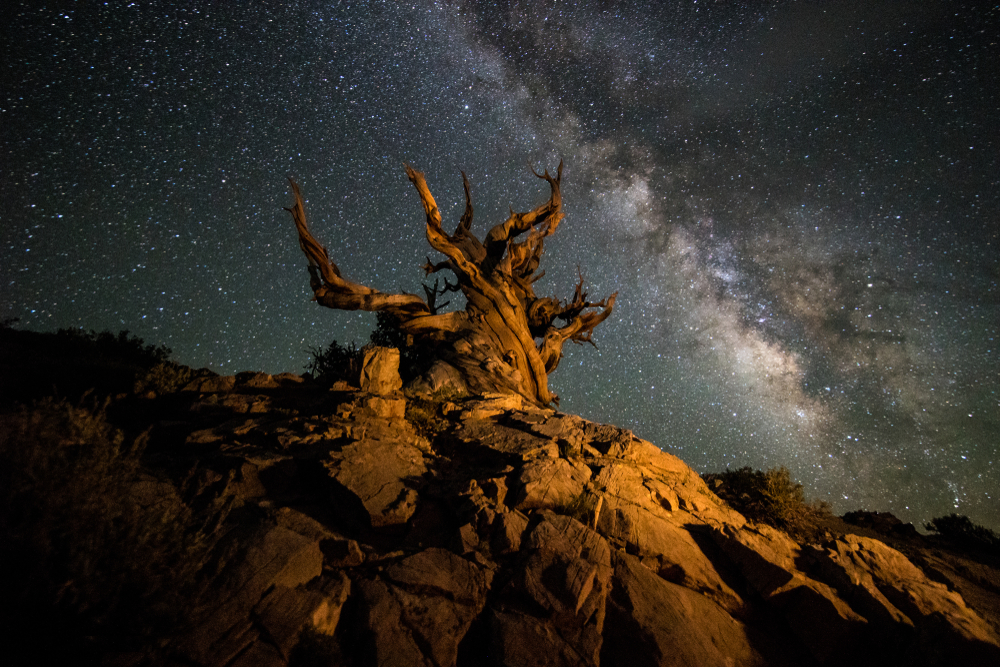
The tree is named after an ageless character from the Book of Genesis. It is estimated to have started growing 4,857 years ago. This estimate dates its germination to around 2,833 B.C., pre-dating the Roman Empire by almost 3,000 years. It would also place the tree’s age older than the 7 wonders of the world. The discovery of these ancient trees gives us newfound insight into the longevity of these ancient organisms.
Edmund Schulman’s revolutionary work in 1953 broke what researchers called the “B.C. Barrier” – the first confirmation of trees that predated the birth of Christ. The Ancient Bristlecone Pine Forest was designated as a protected area in 1953, expanding to 27,160 acres and named in Schulman’s honor after his death.
Scientific Discovery and Dendrochronological Breakthroughs
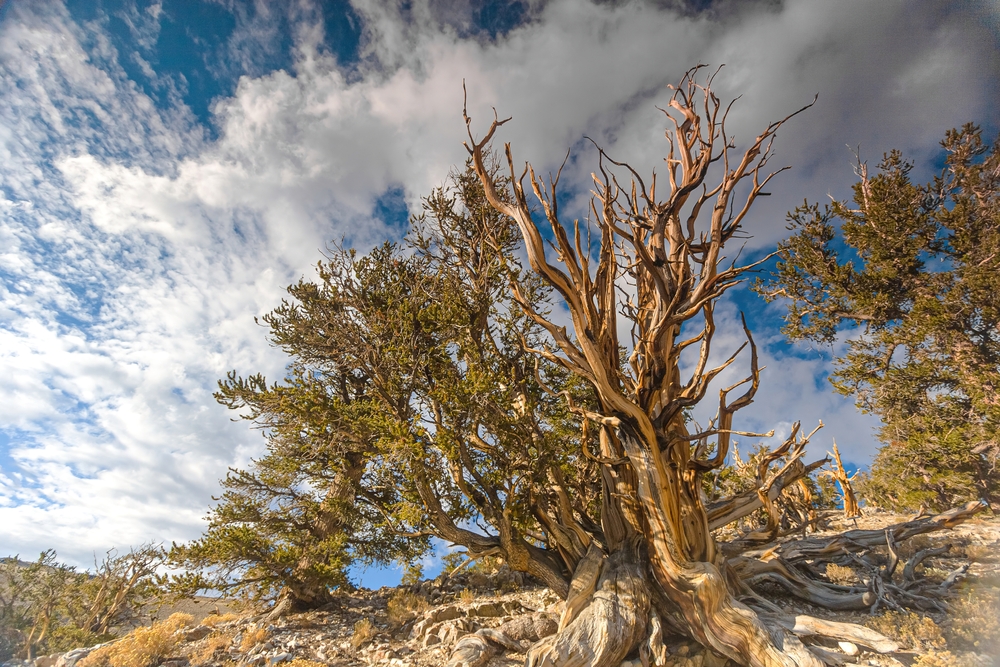
The scientific methodology behind tree age determination is known as dendrochronology. It uses the tree’s annual growth rings to create a chronological timeline. It explains how tree-ring dating works and its importance beyond just determining age. Each ring reflects environmental conditions during its formation – thick rings indicate favorable years, while narrow rings suggest drought or harsh conditions.
Researchers speculate that there might be a bristlecone pine older than Methuselah in California’s White Mountains. However, its location is even more of a secret than the Methuselah tree. In 2009, tree age researcher Peter M. Brown claimed that fellow researcher Tom Harlan inherited a 5,062-year-old tree specimen from his predecessor. Harlan told Brown the tree the sample was derived from was still alive. However, the original sample and location of the tree disappeared after his death.
The Biology and Adaptations of Extreme Longevity
Great Basin bristlecone pines (Pinus longaeva) are adapted for longevity in the harshest of environments, being incredibly resistant towards infections. They also grow extremely slowly. A 40-year-old tree bristlecone pine may only reach 6 inches in height. The needles can remain functional for up to 45 years. These trees essentially become “longevity winners” which makes up less than 0.1% of forest populations.
Strip-Barking
Strip-barking allows bristlecone pines to survive in harsh conditions. During a severe drought, exposed branches desiccate, and the connected bark and roots die. The tree then sheds most of its non-essential wood, leaving behind narrow strips of living bark, sometimes just 2 inches wide, that keep whole sections of foliage alive. This process enables trees to survive with as little as 5% living tissue. The resulting strip-bark form also alters ring-width patterns, giving scientists a valuable record of how these ancient trees track climate shifts.
Geographic Distribution and Habitat Requirements
Great Basin bristlecone pines grow exclusively in subalpine regions between 9,800-11,000 feet elevation across California, Nevada, and Utah. They thrive in xeric alpine conditions with rocky soil, low rainfall, long winters, and are highly drought resistant. These trees grow on various substrates including limestone, dolomite, and quartzite. The harsh conditions paradoxically contribute to their longevity by slowing growth and reducing competition.
Other Ancient Tree Contenders
Bristlecone pines are not the only tree organisms boasting longevity throughout millenia. Statistical modeling estimates the Alerce Milenario (Gran Abuelo) in Chile’s Alerce Costero National Park at 5,484 years old, since traditional coring couldn’t reach the tree’s center. This Patagonian cypress (Fitzroya cupressoides) measures 4.2 meters in diameter and 28 meters tall. The Pando aspen clone in Utah covers 42.6 hectares with 47,000 genetically identical stems estimated at 9,000-16,000 years old, though individual stems live only 100-130 years.
Conservation Challenges and Protection Measures
Preserving these ancient trees is paramount as climate change has already affected ecosystems across the globe. Other multiple threats these ancient trees face are drought stress, bark beetle infestations, and human disturbance. The Forest Service keeps the location of the Methuselah a tight-lipped secret to prevent the public from vandalizing the tree. These ancient trees are irreplaceable; therefore, forest managers use various protection strategies, including fencing, camera monitoring, and educational programs, to prevent damage. It is ironic that to preserve our ability to learn the Earth’s ancient secrets, we must keep the location of these natural libraries hidden. Protecting their wisdom means shrouding them in secrecy.
Scientific Legacy and Future Research Directions
Ancient trees are possibly the oldest living link we have to our environmental past. Their growth rings provide detailed climate records spanning millennia. Recent genetic research on clonal organisms like Pando reveals how ancient organisms protect their genomes from harmful mutations. Ancient trees also further our understanding of the genetic basis of their immense longevity and how adaptations are affected by climate change.
Read More: 3,000-Year-Old Ancient Trees Discovered in Tanzania for the First Time