
When 75-year-old grandfather Dave Richards began a bike ride with friends in July 2021, he expected nothing more than a pleasant afternoon. But in a few chaotic seconds, his life changed forever.
A drunk driver, distracted by his phone, sped up behind the cyclists and crashed into them. Richards got pinned beneath the vehicle. The scorching engine burned one side of his body, while the car’s weight crushed the other.
He suffered devastating injuries, yet his survival paved the way for something extraordinary: a pioneering 3D printed face surgery that rebuilt his face with the help of advanced scanning and printing technology.
The surgery, performed through the NHS, became one of the first of its kind in the UK. More than a story of science, it’s one of courage and the power of innovation to restore identity.
The Accident and Immediate Aftermath
Richards remembers the moment like it happened yesterday. “It was a lovely sunny day and not long into the ride,” he said. “We were going up a hill when this guy came up behind us at speed, over the limit, and on his phone.”
Two of his friends were thrown clear of the impact, but Richards wasn’t as lucky. “I got trapped under the car. The engine and exhaust burned through one side of my body, and the other side was crushed.”
The crash left him with third-degree burns, broken ribs, and a fractured pelvis. Doctors also removed one of his eyes to prevent infection spreading through his optic nerve to his brain.
Police later arrested the driver, who received a three-year prison sentence and a seven-year driving ban. Richards was horrified to learn the man was released after just eighteen months. “I nearly lost my life,” he said. “Now I live with the pain every day.”
Despite the trauma, Richards refused to give up. His determination led doctors to explore a groundbreaking treatment using 3D printing in reconstructive surgery, something that could give him back more than just his appearance.
Dave Richards is one of the first patients to benefit from a unique NHS body parts printing centre in Bristols, UK. Source: Instagram Reels
The Surgical Reconstruction
Doctors at Southmead Hospital faced an incredible challenge. Richards’s face had been destroyed on one side, and traditional skin grafts couldn’t repair that kind of damage. The medical team decided to perform a complex “free flap” operation.
“They took tissue with blood, arteries, and veins from another part of my body and plumbed it into my neck,” Richards explained. The surgeons connected the transferred tissue’s blood vessels under a microscope, allowing it to survive and grow.
This procedure rebuilt the structure and saved his life, but recovery was long and painful. Richards spent months in rehabilitation. Scar tissue tightened, and movement became difficult. “At first, I felt too vulnerable to go out,” he said. “I avoided people because I didn’t want them to stare.”
Still, his resilience pushed him forward. Surgeons eventually referred him to Bristol’s 3D Medical Centre, where technology offered something traditional surgery couldn’t, a custom 3D-printed facial prosthetic designed specifically for his features.
https://www.instagram.com/p/DQWYlCgjIq9 Doctors faced an incredible challenge to reconstruct Richards’s face after being destroyed on one side. Image credit: Instagram
A New Era in Facial Prosthetics
The Bristol 3D Medical Centre, part of the NHS, became the heart of Richards’s recovery. It was the first facility in the UK to combine 3D scanning, digital design, and medical printing under one roof.
Technicians used high-resolution scanners to capture every curve of his head and how his skin moved when he spoke or smiled. Amy Davey, the lead reconstructive scientist, explained, “Surface scanning lets patients be scanned while moving. It helps the prosthesis adapt to natural expressions.”
The data guided specialists as they created a digital model of Richards’s face. They printed detailed moulds using medical-grade resin, ensuring the prosthetic would fit perfectly.
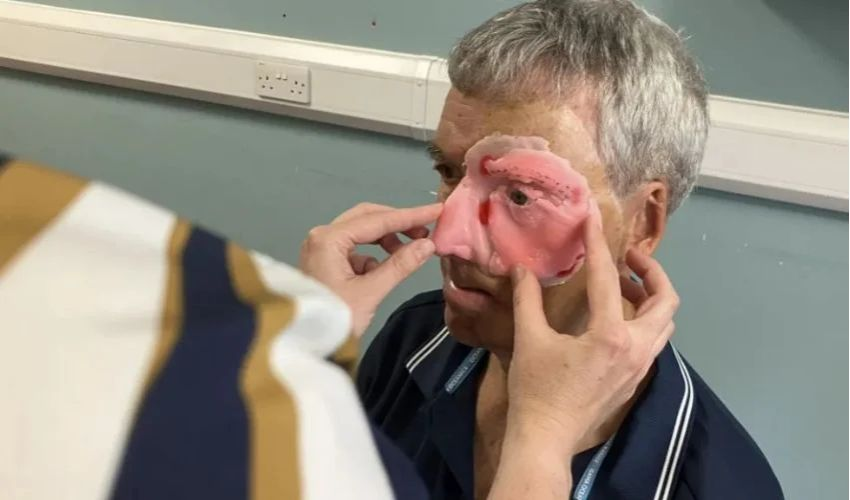
From there, the team crafted the outer layer from soft silicone. Artists hand-painted skin tones, added freckles and veins, and attached realistic eyebrow hairs. They even created a hand-painted acrylic eye that matched his remaining one.
Each morning, Richards uses medical adhesive to attach the prosthetic. Each night, he removes and cleans it. The device moves naturally and blends almost seamlessly with his skin.
“When I saw it for the first time, I felt like myself again,” Richards said. The precision of 3D printed face surgery had given him a sense of familiarity.
How 3D Printing Works in Medicine
Behind Richards’s transformation lies a growing field of science that merges art and medicine.
The Scanning and Design Phase
The process begins with detailed 3D scans. Unlike old-fashioned X-rays, these scanners capture every feature of the face in full detail. Doctors and technicians then use computer-aided design software to digitally rebuild missing or damaged areas.
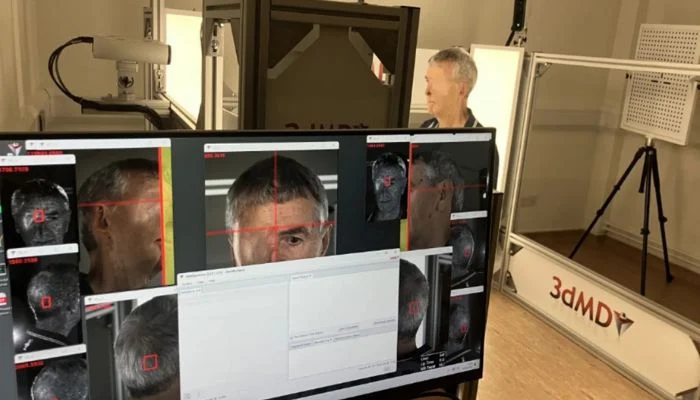
They mirror healthy parts of the face, tweak shapes, and design new structures that match perfectly. This collaboration between surgeon and designer turns science into digital craftsmanship.
Printing the Physical Model
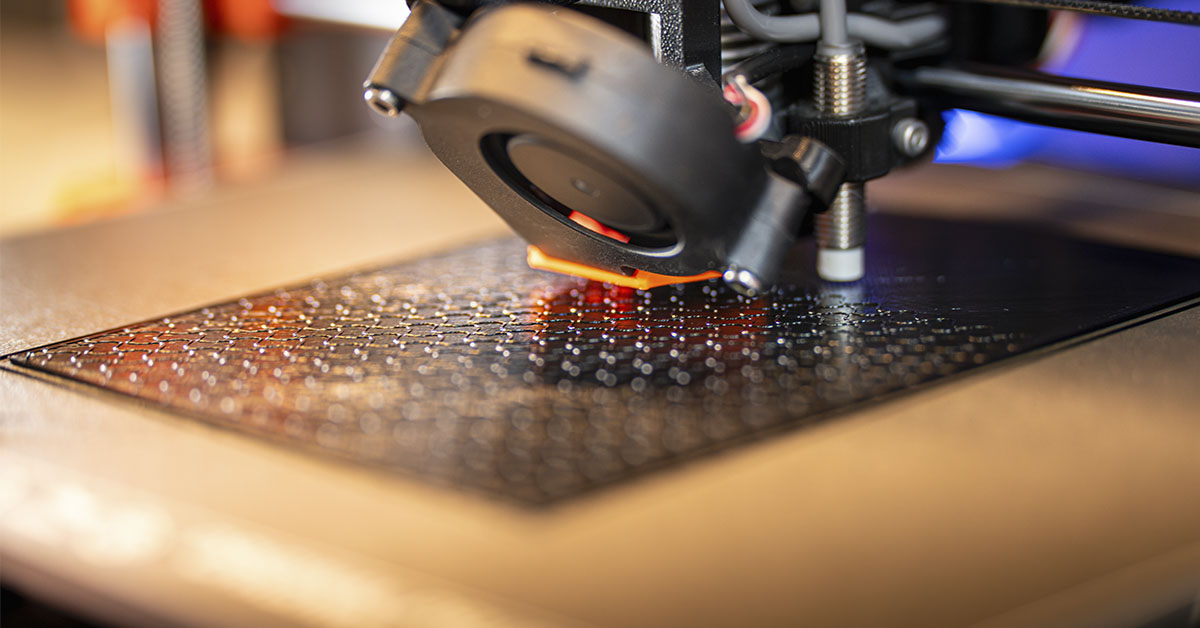
Once the design is ready, the 3D printer takes over. It builds the model layer by layer using biocompatible materials such as resin or silicone. Each layer is paper-thin, but together they form a solid, life-sized structure.
Some prints serve as surgical guides. Others, like Richards’s, become moulds for silicone prosthetics. Hospitals now use this method for bones, dental implants, hearing aids, and even heart models for surgery planning.
The main advantage is precision and speed. What used to take weeks now happens in a few days. For patients like Richards, that means faster healing and prosthetics that feel truly personal.
The Bristol 3D Medical Centre stands at the forefront of this movement, blending technology and compassion to create prosthetics that don’t just restore faces, they restore confidence.
The Full Process Step by Step
Surviving the Crash
Emergency responders stabilized Richards at the scene, and doctors worked tirelessly to save him. Once his condition improved, surgeons performed the free flap procedure. They reconnected arteries and veins from donor tissue to rebuild the destroyed side of his face, restoring blood flow and structure.
Healing and Preparation
As weeks passed after Richards 3D printed face surgery, he began therapy to regain movement and reduce scar stiffness. He endured daily exercises to keep his neck and jaw flexible. These sessions, though painful, prepared his body for the next step, the 3D prosthetic.
Digital Design and Scanning
When his skin and muscles healed enough, technicians scanned his head from every angle. They captured his natural movements, creating a digital model for his 3D-printed reconstruction surgery. The data became the blueprint for the prosthetic’s exact shape and dimensions.
Creating the Prosthetic
Artists then built a wax prototype, adjusting every detail until it mirrored his face perfectly. They cast the final version in soft silicone, carefully painting colors and textures until it looked lifelike. The team refined the edges so they disappeared under natural light.
Learning to Live with It
When Richards first saw himself in the mirror, emotion overcame him. “It didn’t just hide scars,” he said. “It gave me back the person I was.” He quickly learned to clean, attach, and care for it daily. Over time, the prosthetic became part of his life.
The Road to Recovery
Healing from facial trauma isn’t only about surgery, it’s about rediscovering who you are. “It took me a long time to feel comfortable about my image,” Richards admitted. “But I’ve come a long way in that respect.”
The experience humbled him. “It was surreal and not pleasant at times,” he said. “But I’m glad I did it. It got me here.”
The prosthetic gave him courage to go outside again. He started cycling, meeting friends, and embracing daily life. Pain still lingers, but he no longer lets it define him.
For Richards, the 3D printed face surgery didn’t just restore his features. It gave him back his identity and the strength to face the world again.
What This Means for Reconstructive Medicine
Richards’s journey shows how 3D printing in reconstructive surgery is revolutionizing medicine. By combining precise scanning, design, and advanced materials, surgeons can now create prosthetics that look and feel natural.
Each piece is custom-built, not mass-produced. That level of personalization improves both comfort and self-esteem. Because Richards’s procedure was performed through the NHS, it also proved that such advanced care doesn’t have to remain exclusive to private clinics.
Of course, there are still challenges. These procedures take time, resources, and skill. Equipment is expensive, and prosthetics must be replaced as the body changes. Even so, each successful operation pushes the technology forward and makes it more accessible.
The Bristol 3D Medical Centre continues to lead the charge. Scientists there are already testing magnetic attachment systems to replace adhesives. These innovations will make prosthetics easier to wear and remove, marking another step toward patient comfort.
The Future of Bio-Printing and Regenerative Medicine
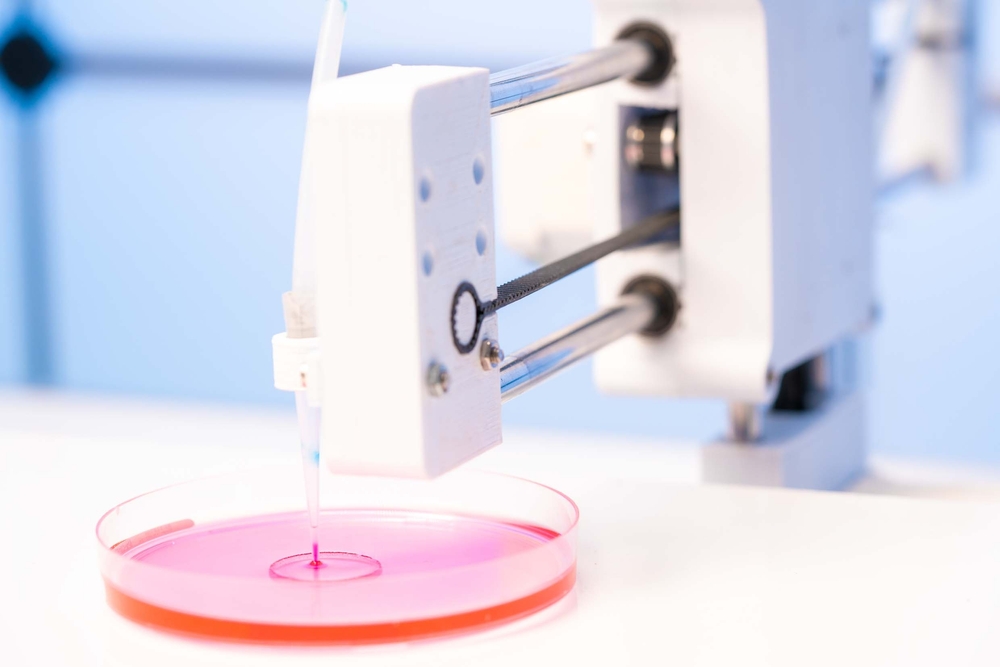
While 3D printing has already changed countless lives, scientists are pushing even further with bio-printing, which uses living cells to create real tissue.
Printing with Life
Instead of silicone or resin, bio-printers use “bio-ink”, a blend of cells and natural proteins which is used to print living material layer by layer. Researchers have already printed small patches of skin and cartilage. These tissues integrate with the patient’s body, healing naturally and reducing rejection risks.
Challenges and Possibilities
The main challenge is complexity. Printing tiny blood vessels to keep tissue alive remains difficult. Ethical debates about “printing life” also continue. Yet progress keeps coming.
Experts envision a future where doctors print skin directly onto wounds or grow ears and noses using the patient’s own cells. If that happens, people like Richards may never need prosthetics again.
Each 3D-printed reconstruction surgery today brings the medical world one step closer to that future, a world where technology not only repairs the human body but helps it regrow.
Read More: 3D-Printed ‘Skin’ Could End the Need for Animal Testing in Cosmetics
Road Safety and Accountability
Even after recovery, Richards often speaks about the crash that changed everything. He says his story isn’t just about survival or technology, it’s about awareness and accountability.
Drunk and distracted driving continues to end lives every year. In 2024, more than 30,000 UK road incidents involved impaired or distracted drivers, many targeting cyclists. Richards knows firsthand how quickly one careless act can cause devastation.

He now supports campaigns promoting road safety and responsible driving. “If my story makes one person think before they drive drunk or text, it’s worth it,” he said.
Local groups have joined his efforts, pushing for safer bike lanes and stricter sentencing. Some even propose “Richards’s Law,” aiming to increase penalties for drivers who injure cyclists.
He believes awareness matters most. “People forget how powerful a car really is,” he said. “It takes seconds to destroy a life.”
By sharing his story, Richards turns tragedy into purpose. His recovery proves that technology can rebuild what’s broken, but empathy and responsibility are what prevent future heartbreak.
Final Thoughts
Dave Richards’s story represents resilience and innovation working hand in hand. After surviving an unimaginable crash, he trusted doctors to try something new. Through 3D printed face surgery, he regained his confidence and his hope.
“If I think there’s a benefit and the risks aren’t too high, I’ll try it,” he said. His courage led him to a pioneering treatment that’s now changing lives across the country.
Richards’s journey reminds us that healing isn’t only physical, it’s emotional, too. Technology rebuilt his face, but his spirit rebuilt his life.
Read More: 3D-Printed ‘Skin’ Could End the Need for Animal Testing in Cosmetics