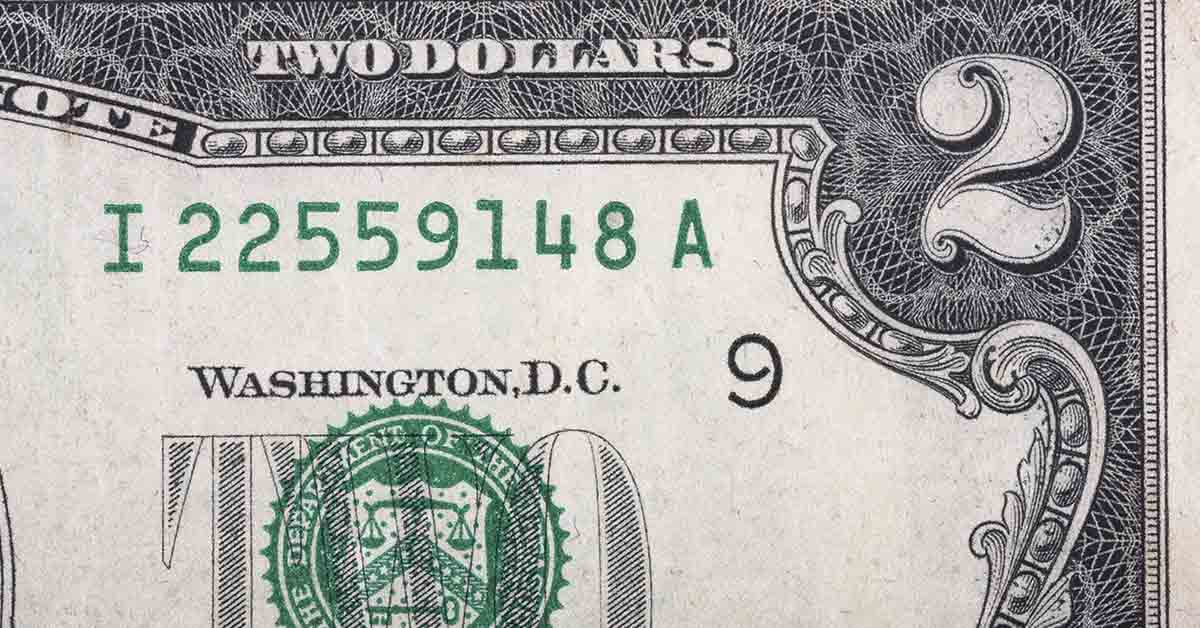

The $2 bill lives in a strange space between myth and reality. People treat it like a lucky charm, a collector’s item, or proof of insider knowledge about money. Yet bank tellers see something very different. They see a niche denomination that complicates daily work, irritates some customers, and creates far more drama than its face value suggests. To understand why many tellers quietly wish people would stop asking for $2 bills, it helps to look backward. The first $2 notes were early American issues tied to a young country’s urgent financial needs. That long history feeds today’s mystique.
However, history also explains why the modern banking system treats $2 bills as a side character, not a star. This article combines historical detail with a front-line view from the teller window. The goal is not to insult fans of $2 bills, but to show why persistent requests can cause headaches inside a bank. Along the way, the history of this odd denomination explains exactly how it ended up so loved, so hoarded, and so impractical. It also offers useful context for readers who wonder whether asking for them is harmless fun. By seeing the situation through a teller’s eyes, you can decide when a request is truly worth it. You may still enjoy the bills, yet you will understand the hidden costs that surround them.
1. A very old denomination with a very narrow purpose
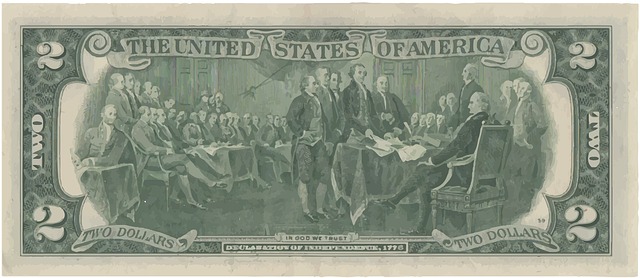
From its earliest appearance, the $2 bill occupied the margins of American money, not center stage. During the Revolutionary era, Congress relied on $2 notes to raise cash quickly for a fragile government. These Continental issues helped finance troops, supplies, and debt, but they never anchored everyday market stalls. From the start, the denomination carried a whiff of emergency and improvisation instead of routine daily spending. That reputation nudged $2 notes to the edge of daily commerce, where they felt unusual, even slightly theatrical.
Later chapters of currency history reinforced this limited, symbolic role. The first federally issued $2 bills of the modern era appeared in 1862, during the Civil War. A country fighting to hold itself together naturally associated them with crisis, sacrifice, and national drama. Today many customers vaguely remember that history, yet they rarely need $2 bills for ordinary purchases. Tellers therefore meet a denomination fueled by nostalgia, not by genuine demand from cash drawers and merchants. Currency historians often note that $2 bills never claimed a clear niche in everyday pricing and wages. Without that defined job, stories rushed in to fill the gap, from gambling rituals to sentimental gifts. Modern customers therefore approach $2 bills through folklore and superstition much more than through practical budgeting.
2. Limited production means every stack must be managed carefully
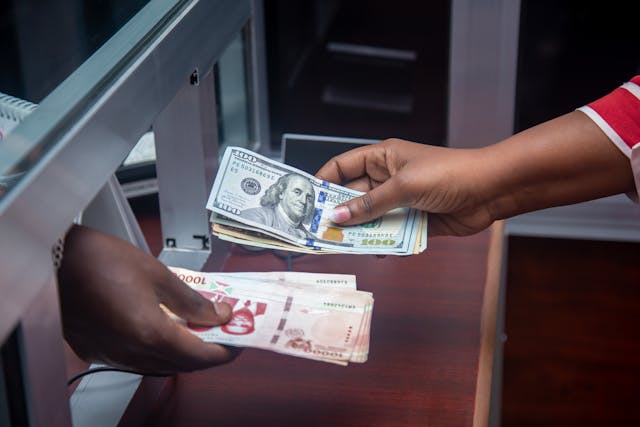
Modern cash systems are built around a few core denominations. Banks order and stock what customers withdraw most often, usually $20, $10, $5, and $1 notes. The full paper set technically includes the $2 bill, but the others see far heavier use in daily life. When demand clusters around a few notes, the rest simply appear less in bank shipments and branch inventories. Banks also respond to business behavior. $2 bills were once discontinued because usage was so low, then reintroduced in the 1970s with hopes of saving printing costs. Even after the reissue, businesses kept focusing on familiar notes that fit existing drawers and habits.
Branches now receive relatively small batches of $2 bills, sometimes only when they specifically request them. A teller who hands out large bundles on impulse may leave the drawer short for customers who genuinely ordered them in advance. That scarcity within the drawer is one reason tellers hesitate when someone casually asks for “all your $2 bills”. Federal Reserve cash offices typically ship standard bundles, and unusual denominations complicate those logistics for smaller branches. If a branch misjudges demand, staff may sit on idle $2 inventory for months. Managers then question why scarce vault space accommodates slow-moving notes instead of heavily used denominations. Tellers feel that pressure during every cash order discussion.
3. Every $2 bill complicates balancing the drawer
At the end of each shift, tellers must count cash, reconcile deposits, and match totals exactly. Extra denominations increase the chance of mistakes, especially when they appear infrequently. Many banks treat $2 bills as special request items instead of standard drawer stock for this reason. That policy reflects not only scarcity but also a desire to keep daily counting simple. When a customer insists on $2 bills, a teller may need to fetch them from the vault, rearrange the drawer, and remember a rarely used count step later.
Missing a single strap can trigger a time-consuming recount for supervisors. While that process happens, the line grows, and pressure rises. From the teller’s perspective, a special request for $2 bills is not just a fun novelty. It is a small operational risk that repeats day after day. Even a single counting error forces them to explain discrepancies to supervisors, which many describe as deeply stressful. Adding $2 slots to that routine gives one more place for distraction whenever the lobby fills with impatient customers. Over time, they learn to anticipate which special requests are likely to trigger those long, uncomfortable evenings.
4. Confusion about legal tender status leads to angry returns
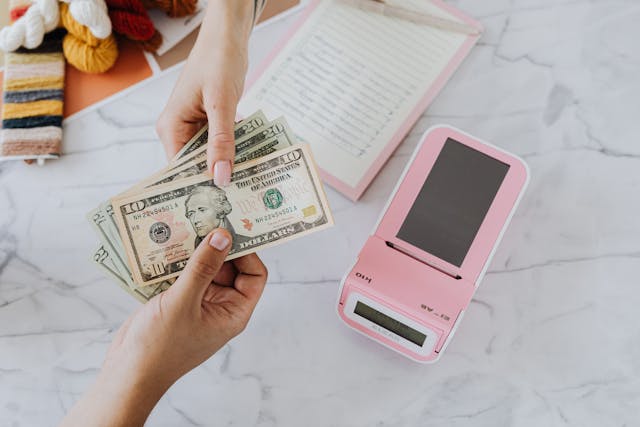
Many customers still wonder whether $2 bills are “real money”. That confusion continues even though official guidance is very clear. All currently circulating U.S. paper currency remains legal tender, regardless of when specific designs were printed or issued. A note may show Jefferson, a red seal, or an older layout, yet it still counts as lawful payment. Despite that clarity, tellers see the consequences of misunderstanding. People have reported being challenged, refused, or even questioned by authorities when they try to spend $2 bills in schools or small businesses.
When those situations occur, customers sometimes return to the bank and blame the teller who provided the notes. A teller who has handled previous complaints may discourage new requests, not because the bills lack legal status, but because they do not want customers caught in another awkward confrontation at the checkout lane. Some institutions now offer staff training on unusual denominations, precisely because past incidents have escalated so quickly. However, tellers still know that not every cashier, teacher, or manager has received that same careful explanation. When confusion reaches social media or local news, customers sometimes return furious, expecting the bank to answer.
5. Business banking policies keep $2 bills out of the normal cycle
Banks respond directly to how businesses deposit and withdraw cash. Many retailers design their cash drawers and pricing around $1 and $5 notes, which fit neatly into standard compartments. If a store never asks for $2 notes in its change orders, local branches have little reason to stock many. The circulation loop between banks and businesses, therefore, bypasses the denomination almost completely. For tellers, that loop matters. When a business constantly deposits $20 bills and takes out $1s and $5s, those notes refill the drawer naturally. $2 bills, by contrast, leave through special requests and rarely return in deposits.
At the national level, they represent a tiny share of outstanding currency, even though many remain technically in circulation. A teller who hands out $2 bills freely may then face weeks without any replacements, leaving the branch unable to satisfy customers who truly need them for events or promotions. This low-velocity circulation means many $2 bills sit dormant in private collections while drawers struggle with basic change. Tellers, therefore, treat each outgoing strap almost like a small allocation decision, not a casual novelty for curious visitors. Their choices influence whether the branch can fulfill payroll orders, weekend events, and other time-sensitive cash needs.
6. The collectible aura makes customers hoard, not spend
When the $2 bill returned in 1976, the federal government had a practical goal. Officials hoped people would use the notes in daily life, not hide them away. Wider use could have reduced the number of $1 bills required and saved production costs over time. The new design also tied into the bicentennial, which brought extra attention from collectors and casual savers. Instead, many Americans treated the new $2 bill as a special souvenir. Limited print runs and the novelty of the design encouraged people to tuck notes into scrapbooks, safe deposit boxes, and family keepsake envelopes.
Tellers still meet customers who ask for crisp $2 bills only to stash them at home as “good luck” or gifts. From the teller’s view, that behavior removes notes from circulation and defeats the practical purpose of stocking them. Each request then feels less like normal banking and more like feeding a private collection for no operational gain. Economists sometimes describe this pattern as a classic example of how perceived scarcity changes real-world behavior. People cling to notes they believe are special, even when official agencies keep printing new series in quantity. For tellers, the result looks simple: drawers empty quickly while attics fill quietly with untouched, perfectly spendable money.
7. Everyday alternatives already meet change and tipping needs
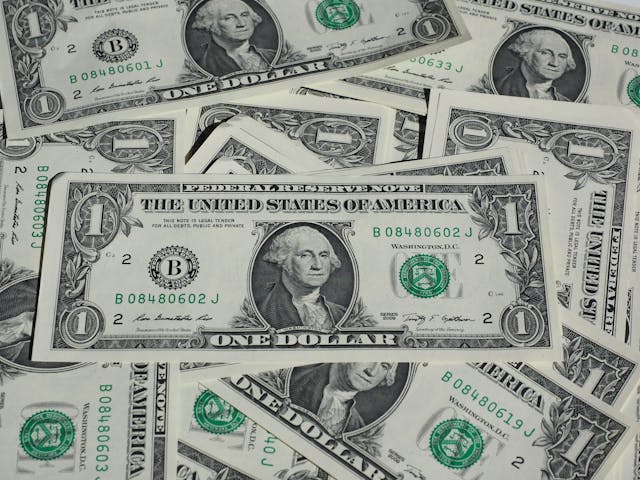
Most situations described by customers do not actually require $2 bills. People ask for them for restaurant tips, vending machines, or quick change at school events. Yet every one of those situations works with $1, $5, or even coins. Common denominations already handle nearly all tipping, small purchases, and booth transactions without confusion. When someone insists on $2 bills for a simple purchase, the teller must weigh that preference against the branch’s operational needs. If $1 bills can handle the same job without any complications, most staff will choose the path with fewer headaches.
They also think about the next customer in line, who might need straightforward cash quickly. A request that sounds harmless to one person can slow service for many others. That trade-off is another quiet reason a teller may gently steer customers away from $2 bills. Some banks even design training scripts that encourage staff to suggest straightforward combinations of $1 and $5 notes instead. Those scripts help maintain predictable drawer patterns, which reduces shortages and keeps end-of-day balancing more manageable. Customers rarely see those internal priorities, yet they shape how every “fun” request feels inside a crowded branch.
8. Myths about rarity encourage arguments at the window

Because people rarely see $2 bills in change, many assume they are scarce or even discontinued. In reality, the denomination still exists, and new series appear from time to time. However, collectors and casual savers remove many from circulation because they believe the notes are more valuable than face value. That constant removal makes genuine scarcity appear where policy does not intend it. Those beliefs can spark uncomfortable conversations at the teller window. Customers sometimes demand uncirculated $2 bills, expecting instant profit or long-term gains.
When a teller explains that most modern $2 notes sell only for about $2, some people feel disappointed or angry. Past printings and rumors have already fueled superstitions about the denomination and its supposed hidden value. Tellers become cautious after enough tense encounters. Denying enthusiastic requests may seem safer than spending another shift explaining that a crisp $2 bill is deeply interesting, yet still worth exactly $2. Some enthusiasts arrive with online price charts printed out, convinced that any older date guarantees immediate profit from resale. Tellers must then explain grading, condition, and supply, subjects that fall far outside normal retail banking conversations. After repeating that lecture many times, staff often choose gentle discouragement instead of reopening the same exhausting debate.
9. The long history invites fraud checks and extra scrutiny
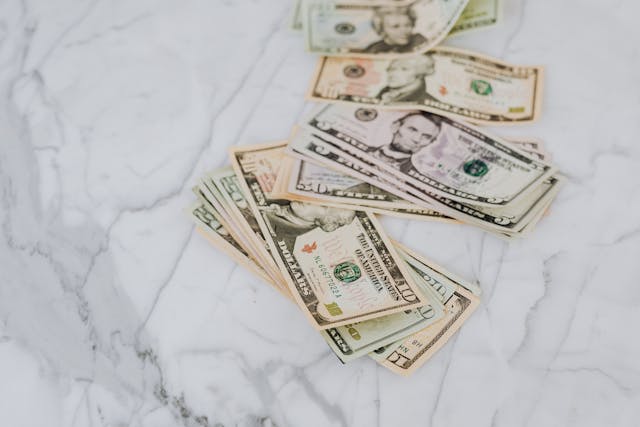
Older $2 bills often look different from modern notes. Some have red seals, unusual portraits, or slight changes in paper appearance. Each variation reflects a particular era of design or legal framework, carefully recorded in official histories and currency catalogs. To a rushed cashier or an inexperienced teller, these differences can seem suspicious at first glance. In practice, older paper formulas and inks can confuse counterfeit detection tools, which are designed for modern issues. When a branch hands out older $2 notes, staff may face extra verification steps for authenticity and condition.
Sometimes, supervisors must inspect the bills and sign off on their release. That extra scrutiny slows service and increases stress. From a teller’s standpoint, the combination of long history, multiple designs, and heightened attention from law enforcement makes $2 bills feel like more trouble than their face value justifies. In some regions, reports of counterfeit $2 bills have prompted managers to lock older notes away from routine use. When customers demand those specific designs, tellers may need supervisor approval, which disrupts workflow and lengthens waiting times. Although genuine $2 notes remain lawful, the extra caution surrounding them creates friction that $1 or $5 bills avoid.
10. Why many tellers quietly wish you would not ask
When you combine all these factors, the teller’s reluctance starts to make sense. The $2 bill is historically significant, yet operationally awkward. Its origins in special wartime funding, its long gaps in production, and its bicentennial reissue created a mystique that encourages hoarding and myths about rarity. Official agencies still emphasize that $2 bills are genuine money, part of the seven standard paper denominations, and fully legal tender in every state. For many people, that knowledge strengthens the charm and story of the note. Inside the bank, though, the story looks different. Tellers juggle scarce supply, extra counting steps, complicated customer expectations, and the occasional dispute at the checkout counter.
They know that everyday denominations can handle almost every task, with far fewer headaches. Understanding that context does not mean you must stop enjoying $2 bills. However, it does explain why your friendly teller sometimes sighs inwardly when someone leans forward and asks, with a conspiratorial smile, whether they have “any $2 bills in the back”. If you truly need them for a special purpose, consider calling ahead and placing an order first. That simple step respects the teller’s workload and helps the branch plan its limited supply more sensibly. When requests feel thoughtful, not demanding, unusual notes can become a small pleasure for everyone involved. Collectors who coordinate politely with staff often find branches more willing to set aside interesting examples over time. That ongoing relationship benefits everyone, because it turns a potential nuisance into a predictable, well-managed request. In the end, respectful planning helps keep $2 bills charming for customers without creating constant stress behind the counter.
Read More: 15 Ridiculous Ways Intelligent People Throw Their Money Away