

The heart is one of the most important organs for health and longevity. Despite this, for decades, we have accepted the stiffening of arteries and the shrinking of cardiac chambers as inevitable parts of heart aging and growing older. A growing body of research, however, recently popularized by biochemist Dr. Rhonda Patrick and groundbreaking research from Norway, suggests that we may have the power to turn back the clock.
Specifically, researchers have identified a protocol that can effectively reverse the aging of the heart by up to 20 years. It isn’t a miracle pill or a secret supplement; it is a specific, science-backed approach to exercise known as the Norwegian 4×4 Protocol. By pushing the cardiovascular system in a very particular way, this method can restore the elasticity of a middle-aged heart to that of a person decades younger.
The Science of a Stiffening Heart

To understand how an exercise can “reverse” aging, we must first look at what happens to the heart as we age. For many sedentary adults, the heart muscle begins to shrink and stiffen over time. The left ventricle, which is the chamber responsible for pumping oxygen-rich blood to the rest of the body, becomes less compliant. Imagine a brand-new rubber band that is stretchy and snappy; an aging heart is more like an old, dried-out rubber band that has lost its “give.”
This stiffness makes it harder for the heart to fill with blood and pump it out efficiently, leading to a decline in VO2 max. This is the maximum amount of oxygen your body can utilize during intense exercise. VO2 max is often cited by longevity experts as the single most important predictor of how long you will live. When your VO2 max drops, your biological age rises, and your risk for heart failure and other chronic diseases skyrockets.
The Norwegian 4×4: The “Gold Standard” of Heart Health Exercise

The exercise that has researchers buzzing is the Norwegian 4×4 protocol, developed by scientists at the Norwegian University of Science and Technology (NTNU). Unlike traditional “steady-state” cardio, such as a long, slow jog, this protocol is a form of High-Intensity Interval Training (HIIT) designed to maximize the “stroke volume” of the heart.
The protocol is remarkably simple in structure but physically demanding:
- Warm-up: 5 to 10 minutes of moderate activity to get the blood flowing.
- The High-Intensity Interval: 4 minutes of vigorous exercise. You should be at 85% to 95% of your maximum heart rate. A good rule of thumb is the “talk test”: you should be breathing too hard to speak in full sentences, but not so hard that you are gasping for air.
- The Active Recovery: 3 minutes of low-intensity movement (like walking or slow cycling) to allow your heart rate to drop to about 60-70% of its max.
- Repeat: Complete this cycle four times.
- Cool-down: 5 minutes of easy movement.
A landmark study led by Dr. Benjamin Levine at UT Southwestern Medical Center tracked sedentary middle-aged adults over two years. The results were staggering. Those who followed a program that included the 4×4 protocol once or twice a week saw an 18% improvement in their VO2 max and a 25% improvement in the elasticity of their left ventricle. Essentially, their hearts functioned like those of people 20 years younger.
Why 4 Minutes? The Magic of the Interval
You might wonder why four minutes is the magic number. Why not thirty seconds or ten minutes? The reason is simple.
The four-minute window is the “sweet spot” for cardiac remodeling. Shorter bursts (like 30-second sprints) primarily tax the muscles and the anaerobic system. While they are great for burning fat, they don’t stay at a high enough intensity for long enough to force the heart to change its physical structure. Conversely, it is nearly impossible for most people to maintain 90% of their maximum heart rate for longer than five or six minutes.
The 4×4 method keeps the heart at its maximum pumping capacity for a total of 16 minutes per session. This sustained pressure forces the heart to adapt by becoming larger, stronger, and more flexible, reversing the natural shrinkage that occurs with age.
The Foundation: Why You Also Need Zone 2 Training

While the 4×4 protocol is the heavy hitter for reversing heart aging, it shouldn’t be your only form of exercise. Most longevity experts, including Dr. Rhonda Patrick and Dr. Peter Attia, recommend balancing high-intensity work with Zone 2 training.
Zone 2 is moderate-intensity exercise. Think of a brisk walk, a light jog, or a steady bike ride where you can still carry on a conversation, though with some effort. This type of exercise targets the mitochondria, the powerhouses of your cells. Benefits of Zone 2 include:
- Mitochondrial health: It teaches your body to burn fat more efficiently and increases the number of mitochondria in your cells.
- Metabolic flexibility: It helps prevent insulin resistance and type 2 diabetes.
- Capillary density: It builds a vast network of tiny blood vessels, making it easier for oxygen to reach your muscles.
Think of Zone 2 as building the base of your fitness pyramid, while the 4×4 protocol builds the peak. Without the base, the peak is unstable; without the peak, your heart never gets the signal to stay young.
Strength Training: The Secret to Functional Longevity
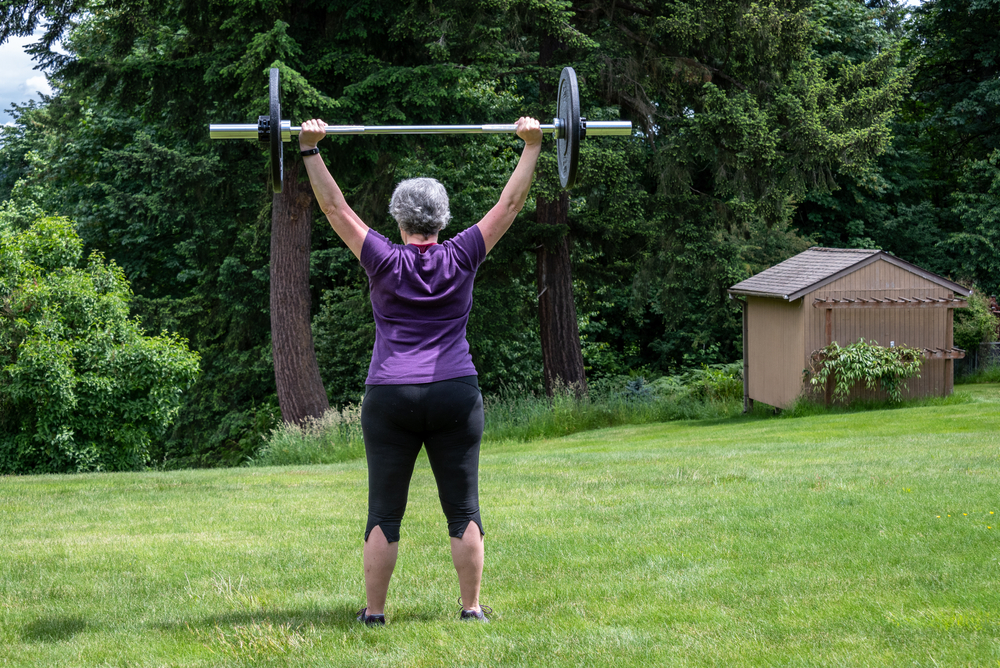
Image credit: Shutterstock
Cardiovascular health is the engine of the body, but your muscles and bones are the chassis. As we age, we face a condition called sarcopenia. This is the natural loss of muscle mass and strength. This is why resistance training (lifting weights and bodyweight exercises) is non-negotiable for longevity.
Research shows that maintaining muscle mass is directly linked to a lower risk of all-cause mortality. Strong muscles protect your joints, prevent falls (the leading cause of injury in older adults), and even help regulate your blood sugar. You don’t need to be a gym rat, either, to see results.
For the general audience, the goal isn’t to become a bodybuilder. Just two sessions a week of full-body resistance training can provide the stimulus needed to keep your biological machinery running smoothly. When combined with the Norwegian 4×4 a couple of times a week and some Zone 2 cardio to fill in the gaps, you are attacking aging from multiple sides: a youthful heart and a resilient body.
Mobility and Stability Training
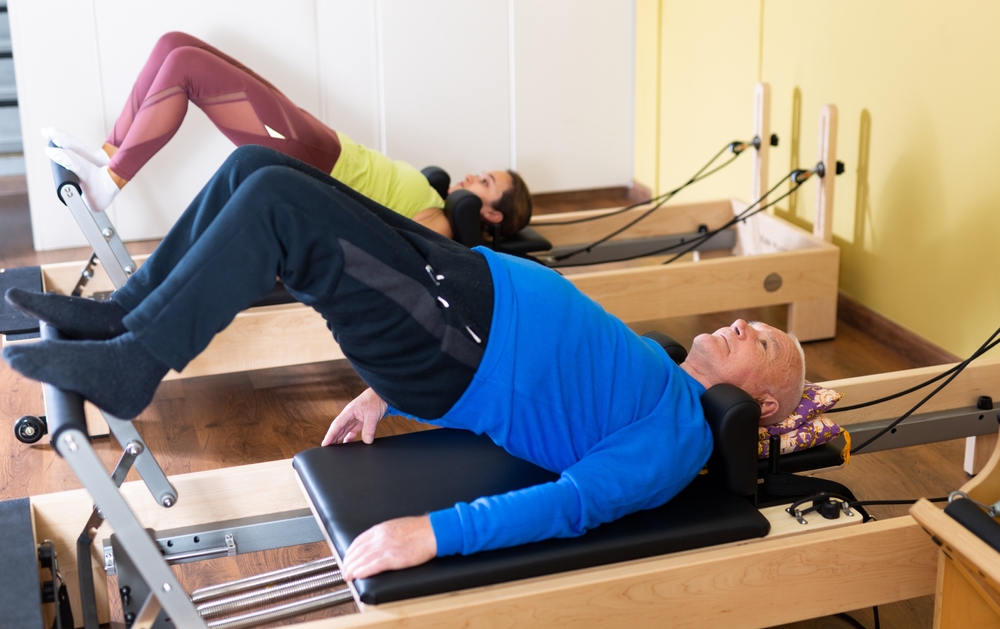
Image credit: Shutterstock
While cardiovascular and strength training often steal the spotlight in longevity discussions, mobility and stability training form the essential framework that allows those other exercises to remain possible as we age. Scientific research highlights a “use it or lose it” reality: aging typically involves the shortening of tendons and a decrease in synovial fluid within the joints, leading to a restricted range of motion and an increased risk of falls. True mobility is not just passive flexibility, such as the ability to touch your toes, but active control over your joints throughout their entire range of motion. By incorporating practices like yoga, Pilates, or dedicated dynamic stretching, individuals can combat the stiffening of the joint capsules and maintain functional independence. This ensures that the 20-year-younger heart you’ve built through the Norwegian 4×4 protocol is housed in a body that can still squat, reach, and move without pain or structural limitation.
How to Get Started Safely

If the idea of 4-minute high-intensity intervals sounds daunting, you aren’t alone. The Norwegian 4×4 is brutal by design – it has to be to force the heart to change. However, you don’t have to start at 100%, and if you haven’t done anything like this in a long time, you probably shouldn’t.
First, consult a doctor. This is especially important if you have been sedentary or have existing heart conditions. Get medical clearance before jumping into high-intensity work. Next, build your base. Start with four to six weeks of consistent zone 2 walking or cycling. This prepares your joints and your heart for the more intense work to come.
From there, ease into the 4×4. Start by doing just two intervals of two minutes. Each week, add a minute or add an extra interval until you can complete the full 4×4. Remember, the modality is yours to choose. This can be done walking or running outside, on a treadmill, a stationary bike, a rowing machine, or even by hiking up a steep hill. The heart doesn’t know what your legs are doing; it only knows how hard it is beating.
Read More: 8 Heart Healthy Supplements To Consider (and 2 To Avoid)
Reclaiming Your Future
The revelation that we can reverse heart aging by 20 years is one of the most exciting developments in modern exercise science. It shifts the narrative of aging from a slow, inevitable decline to a process that can be managed, and even partially rolled back.
By incorporating the Norwegian 4×4 protocol once or twice a week, complemented by steady-state zone 2 cardio, regular strength training, and mobility work, you aren’t just adding years to your life. You are adding life to your years. The protocol is demanding, and it requires a level of intensity that many of us aren’t used to. But when the reward is a heart that pumps with the vigor of a 30-year-old, the effort is undoubtedly worth it. Your future self will thank you for every beat.
Disclaimer: This information is not intended to be a substitute for professional medical advice, diagnosis or treatment and is for information only. Always seek the advice of your physician or another qualified health provider with any questions about your medical condition and/or current medication. Do not disregard professional medical advice or delay seeking advice or treatment because of something you have read here.
Read More: 40 Worst Foods For Heart Health