

Aging is something that many of us are afraid of and trying to fight. We deny our age as much as possible and are constantly worried about waking up one day, looking into the mirror, and wondering where all the time has gone. This isn’t surprising. Modern culture frequently equates youth with utility and aging with obsolescence. We are bombarded with advertisements for anti-aging creams, bio-hacking supplements, and retirement plans that focus almost exclusively on the thickness of one’s wallet rather than the depth of one’s soul. Thousands of years before the first retirement community was ever built, however, a Chinese philosopher named Kong Fuzi, known to the West as Confucius, was already contemplating the blueprint for a life well-lived from start to finish.
Confucius viewed life not as a race to a finish line, but as a continuous process of self-cultivation. To him, the “golden years” were not a period of fading away, but the harvest season of a lifetime’s labor. It is the time when the Junzi (the exemplary person) finally reaps the peace that comes from a life of integrity, discipline, and love. If we approach old age with fear, it is often because we have not built a foundation sturdy enough to support the weight of our years. By looking back at Confucian ethics, we can find a roadmap that transforms aging from a process of losing into a process of becoming.
Confucius viewed life not as a race to a finish line, but as a continuous process of self-cultivation. To him, the “golden years” were not a period of fading away, but the harvest season of a lifetime’s labor. It is the time when the “Junzi” (the exemplary person) finally reaps the peace that comes from a life of integrity, discipline, and love. If we approach old age with fear, it is often because we have not built a foundation sturdy enough to support the weight of our years. By looking back at Confucian ethics, we can find a roadmap that transforms aging from a process of “losing” into a process of “becoming.”
Confucius and the Art of Self-Cultivation
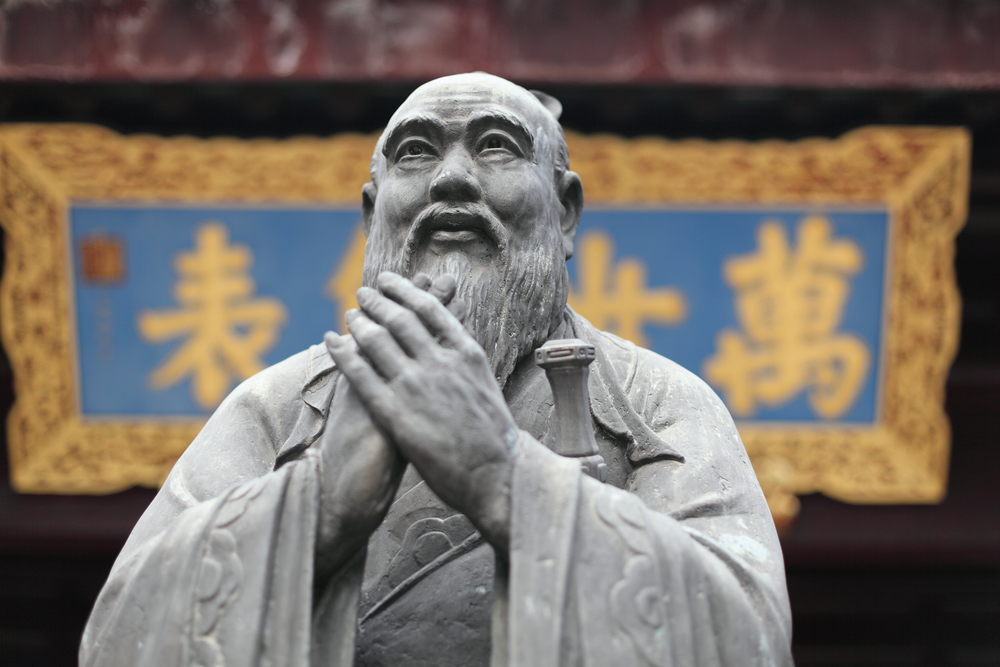
Before diving into specific principles, it is essential to understand the core of Confucian thought. Confucius lived during the Spring and Autumn period of Chinese history, a time of significant social upheaval and moral decay. His response was not to seek salvation in the supernatural, but to find it in the human. He believed that the secret to a stable society lay in the moral perfection of the individual. At the heart of his philosophy is the concept of Ren, humaneness or benevolence, and Li, ritual or propriety.
For Confucius, life is a series of interconnected relationships and duties. He famously outlined the progression of his own life in The Analects:
“At fifteen, I had my mind bent on learning. At thirty, I stood firm. At forty, I had no doubts. At fifty, I knew the decrees of Heaven. At sixty, my ear was an obedient organ for the reception of truth. At seventy, I could follow what my heart desired, without transgressing what was right.”
This quote is the ultimate rebuttal to the modern fear of aging. Confucius presents a trajectory of increasing freedom and moral clarity. Note that he doesn’t reach his peak at twenty; he reaches a state of effortless virtue at seventy. This is the goal of Confucian aging: to reach a point where your natural inclination aligns perfectly with what is good and true.
His teachings emphasize that aging is a privilege and a responsibility. In a Confucian framework, the elderly are the repositories of wisdom and the anchors of the family. However, this respect is not just given; it is earned through a lifetime of adhering to principles. To live well in our golden years, we must understand that happiness is not a lucky accident that happens to some seniors and not others. It is the result of Xue, continual learning, and the refinement of one’s character. By focusing on the four principles below, we can begin to cultivate the “obedient ear” and the “free heart” that Confucius championed.
1. Personal Dignity: The Foundation of a Peaceful Old Age

Image credit: Shutterstock
Personal dignity, or what Confucius might describe through the lens of Li (propriety), and Yi (righteousness), is the internal backbone that keeps a person upright when the external world begins to lean on them. In our younger years, our dignity is often tied to our titles, our physical strength, or our professional achievements. We feel important because we are producers. But what happens when the career ends, the muscles soften, and the title is stripped away?
Confucius taught that true dignity is internal. It is the result of standing firm in one’s values. To have a peaceful old age, one must be able to look in the mirror and respect the person staring back, not for what they do, but for who they are. This starts with the practice of self-respect in the small things. Confucius was a firm believer that how we carry ourselves, how we speak, and how we treat our immediate environment reflect our internal state.
In the context of aging, personal dignity means refusing to succumb to the slumping of the spirit. It involves maintaining a sense of order in one’s life. When we lose our sense of routine, or when we stop caring about our conduct because “no one is watching,” we begin to erode our own foundation. A dignified old age is built on the habit of integrity. If you have spent your life cutting corners, lying to yourself, or compromising your values for convenience, the silence of retirement will be deafeningly uncomfortable.
To ensure contentment later, we must practice rectification of the mind now. This means being honest about our flaws and working to correct them. It means taking pride in our character. A person with high personal dignity does not fear the loss of status because their value was never derived from the crowd’s applause. They find peace in the fact that they have lived a life of propriety – treating others with respect and holding themselves to a high standard. In your golden years, this internal consistency becomes a sanctuary. You are not haunted by who you used to be because the core of your being, your character, has only grown stronger with time.
2. Our Relationship with Time: Learning to Live in the Present

Confucius had a profound respect for the “Great Way” of nature, which includes the passage of time. One of the greatest thieves of happiness in old age is a dysfunctional relationship with time; either a desperate clinging to the past or a fearful scanning of the future. Confucius, however, emphasized the importance of the present task. He believed that if a person hears the Way in the morning, they may die in the evening without regret.
Living in the present, from a Confucian perspective, isn’t about hedonism or YOLO-ing (You Only Live Once) life. Rather, it is about the mindfulness of duty and the appreciation of the current season of life. Many people reach their golden years only to spend them mourning their youth. They view time as a predator that has stolen their beauty and energy. Confucius suggests a different path: seeing each stage of life as having its own specific propriety.
To be happy in old age, we must learn to stop fighting the clock and start walking with it. This involves a shift from doing to being. In our youth, time is a resource to be spent on building. In our older years, time is a space to be inhabited. Confucius emphasized the beauty of the daily ritual. Whether it is the way we drink our tea, the way we greet the sunrise, or the way we listen to a friend, these small moments are where life actually happens.
If we train ourselves now to find satisfaction in the here and now, we won’t find ourselves lost when the fast-paced distractions of the working world fall away. Contentment in old age comes from the realization that this moment, right now, is the only one where virtue can be practiced and joy can be felt. By letting go of the ghosts of our younger years and the monsters of our future, we free ourselves to experience the richness of our senior years. We learn to see time not as a countdown to an end, but as a continuous unfolding of the Way.
3. Human Relationships: Our True Wealth

In the West, we often talk about saving for retirement, and we almost always mean money. For Confucius, the ultimate retirement fund is your Relational Wealth. Confucianism is a deeply social philosophy; it states that we do not exist in a vacuum. We are defined by our roles: as children, parents, siblings, friends, and citizens.
Xiao(filial piety) is perhaps the most famous Confucian concept, emphasizing the respect and care children owe their parents. However, this is a two-way street. To be a person who is loved and cared for in old age, one must be a person who has invested deeply in others throughout their life. Confucius believed that the highest joy is “having friends come from afar.”
Modern isolation is one of the greatest risks to the elderly. We often spend our middle years prioritizing networking over friendship and career over family. Confucius warns us that this is a poor trade. True wealth in your golden years is the number of hands willing to hold yours and the number of hearts that carry your stories. To live happily in old age, we must prioritize the Five Relationships and cultivate them with sincerity and Ren (benevolence).
This means being present for our children not just as providers, but as mentors and companions. It means maintaining deep, non-transactional friendships. It means being an active member of a community. In old age, the walls of our homes can feel very small if they aren’t filled with the echoes of shared experiences. By shifting our focus from accumulating things to nurturing souls, we ensure that our later years are filled with the warmth of humanity rather than the coldness of things. Confucius reminds us that a man of virtue is never lonely; his character acts as a magnet for others.
4. Life’s Meaning: Leaving More Than Memories

Image credit: Shutterstock
The final principle for a contented old age is the pursuit of a meaning that transcends the self. Confucius was not concerned with personal fame, but with the “transmission of the Way.” He famously said, “I transmit but do not create.’ He saw himself as a link in a chain, passing on the wisdom of the ancients to the next generation.
Many people face a“crisis of meaning” in old age because they feel their work is done and they have nothing left to contribute. Confucius would argue that your most important work is just beginning. In your golden years, you transition from the role of the worker to the role of the Elder or Sage. Your meaning is found in mentorship, in storytelling, and in providing a moral example for those who follow.
To be happy in old age, you need to feel that your life has a surplus that you can give away. This isn’t necessarily about money; it’s about wisdom, values, and love. What are you leaving in the hearts of others? If your life’s goal was merely to consume, you would find your old age empty. But if your goal was to cultivate virtue, you will find that you have an endless supply of legacy to share.
Confucius taught that the noble person seeks to bring out the best in others. In old age, this becomes your primary mission. Whether it is teaching a grandchild a skill, volunteering in your community, or simply being a beacon of peace in a chaotic world, having a sense of purpose that extends beyond your own lifespan is the ultimate antidote to despair. You aren’t just waiting for the end; you are completing the circle of life by planting seeds in the gardens you will never sit in. This is the essence of leaving more than memories; it is leaving a “Way” for others to follow.
Read More: How to Deal with Grief: Beautiful Advice from an Old Man
Becoming a Master of One’s Own Life

Living well into your golden years is not an achievement of biology; it is an achievement of philosophy. Confucius offers us a vision of aging that is active, vibrant, and profoundly hopeful. It challenges the notion that our later years are a period of decline and instead invites us to see them as a period of effortless mastery.
By focusing on personal dignity, we build an internal fortress that no external loss can topple. By refining our relationship with time, we learn to taste the sweetness of the present moment. By investing in human relationships, we surround ourselves with the only wealth that truly matters. Finally, by finding a meaning that transcends ourselves, we ensure that our lives remain relevant and radiant until the very last breath.
The beauty of Confucian wisdom is that it is never too late, and never too early, to start. Whether you are twenty, fifty, or eighty, the “Way” is open to you, too. We do not have to be victims of time. We can choose, as Confucius did, to see every passing year as an opportunity to become a little more human, a little wiser, and a little more at peace.
Read More: 4-year-old gives baby brother hilarious advice about grandma