

Many people searching for how to keep snakes away are hoping for a simple, scent-based solution that works immediately. That reaction is understandable after an unexpected sighting near a doorway, garden bed, or woodpile. Yet much of the advice circulating online gives smell-based remedies more power than the evidence supports. Snakes do rely heavily on chemical cues, but they process them in a highly specialized way. They sample particles from the air with the tongue and interpret them through the Jacobson’s organ, which helps them detect prey, navigate their surroundings, and assess nearby threats. That sensitivity helps explain why rodents, frogs, insects, and damp hiding places can draw snakes toward a property. It also helps explain why certain concentrated oils may irritate them in enclosed spaces. Still, a temporary irritant is not the same as a dependable barrier. A strong scent may cause a snake to withdraw in the moment.
Yet it rarely provides lasting protection across an entire yard. The more useful question, therefore, is not simply which smells snakes dislike, but what attracts snakes to your house in the first place. Effective prevention begins with the conditions around the home. While some compounds, including cinnamon oil, clove oil, and eugenol, have shown limited value in specific circumstances, the strongest guidance still points to 5 key strategies:
- Using scents as short-term irritants
- Reducing shelter and hiding spots
- Managing prey populations
- Sealing access points with exclusion measures
- Ongoing property maintenance
These measures work because they address the reasons snakes arrive, shelter, and return, making the property itself less appealing. Smell-based deterrents may have a supporting role in a broader strategy, but they should never be presented as a complete solution. The most reliable way to keep snakes away is to remove the food, moisture, cover, and access points that make a home worth investigating in the first place.
Use Cinnamon Oil as a Short-Range Irritant, Because It Does Not Create a Lasting Outdoor Barrier

Cinnamon oil has one of the more credible evidence trails in snake control, but that evidence is narrower than many homeowners realize. USDA APHIS Wildlife Services states that cinnamon oil aerosol sprays can repel brown treesnakes, which gives the compound more support than many popular home remedies. In the right setting, that finding is useful. However, the same federal guidance explains the mechanism clearly. “Direct contact with the snake will trigger escape behavior.” That detail changes the meaning of the claim. Cinnamon oil is not described as a passive border treatment that keeps snakes from crossing a yard. It is described as a direct irritant used when a snake is already present and exposed to the spray.
APHIS allows cinnamon oil for heated vapor use in enclosed spaces, including containers, cargo areas, and crawl spaces. Even so, those applications remain highly specific. They do not prove that a few drops near a doorway, garden edge, or porch will keep snakes away for weeks. Nor do they show that every species will respond in the same way. The strongest support concerns brown treesnakes under controlled conditions, which is a far more limited claim than many viral posts suggest when they present cinnamon oil as a universal outdoor shield. That limitation matters because cinnamon oil is often promoted well beyond what the source material actually supports. APHIS states plainly, “Applying the mixture to hard surfaces will not prevent snakes from entering areas.”
That sentence alone dismantles a great deal of online advice. A step, threshold, or patio corner may smell intense to a person, yet the federal guidance does not support that use as long-term exclusion. A 2002 study in Pest Management Science by USDA researchers Larry Clark and John Shivik did report strong irritant effects from several natural compounds, including cinnamon-related formulations, under test conditions. However, that work still involved controlled exposure with brown treesnakes. It did not establish reliable outdoor protection across changing weather, sunlight, airflow, surface types, and species behavior. For homeowners, that distinction is critical. Cinnamon oil may have a place in a narrow response plan, but it should never be mistaken for complete prevention.
Products should be used only according to label directions, with careful attention to ventilation, distance, and household safety. Strong vapors can irritate the eyes, skin, and airways, especially in children, pets, and anyone with asthma or respiratory sensitivity. For that reason, stronger homemade mixtures are not a smart solution. Greater concentration does not guarantee better results, and it may create a new indoor hazard. If a snake is inside a living area, near animals, or in a place that cannot be treated safely, professional removal is the wiser course. The larger lesson is straightforward. Cinnamon oil may help during a specific encounter in a confined space, yet it works best as a limited support tool within a broader prevention strategy built on sealing entry points, reducing prey, cutting back heavy cover, and making the property less inviting in the first place.
Treat Clove Oil as a Space-Clearing Tool, Not as a Reliable Perimeter Around the House
Clove oil continues to appear in homemade snake repellent advice because, unlike many folk remedies, it does have some genuine scientific support behind it. USDA APHIS includes clove oil alongside cinnamon oil and eugenol in its guidance on brown treesnake control, and the agency states that clove oil aerosol sprays can be effective in that very specific context. It also allows clove oil for heated vapor use in enclosed spaces. That gives the oil a stronger footing than many traditional remedies that circulate online without meaningful evidence. Even so, the context remains narrow from beginning to end. APHIS is not describing broad, long-term protection around a yard, deck, pathway, or garden bed. It discusses the management of a known snake in a confined area under controlled conditions.
In practical terms, clove oil may help drive a snake from a crawl space, a storage void, or another enclosed hiding place. What it does not do is address the reasons that the snake entered the space in the first place. That distinction matters because many homeowners are looking for a scent that will keep snakes away from the home altogether. What the guidance actually describes is a tool that may help clear a snake from a specific location. That is useful, but it is not the same promise as lasting protection around an entire property. The clearest caution in the APHIS guidance may also be the most important. It states, “These oils will not prevent snakes from entering enclosed spaces.”
That sentence should shape how homeowners think about clove oil from the start. The product may help with an immediate problem, but it does not stop the next snake from following the same route if the structure remains open and inviting. This is where physical exclusion becomes far more important than fragrance. Guidance from the National Pesticide Information Center advises homeowners to secure door sweeps and window screens and to seal openings larger than 1/4 inch. Colorado State offers similar advice, recommending that gaps of that size or greater around windows, pipes, crawl spaces, and foundations be closed properly. Those measures may lack the instant appeal of a strong scent, but they change the result in a far more meaningful way. Once an opening is repaired, the area becomes less useful to any snake that passes by.
Without those repairs, the same cool, sheltered void remains attractive long after the odor has faded. For homeowners, that distinction can save both time and money. Clove oil may have value after a sighting in a crawl space, beneath a porch, or inside a cluttered shed, but it should never be treated like an invisible fence that protects the property day after day. Rain, airflow, heat, and sunlight all weaken odor persistence, while open gaps continue to invite new movement. That is why every smell-based intervention should be followed by a physical correction. Replace torn screens, fit tighter door sweeps, close openings around vents and pipes, remove stacked materials near walls, and trim back vegetation that conceals prey movement. In that role, clove oil can be useful, but only as a limited support tool within a larger strategy built on exclusion, cleanup, and lasting home maintenance.
Keep Eugenol in Perspective, Because Good Test Results Do Not Equal Universal Yard Protection
Eugenol deserves separate attention because it often sits behind claims about smell and snake avoidance. It is a major component of clove oil, and USDA APHIS names it separately in repellent guidance. The agency says eugenol aerosol sprays are effective for repelling brown treesnakes. It also permits eugenol for enclosed-space fumigation methods. That makes eugenol one of the few named compounds with formal federal guidance behind it. Even so, the document stays careful. APHIS is not promising broad protection for every yard or every snake species. It discusses brown treesnakes and specific application methods. A 2002 Pest Management Science study by USDA researchers Larry Clark and John Shivik also reported potent irritant effects from several essential oils and natural compounds.
Those findings are useful, yet they still describe controlled exposure. They do not prove that a scented pad or garden border will hold up through wind, rain, heat, and repeated wildlife traffic. They also do not prove the same response across every common yard snake. Homeowners, therefore, need the wider extension picture beside the federal note. Texas A&M AgriLife says “no chemical repellants have been proven to deter snakes.” Colorado State reaches a similar conclusion from another angle. Its extension guidance says there is “not enough conclusive data to recommend these repellents for snakes.” Those statements do not erase the APHIS guidance. They define its boundaries. Some compounds can irritate some snakes when used directly and correctly. That is not the same as dependable property-wide prevention.
The broader answer still points back to habitat control. Reduce rodents and spilled feed. Cut grass and thin heavy cover. Remove debris, scrap materials, and unused containers. Secure sheds, barns, and chicken coops. UGA also notes that keeping the area clean reduces the reasons a snake wants to stay. Once that work is finished, a targeted odor product may still help in a narrow situation. Without that groundwork, even promising compounds like eugenol become a short-term patch over a property that still offers cover, prey, moisture, and easy access. This caution also matters because outdoor environments are messy and constantly changing. Sunlight breaks down volatile compounds.
Wind disperses them. Rain dilutes them. Soil, mulch, and porous wood also absorb them unevenly. A snake moving through that setting is not receiving the same concentrated exposure seen in controlled tests. It may barely encounter the substance at all. Species behavior adds another complication. Some snakes hunt mainly at night. Others travel along walls, under cover, or through dense vegetation where a scent line may be patchy. Temperature can also change movement patterns and shelter use. That means a product that seems impressive in a lab or enclosed structure may perform weakly across a real yard. Homeowners should therefore treat eugenol claims with caution and use them as one small part of a larger plan. The more dependable protections remain simple and physical. Seal access points, reduce prey, remove clutter, and make the landscape less comfortable for snakes to explore.
Remove Food and Shelter First, Because Scent Alone Cannot Beat a Good Snake Habitat
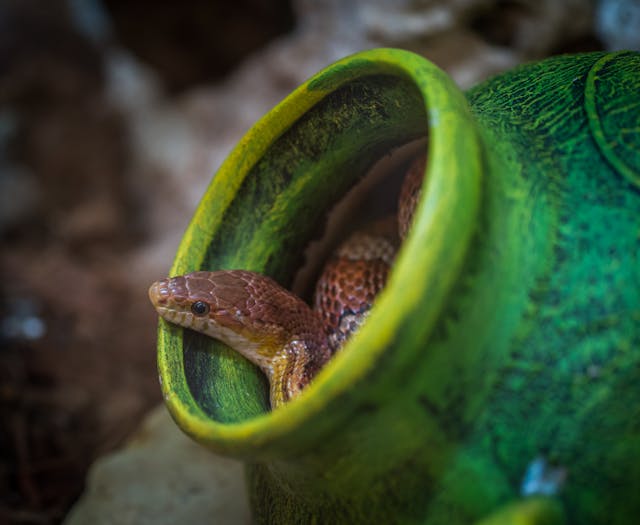
The most effective answer to how to keep snakes away begins with the property itself, not with a bottle of repellent. Wade Hutcheson of the University of Georgia summed up the principle clearly when he wrote, “Take away the food source and the snakes will move on.” That observation reaches the heart of the issue. Snakes remain where food, shelter, and favorable conditions come together in one space. Around homes, rodents are among the strongest attractants, but they are far from the only ones. Frogs, insects, lizards, eggs, and small birds can also draw different species into a yard. Guidance from Montana State notes that snakes often favor cool, dark areas where prey is easy to find, while the University of Georgia points to tall grass, debris piles, and dense cover as conditions that encourage them to linger.
Texas A&M offers similar advice, stressing short grass, trimmed vegetation, and reduced clutter. This is precisely why odor alone rarely solves the problem. If a property still provides food, moisture, and concealment, even a strong scent is competing with a more meaningful reward. A snake does not need an ideal refuge to remain nearby. It only needs enough cover to feel protected. A neglected fence line can provide that. So can a damp woodpile beside a shed or a shaded pocket beneath stacked materials. Natural snake repellents only make sense once the yard stops functioning like an easy feeding and hiding ground. For that reason, cleanup must be deliberate, thorough, and consistent from one end of the property to the other. Grass should be kept short, and weeds should be cut back along fences, sheds, and foundations.
Brush piles, scrap timber, unused pots, loose stones, and forgotten materials should be removed before they become shelter. Firewood belongs on a raised rack and should be kept away from exterior walls. University of Georgia guidance advises stacking firewood and lumber at least 12 inches above ground, while also keeping shrubs set back from the foundation. Hutcheson made the broader point when he wrote, “The best thing a homeowner can do to reduce the chances of seeing a snake is to clean up and clean out.” That principle extends indoors as well. Pet food should be sealed, and bird seed or chicken feed should never be left scattered overnight.
Check basements, attics, garages, sheds, and outbuildings for droppings, gnaw marks, nesting material, and other signs of rodents. A broken vent screen, a gap beneath a door, or damp ground beside paving can quietly support the prey base that attracts snakes in the first place. Water features, heavy mulch, large decorative rocks, and dense ground cover can also create cooler, protected conditions near entrances. By contrast, brighter edges, drier soil, open planting, and cleaner storage areas reduce concealment and make hunting less rewarding. When a yard becomes tidier, drier, and less hospitable to prey, snakes lose both shelter and opportunity. That shift is more powerful than any scent because it changes the property itself.
Skip Mothballs and Sulfur, Then Build a Home That Gives Snakes Very Little to Use
The last step is clearing away the remedies that keep circulating online without good support. Mothballs and sulfur are two of the biggest examples. Colorado State reports that a commercial repellent containing naphthalene and sulfur was not successful against several snake species. The same source says naphthalene and sulfur, used individually, were also ineffective against plains garter snakes. Mississippi State reaches a blunt conclusion after reviewing common home remedies. Its list included sulfur, lime, moth balls, cayenne pepper spray, coal tar, creosote, and other folk treatments. Mississippi State found that “None of these worked.” Utah State adds an important safety warning. It says mothballs contain chemicals that are toxic to insects and mammals, but are not effective against snakes. That combination makes mothballs a poor answer.
They fail as a reliable control, and they can also create avoidable risks for people, pets, soil, and wildlife. A famous remedy is still a bad remedy when the evidence does not support it. Once weak remedies are removed, the stronger plan becomes much easier to see. NPIC says homeowners should secure door sweeps and window screens. It also says they should seal holes larger than 1/4 inch. Colorado State recommends checking around doors, windows, water pipes, and electrical lines. Utah State suggests 1/4-inch mesh fencing, buried slightly into the soil, where local pressure is high. UGA offers the clearest summary of the whole approach. Hutcheson said, “Keeping the area clean will reduce the reasons why the snake wants to be there.” That idea covers the real strategy.
Snakes enter homes and yards because the site offers prey, shelter, moisture, and access. Remove those advantages, and visits become less rewarding. A limited scent tool may still help in a tight space, especially with cinnamon oil, clove oil, or eugenol. However, lasting success comes from a property that is cleaner, tighter, drier, and less attractive to prey. That is the most reliable answer to what attracts snakes to your house and to how to keep snakes away from it. Homeowners should also think about the transition zones around the house, because those edges often decide whether a passing snake keeps moving or stops. Gravel borders, trimmed plantings, and open sightlines near foundations reduce the cool, protected cover many snakes prefer during the day.
Outdoor clutter deserves the same attention. Unused pots, stacked tiles, folded tarps, and neglected tools can create shaded pockets that feel safe and undisturbed. Poultry areas and compost zones also need careful management, since spilled grain, insects, and rodents can turn them into feeding corridors. Even decorative choices can matter. Thick ivy, dense groundcover, and low shrubs pressed against walls make inspection harder and movement easier for both prey and predators. A home does not need to become sterile or bare to be less attractive to snakes. It simply needs fewer hidden routes, fewer food cues, and fewer cool shelters near entry points. That steady, practical maintenance is far more dependable than any bag of mothballs ever sold for true long-term prevention around the property itself.
A.I. Disclaimer: This article was created with AI assistance and edited by a human for accuracy and clarity.
Read More: