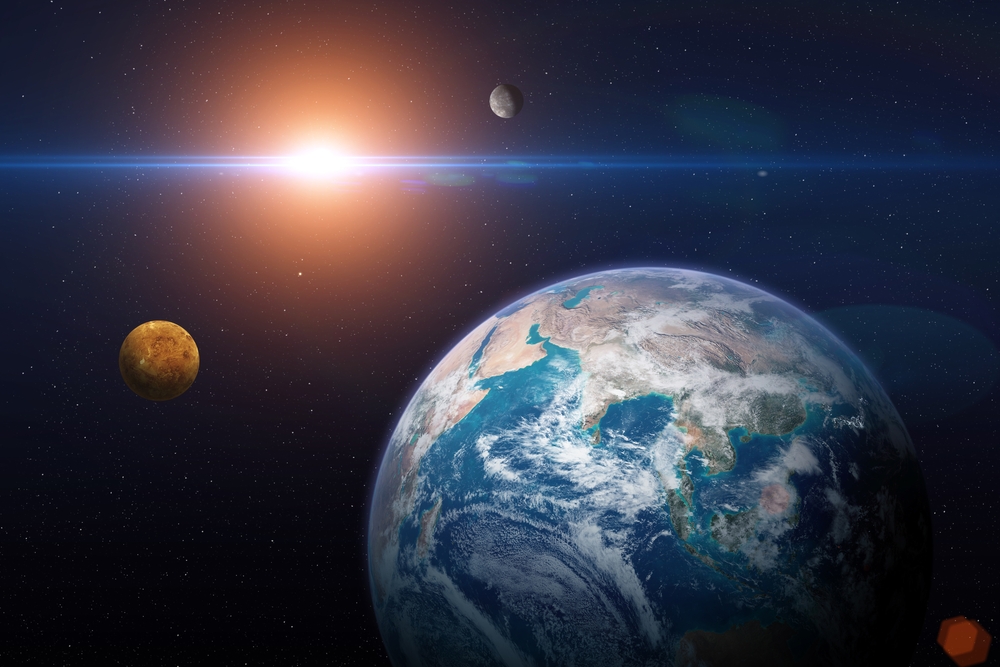

On April 3, 2026, the Artemis II crew released the first Earth images captured from the Orion spacecraft during their historic lunar flyby mission, giving humanity a new look at its home planet from a vantage point no astronaut had reached in more than 50 years. The Artemis II crew Earth images show a blue-white sphere suspended against the absolute black of deep space, a view that carries both scientific weight and an undeniable emotional pull. For the four astronauts aboard Orion, these photographs mark a personal milestone. For NASA, they signal that the agency’s long road back to the Moon is no longer theoretical.
What the Artemis II Mission Is and Why It Matters
NASA’s Artemis II mission launched on April 3, 2026, sending four astronauts on a trajectory around the Moon and back, the first crewed deep space mission since Apollo 17 in December 1972. The crew consists of NASA astronauts Reid Wiseman, Victor Glover, and Christina Koch, along with Canadian Space Agency astronaut Jeremy Hansen. Wiseman serves as commander, Glover as pilot. Koch and Hansen round out the mission as mission specialists.
The mission does not include a lunar landing. Instead, it follows a free-return trajectory, meaning the spacecraft uses the Moon’s gravity to slingshot back toward Earth without requiring a powered burn to escape lunar orbit. This approach limits fuel requirements and provides a natural abort capability if something goes wrong. Think of it as a dress rehearsal for the Moon landing missions that follow.
Orion launched atop NASA’s Space Launch System (SLS), a rocket developed over more than a decade at a cost that has drawn both admiration and scrutiny. The SLS stands as the most powerful rocket NASA has ever successfully flown. For context, it generates more thrust than the Saturn V rockets that carried Apollo astronauts to the Moon, though modern engineering goals differ considerably from those of the 1960s.
The Artemis program’s broader objective is to return humans to the lunar surface, with particular emphasis on landing the first woman and first person of color on the Moon. Artemis II serves as the crewed flight test that validates every system before those higher-stakes missions begin.
What Did the Artemis II Crew Photograph from the Orion Spacecraft?
The Orion spacecraft carries multiple cameras positioned on the exterior of the capsule and within the crew cabin, designed to document both the mission and the views beyond. The Artemis II crew used these systems to capture photos of Earth as the spacecraft moved beyond low Earth orbit (the region of space within roughly 2,000 kilometres of Earth’s surface) and entered deep space.
The resulting Orion spacecraft photos show Earth diminishing in frame as Orion travels deeper into the cislunar environment (the space between Earth and the Moon). Early images from shortly after trans-lunar injection (the engine burn that sets a spacecraft on a path toward the Moon) show Earth still large enough to fill a significant portion of the frame, with cloud formations, ocean colours, and continental outlines clearly visible. Later images capture a smaller, more isolated sphere, the kind of perspective that has historically changed how people think about the planet’s fragility.
NASA shared the images publicly through its official channels, and they spread rapidly across media outlets worldwide. The Orion capsule Earth view differs meaningfully from images taken by Earth-observing satellites, which typically maintain fixed orbital paths. These photos come from a moving, crewed spacecraft heading away from the planet at tens of thousands of kilometres per hour, captured by human hands on a specific trajectory no crew had flown since the Apollo era.
What did the Artemis II crew photograph from the Orion spacecraft? In addition to Earth, the crew captured imagery of the spacecraft’s interior, documenting how they live and work inside Orion’s cabin during the multi-day mission. They also photographed the Moon as Orion approached, providing images of the lunar surface from close proximity that will serve both scientific and public communication purposes.
How Far from Earth Did the Artemis II Crew Travel?
The Artemis II trajectory takes the crew on a free-return path that brings them to a distance of roughly 370,000 kilometres (about 230,000 miles) from Earth at its farthest point, placing them well beyond the Moon. To put that in perspective, the International Space Station orbits at roughly 400 kilometres above Earth’s surface. The Artemis II crew traveled almost 1,000 times farther than that.
That distance makes this the farthest any humans have traveled from Earth since Apollo 17. According to NASA mission documentation, the crew broke free of Earth’s gravity well following trans-lunar injection and entered a trajectory governed primarily by the gravitational relationship between Earth and the Moon. The Guardian reported on April 3, 2026, that the crew successfully broke free of Earth’s orbit, confirming the mission had cleared its first major milestone on schedule.
At those distances, communication with mission control at NASA’s Johnson Space Center in Houston requires a slight but measurable delay. Radio signals travel at the speed of light, and even light takes over a second to cover that distance each way. It is a small reminder that deep space truly means beyond the comfortable reach of immediate contact with Earth.
The distance also explains why the Artemis II crew Earth images carry such resonance. From 370,000 kilometres away, the planet that holds every living thing humanity has ever known fits within a camera frame with room to spare. NASA deep space photography has produced iconic images before, including Voyager 1’s “Pale Blue Dot” photograph from 6 billion kilometres away. The Artemis II images continue that tradition of using distance to reframe perspective.
When Did NASA’s Artemis II Mission Launch?
NASA’s Artemis II mission launched on April 3, 2026, from Kennedy Space Center in Florida. The SLS rocket lifted off carrying the Orion capsule and its four-person crew into an initial parking orbit before the trans-lunar injection burn sent them on their path toward the Moon. The launch followed years of delays tied to the development of the SLS rocket and Orion spacecraft, as well as technical issues encountered during the uncrewed Artemis I test flight in 2022.
Artemis I launched in November 2022 and completed a 25-day uncrewed mission around the Moon, testing the Orion spacecraft and SLS systems without a crew aboard. The data gathered from that mission fed directly into the preparations for Artemis II. Engineers analyzed heat shield performance, capsule systems behavior, and trajectory accuracy before clearing the vehicle for crewed flight.
The gap between Artemis I in 2022 and the Artemis II launch in 2026 reflects the caution built into NASA’s approach to crewed deep space missions. Each step requires extensive review, and the agency publicly committed to not rushing the crewed flight test simply to meet political or programmatic timelines. That patience frustrated some observers, but it reflects a hard lesson learned from the Columbia and Challenger disasters, both of which involved pressure to maintain launch schedules overriding engineering concerns.
The April 2026 launch also places Artemis II as a precursor to Artemis III, the planned crewed Moon landing mission. With Artemis II data in hand, NASA and its commercial partners, including SpaceX, which is developing the Human Landing System for Artemis III, can finalize preparations for putting boots on the lunar surface.
Life Aboard Orion: What the Crew Eats and How They Work
One dimension of the Artemis II mission that NASA has made unusually public is the crew’s daily life inside the capsule. According to NASA’s official Artemis II mission documentation covering food and daily operations, the crew’s menu was designed around the constraints of deep space travel, including limited refrigeration, the need to manage packaging waste in a small cabin, and the physiological demands of extended spaceflight.
Orion carries food that is primarily freeze-dried or thermostabilised (preserved using heat to kill bacteria and seal out moisture). The crew rehydrates freeze-dried items using a water dispenser integrated into the capsule. NASA’s food systems team worked with the astronauts before the mission to personalise the menu, accounting for individual preferences and caloric needs during a physically demanding multi-day mission.
The cabin itself measures considerably smaller than the International Space Station’s habitable volume. Orion’s crew module offers approximately 8.95 cubic metres (316 cubic feet) of habitable space, enough for four astronauts to move around but requiring careful organisation of every item aboard. The crew manages sleep schedules, exercise protocols, communication windows with mission control, and the imaging tasks that produced the now-circulating Earth photographs, all within that compact environment.
The close quarters and isolation of deep space have psychological dimensions that NASA takes seriously. The agency has conducted research on crew cohesion and performance during long-duration spaceflight, drawing on data from ISS missions and analog environments on Earth. For a mission of Artemis II’s duration, those factors are manageable, but the work done here feeds directly into planning for future missions that could last months.
The Science Behind These Images and What They Document
The Orion capsule Earth view serves more than a public relations function. The images capture precise moments in the spacecraft’s trajectory, and their metadata, including distance from Earth, camera settings, and time stamps, contributes to NASA’s documentation of the mission. Researchers studying deep space imaging techniques use this data to refine camera systems for future missions.
NASA deep space photography has a history of producing scientifically useful images alongside iconic ones. The Earth photographs taken during Apollo missions in the late 1960s and early 1970s became some of the most reproduced images in history, and researchers have used them to study atmospheric conditions and cloud patterns visible from deep space. The Artemis II images add a contemporary data point to that record.
The cameras aboard Orion also capture imagery useful for monitoring the spacecraft itself. External cameras document the condition of the heat shield, solar arrays, and structural components throughout the mission, giving engineers real-time visual data on system performance. When the crew photographs Earth, they are using the same imaging infrastructure that monitors the vehicle’s health.
From a broader scientific standpoint, every crewed mission to deep space generates data about human physiology under radiation exposure conditions not present in low Earth orbit. The Van Allen belts (bands of charged particles held in place by Earth’s magnetic field) offer partial protection to spacecraft within them, but beyond those belts, cosmic radiation exposure increases significantly. The Artemis II crew wears dosimeters (devices that measure radiation absorbed by the body) and contributes physiological data that will inform how NASA manages crew health on longer missions to the Moon and, eventually, Mars.
What First Earth Images from Space Mean for the Future of Artemis
The release of the first Earth images from space, captured by the Artemis II crew, signals something beyond their visual appeal. NASA’s ability to deliver these images in real time to the public reflects advances in deep space communication. The agency’s Deep Space Network, a global array of large radio antennas based in California, Spain, and Australia, handles communication and data transfer for missions beyond Earth orbit. The fact that high-quality images from more than 300,000 kilometres away appear on news sites within hours of capture demonstrates how significantly that infrastructure has evolved since Apollo.
For NASA’s Artemis moon mission objectives, the images also serve a communication purpose. Public support for expensive crewed space exploration programs depends partly on people feeling connected to the missions. The Apollo 8 Earthrise photograph, taken by astronaut William Anders in December 1968, became one of the most influential environmental images ever produced, credited with shifting public perception of Earth as a shared, finite home. NASA Orion spacecraft images of Earth carry a similar potential, presenting a perspective that only a handful of humans have ever experienced in person.
The Artemis II crew’s first Earth photos from Orion arrive at a moment when competition in space exploration has intensified. China’s space program has set explicit goals for crewed lunar missions later this decade. Commercial spaceflight companies including SpaceX have reshaped launch economics and timelines. NASA’s ability to execute Artemis II and produce these images matters as both a demonstration of technical capability and a statement of continued human presence in deep space.
Looking ahead, Artemis III will attempt a crewed landing near the Moon’s south pole, a region of particular scientific interest because permanently shadowed craters there may contain water ice. That water, if accessible, could serve as a resource for future missions, both as drinking water and as a source of hydrogen and oxygen for rocket fuel. The foundation being built by Artemis II, operationally, technically, and in terms of public engagement through imagery like the Earth photos, sets the stage for that next step.
Practical Context: What These Images Tell Us About Earth
For readers grounded in health and environmental awareness, the perspective offered by NASA Orion spacecraft images of Earth carries a specific kind of information. Seeing Earth from 370,000 kilometres away puts scale into context. The atmosphere that sustains all life appears as a thin blue line at the edge of the sphere. The oceans that drive global weather and temperature regulation cover most of the visible surface. The land masses that human civilisation has modified so substantially appear small within that frame.
Environmental researchers have long pointed to the “overview effect,” a term coined by space philosopher Frank White in his 1987 book of the same name, to describe the cognitive shift astronauts report when viewing Earth from space. White documented accounts from Apollo-era astronauts who described a changed understanding of the planet’s interconnectedness and fragility after seeing it from distance. Christina Koch, Reid Wiseman, Victor Glover, and Jeremy Hansen now join that group of people with direct experience of that perspective.
The images also carry practical resonance for anyone tracking climate indicators. From deep space, long-term changes in ice cover, vegetation, and cloud patterns become visible in comparative photography over decades. While a single mission’s photographs cannot track trends, they contribute to a visual record that, alongside satellite data from agencies including NASA, NOAA, and the European Space Agency, documents the planet’s changing state. Each new set of images from a crewed deep space mission adds to that archive.
The Artemis II crew’s Earth photographs will almost certainly become reference images for years of scientific communication, educational materials, and public engagement about both space exploration and the planet those explorers left behind. That is what the best space photography has always done: it changes the frame through which people understand where they live and why it matters.
—
The information in this article reflects NASA mission documentation, reporting from The Guardian, and publicly available materials from the Canadian Space Agency and NASA’s official Artemis mission pages current as of April 2026.