

The brain’s alarm system exists for a reason. It scans for threats, raises attention, and prepares the body to act. Yet that same system can also lock into overdrive, especially after stress. Scientists have spent years trying to understand why one brain recovers from pressure while another keeps sounding the alarm. A study led by Mariusz Mucha and colleagues, published in Nature Communications, offers a striking answer. It points to a small RNA molecule inside the amygdala that appears to blunt some of stress’s harmful effects and reduce anxiety-like behavior in male mice.
That finding has attracted coverage, and the phrase “turn off” anxiety makes for an easy headline. Yet the real story is stronger when it stays precise. The University of Bristol team did not show that anxiety can be erased like a light. They showed that acute stress increased the expression of a microRNA called miR-483-5p in the basolateral amygdala, that this molecule suppressed the gene Pgap2, and that the entire pathway was linked to reduced anxiety-like behavior in established mouse tests. In a field where overstatement is common, a tightly connected biological chain carries real weight. It gives researchers a specific route to follow as they search for better ways to reduce anxiety.
Why researchers went looking for the brain’s own restraint system
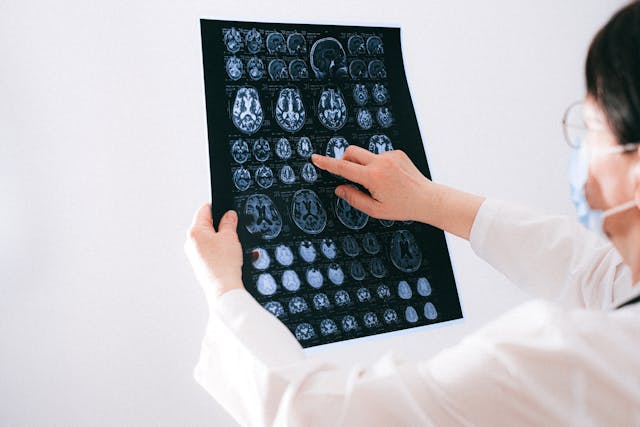
Anxiety disorders are not a marginal medical issue, and they are not light burdens for affected people. The World Health Organization says 359 million people worldwide had an anxiety disorder in 2021. It also reports that only 27.6% of people who need care receive treatment. Those figures explain why researchers keep chasing better biological targets with unusual persistence. Existing drugs help many patients, yet too many still cycle through treatment without full relief. The University of Bristol press release says more than half of patients miss remission with current anti-anxiety medicines. That shortfall shaped the logic behind this study from its earliest stages. The team was led by Mariusz Mucha and colleagues. They wanted to identify molecular events inside the amygdala that influence the stress response.
The amygdala matters because it sits near the center of fear processing and threat learning. When stress becomes intense or prolonged, changes can support lasting anxiety-like behavior. Bristol’s summary explains that trauma can trigger genetic, biochemical, and morphological changes in amygdala neurons. That chain deserves attention because useful drugs usually follow a clearer map of the biology. The authors therefore sought molecules that do more than mark stress. They wanted molecules that might actually help reduce anxiety after stress exposure. NIMH also notes that anxiety disorders reflect both environmental and genetic influences. That background makes broad gene regulators especially interesting for future treatment work. Those features made microRNAs a sensible place to search first.
MicroRNAs, usually shortened to miRNAs, are small non-coding RNA molecules that regulate gene expression after transcription. They attract neuroscientists’ interest because they can influence entire clusters of target genes simultaneously. The Nature Communications paper explains that this makes them suited to complex neuropsychiatric conditions, including pathological anxiety. In the Bristol and Exeter study, researchers used adult male C57BL/6J mice. The animals underwent 6 hours of restraint stress. The team then isolated material from the basolateral amygdala for analysis. They used microarray testing to identify stress-responsive miRNAs in that brain region. One candidate then stood out from the rest. miR-483-5p increased after stress and became the center of the paper’s mechanistic work. The researchers did not stop with a broad survey result.
They traced where this molecule appeared inside the tissue. It was present predominantly in neurons. It also appeared in a subset of synapses. The team then found a 4-fold enrichment of miR-483-5p in the synaptosomal fraction. They compared that fraction with the cytosolic fraction in stress-naive mice. That detail gave the study more depth and credibility. Synapses are where neurons pass signals, strengthen circuits, and encode emotional learning. A stress-responsive molecule concentrated there can change more than a single gene readout. It can influence how an entire circuit behaves after pressure. That is why the paper attracted so much notice. The authors were not simply identifying a marker left behind by stress. They were uncovering part of the brain’s own protective response. Bristol later described this response as a “molecular brake” on anxiety-related signaling.
The key signal rose after stress and pointed to a protective pathway
One of the most important features of this study is its balance. Stress did not produce only damaging changes. It also activated a response that appeared to push back. The Nature Communications paper reports that miR-483-5p was upregulated in the amygdala of male mice after acute stress. More specifically, it accumulated in the synaptic compartment of amygdala neurons. That location gives the result unusual weight and relevance. Synapses are not decorative features of neurons. They are contact points where circuits strengthen, weaken, and stabilize emotional responses. When a molecule appears after stress, it can plausibly shape later behavior. The paper says miR-483-5p can “counterbalance the adverse effects of stress”, a phrase that captures restraint without promising total removal. Anxiety is not being erased as a biological function.
A built-in defensive process is being recruited to contain the stress response. That is more accurate than simply ‘switching anxiety off.’ It also fits Bristol’s description of the discovery. The university said the pathway shows how the brain regulates its stress response. It is also a good first step toward better therapies. Bristol further noted that low levels of stress can be counterbalanced by the brain’s natural capacity to adjust. The same release adds that severe or prolonged trauma can overwhelm those protective mechanisms. For an article built around turning down harmful anxiety signals, this is the best frame. The brain appears to carry its own buffering mechanism against stress-linked harm. This study identifies one precise part of that mechanism.
The mechanism became clearer when the researchers examined genes suppressed by miR-483-5p. Using several databases, they narrowed a broad target pool to 12 genes. Each gene was relevant to stress biology and amygdala expression. Experimental testing then sharpened the picture further. miR-483-5p repressed 3 stress-associated genes, namely Pgap2, Gpx3, and Macf1. Among those, Pgap2 emerged as the most important candidate. The Nature paper links Pgap2 repression to structural change and behavioral change. That moved the result well beyond loose association. Bristol quoted Dr. Valentina Mosienko, one of the lead authors, saying the pathway “offers a huge potential” for future therapies. That remark carries force because the route was not guessed from superficial matching.
The researchers followed it from acute stress to increased miR-483-5p. They then tracked gene repression, altered neuronal structure, and lower anxiety-like behavior. The paper also showed binding to the 3′ untranslated regions of target mRNAs. That detail strengthened the mechanistic case considerably. Yet the excitement still needs proportion and discipline. This was not a human treatment trial. It was a controlled mouse study centered on one region and one stress model. Even so, it offers a biologically grounded pathway for better drug design. That is why the work deserves attention beyond the original headlines. Such specificity may prove useful when researchers seek more exact ways to reduce anxiety. That promise remains early, yet real.
How Pgap2 linked brain structure to anxiety-like behavior
The paper becomes most convincing when it narrows the story to Pgap2. Many neuroscience studies identify an interesting molecule, yet never connect it to a credible target. This study went further at every stage. The authors screened candidate targets through stress relevance and amygdala expression. They also checked predicted interaction with miR-483-5p. Their database cross-comparison produced 12 genes that met those broad conditions. Experimental analysis then reduced that list sharply. Pgap2, Gpx3, and Macf1 were confirmed as genuine miR-483-5p targets. Yet Pgap2 stood apart once structural and behavioral data were considered together. That narrowing gave the paper a coherent backbone. The researchers were no longer discussing a general stress response. They had isolated a gene in the right tissue.
It changed under the right conditions and also responded to the same regulator highlighted after stress. The Nature paper then pressed the case further. It describes miR-483-5p-mediated repression of Pgap2 as a “critical cellular event.” Strong wording usually needs equally strong support. Here, that support came from several levels of evidence moving together. That convergence explains why the paper drew such wide media attention. It also explains why the result survived closer scrutiny. It did not rely on one behavioral assay alone and did not rely on one molecular readout. Rather, it tied together target identification, repression experiments, neuronal structure, and behavioral output. For research aimed at finding ways to reduce anxiety, that continuity is unusual. It also makes the result far more useful for future work.
The neuronal evidence explains why Pgap2 drew so much attention after publication. When miR-483-5p increased in basolateral amygdala neurons, distal dendritic branches contracted. At the same time, immature filopodia were converted into mature mushroom-like dendritic spines. The paper links those mushroom-like spines to stronger, stabler synaptic connections. Those connections are involved in emotional memory formation and storage. The authors also reported an approximately 60% rise in mature mushroom spines. This was seen in primary mouse amygdala neurons after miR-483-5p overexpression. They then asked whether Pgap2 truly drove these structural effects. Suppressing Pgap2 with shRNA reproduced them. Restoring a miR-483-5p-resistant form of Pgap2 blocked them. That rescue experiment is one major reason the paper stands up well.
It shows the pathway was not merely traveling beside the observed changes. It was helping cause them directly. The paper also places these findings inside a wider stress framework. It notes that stress-linked dendritic outgrowth in basolateral amygdala neurons correlates with high anxiety. In that context, miR-483-5p-driven shrinkage may represent protective correction, not random damage. That interpretation fits the authors’ view of resilience after stress. It also turns a technical structural result into something clinically meaningful. The pathway may influence how emotional circuits stabilize after strain. That possibility gives the study unusual translational value. Clinically, that could prove important later. That is precisely where more effective anxiety treatments are still badly needed. Better mapping of that process could eventually help reduce anxiety with greater precision.
The behavior changed too, but the most useful reading still requires caution
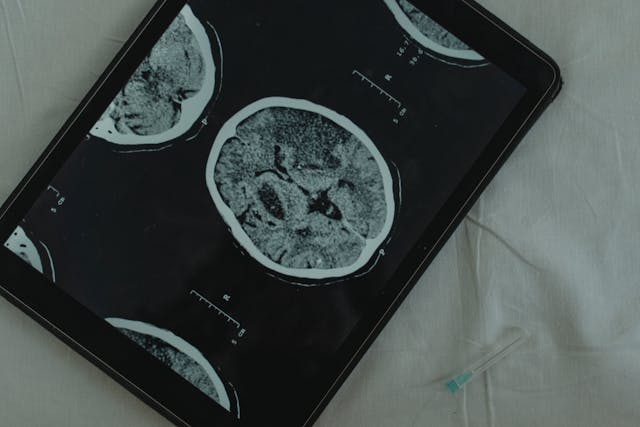
Many preclinical studies look impressive at the cellular level and then weaken once behavior is measured. This study remained coherent when behavior entered the picture. After overexpressing miR-483-5p in the basolateral amygdala, researchers tested mice in the elevated plus maze. That assay is a standard measure of anxiety-like behavior. The mice entered the open arms about 40% more often than controls. In this test, that change is consistent with reduced anxiety-like responding. Just as important, total arm entries did not change. That argues against simple sedation or broad changes in locomotor activity. The behavior, therefore, matched the underlying molecular and structural evidence. The same picture appeared when researchers suppressed Pgap2. That intervention also produced about a 40% increase in open-arm entries.
Under acute restraint stress, miR-483-5p overexpression prevented the anxiety-like behavior seen in controls. Pgap2-targeted shRNA prevented it as well. By this stage, the paper had built a full sequence. It ran from stress exposure to synaptic enrichment. It then moved through target repression and dendritic remodeling before reaching behavior. That is why the authors could write that miR-483-5p was “sufficient to confer” lower anxiety-like behavior. They had already shown enough for the line to carry weight. In a field crowded with broad claims, consistency is a major strength. It gives researchers a much clearer route for future work. It also keeps the idea of reducing anxiety tied to evidence, not wishful language.
Read More: Could a Single ‘Vaccine-Like’ Shot Treat Anxiety? Early Research Shows Promise
Even with those strengths, the most useful interpretation remains a careful one. This was a mouse study, and the title itself specifies male mice. The model used acute 6-hour restraint stress and viral overexpression. It also used direct manipulation of one amygdala region. Human anxiety disorders are far broader than that framework. NIMH says anxiety research examines environmental and genetic contributions. It also studies family factors, trauma, development, and changing treatment needs over time. WHO likewise describes anxiety disorders as the world’s most common mental disorders. It says 359 million people were affected in 2021. It also says that only about 1 in 4 people receive treatment. Those numbers underline the urgency of better therapies. They also underline the distance between a promising mechanism and a finished drug.
Bristol’s press release handles that balance well. It calls the pathway the “first stepping stone” toward improved treatments. That phrasing is persuasive because it keeps ambition tied to evidence. The study did not produce a human medicine. It also did not show that all anxiety can be switched off. It identified a stress-responsive amygdala pathway that appears to buffer harm after stress. In animals, that pathway promoted lower anxiety-like behavior. For future medicine, that is still a major result. It suggests new treatments may one day strengthen the brain’s own resilience machinery. That route could prove more exact than broadly dampening symptoms alone. For an article focused on efforts to reduce anxiety, that is the real strength here. It maps a plausible road toward more precise therapies without pretending the journey is complete.
A.I. Disclaimer: This article was created with AI assistance and edited by a human for accuracy and clarity.
Read More: ‘Nature’s Valium’: Examining the Evidence Behind Valerian’s Claims for Anxiety and Sleep