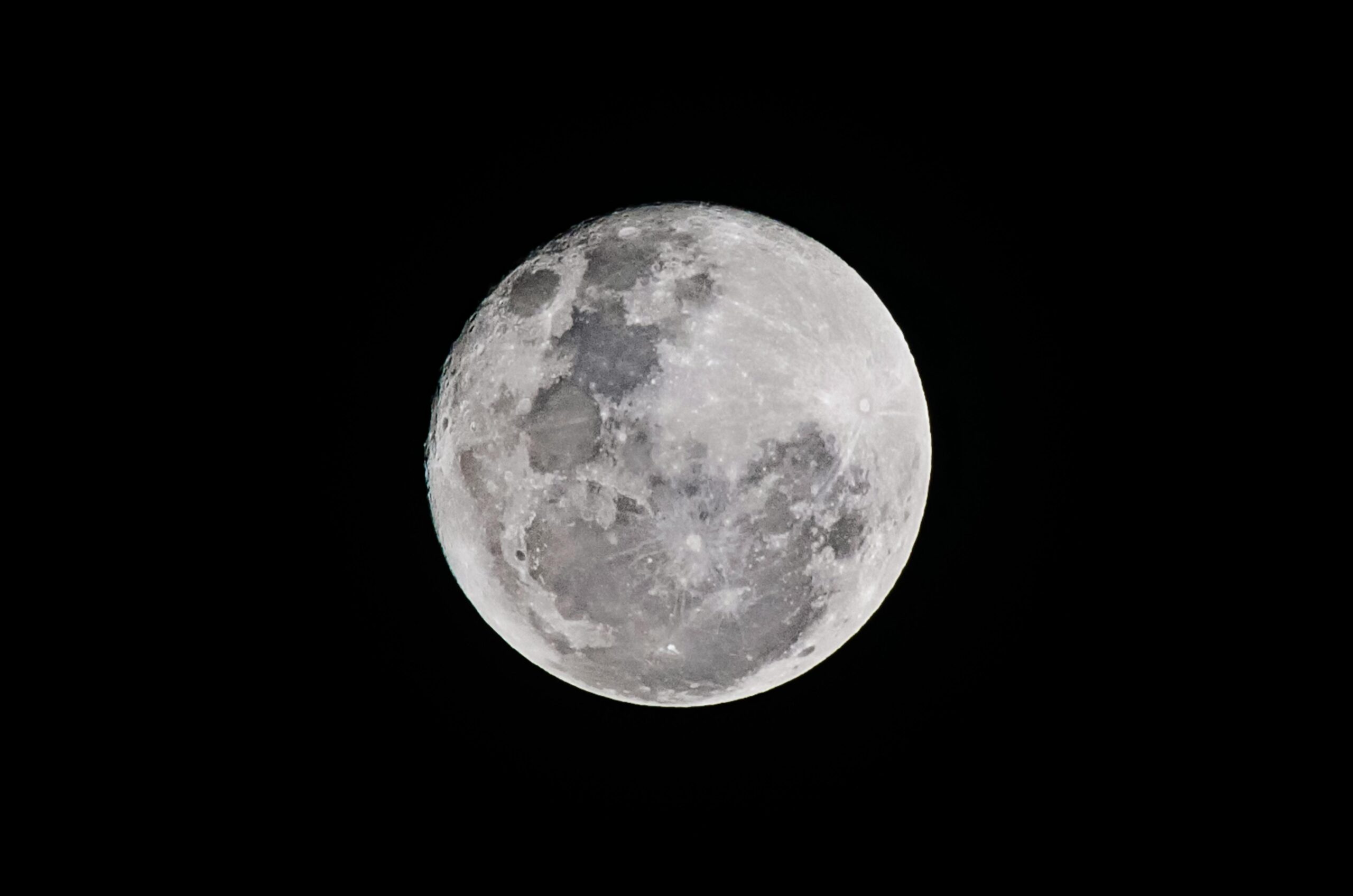

On Monday, April 6, 2026, four astronauts aboard NASA’s Artemis II mission made history at 12:56 p.m. CDT. Traveling 248,655 miles from Earth, NASA astronauts Reid Wiseman, Victor Glover, and Christina Koch, along with Canadian Space Agency astronaut Jeremy Hansen, surpassed the record for the farthest distance any humans have ever traveled from Earth – a record previously held by the Apollo 13 mission since 1970. The milestone came on flight day six of what NASA has described as a 10-day test mission around the Moon and back.
The spacecraft carrying the crew is called Orion – a capsule built to sustain astronauts in deep space, far beyond the low Earth orbit where the International Space Station operates. Artemis II is a 10-day lunar flyby mission that launched on April 1, 2026, and represents the first crewed flight of NASA’s Artemis program and the first crewed flight beyond low Earth orbit since Apollo 17 in 1972. The mission also marks the first crewed flight of the Orion spacecraft, which the crew named Integrity. A lunar flyby, simply put, is a trajectory where the spacecraft swings around the Moon using its gravity to slingshot back toward Earth, without landing on the surface.
The Apollo 13 record it broke was itself set under extraordinary circumstances. Apollo 13 set the distance record only out of necessity. On the third day of the 1970 mission, when the astronauts were roughly 205,000 miles from Earth, an oxygen tank explosion crippled their service module. NASA quickly determined that the capsule could slingshot around the Moon, using lunar gravity to boost the crew home as fast as possible. That decision – in addition to saving the crew’s lives – happened to earn them the record for the farthest distance humans had ever traveled from Earth, though apparently no one realized it until decades later.
How Far Did Artemis II Travel From Earth?
NASA confirmed that the Artemis II crew was expected to travel a total of 695,081 miles from launch to splashdown. The spacecraft passed within 4,070 miles of the lunar surface at its closest approach, reaching a maximum distance of 252,760 miles from Earth – about 4,105 miles farther than Apollo 13. To understand just how vast that gap is, consider that the average distance between Earth and the Moon is roughly 238,855 miles. The Artemis II crew traveled well past the Moon before gravity pulled them back.
Directly searches for the specific distance milestone and NASA’s official reporting on the Artemis II flyby.
Artemis II astronauts reached a maximum distance from Earth of 252,756 miles, surpassing the record set by Apollo 13 in 1970 by over 4,000 miles. The Orion spacecraft’s four-person crew has traveled farther from Earth than any humans in history. The record-breaking threshold of 248,655 miles was crossed first, and then the spacecraft continued its arc around the far side of the Moon before lunar gravity bent its path back toward home.
The flyby marked a major achievement for the first crewed Artemis mission, which launched atop the Space Launch System rocket from Kennedy Space Center on April 1, 2026. The roughly 40-minute communications blackout – caused by the Moon blocking the signal path to Earth’s Deep Space Network – occurred around the time the spacecraft reached its maximum distance from Earth. During that blackout, the crew was completely out of contact with Mission Control in Houston.
Did Artemis II Break the Apollo 13 Distance Record?
Yes. At 1:57 p.m. EDT on Monday, April 6, 2026, NASA astronauts Reid Wiseman, Victor Glover, and Christina Koch, and Canadian Space Agency astronaut Jeremy Hansen officially exceeded the distance of 248,655 miles from Earth – the previous record set in 1970 by Apollo 13 astronauts James Lovell, John Swigert, and Fred Haise. The record had stood for 56 years.
As Artemis II broke the distance record set by Apollo 13, mission specialist Jeremy Hansen relayed a message from the crew. “From the cabin of Integrity, as we surpass the furthest distance humans have ever traveled from planet Earth, we do so honoring the extraordinary efforts and feats of our predecessors in human space exploration,” Hansen said. “We will continue our journey even further into space before Mother Earth pulls us back into everything that we hold dear.”
The trajectory Artemis II used to achieve this record is the same one that inadvertently gave Apollo 13 its original title. Known as a free-return lunar trajectory, this route uses the gravity of the Earth and Moon to slingshot the spacecraft home without requiring significant fuel for the return leg. It creates a celestial figure-eight that puts the crew on course for Earth once they emerge from behind the Moon. NASA engineers selected this path deliberately for Artemis II as a safe, fuel-efficient option for the mission’s test objectives.
What the Crew Saw on the Far Side of the Moon
The distance record was not the only first the Artemis II crew claimed. The astronauts also became the first humans to see some parts of the far side of the Moon with the naked eye. The Moon’s far side never faces Earth due to the way the Moon rotates in sync with its orbit – a phenomenon called tidal locking. Even the Apollo astronauts could not observe this hemisphere the way Artemis II’s crew did.
The crew spent nearly seven hours observing the Moon’s far side and capturing images. They worked in pairs, taking turns at Orion’s windows while one crewmember photographed and another recorded observations. NASA’s crew turned out the lights in their Orion spacecraft to get a better look at the Moon and prevent reflections on the windows during the flyby.
Among the standout targets was the Orientale Basin, one of the Moon’s most striking geological features. One of the 30 science targets set out for the mission was the Orientale Basin, a nearly 600-mile-wide crater that straddles the Moon’s near and far sides. The 3.8-billion-year-old basin was formed when a large object smacked into the Moon’s surface. The astronauts could spy the rings surrounding the Orientale Basin, one of the Moon’s youngest large impact craters. Prior to this mission, Orientale had never been seen with human eyes.
The crew also documented Vavilov Crater in detail. Hertzsprung Basin appears as two subtle concentric rings interrupted by Vavilov, a younger crater superimposed over the older structure. A close-up view of Vavilov Crater on the rim of the older and larger Hertzsprung basin showed the transition from smooth material within an inner ring of mountains to more rugged terrain around the rim. The image was captured using a handheld camera at a focal length of 400mm.
Those who want to follow NASA’s broader deep space health research may find this related coverage on the effects of space radiation on human health a useful context for understanding the challenges astronauts face beyond Earth’s protective magnetosphere.
A Moment of Grief Turned to Legacy
One of the most moving moments of the entire mission happened just as the crew crossed into record-breaking territory. Moments after breaking Apollo 13’s record, the astronauts asked permission to name two new lunar craters they had already observed. They proposed Integrity, their capsule’s name, and Carroll in honor of Commander Reid Wiseman’s late wife, who died of cancer in 2020. Wiseman wept as Hansen put in the request to Mission Control, and all four astronauts embraced in tears.
Carroll Taylor Wiseman, a nurse in a newborn intensive care unit, died in 2020 following a battle with cancer. After naming the crater Carroll, the four astronauts hugged while shedding tears, and a moment of silence was observed in NASA Mission Control in Houston. The names Integrity and Carroll will be formally submitted to the International Astronomical Union – the scientific body that governs the naming of celestial features – after the mission concludes.
At one point during the flyby, one of the astronauts remarked on the countless craters dotting the Moon’s far side, calling it “impossibly rugged.” “It reminds you that the whole far side is that way,” the astronaut said. “No surface of the terminator is not marked by meteor impact.” The terminator, in this context, refers to the boundary line between the lit and dark sides of the Moon – a place where low-angle sunlight throws craters and ridges into sharp relief.
The Solar Eclipse No Human Had Seen Before
Hours after the distance record fell, the crew experienced something else entirely unprecedented. Most people never get to experience a total solar eclipse, when the Moon blots out the disk of the Sun and reveals its fiery outermost atmospheric layer, the corona. But the four crew members of NASA’s Artemis II mission were treated to a spectacle no human has ever experienced before – a total solar eclipse as seen from just a few thousand miles above the Moon.
On Earth, lucky eclipse watchers experience a few minutes of totality when the Sun’s disk is fully blocked by the Moon. Inside Orion, totality lasted an incredible 57 minutes, from 8:35 p.m. EDT until 9:32 p.m. EDT. That is many times longer than any eclipse visible from Earth’s surface. Pilot Victor Glover reported on the scene just before the Moon completely covered the Sun. “The sun has gone behind the moon. The corona is still visible, and it’s bright, and it creates a halo under almost the entire moon,” he said. “The moon is just hanging in front of us – this black orb.”
During this period, the crew peered at the Moon in search of earthshine – the faint light reflected off Earth onto the lunar surface – as well as the flashes of light caused by micrometeoroid impacts, of which they saw at least five. The astronauts also turned their cameras to the cosmos at large: Venus, Mars, Saturn, and Mercury were all in Orion’s line of sight.
How Artemis II Compares to Apollo Missions
The most direct comparison is to Apollo 13, the 1970 mission that Artemis II just displaced as the record-holder. Apollo 13, launched from Kennedy Space Center on April 11, 1970, would have been the third Moon landing. The landing was aborted after an oxygen tank in the service module exploded two days into the mission, disabling its electrical and life-support systems. The crew looped around the Moon in a circumlunar trajectory and returned safely to Earth on April 17.
The deeper comparison is to Apollo 8 from December 1968. Artemis II’s mission objectives are similar to those of Apollo 8 in 1968, the first crewed lunar flight during the Apollo program. Both missions sent humans around the Moon without landing, both served as critical test flights paving the way for future lunar surface missions, and both produced images of Earth as seen from deep space that became iconic. Even the Apollo astronauts could not view the Moon’s far side in the way Artemis II’s crew did, because of the paths and timing of their flights.
What sets Artemis II apart is its technology. On flight day 10, Orion is expected to re-enter Earth’s atmosphere at about 25,000 miles per hour – the fastest crewed reentry ever attempted. The Orion spacecraft also carries far more capable cameras and sensors than anything flown during Apollo. During the lunar flyby, a fleet of cameras captured imagery of the Moon, including features humans have never directly seen before. The astronauts used a variety of digital handheld cameras to conduct high-resolution photography of the lunar surface.
The lunar flyby was the climax of the 10-day mission. It was the closest humans have been to the Moon since the Apollo program ended in 1972. After more than five decades, humans were once again close enough to the Moon to see its craters, colors, and surface textures with their own eyes.
What Comes Next for NASA’s Artemis Program
Artemis II was always designed as a stepping stone, not a destination. Astronauts on their first flight aboard NASA’s Orion spacecraft confirmed that the spacecraft’s systems operate as designed with crew aboard in the actual environment of deep space. The mission was built on the uncrewed Artemis I flight test by demonstrating a broad range of Space Launch System and Orion capabilities needed on deep space missions. It also allowed the crew to verify Orion’s life support systems and practice operations essential to Artemis III and beyond.
Artemis III, scheduled for 2027, aims to conduct docking tests with a Human Landing System lunar lander in Earth orbit. The first actual lunar landing of the program is planned for the Artemis IV mission, targeted for 2028. Afterward, NASA intends to conduct yearly lunar landings to develop a permanent lunar base. Artemis IV would mark the first time humans have set foot on the Moon since Apollo 17’s Gene Cernan and Harrison Schmitt walked the lunar surface in December 1972.
As part of the Artemis IV mission, two astronauts would spend almost a week in the Moon’s south polar region, where frozen water may exist in permanently shadowed craters. This objective represents a significant departure from the Apollo missions, on which astronauts explored the equatorial regions of the Moon. Water ice at the South Pole is considered a critical resource for any future sustained human presence on the lunar surface.
The Artemis II data will directly feed that planning. Artemis II provided astronauts with an opportunity to gather data, with their four pairs of eyes serving as some of the most powerful scientific tools for observing lunar features with varying illumination and texture. Photos, videos, mission telemetry, and communication information are all sources of data from the test flight that will be used to inform future Artemis missions as the agency works toward developing a Moon base.
What This Means
On April 6, 2026, something happened that had not happened in over five decades: human beings ventured deep into space, past the safe nearness of low Earth orbit, out to a distance where Earth is small and the Moon fills the window. At its greatest distance from our planet, Integrity had traveled 252,756 miles from Earth, breaking the record set by the Apollo 13 mission in 1970. A record that had stood since before most of today’s adults were born was officially retired.
The Artemis II lunar flyby is not a finish line. It is a confirmation that the hardware works, the crew is capable, and the path forward is open. NASA’s latest architecture includes adding a new mission in 2027 to test system capabilities closer to home before sending astronauts to the surface of the Moon for the first time in more than 50 years, with the goal of achieving one lunar mission per year thereafter. Standardizing the Space Launch System and other systems now will help NASA send astronauts to explore the lunar south pole for the first time in 2028. What Reid Wiseman, Victor Glover, Christina Koch, and Jeremy Hansen flew was the first chapter of a much longer story – one that ends with boots on the Moon again, and eventually, eyes fixed on Mars.
Disclaimer: This is AI-assisted content. Reviewed for accuracy. Always consult a qualified healthcare provider before making medical decisions.
Read More: Astonishing Images: What Voyager 1 Really Saw in Its 47-Year Journey to Interstellar Space