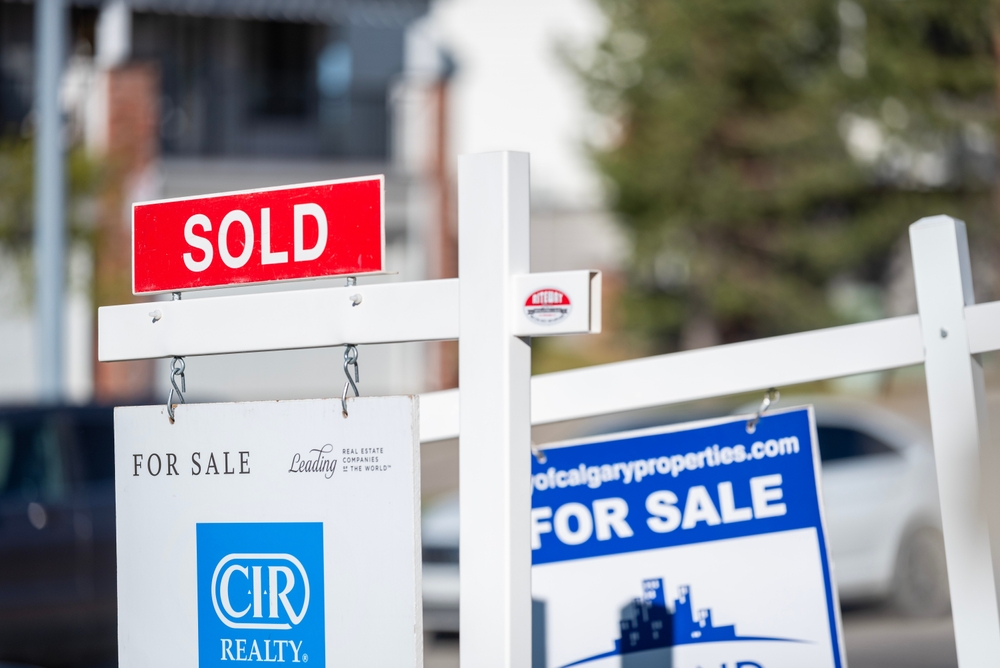

For the past several years, investors chasing passive rental income have had their eyes fixed on Sun Belt cities like Austin, Phoenix, and Tampa. Now, a detailed market analysis published by BiggerPockets, one of the largest real estate investing platforms in the United States with more than 3 million registered members, points the compass firmly north and east – toward the aging industrial heartland known as the Rust Belt. According to BiggerPockets data, the top seven cities for cash flow real estate investing are all located in the Rust Belt states of Michigan, Ohio, Indiana, and Pennsylvania. When researchers expanded the lens to the top 25 markets, 16 of those 25 top markets were in those same four states alone.
The Rust Belt refers roughly to the arc of formerly industrial states running from western New York through Pennsylvania, Ohio, Indiana, and Michigan – regions that built their economies on steel, automobiles, and heavy manufacturing before those industries contracted sharply in the second half of the 20th century. For investors, the key question is whether these markets represent genuine opportunity or just cheap prices in struggling towns. The BiggerPockets analysis suggests the answer depends heavily on which metric you use and which cities you choose.
The central measurement BiggerPockets uses in this analysis is the rent-to-price ratio, or RTP. The RTP is one of the most common metrics used to estimate cash flow potential – calculated by dividing the median monthly rent by the median sales price. The higher the RTP, the better the potential for cash flow. Think of it this way: if a home costs $150,000 and rents for $1,200 per month, the RTP is 0.8%. A higher percentage means rents are large relative to the purchase price – which is the basic engine of positive cash flow.
What the Analysis Found
In ranking of the best cash flow market in each U.S. state, Michigan, Indiana, and Ohio took the top three spots. Analyst Dave Meyer noted this did not come as a surprise, given that those states – along with Pennsylvania – consistently rank near the top in this type of analysis. That consistency across multiple studies matters. It suggests these markets are not statistical anomalies but reflect durable structural advantages.
Broadly speaking, BiggerPockets found that the best cash flow opportunities in the United States are concentrated in Texas and parts of the Midwest and South. The West Coast offers little in terms of cash flow opportunity, while the Southeast has several opportunities but mostly in small towns and submarkets that did not make the top rankings due to their size. The takeaway for investors is geographic clarity: if your primary goal is monthly cash flow rather than rapid appreciation, the Midwest and Rust Belt cities are where the numbers consistently work.
In total, 16 of the 25 top markets were in those four Rust Belt states alone. If Florida is added to that group, 80 percent of the top cash flow markets were in just five states. That level of geographic concentration is striking. It means that investors looking for the best rust belt cities for real estate cash flow do not need to search the entire country – the data points consistently to a fairly tight cluster.
Dave Meyer, Head of Real Estate Investing at BiggerPockets, has also highlighted this region in podcast commentary. According to Meyer, investors find the highest rent-to-price ratios in the Midwest, with places like Indiana, Ohio, Michigan, and Illinois tending to have better rent-to-price ratios. His view, reinforced by the platform’s Top 100 Cash Flow Markets report, is that this is not a temporary trend but a structural feature of markets where home prices remain low relative to what tenants will pay.
Why Are Rust Belt States Good for Real Estate Investing?
The core reason is simple arithmetic. No matter what real estate list you look at, the majority of entries come from two areas: the South and the Midwest/Rust Belt. The reason is straightforward – properties are generally cheaper in these areas, meaning even modest rents will cover costs and let landlords profit. When you buy a single-family home for $150,000 rather than $600,000, the monthly mortgage payment is roughly one-quarter as large. If the rent stays comparably strong, positive cash flow is far easier to achieve.
Data from rental analytics firm Rentometer confirms this pattern independently. When looking at cities with gross rental yields of 10% or higher, a clear geographic pattern emerges. The majority of these high-return markets are clustered around the Great Lakes region – including cities in Michigan, Ohio, Indiana, and upstate New York – where home prices remain relatively affordable compared to national averages but rent levels have held steady. Cities such as Flint, Detroit, Toledo, Saginaw, Cleveland, Gary, and Rochester continue to dominate the list, as long-established industrial hubs that now offer some of the most attractive prices for single-family rentals in the country.
This affordability advantage connects directly to a broader national trend. Previously overlooked Rust Belt cities are now posting 8-12% appreciation gains, while many pandemic-era Sun Belt boom markets have cooled significantly. That combination – low entry prices plus improving appreciation – is what makes rust belt real estate investing increasingly attractive to a wider range of buyers.
The second key advantage is landlord-friendly regulation. Indiana, for example, features landlord-friendly regulations and low property taxes, making it an ideal location for real estate investments. Ohio similarly has a reputation for straightforward eviction processes and limited rent control – factors that reduce operational risk for out-of-state investors managing properties remotely. Knowing you can act decisively if a tenant stops paying is a legitimate part of the cash flow calculation.
A third factor is the economic transformation underway in several of these cities. The Rust Belt narrative of uninterrupted decline is outdated for many markets. Today, companies like Uber, Google, Amazon, and Meta have established major operations in Pittsburgh, while Carnegie Mellon University continues to produce world-class talent in technology and engineering. This influx of high-paying tech jobs has created new housing demand patterns. That shift from steel town to tech hub has altered Pittsburgh’s investment profile significantly.
Which Rust Belt Cities Have the Best Cash Flow for Real Estate Investors?
Pittsburgh, Pennsylvania
Pittsburgh repeatedly surfaces in BiggerPockets’ top-ranked cash flow markets for investors who want both income and appreciation potential. According to Redfin data, Pittsburgh housing prices were up 22% from February 2023 to February 2024, making it the city with the fastest-growing house prices in the country. That kind of appreciation on top of existing cash flow potential is rare.
At the heart of the Rust Belt, Silicon Valley tech giants including Google, Amazon, Facebook, Uber, Apple, and Microsoft have all set up operations in Pittsburgh, feeding off graduates of Carnegie Mellon University’s computer science program. Education, finance, and healthcare are also major employment sources. The median home price sits around $202,454 with a median rent of $1,401.
As of 2025, Pittsburgh home prices appear to be settling near the $240,000 mark. While this remains elevated by local standards, it is still below the national average of over $350,000, keeping the city relatively affordable. For investors, that relative affordability is crucial. Pittsburgh offers something most major tech hubs do not: you can buy in at a fraction of the cost while still accessing a deep, diversified economy.
That said, BiggerPockets has noted a shift. For many years, Pittsburgh was primarily a cash flow market, with steady 2% annual appreciation meaning no one would get rich quickly buying and selling homes. The recent price boom has added another investment string to its bow. The implication for investors is important: if you bought in Pittsburgh five years ago for cash flow and are now also getting equity growth, the returns are compounding. If you buy today, run your numbers carefully, as the cash flow math has tightened with rising prices.
Indianapolis, Indiana
Indianapolis is the standout growth story among Rust Belt and Midwest markets. A recent HousingWire report notes that remote real estate investors are placing Indianapolis at the top of their lists of markets where property remains affordable and potential cash flow returns are higher. The city’s appeal comes from a combination of factors that rarely align so neatly.
Rent-to-price ratios in Indianapolis range from 0.9% to 1.1%, placing them among the strongest in the country. That means a property bought for $175,000 might rent for roughly $1,575 to $1,925 per month – giving investors a fighting chance at positive monthly cash flow even in a higher-interest-rate environment. The Indianapolis rental market offers investors stability and reliable cash flow, with a diverse tenant base ranging from students and professionals to families, and landlord-friendly regulations that keep operational complexity low.
A diverse economy anchored by healthcare, manufacturing, logistics, and tech has steadily attracted new residents and businesses. This population growth, combined with restrained housing supply, has helped support property values even in the face of broader national market slowdowns. Indianapolis is also one of the few Rust Belt-adjacent cities where population is growing, not shrinking – a meaningful long-term foundation for rental demand.
Cleveland, Ohio
Cleveland represents the deep-value end of the Rust Belt cash flow spectrum. With its low cost of entry and high rental yields, Ohio is a long-standing favorite for real estate investors. Cities like Columbus, Cincinnati, and Cleveland have diverse and stable economies with consistent housing demand, and some reports show Cleveland with a reliable rental yield around 9.8%.
Like many Rust Belt cities, the decline of manufacturing dramatically reshaped Cleveland in recent decades. Once the fifth-largest city in the country, it is now the 53rd-largest, with its population declining from 900,000 in 1950 to just 362,000 today. Since 2010, however, investment has increased in the downtown area, which has seen both economic and population growth, and the low cost of living means that cash-flowing properties are widely available.
Cleveland illustrates both sides of the Rust Belt equation. The raw RTP numbers are compelling, and the Cleveland Clinic – one of the top hospital systems in the world – anchors a healthcare and education economy that provides genuine rental demand. At the same time, population decline is a real variable that investors must factor in. Neighborhoods are not equal. A 9.8% yield in a pocket of the city experiencing decline is fundamentally different from the same yield in a neighborhood with employment anchors and transit access nearby.
Detroit and Michigan Broadly
Michigan as a state sits at or near the top of virtually every cash flow ranking BiggerPockets has produced. Detroit in particular offers some of the most extreme RTP ratios in the country. The rent-to-price ratio is favorable for many of these Rust Belt markets, with Detroit, Cleveland, and Rochester all posting ratios above 1%.
Detroit has seen a solid restructuring of its economy and urban life over the past decade. The city declared bankruptcy in 2013 and exited it in December 2014 after a series of deals and improvements were secured. Today, the city’s economy is mostly driven by professional and business services, trade, transportation, utilities, and education and health services.
The important caveat with Detroit is neighborhood specificity. The city covers a vast geographic area with enormous variation between districts. Cleveland’s industrial backbone and the storied neighborhoods of Pittsburgh and Detroit are experiencing a quiet but powerful resurgence, and real estate investors are noticing the momentum. But that resurgence is uneven. Investors should treat any Detroit listing as neighborhood-specific, not city-wide.
The Real Risks of Rust Belt Real Estate
Any honest analysis of rust belt cities for real estate cash flow must address the risks directly. High yields often exist precisely because other investors have priced in risk. Buying at a high RTP in a market with declining population is not automatically a good deal – it may simply reflect that fewer people want to own there.
Population decline is one of the predominant negative traits of the region. Youngstown, Ohio, and Flint, Michigan, for example, lost nearly 50% of their population since 2000 and are among the lowest-performing cities in studies of legacy markets. These are real cautionary data points. A rental property in a city losing residents year over year faces structural vacancy pressure that no landlord can fully offset with good management.
Property taxes in some Ohio markets also deserve attention. Columbus, Ohio, offers strong fundamentals as one of the few large Midwest cities on the rise, but like other Ohio markets, property taxes are high. High property taxes are a direct hit to cash flow that does not show up in simple RTP calculations. Investors must model the full expense picture – not just rent versus purchase price.
For those considering remote investing in rust belt markets, local market knowledge is non-negotiable. While using trends and research to identify markets to explore is valuable, investors must run the numbers based on individual properties rather than markets as a whole. The markets on any best-of list include many neighborhoods with distinct characteristics, meaning home prices and rent rates can vary significantly. Out-of-state investors who are not familiar with the ins and outs of different neighborhoods need to be laser-focused on the details to make good investments.
The BiggerPockets Top 100 Cash Flow Markets report itself acknowledges this trade-off. A lot of places that offer the best cash flow do not appreciate as much. Many of those markets are appreciating now, but historically that relationship does exist. Investors choosing cash flow over appreciation are making a deliberate strategic choice, not finding a free lunch.
What BiggerPockets Says About Rust Belt Real Estate Markets
Beyond the raw rankings, the BiggerPockets analysis offers several strategic observations worth noting. First, the platform’s researchers found that the correlation between RTP and actual cash flow is strong but not perfect. An analysis conducted in 2020 revealed a correlation of 0.85 between RTP and cash flow, where 1.0 would be a perfect correlation. While it is not a flawless measure, understanding RTP provides valuable insights for the broad analysis investors need to conduct.
Second, BiggerPockets highlights that the overall environment for cash flow has become harder nationally. According to U.S. Census data, the national RTP has been on the decline since 2012, confirming that cash flow is genuinely harder to find than it once was. This context matters because it explains why investors are gravitating toward Rust Belt states: when cash flow is scarce everywhere, you go where it still exists at scale.
Third, BiggerPockets’ researchers note that the advantage for Rust Belt cities versus Sun Belt cities has become more pronounced recently. This finding is supported by Fortune and Newsweek, which highlight the Rust Belt eclipsing the Sun Belt as the most desirable place for buyers to invest. While the Sun Belt boom that followed the pandemic produced enormous appreciation for early buyers, the flip side is that many of those markets now have RTP ratios too low to produce cash flow for anyone buying at current prices.
For investors who want to learn more about building diversified income streams and the role rental property plays in long-term financial planning, The Hearty Soul’s article on passive income and the modern worker provides useful context on why rental income has become an increasingly essential strategy for financial resilience.
How to Invest in Rust Belt Real Estate for Passive Income
If the numbers support this kind of investing, what does a practical entry strategy look like? Several principles emerge clearly from the BiggerPockets analysis and supporting market data.
Start with the RTP calculation before anything else. Divide the expected monthly rent by the purchase price. In a strong Rust Belt market, you want to see a ratio of at least 0.8% to 1.0%. Below that, your cash flow margin at current interest rates will likely be razor-thin or negative. Many investors have historically subscribed to the “1% rule,” which states that any deal pursued should have an RTP above 1%. Some investors only pursue markets where the average RTP is at least 1%.
Model the full expense picture, not just rent versus mortgage. Property taxes vary considerably across Rust Belt cities and can represent a meaningful drag on returns. Insurance costs in certain markets are also elevated, particularly in cities where vacant neighboring properties create maintenance and security concerns. Add in a realistic vacancy assumption – even a well-managed property in a strong market needs a 5-8% vacancy allowance in your calculations.
Build relationships with local property managers before buying. This is especially critical for out-of-state investors targeting Rust Belt markets, where neighborhood quality varies dramatically within short distances. Having good relationships with local experts such as property managers or real estate agents can help investors avoid mistakes and find hidden opportunities. A local manager who knows which blocks are transitioning versus declining is worth more than any national dataset.
Finally, consider how concentration affects your risk. Buying three properties in the same neighborhood in Youngstown, Ohio concentrates both your income and your downside in a single micro-market. Spreading investments across cities – say, one property in Indianapolis, one in Pittsburgh, and one in Cleveland – diversifies the economic and demographic risks inherent in any single Rust Belt location. Allocating capital across at least three top markets helps create the cross-market stability that protects passive income streams from localized downturns.
Read More: From Steady Jobs to Side Hustles: The Age of Passive Income and the ‘Polygamous Worker’
What This Means for Real Estate Investors
The BiggerPockets analysis makes a compelling case that rust belt real estate investing remains one of the most data-supported paths to passive rental income in the current market. With 16 of the top 25 cash flow markets concentrated in Michigan, Ohio, Indiana, and Pennsylvania, and with Rust Belt cities like Pittsburgh, Indianapolis, and Cleveland posting RTP ratios that Sun Belt and coastal cities simply cannot match, the fundamentals for cash-flow-focused investors are difficult to ignore. The convergence of low entry prices, improving local economies, and strong rent-to-price ratios gives Rust Belt markets a structural advantage that does not depend on speculative growth.
That said, this is not a blanket endorsement of buying anywhere in these states. The region’s weakest markets carry genuine risks – population decline, hyper-vacancy, and concentrated economic fragility in cities that lost their industrial base without finding an adequate replacement. The cities worth targeting are those with economic anchors: universities, hospital systems, tech corridors, and logistics hubs that create stable, diversified rental demand. Do the neighborhood-level research, model the full expense picture including property taxes, build relationships with local management professionals, and treat any RTP number as a starting point rather than a guarantee. For investors who approach these markets with discipline, rust belt cash flow real estate offers something increasingly rare: income that makes sense on paper before the deal closes. Always consult a qualified financial advisor before making real estate investment decisions, as individual circumstances vary significantly.
—
Medical Disclaimer: This information is not intended to be a substitute for professional medical advice, diagnosis, or treatment and is for information only. Always seek the advice of your physician or another qualified health provider with any questions about your medical condition and/or current medication. Do not disregard professional medical advice or delay seeking advice because of something you have read here.