

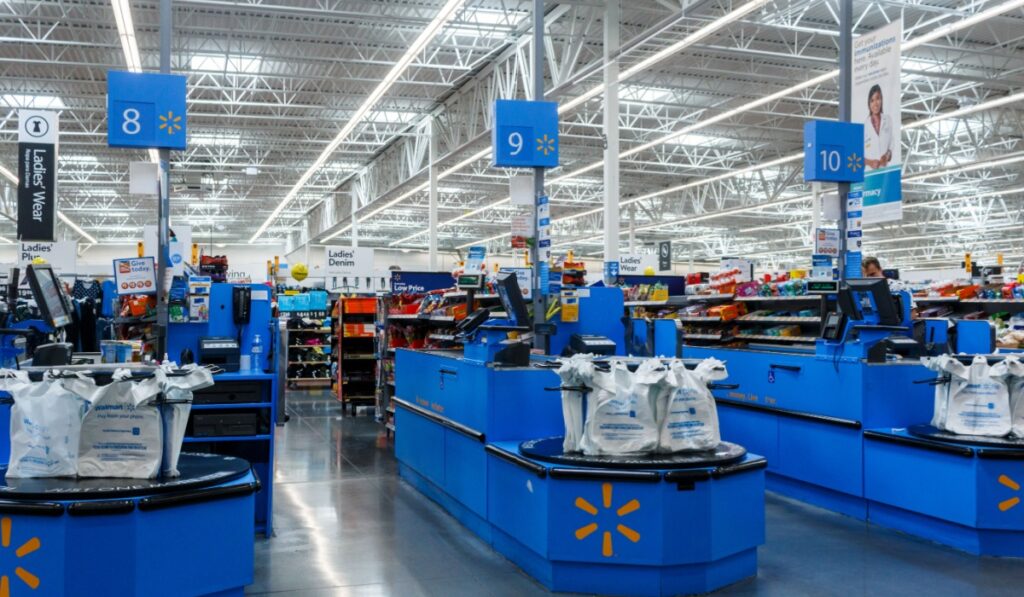
Dozens of Walmart stores across the United States have quietly begun capping self-checkout lanes at 12 items, a move that is catching shoppers off guard and generating significant frustration online. The change is not coming from Walmart’s corporate headquarters as a nationwide order. Instead, individual store managers are making the call based on their own judgment about what works best for their location. The result is a patchwork of rules that varies from store to store – and sometimes even from shift to shift within the same building.
To understand the Walmart self-checkout limit debate, it helps to know what self-checkout actually is. A self-checkout kiosk is a machine that lets you scan your own items and pay without a cashier. Retailers like Walmart started rolling them out in large numbers to move customers through faster and reduce labor costs. That original promise is now under serious scrutiny.
The Walmart 15-item limit has existed informally at some locations for a while, but stricter enforcement of a 12-item cap at select stores is newer. Walmart has not rolled out a single, nationwide policy. What’s changed is that more managers are actively choosing to restrict their self-checkout lanes, and not all of them are posting signs or warning shoppers in advance.
What the Policy Actually Says
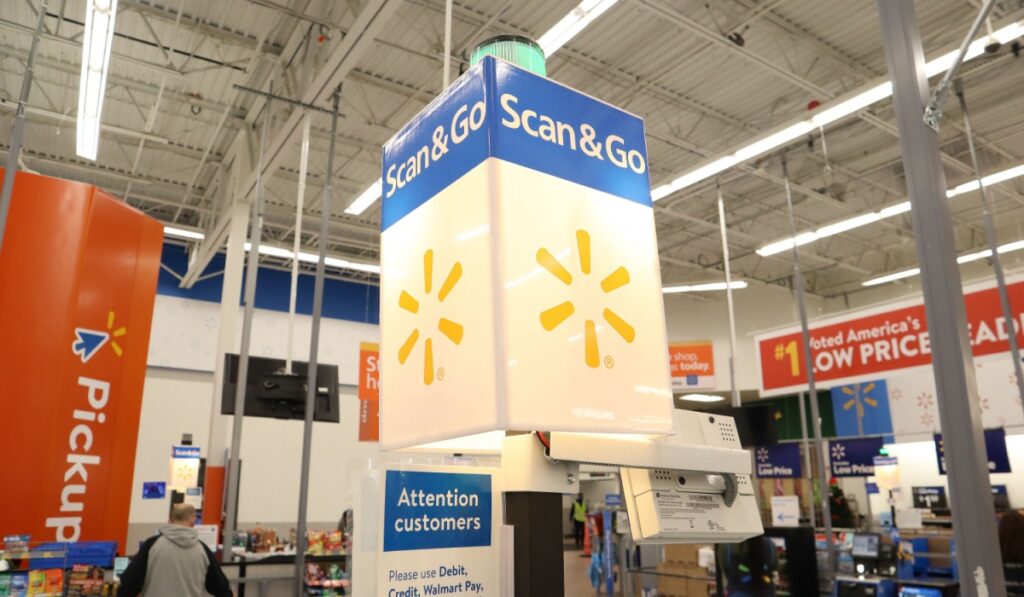
Walmart Press Office Global Communications Director Joe Pennington said the changes to self-checkout lanes are based on individual store manager decisions, not top-down orders from corporate headquarters. “Not every store is going to look the same – probably even within Fresno and the Valley – there’s going to be different solutions at every different store because the manager has been given discretion,” Pennington said.
Pennington added that managers’ decisions to open or close self-checkout registers will vary based on a number of factors, including foot traffic and staffing levels, and he pointed out that managers are now receiving stock equity in Walmart with the expectation that they will operate their stores with an owner’s mindset. This is a real shift in how Walmart runs its stores. Managers are being given more power – and more accountability – for the day-to-day experience their customers have.
In a formal statement, Walmart explained that store managers regularly experiment with staffing arrangements. “Our managers look for ways to innovate within their stores and pay close attention to customer feedback on where they can better meet their needs,” Pennington said in a statement to USA TODAY. “Based on several factors including customer and associate feedback, shopping patterns, and business needs, some locations are temporarily testing different checkout staffing options.” The word “temporarily” is doing a lot of work in that sentence. Shoppers who have seen their local store go to a 12-item cap are not experiencing it as temporary.
Which Walmart Stores Have a Self-Checkout Item Limit?
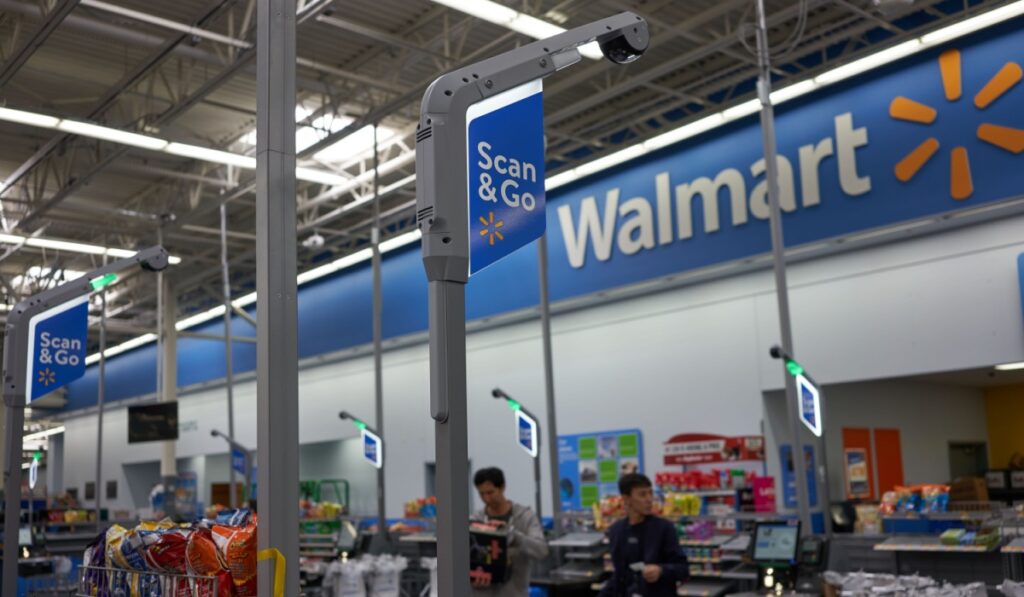
This is the question most shoppers are asking right now – and the honest answer is that there is no definitive public list. The honest answer is that it depends on the store. Walmart keeps changing its self-checkout policies – sometimes employees enforce a “15 items or less” policy at self-checkout, and sometimes they don’t. At some Walmart locations, shoppers have already reported a stricter 12-item cap.
Beyond item limits, some stores have gone further. Over the last 12 months, Walmart has removed self-checkout from a small number of locations – more than 10, but still only a tiny fraction of its total store base. At least 6 known stores, including locations in Shrewsbury, Missouri; Cleveland, Ohio; three stores in New Mexico; and one in Los Angeles, California, have reported complete removal of self-checkout lanes. These are the exception, not the rule. Walmart has expanded self-checkout to a majority of its U.S. stores over the last several years, with industry sources confirming that over 3,800 Walmart stores in the U.S. currently feature self-checkout options.
So which stores are using a Walmart self-checkout 12 item limit right now? The safest answer is: check before you go. Call your local store, or check the Walmart app. Rules are changing fast, and shoppers who show up expecting open access are sometimes finding express-only lanes with no heads-up. The lack of consistency is a big part of what’s driving frustration online. Shoppers arrive expecting one experience and get another, with no clear sign posted and no advance notice.
Walmart rolling out self-checkout restrictions is happening in fits and starts, not in one clean wave – which makes it harder to track and even harder to plan around.
Why Is Walmart Limiting Self-Checkout?
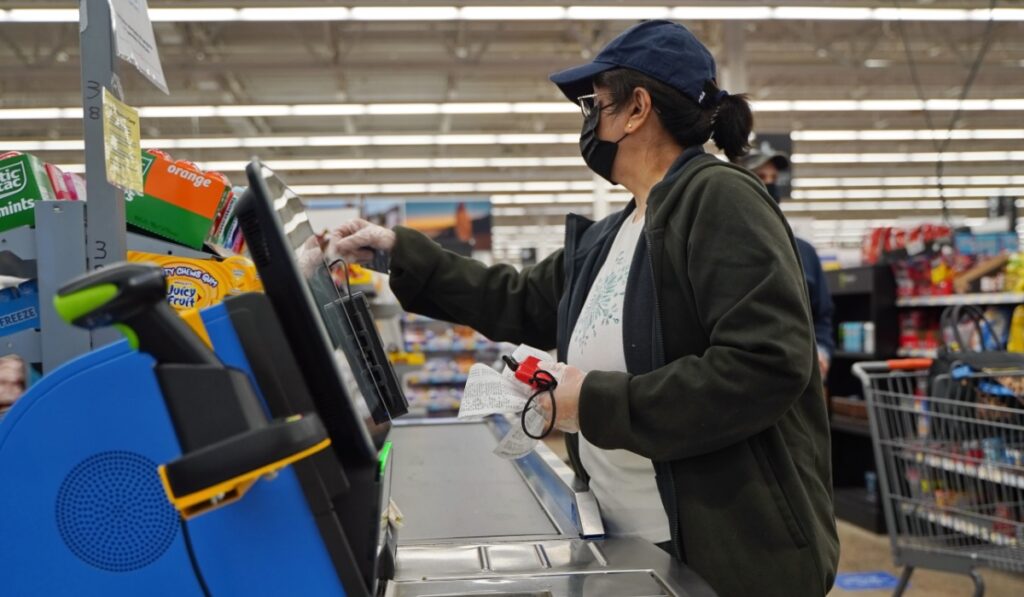
According to a LendingTree survey of 2,050 U.S. consumers, 27% of self-checkout users have purposefully taken an item without scanning it. The main motivations are unaffordable essentials (47%) and price increases tied to tariffs (46%).
That 27% figure represents a massive 12 percentage point jump from 15% in 2023. In other words, intentional self-checkout theft has nearly doubled in two years. That’s not a small trend. That’s a structural problem for retailers who invested heavily in the technology.
The financial toll is significant. Self-checkouts see up to 4 times as much shrinkage as traditional cashiers. “Shrinkage” is a retail term that just means lost inventory – items that leave the store without being paid for, whether by accident or on purpose. Self-checkout lanes experience shrink rates of 3.5 to 4%, compared to just 0.21% at staffed registers. Retailers in the U.S. alone lose an estimated $4.9 billion annually due to self-checkout theft.
The logic behind an item cap is fairly straightforward. Smaller transactions are easier to supervise and verify. A customer scanning six things is easier to monitor than one scanning 30. Retailers are effectively trying to shrink the window of opportunity. Whether that works in practice is a separate question. A determined thief doesn’t necessarily stop stealing because of a 12-item rule. But from an operations perspective, fewer items per transaction means less that can go unscanned.
Not all theft is intentional, either. Although 79% of self-checkout users diligently check to see if their items scan, 21% say they’ve taken an item accidentally. And machines that glitch, misread barcodes, or fail to register items in the bagging area make the problem worse. Item limits reduce the complexity of each transaction, which in turn reduces the number of errors – whether intentional or not.
How Shoppers Are Reacting – and Why the Anger Makes Sense
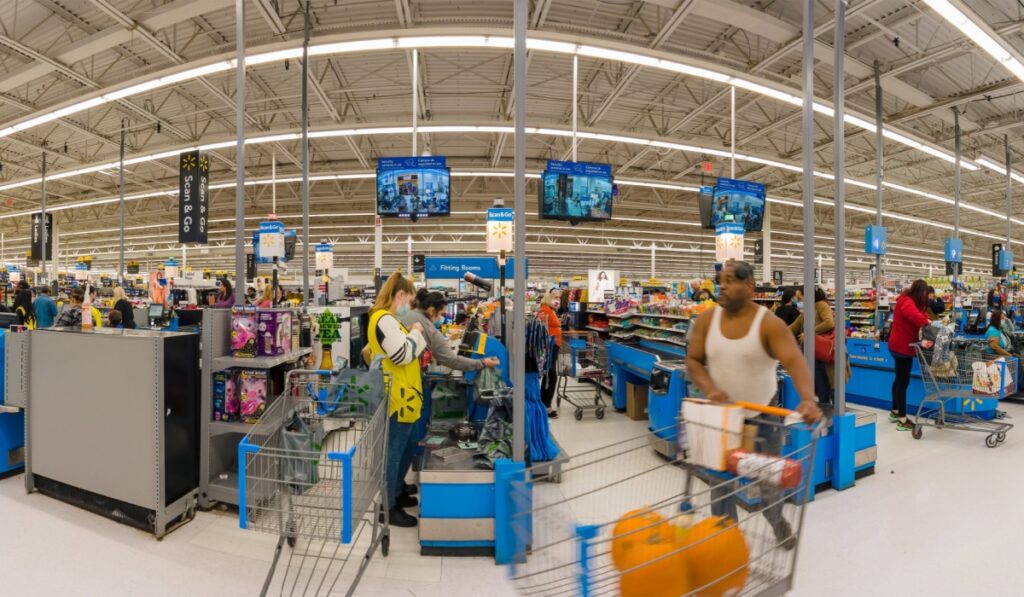
The pushback from customers is real. The U.S. Sun rounded up complaints from shoppers saying their stores had shifted self-checkout to “12 or less express” while only two regular lanes were open, and the lines were “through aisles.” One shopper described on Reddit a visit where all self-checkout machines were restricted to express mode, leaving just a couple of staffed registers to handle the full crowd.
When fewer shoppers can use self-checkout, the strain does not vanish – it simply shows up as longer waits, tighter lane access, and more visible irritation at the front of the store. For someone doing a full grocery run, being turned away from self-checkout because they have 16 items feels arbitrary. For someone on a lunch break with a cart of 14 things, the difference between the old system and the new one is 20 minutes of standing in line.
There’s also the issue of inconsistency. One Reddit user wrote, “My Walmart, like many others, has greatly increased the amount of self-checkout lanes and reduced lanes manned by a cashier, including adding self-check stations with longer bagging bays. And yet, for the first time ever, the employees have decided to start enforcing the 15 item limit. Why is this????? Several times now I’ve had a cart with maybe 20 items and there have been multiple self-check lanes open, and the associate manning the self-check has ordered me to go to a regular lane.”
That kind of experience – rules that appear without warning, enforced unevenly – is what’s turning a routine inconvenience into genuine frustration. The Walmart self-checkout policy debate isn’t really about 12 items versus 15. It’s about trust between a retailer and its customers.
Walmart Isn’t the Only One Doing This

The Walmart self-checkout cap is part of a much wider retail trend. Across the industry, major chains are rethinking how much access they give customers to unmanned checkout lanes – and item limits are one of the most common tools they’re reaching for.
Target tested a 10-item limit at self-checkout in roughly 200 stores during 2023, then expanded the policy nationwide in 2024. A spokesperson for Target said the change was driven by “internal testing that showed it increased customer satisfaction.” That’s an interesting framing – the restriction made customers happier, presumably because shorter transactions meant faster-moving lanes.
Dollar General has taken a particularly aggressive stance, removing self-checkout from approximately 12,000 stores and imposing strict limits – often five items or fewer – in others, with theft explicitly cited as a pivotal factor. That is a massive change for a chain that once leaned heavily on self-checkout to offset thin staffing budgets.
The Walmart checkout rules changes are also being mirrored at the legislative level. Bronx Councilwoman Amanda Farias introduced legislation to the New York City Council that would cap self-checkout transactions at 15 items and require supermarkets and pharmacies to assign at least one worker for every three self-checkout lanes. Stores that fail to comply would face daily fines starting at $100. That proposed New York City legislation has been referred to the Council’s Committee on Consumer and Worker Protection but has not yet had public hearings, committee approval, or a full Council vote.
Farias has been direct about her reasoning. She believes the bill will improve overall safety at grocery and retail outlets across the city. “We’ve seen the consequences of removing workers from these spaces: increased retail theft, less oversight, fewer protections for both workers and customers, and generally decreased safety,” she said while introducing the legislation. Critics on the other side argue that penalizing stores for how they staff their checkout lanes doesn’t actually stop thieves. The debate is unresolved – but the bill’s introduction signals that government bodies are paying close attention to what retailers are doing, not just watching from the sidelines.
Is Walmart Getting Rid of Self-Checkout Entirely?
The short answer is no. The longer answer requires some nuance.
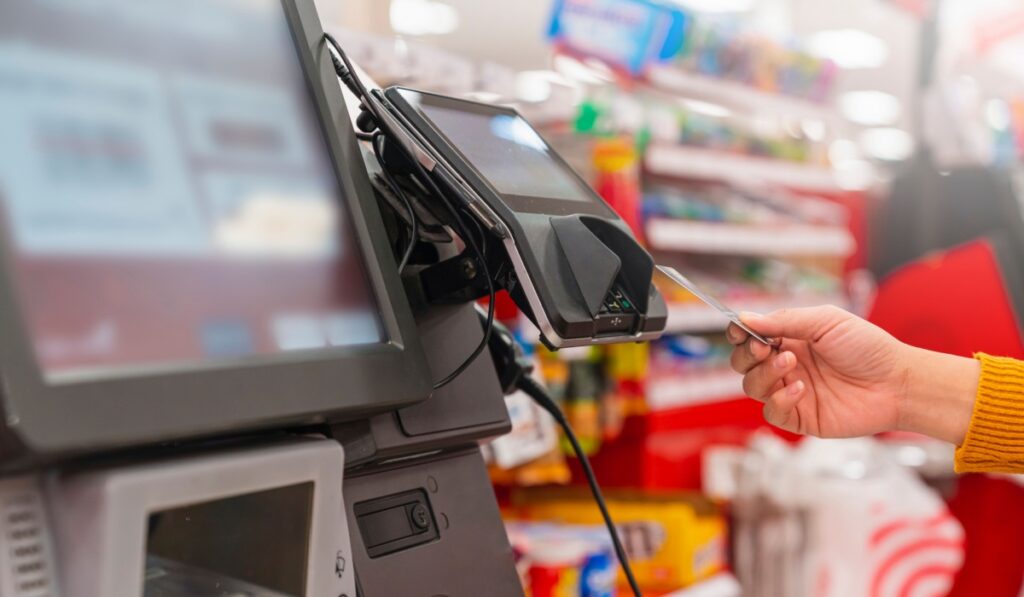
While Walmart removed self-checkout from some select locations, the company has no plans to remove self-checkouts nationwide. Over the past 12 months, Walmart has made significant strides in advancing its self-checkout technology, and the company isn’t ditching self-checkout. If anything, the technology is getting more sophisticated. Walmart’s Sam’s Club division continues to operate its “Scan & Go” system, which uses mobile apps and AI to track purchases with greater precision. Walmart is also reportedly experimenting with AI-powered self-checkout kiosks that use computer vision to identify products without traditional barcodes and detect potential scanning errors or theft in real time.
What Walmart is doing is managing self-checkout more aggressively than before. Some locations will still have full self-checkout access in 2025, though a few are scaling back where theft spikes or lines get messy. Rather than applying the same setup everywhere, adjustments depend on each store’s layout and loss patterns. That’s a more targeted, data-driven approach – even if it doesn’t always feel that way to a shopper who turns up and gets redirected to a staffed lane.
The technology angle is worth watching. Walmart is also testing invisible barcodes embedded directly onto product packaging, developed in partnership with Digimarc. These barcodes allow for automatic scanning without requiring customers or associates to manually locate a visible barcode, improving scanning speed and accuracy. If that technology scales, it could reduce both accidental and intentional self-checkout theft without needing item limits at all.
How Other Stores Handle Self-Checkout Restrictions – and What Works
The evidence on whether item caps actually reduce theft is more mixed than retailer statements suggest. The causal link between item caps and actual shrinkage reduction is not yet clearly established. Retailers are making educated bets, not acting on rock-solid evidence. Target reported that customer satisfaction improved after its 10-item limit, but satisfaction and theft reduction are two different outcomes.
What does seem to reduce theft more meaningfully is human presence. According to reporting by the Webster-Kirkwood Times, after one Walmart in Shrewsbury, Missouri, removed self-checkout, police calls to the store dropped from 509 in a five-month period to 183 in the same period the following year. Arrests for theft dropped from 108 to 49. Shrewsbury Police Chief Lisa Vargas directly attributed this “huge change” to the elimination of the self-checkout systems. That’s a compelling data point – though it’s from a single store in a specific community, and removing self-checkout entirely is a very different intervention from capping lanes at 12 items.
According to a June 2024 survey conducted by Redfield & Wilton Strategies for Newsweek, 43% of shoppers actually support the removal of self-checkouts from retail stores. That number might surprise people who assume everyone loves the convenience of scanning their own groceries. Public opinion on self-checkout is more divided than retail chains tend to acknowledge.
For shoppers interested in how big retailers are reshaping their shopping policies, this self-checkout shift is part of a broader pattern of major chains adjusting the balance between convenience, cost, and loss prevention.
The Real Cost That Isn’t Being Talked About

One element that rarely makes it into press releases is what item limits do to the average shopper who is doing nothing wrong. When a store converts all its self-checkout lanes to express-only without adding more staffed registers, someone has to absorb the bottleneck. That someone is the regular customer.
The frustration is proportionate to the disruption. Walmart built its stores around the idea of being a one-stop shop. As one shopper wrote online, “It’s absolutely infuriating – really, who is going to Walmart to purchase less than 15 items on a regular basis? It’s a SUPERSTORE, you’re supposed to buy your groceries, toiletries, housewares, etc., all in one stop there.” That frustration captures the mismatch between what self-checkout item limits are designed to solve and the customers who end up bearing the cost of the solution.
There’s also a deeper concern for shoppers who rely on self-checkout for reasons beyond convenience – people who have anxiety in social situations, individuals who prefer not to interact with a cashier, or those with mobility challenges who find the self-checkout setup more accessible. For those shoppers, a strict item cap isn’t a minor inconvenience. It’s a meaningful change to how they experience the store.
Read More: Why You Should Never Buy a Rotisserie Chicken From Walmart
What This Means for You

If you’re a regular Walmart shopper, a few practical steps will save you a lot of hassle. First, call your local store before a big trip and ask whether self-checkout is restricted and to how many items. Rules vary by location and can change based on staffing levels and time of day, so what was true last week might not be true today. Second, if you use the Walmart app, check whether your store offers Walmart+ member lanes – subscribers to the $98-per-year plan sometimes have access to dedicated self-checkout that isn’t restricted in the same way.
If you regularly shop for more than 12 items in a single trip – which is most people doing a weekly grocery run – plan for the staffed checkout line as your default when visiting affected stores. Build in extra time, especially during peak hours. The self-checkout item cap is designed around quick, small purchases. A full cart of groceries no longer fits that model at dozens of locations across the country.
The Walmart self-checkout limit story is still unfolding. Walmart hasn’t locked in a permanent national policy, legislative proposals like New York City’s 15-item bill haven’t become law, and the technology being tested could change what’s possible within a few years. What’s clear right now is that the era of unlimited, unstaffed, scan-it-yourself convenience is being actively renegotiated – and shoppers are right in the middle of that negotiation, whether they asked to be or not.
A.I. Disclaimer: This article was created with AI assistance and edited by a human for accuracy and clarity.
Read More: The Banana Trick and Other Acts of Self-Checkout Thievery