

As women get older, transitioning from our 20s into our 30s, then 40s, 50s, and beyond, our focus often shifts. We start thinking more about longevity, mobility, and, perhaps most importantly, the hidden framework that holds us up: our bones. For many women, the mention of bone health conjures images of calcium supplements and leisurely walks. While those have their place, there is a powerful, science-backed secret that doctors wish more women were utilizing to bulletproof their bones: Plyometrics, aka bone-building exercises.
If the word “plyometrics” sounds like something reserved for Olympic athletes, don’t click away just yet. While these movements are high-energy, they are infinitely scalable. Whether you are a seasoned athlete or someone who hasn’t laced up sneakers in a decade, plyometrics offer a unique biological spark that traditional weightlifting or cardio simply cannot match. In this guide, we’ll explore the science of why jumping is the fountain of youth for your frame, how to start safely, and why your 40s (or beyond) are the perfect time to start “leaping” into better bone health.
What Exactly Are Plyometrics?

Before we dive into the why, let’s define the what. Plyometrics is a type of exercise training that uses speed and force of different movements to build muscle power. More specifically, it involves the Stretch-Shortening Cycle (SSC).
To understand the SSC, think of your muscles and tendons like elastic bands. If you pull the rubber band back (the stretch, or eccentric phase) and release it immediately, it snaps forward with much more force than if you had just let it go slowly. Plyometrics train your body to use this stored elastic energy to produce explosive movements. Common examples include jumping, hopping, and bounding.
In the fitness world, we often call these “power” exercises. While strength is about how much weight you can lift, power is about how fast you can move that weight. For women over 40, this distinction is vital.
The Science of Bone Health: Why Impact Matters
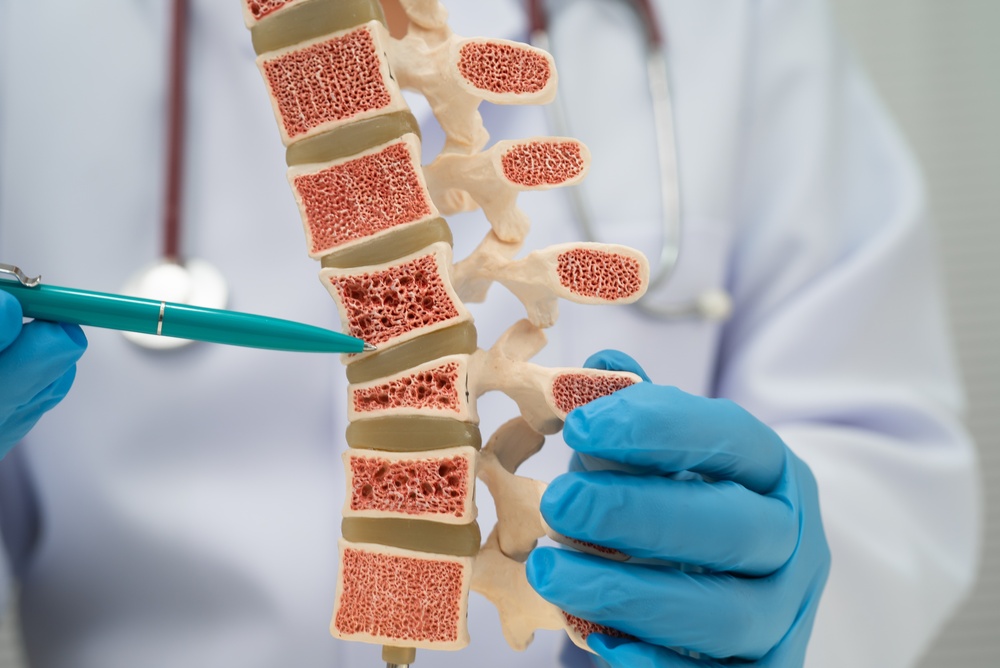
To understand why plyometrics are the ultimate bone-building exercises, we have to look at Wolff’s Law. Wolff’s Law states that bone in a healthy person or animal will adapt to the loads under which it is placed. If loading on a particular bone increases, the bone will remodel itself over time to become stronger to resist that sort of loading.
As women enter their 40s, estrogen levels begin to fluctuate and eventually decline during perimenopause and menopause. Estrogen plays a protective role in bone density; when it drops, the rate at which our bodies break down old bone can outpace the rate at which we create new bone. This leads to Osteopenia (lower than normal bone density) and eventually Osteoporosis (brittle, porous bones).
Mechanical Loading and Osteoblasts
When you perform a plyometric move, let’s say a simple hop, your bone experiences a brief “mechanical deformation.” It bends just a tiny, microscopic amount. This bend sends a signal to cells called Osteoblasts.
There are two types of cells that affect the strength and structure of your bones: Osteoblasts and Osteoclasts:
- Osteoblasts: These are the “construction crew” cells of your skeletal system. Their job is to lay down new bone tissue.
- Osteoclasts: These are the “demolition crew” that remove old bone.
Plyometrics act as a megaphone for the Osteoblasts. The high-impact nature of jumping creates a “high-strain rate,” which is much more effective at stimulating bone growth than the steady, rhythmic strain of walking or even steady-state jogging.
Why Women Over 40?

Image credit: Shutterstock
You might be wondering, “Is it too late for me?” The answer is absolutely not. In fact, research suggests that high-impact exercise is one of the few ways to significantly influence Bone Mineral Density (BMD) in pre- and post-menopausal women. Plyometrics benefit women of all ages in three different areas:
- Site-Specific Strength: Plyometrics specifically target the hip and the spine. These are the two areas most prone to fractures as we age.
- Neuromuscular Coordination: These exercises don’t just build bone; they build the brain-to-muscle connection. This improves balance and reaction time, which are the primary defenses against falls.
- Metabolic Boost: Because plyometrics require explosive energy, they recruit “fast-twitch” muscle fibers, which burn more energy and help maintain lean muscle mass during hormonal shifts.
The Pre-Plyo Checklist: What to Do First

If you aren’t currently exercising, you shouldn’t start jumping on day one. Your tissues (aka your tendons, ligaments, and muscles) need to be prepared for the load. Think of this as prepping the runway before the plane takes off.
1. Establish a Strength Base
Before you add speed, you need strength. If you cannot perform a controlled bodyweight squat, your joints will not be able to handle the force of a squat jump.
The Goal: Be able to perform 15 slow, controlled bodyweight squats and 20 calf raises without pain.
2. Core Stability
Plyometrics require a strong core to transfer energy. If you are unable to contract your core muscles sufficiently to maintain a braced midsection, the force leaks out, and your lower back takes a hit.
The Goal: Be able to hold a standard forearm plank for 45 seconds with good form.
3. Balance Basics
Since many plyometric moves involve landing on one or both feet, you need to ensure your vestibular system (your balance) is awake.
The Goal: Stand on one leg for 30 seconds per side without grabbing a wall.
When NOT to Do Plyos (Safety First)
While bone-building exercises are beneficial, they aren’t for everyone at every moment. Consult a doctor or physical therapist if you have:
- Severe Osteoporosis: If your bones are already very brittle, high-impact activity could cause a stress fracture. A professional can help you find low-impact alternatives.
- Acute Joint Inflammation: If your knees or ankles are currently swollen or painful due to an injury or an arthritis flare-up.
- Pelvic Floor Issues: For many women over 40, high impact can trigger “Stress Urinary Incontinence” (leaking). It is highly recommended to work with a pelvic floor physical therapist to strengthen the pelvic floor (the “bottom” of your core) before starting a jumping routine.
- Significant Excess Weight: If you are significantly overweight, the force on your joints during a jump can be up to 5 to 7 times your body weight. Start with impact loading, like heavy walking or marching, first.
The Dos and Don’ts of Bone Building
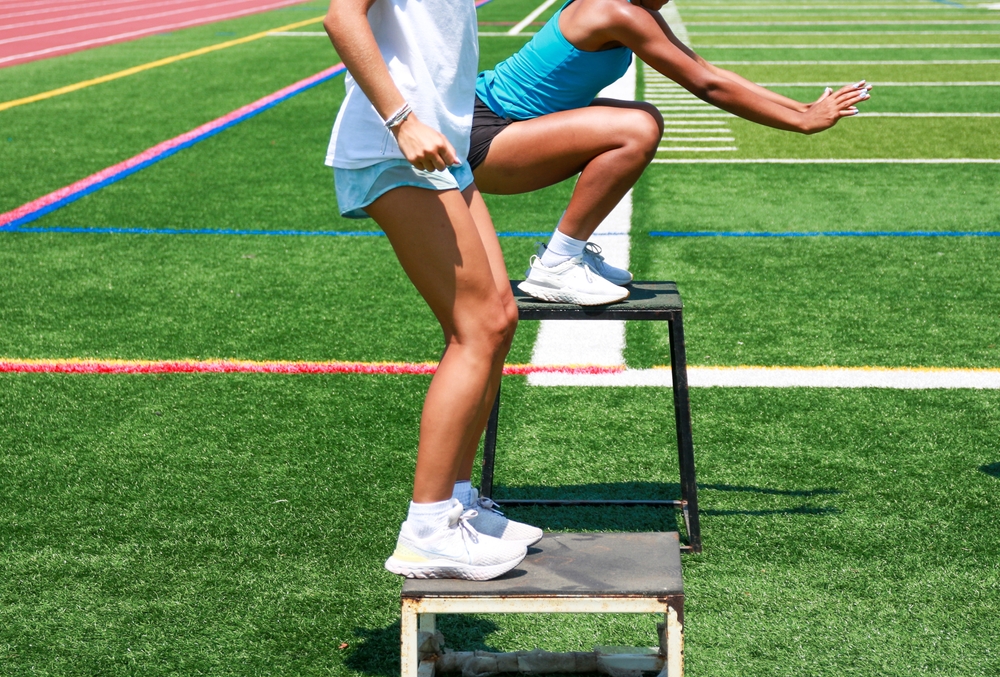
Image credit: Shutterstock
The point of performing plyometric exercises is to build healthier, stronger bones. If these exercises are done incorrectly, however, the effect won’t be the same and could even be negative. Follow this list of dos and don’ts, and if you are still unsure, speak with a licensed physical therapist or personal trainer who can help to coach you through the moves.
Do:
- Land Softly: You should be as quiet as a cat. If you sound like a sack of potatoes hitting the floor, you aren’t using your muscles to absorb the shock. This means your joints are taking it all.
- Quality over Quantity: You only need a few repetitions to signal bone growth. Doing 50 jumps in a row leads to fatigue and poor form.
- Wear Proper Shoes: While it can be beneficial to go barefoot, most of us generally prefer to be in sneakers. This is not the time for flip-flops.
- Rest: Bone remodeling takes time. Only perform plyometrics a couple of times per week, with at least 48 hours between sessions.
Don’t:
- Jump on Concrete: Find a forgiving surface. A yoga mat, a carpeted floor, or firm grass is much better for your joints than a garage floor or a sidewalk.
- Lock Your Knees: Always land with a slight bend in the knees. Locked knees create immense pressure on the joints.
- Skip the Warm-up: Cold tendons are brittle tendons. Spend 5 to 10 minutes walking, doing some mobility and activation exercises before starting.
- Perform until Exhaustion: As mentioned above, plyos are all about form and performing them properly. Don’t rush through them, and don’t do too many reps. Think three or four sets of three to five reps. Don’t rush through the sets, and take two to three minutes between sets, allowing full time for your body to rest.
From Beginner to Advanced: The Exercise Progression
Ready to start? We have broken these down into three levels. Do not move to the next level until you feel 100% confident and quiet in your landings at your current level.
Level 1: Beginner (Low Impact, High Benefit)

1. Power Marching
This is the “gateway” to plyometrics. It builds the coordination needed for jumping without the flight phase.
How to do it: Stand tall. Drive one knee up toward your chest while simultaneously driving the opposite arm up, like a soldier. The key is the “stomp.” When you bring your foot down, do it with intention and force.
Focus: Core engagement and forceful foot-to-floor contact.
2. Calf Bounces (The “Heel Drop”)
This is a classic bone-building move used in clinical studies for osteoporosis prevention.
How to do it: Stand with your feet hip-width apart. Rise up onto your tiptoes as high as you can. Then, quickly drop your heels back to the floor so you feel a slight “jolt” travel up your legs.
Focus: The sudden stop at the bottom is what triggers the bone cells.
3. Box Step-Ups with Power
This move also helps to build the muscle strength required to graduate to more explosive movements later on.
How to do it: Use a sturdy step or the bottom stair. Step up with your right foot. As you bring your left foot up, drive the left knee high and rise onto the toes of your right foot. Step back down softly.
Focus: Explosive upward movement.
Level 2: Intermediate (Introducing Flight)
4. Squat Pops
This move is a step before doing full-on squat jumps. Again, it is helping to build strength in your tendons and ligaments, as well as preparing the bones for the full take-off later on.
How to do it: Stand with feet shoulder-width apart. Lower into a shallow squat, about halfway down. From the bottom, quickly stand up so forcefully that your heels leave the ground, but your toes stay in contact with the floor, or just barely lift off.
Focus: “Exploding” out of the hole of the squat.
5. Lateral Hops (The Skater)
Bone is strengthened best when it is loaded from different angles. Side-to-side movement is excellent for hip bone density.
How to do it: Imagine there is a line on the floor. Hop sideways over the line, landing softly on your right foot with a slight knee bend. Immediately hop back to the left.
Focus: Stability. Don’t let your knee dive inward when you land.
6. Box Landings (The “Snap Down”)
This teaches you how to handle gravity before you actually try to jump high.
How to do it: Stand on a small step (6 inches). Step off with one foot and land on both feet simultaneously in a “ready” position. This means knees bent, butt back, and chest up. Land as quietly as possible.
Focus: The “stick.” You should land and freeze like a statue.
Level 3: Advanced
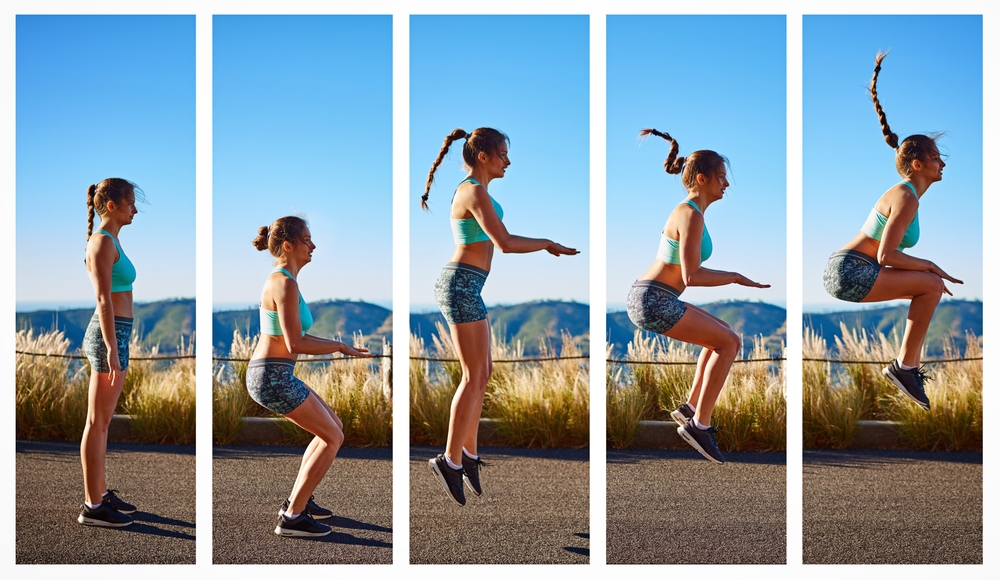
7. Counter-Movement Jumps
How to do it: Stand tall. Quickly throw your arms back and sit your hips into a partial squat, then immediately reverse the motion, swinging your arms forward and jumping as high as you can. Land softly in a squat position.
Focus: The transition time. The shorter the time between “down” and “up,” the more the Stretch-Shortening Cycle is working.
8. Broad Jumps
How to do it: This is a jump for distance rather than height. Stand at one end of a mat. Swing your arms and jump forward as far as you can comfortably control. Focus on a “sticky” landing.
Focus: Using your glutes to propel you forward and your quads to brake the landing.
9. Tuck Jumps
How to do it: From a standing position, jump straight up and try to pull your knees toward your chest for a split second. This is a very high-intensity move.
Focus: Maximum power. Only do 3-5 reps of these at a time.
Knowing When to Stop

No matter what age you are, the “No Pain, No Gain” mantra is dangerous. You need to listen to the subtle signals your body sends, before it needs to send a not-so-subtle one.
Stop immediately if you feel:
- Sharp, pointed pain: Especially in the bottom of the foot, the achilles tendon, or the kneecap.
- Incontinence: If you experience leaking, stop the high-impact moves and switch to “power” moves where on foot stays on the ground (like power marching).
- Joint “giving way”: If your knee or ankle feels unstable or wobbly, you have reached muscular fatigue. Your bones are no longer protected by your muscles.
Wait until tomorrow to assess:
It is normal to feel some muscle soreness (aka DOMS – Delayed Onset Muscle Soreness) 24 to 48 hours after a new workout. However, if you feel joint pain deep inside the hip or knee, you likely did too much. Scale back the intensity or the number of jumps in your next session. If needed, consult a doctor or physical therapist.
Read More: 15 Workout Mistakes That Can Be Dangerous for Your Health
How to Structure Your Bone-Building Routine
The great thing about plyometric routines is that they don’t actually require a lot of time. You don’t need an hour of jumping. In fact, that would be counterproductive. Research shows that bone cells become “deaf” to the mechanical signal after about 10 to 20 repetitions. After that, you’re just tiring yourself out without adding more bone benefits.
The “Strong Bones” Mini-Circuit:
The following is a simple plyometric routine that you can perform twice weekly. Again, be mindful of fatigue. Some days you may find completing 3 sets no problem, other days you might find yourself reaching muscular fatigue by the end of two. Push yourself, yes, but do so mindfully.
- Warm-up: 5 minutes of brisk walking and dynamic stretching.
- Power Marching: 20 steps (10 per side).
- Calf Bounces: 10 repetitions.
- Lateral Hops: 10 repetitions total (5 per side).
- Squat Pops OR Jump Squats: 5 to 8 repetitions.
- Rest: 2 minutes between rounds. Repeat the circuit 2–3 times.
The Bottom Line
Building stronger bones doesn’t require a miracle; it requires a little bit of science. By introducing plyometric workouts into your weekly routine, you are doing more than just working out; you are sending a direct signal to your skeletal system that it needs to be strong, resilient, and ready for action.
For women over 40, this is the ultimate insurance policy. It protects against future fractures, boosts metabolic health, and if I’m being honest, there is something incredibly empowering about realizing your body can still fly. Start where you are. If that’s a power march in your living room, great. If it’s a box jump at the gym, also great. The goal isn’t to jump the highest or furthest, it’s to keep moving, keep impacting, and keep building a frame that will support you for the decades to come. Your bones are living tissue. They are listening. Give them a reason to be strong.
Read More: Are Your Workout Clothes Affecting Your Fertility? Here’s What the Science Says