

Falling out of love rarely happens in one big moment. It slips away through small daily shifts that are easy to miss. The everyday warmth fades a little at a time, until the relationship feels different and you can’t even remember when it changed. Most of the signs ahead are small enough to brush off as a bad week or a busy season, which is how they go unnoticed for months. Once you can name what you are noticing, it becomes easier to bring it up with your partner and work out what you want to do.
What Falling Out of Love Actually Means

Falling out of love is the slow loss of emotional connection between partners, where affection, interest, and care quietly drain out of the day-to-day. Dr. John Gottman has spent decades researching couples, much of it at the Gottman Institute in Seattle, and he describes this drift as the slow breakdown of friendship at the heart of the partnership. It is different from a rough patch because rough patches still carry the wish to repair. Falling out of love comes with a quiet acceptance that the distance is now part of the relationship.
Why People Fall Out of Love in the First Place

People rarely fall out of love for one big reason: the slide is usually built from smaller losses that stack up over time. The PAIR Project at the University of Texas at Austin tracked married couples for 13 years and found that the slow fade of affection in the early years was a stronger signal of future divorce than how often a couple argued. Life events feed into this too; things like new parenthood, career stress, and grief can pull two people apart when neither one notices the warmth quietly leaving the relationship.
Before You Read the List, Hold This in Mind

These behaviors do not always mean love is fading; sometimes, ordinary life produces the same signs. Stress, depression, burnout, grief, and health problems can all flatten someone in ways that look like emotional withdrawal. A partner who has been quiet or short-tempered might be carrying something heavy that has nothing to do with how they feel about you. Hold that as you read on. Here are 12 behaviors worth noticing, what they might mean, and what to do once you have seen them.
1. They Stop Being Curious About Your Day

The first thing many people notice is the small questions drying up. “How was your meeting?” or “What did your sister say?” used to come without thinking, but now you offer the story, and they nod, check their phone, or change the subject. Gottman calls these small offerings bids for connection, and curiosity is what fuels them. When a partner stops turning toward those small bids, conversations become updates instead of a real exchange, and the warmth around the words has gone somewhere else.
2. Sharing the Small Stuff Dries Up

A partner who feels close to you tends to think out loud. The half-formed worry about work, the thing that has been bugging them about their mum, the idea they are kicking around for the weekend. As they pull back emotionally, that thinking-out-loud moves inward. Their inner life is still happening; you are just no longer a default place for it to land. They might be processing it alone, with a friend, in a journal, or not at all. The shift is not in how much you talk, it is in how much of them is in the room when you do.
3. Compliments and Appreciation Fade

Kind words that used to come naturally start to feel rare. “Thank you for dinner,” “you look nice today,” “I appreciate how you handled that,” those small acknowledgments dry up and nothing moves in to replace them. Gottman’s research has long shown that healthy couples run on a steady stream of small positives in everyday life. Most people underestimate how much of that quiet warmth is holding things together. When the flow thins out, the relationship feels heavier even when nothing obviously bad has happened.
4. Conflict Turns Into Silence

Disagreements that used to end in talking it out start to end in walls. A partner might shut down mid-conversation. They give one-word answers or leave the room and refuse to come back to it. Gottman’s team calls this stonewalling, one of the behaviors they have linked most closely to relationships ending. Silence here is not peace. It is a sign that the work of staying connected has started to feel like too much.
5. Criticism Replaces Kindness

Small things that used to roll off start to catch. The way the dishwasher got loaded, a comment made at dinner, the route someone took home, suddenly, these are worth a sharp word. It is rarely about the dishwasher. When affection fades, the automatic patience that comes with feeling close fades with it, and the small daily friction of living with another person stops being absorbed and starts being aired. A complaint points to one specific thing that happened. Criticism points at the person, and it lands like a verdict on who they are.
6. They Guard Their Phone and Schedule

You might notice their phone going face down when it never used to. The screen tilts away when a message comes in, and their password has quietly changed. Maybe a question about the weekend gets a vague answer instead of the easy back and forth. Privacy is normal and healthy, so this one needs careful reading. The thing to watch for is secrecy moving in where openness used to be. That on its own is not proof of anything. It might mean cheating, it might mean love is fading, or it might mean they are working through something alone.
7. Casual Affection Becomes Rare

Casual affection lives in the small things. The hand on your back as they walk past, the kiss on the head, the leg draped over yours on the couch. These touches are how closeness stays alive between the bigger moments, so when they fade, the relationship can start to feel more like a house-share than a partnership. You might still hug hello and goodbye, but the easy affection that used to fill the hours in between has dried up, leaving a polite distance in its place.
8. Sex and Intimacy Drop Off

Frequency might drop, initiation might slow, and even when sex happens, it can feel like two people going through the motions. Dr. Amy Muise, a relationship researcher at York University in Toronto, has found that the link between sex and relationship happiness is closely tied to emotional closeness. The bedroom can be a mirror for what is happening in the rest of the relationship, so if affection has been fading elsewhere, it may be showing up here too.
9. Body Language Shifts Around You

The body often gives away what the mouth has not said yet. They might sit further away on the couch, cross their arms when you talk, or hold eye contact for a beat less than they used to. None of this is loud on its own, but it can add up over time. When someone is pulling back emotionally, you can often see it in how they sit, stand, and turn toward or away from you in the small moments of the day.
10. Future Plans No Longer Mention You

Listen to how they talk about what is coming next. Plans that used to be told in “we” have started slipping into “I“, and your name no longer turns up where it once would have. Sometimes this happens without them realizing, other times it is a quiet rehearsal of a life without you. Future plans tend to be honest in a way that day-to-day talk is not, because that is where people answer, often without meaning to, the question of who they picture beside them.
11. They Prefer Time Alone or With Others

Their energy seems to go everywhere except home. They take on extra work, see friends more often, and throw themselves into hobbies that used to sit on the side of life and now seem to fill most of it. Coming home can start to look more like recovering from the day than enjoying the person they share it with. A bit of separate space is healthy in any relationship. The thing to watch for is when home stops being where they want to be and starts being where they end up.
12. They Withdraw When Life Gets Hard
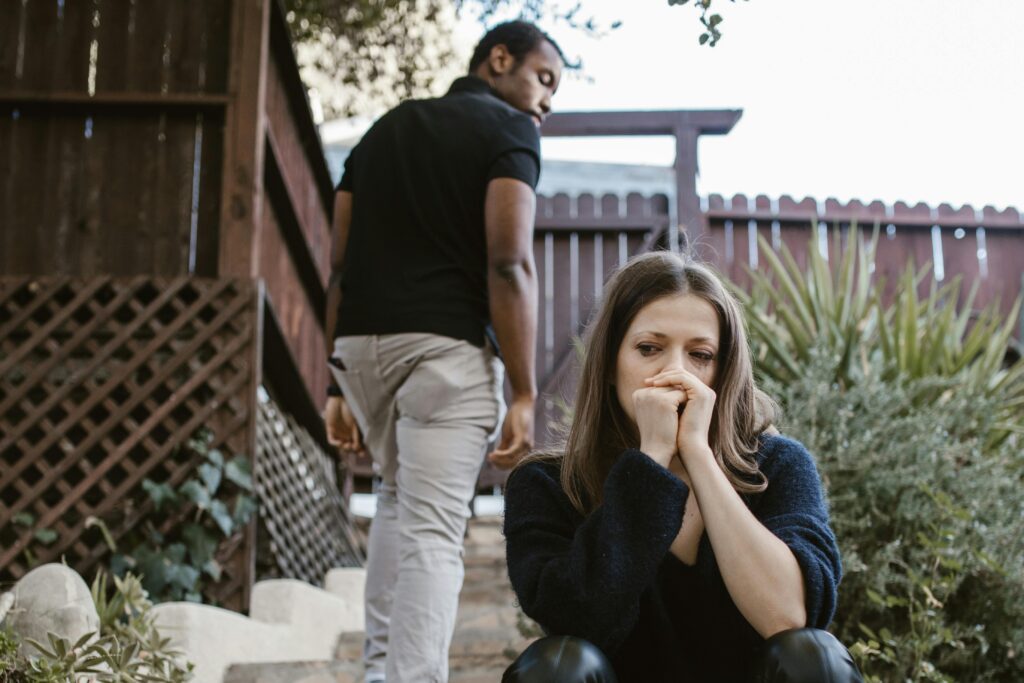
When something heavy happens at work, in their family, or in their body, healthy partners usually turn toward each other for comfort. A partner who is falling out of love tends to do the opposite. They pull inward, lean on friends or family instead, and treat your support like an offer they would rather not take. The instinct to share the weight with you has quietly faded, and what used to feel like the natural place to turn no longer does.
One Sign on Its Own Usually Means Nothing

As mentioned earlier, none of this on its own means for certain that love is leaving your relationship. What turns a quiet week or a snappy comment into something worth a closer look is repetition. These signs start to mean more when several show up together, last for months rather than weeks, and keep going long after the harder seasons of life have passed. What you are really weighing up is how many of these behaviors are turning up, how often they are happening, and how long they have been going on for.
Your Own Part in the Drift

Sometimes it is easier to look for fault in someone else than it is to turn the same honest eye on ourselves. Before any of this becomes a story about what your partner has done, sit with your own side of it for a moment. A relationship rarely drifts because of one person alone, both people usually have a hand in the distance, even when one seems further away than the other. You might notice that you also stopped reaching out as often, or grew quieter when things felt hard. Real repair starts with seeing your part clearly.
Whether Love Can Come Back
Sometimes yes, and sometimes the relationship has quietly run its course. Gottman’s research suggests that couples who manage to rebuild after a long drift tend to share two things, a willingness from both people to do the repair work and a friendship underneath the conflict that is still worth saving. Love that has faded into resentment or contempt is much harder to recover than love that has simply faded into distance. The honest answer is that it depends on what is left between you when you both look closely at it.
Read More: How Narcissists Express ‘Love’: 3 Psychology-Backed Patterns to Know
How to Start the Conversation

If you decide to talk about it, lead with what you have noticed and how it has been feeling for you, not with a list of accusations. Something like, “I have felt a distance between us lately, and I want to understand what is going on for you.” Pick a time when you are both calm, when there is enough quiet to actually talk, and when neither of you is hungry or tired. Leave room for an answer you might not want to hear, the conversation only works if honesty is welcome on both sides.
When to Bring in a Couples Therapist

There comes a point where two people trying their best at home is no longer enough. If the same conversation keeps hitting the same wall, a trained therapist can help you find a way through. The same goes for the conversations you cannot even start without things going sideways. Look for someone who works specifically with couples, ideally one trained in Emotionally Focused Therapy or the Gottman Method. Both have strong evidence behind them. Reaching for outside help is not a sign the relationship has failed, it is a sign you both still want it to work.
Whatever Happens Next, Look After Yourself

Whichever way this goes, the version of you that comes through it deserves real care along the way. Sleep properly. Move your body in a way that feels good. Stay close to the people who know you well outside the relationship. These are the things that keep you upright when home stops feeling steady underneath you. What you are seeing is information to work with, not a verdict on the relationship or on you. What you choose to do next is yours to decide, and that decision is easier to make from solid ground.
Disclaimer: The information provided here is for educational and informational purposes only and is not a substitute for professional psychological, psychiatric, or mental health advice, diagnosis, or treatment. Always seek the guidance of a licensed mental health professional, therapist, psychologist, or psychiatrist with any questions or concerns about your emotional well-being or mental health conditions. Never ignore professional advice or delay seeking support because of something you have read here.
A.I. Disclaimer: This article was created with AI assistance and edited by a human for accuracy and clarity.
Read More: What to Do After Receiving a Loved One’s Ashes: A Gentle Guide