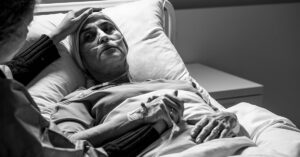

There are certain moments in medicine that feel almost impossible to prepare for – the point at which a doctor or nurse must look a grieving family in the eye and answer the question no clinical training fully equips anyone to answer: How much longer? It is not a question about prognosis in the abstract. It is a question measured in hours. And for most of the history of modern palliative care, the honest answer has been: we don’t know with any real precision.
That uncertainty carries a weight that is not just medical. Families rearrange their lives, travel across countries, and sit through sleepless nights in hospital chairs, all in hope of being present at the exact moment that matters most. The gap between a family’s readiness and a patient’s final breath is not merely logistical – it is one of the deepest emotional fault lines in end-of-life care.
Now, a new study from South Korea is proposing something straightforward enough to do at the bedside with a wisp of cotton – yet potentially significant enough to change how clinicians approach the final 24 hours of a patient’s life. At the center of it all is an automatic blink response. Or, more precisely, the moment when it disappears.
In the Blink of an Eye (Or Lack thereof)
Research led by Dr. Jung Hun Kang, director of the hospice center at Gyeongsang National University Hospital in South Korea, and published in BMJ Supportive and Palliative Care, proposes that the loss of the corneal reflex – the automatic blink triggered by touching the surface of the eye – can predict death within 24 hours. Patients with an absent corneal reflex had roughly 5.5 times higher odds of dying within 24 hours than those whose reflex remained intact or diminished, and the 24-hour mortality rate among patients with an absent reflex was 70.7%. The study is the first to systematically link this long-established neurological sign to the timing of imminent death, rather than simply the presence or absence of brain function. Its findings have implications for how clinicians communicate with families, how AI might one day assist at the bedside, and how end-of-life medicine weighs simplicity against diagnostic precision.
The Problem With Predicting Death
Knowing that someone is dying is rarely the hard part in a hospice setting. Knowing when – with enough precision to answer a family’s questions – remains one of clinical medicine’s most persistent challenges.
Clinician predictions of survival have been shown to be unreliable and over-optimistic. While the factors behind their prognostic decisions are beginning to be better understood, prognostic algorithms and scores have been developed as alternatives, though only a few have consistently shown superiority to clinicians’ own estimates.
The data on bedside prognosis confirms just how difficult the task is. Research published in BMJ Supportive and Palliative Care found that even specialist palliative care clinicians were inaccurate in up to one in three of their predictions when estimating imminent death within 72 hours, with nurses performing slightly better than doctors at recognizing dying. A larger 2022 study in PLOS One found that multi-professional predictions about whether patients would survive for days, weeks, or months were accurate on only 61.9% of occasions overall, though positive predictive value for imminent death within one week was better – 77% for doctors and 79% for nurses.
A phenomenon known as the “horizon effect” suggests it is easier to predict events expected to happen imminently than those further in the future – yet even with that advantage, the final 24 hours remain remarkably hard to call.
What Clinicians Currently Look For
Clinicians typically monitor a constellation of signs – death rattle, peripheral cyanosis (bluish skin discoloration caused by poor circulation), and mandibular breathing (jaw-dropped breathing pattern) – which have high specificity when present but low sensitivity. Identifying these signs together carries a 95% probability of death within 48 hours. But many patients die without ever displaying them, and these signs tell clinicians the window is closing – not how many hours remain.
Prospective studies in advanced cancer patients approaching death have found 13 indicators with high sensitivity in the last 72 hours of life, including pulselessness of the radial artery, Cheyne-Stokes breathing (an irregular pattern of deep and shallow breaths), audible airway secretions, non-reactive pupils, and an inability to close the eyelids. Despite the length of that list, none of these signs, individually, reliably narrows the window to the final 24 hours with high accuracy.
That is the gap Kang’s team set out to close.
The Corneal Reflex: From Brain Death to Bedside Prognosis
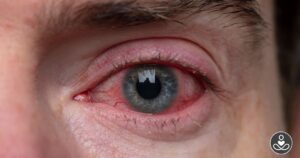
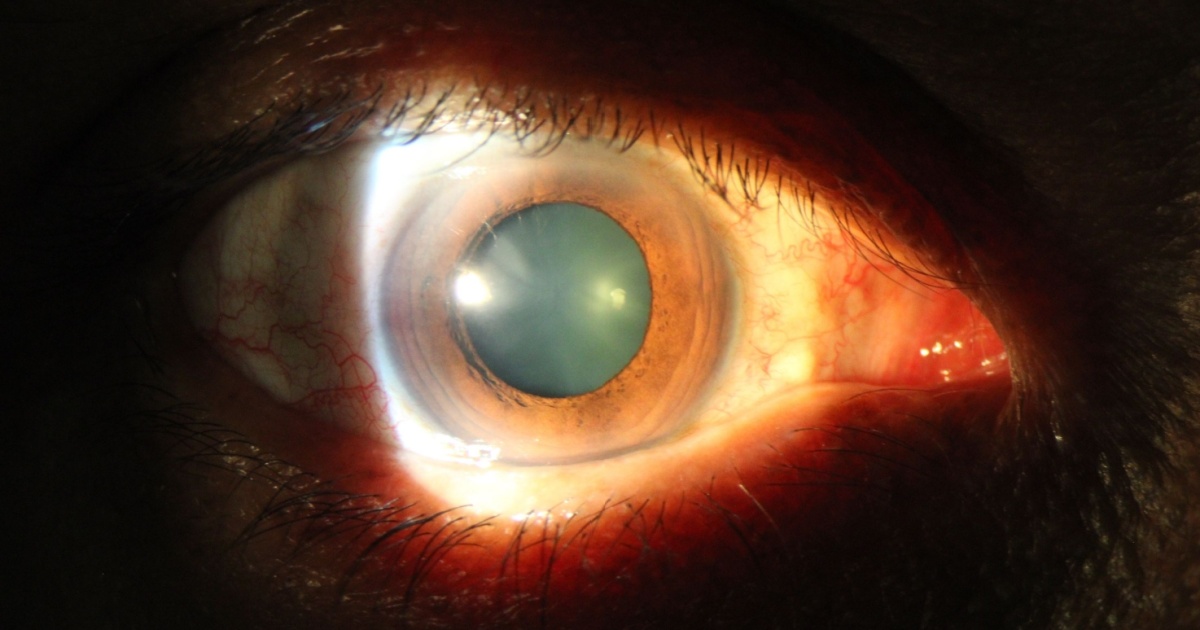
The corneal reflex is controlled by part of the brainstem known as the pons – the region at the base of the brain that governs many automatic functions including breathing, heart rate, and wakefulness. When a clinician gently touches the surface of the eye, the pons triggers an automatic blink. It requires no conscious effort. A person who is deeply unconscious will still blink if the pons is intact.
In standard brain death evaluations, absent cranial nerve reflexes – including pupillary response to light, corneal reflexes, oculocephalic reflex, and others – are among the criteria used to establish neurological death. For decades, this made the corneal reflex a tool for the most irreversible of diagnoses. The medical community has long used the corneal reflex to confirm brain death in comatose patients, but Kang’s study is the first to systematically link it to the timing of imminent death.
Applying it in the context of imminent death rather than brain death is a novel shift, noted Dr. David Hui, professor and Director of Supportive and Palliative Care Research at MD Anderson Cancer Center in Houston.
The biological rationale is logical. If the dying process involves progressive brainstem deterioration, the pons – among the last structures to fail – would be expected to lose function in the final hours. The reflex’s disappearance becomes a marker not of brain death in the legal sense, but of the body’s final neurological retreat.
How the Study Was Conducted
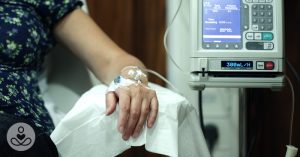
Trained nurses assessed the corneal reflex three times a day in 112 hospice patients with advanced cancer and a life expectancy of one to two weeks. The median patient age was 73.5 years, and 110 of the 112 participants died within seven days of the study starting.
Nurses approached each patient from the side – to avoid triggering a visual startle response – and gently touched the cornea with a sterile cotton wisp or gauze strand. Responses were recorded as intact, diminished, or absent. The study also tracked 12 additional potential indicators of imminent death, making the corneal reflex one of 13 variables evaluated in parallel.
The study was conducted only in patients with a RASS score of -3 or lower, to avoid causing discomfort to more conscious patients – an important ethical constraint that also shaped the study’s scope.
What the Data Showed
Patients with an absent corneal reflex had 5.48 times higher odds of dying within 24 hours than those whose reflex remained intact or diminished. The 24-hour mortality rate among those with an absent reflex was 70.7%.
That number is striking. Roughly seven in ten patients whose corneal reflex had disappeared died within the next 24 hours. For a test requiring only a cotton wisp and less than a minute’s time, that predictive weight is clinically meaningful.
The Role of the RASS Score
Out of 13 potential indicators evaluated, a Richmond Agitation-Sedation Scale (RASS) score of -4 or -5 – indicating deep sedation – was the most sensitive predictor of imminent death. The RASS is a widely used 10-point clinical scale. Designed to assess the level of alertness and agitated behavior, the RASS was developed by a multidisciplinary team of critical care physicians, nurses, and pharmacists. It runs from -5 to +4, with levels of -1 to -5 representing five degrees of sedation, and levels of +1 to +4 describing increasing agitation. A score of -4 means a patient responds only to physical stimulation, and -5 means they are unarousable.
Combining RASS with the corneal reflex assessment may be especially useful. Among patients with a -4 or -5 RASS score, 71.2% of those whose corneal reflex was absent died within 24 hours, compared to 37.1% of those whose reflex remained present. That near-doubling of mortality rate within the deeply sedated subgroup gives the combination its potential clinical power.
Kang’s proposed workflow reflects this: he envisions the corneal reflex test as a confirmatory step following RASS assessment and the observation of peripheral cyanosis. In other words, first look for deep sedation, then look for bluish skin, and then – if both are present – assess the corneal reflex as a final confirmation that death is likely within the next day.
You can read more about the body’s physical signs in the final hours on The Hearty Soul.
The Brainstem Hypothesis
Kang’s interpretation of why the corneal reflex works as a predictor is rooted in the biology of dying itself. “Absence of the reflex may strongly support a prediction of imminent death, but preservation of the reflex does not rule it out,” Kang said. “Loss of the corneal reflex may reflect progressive deterioration of brainstem function as part of the natural dying process.”
This framing positions the reflex not as an arbitrary biomarker, but as a physiological proxy for a process that is already well underway. As the brainstem’s regulatory capacity collapses – blood pressure falls, breathing becomes irregular, the pons loses its ability to coordinate even the most basic reflexes – the involuntary blink disappears. By then, the body is in its final descent.
Dr. Hui noted that “absent corneal reflex and non-reactive pupil both point to decreased brainstem response,” and said it would be interesting to determine whether patients had both signs or just one, and whether adding the corneal reflex assessment actually improved prognostic prediction beyond the pupillary response alone.
That is a genuinely important methodological question. Both the corneal reflex and the pupillary light response are brainstem-mediated. If they occur together, the incremental value of testing both may be modest. Kang’s multi-center follow-up study – which is planned in a more diverse patient population – will need to address this directly.
Limitations and the Caution Clinicians Must Apply
No single prognostic sign in end-of-life care should be treated as infallible, and the investigators and external commentators are clear about this study’s boundaries.
Dr. Hui, who was not involved in the study, called the corneal reflex results comparable in sensitivity and specificity to other “late signs” but noted the small sample size and potential selection bias. A cohort of 112 patients, all with advanced cancer, at a single institution in South Korea, is a starting point – not a definitive answer. Patients with non-cancer diagnoses, different ethnic backgrounds, different disease trajectories, and different sedation histories may present differently.
The study was limited to patients with a RASS of -3 or lower, which means its findings apply only to deeply or moderately sedated individuals. The reflex cannot be ethically or practically tested in more conscious patients.
Researchers in the field of end-of-life prognostication have cautioned that this remains an area of ongoing research, and that many purported signs may be difficult to spot, with the sensitivity of some being quite low – meaning their absence does not exclude the possibility of imminent death. The corneal reflex test faces the same ceiling: its absence is informative, but its presence does not mean death is not close.
As Kang himself acknowledged, this is a challenge common to many end-of-life indicators – “moderate sensitivity” means the sign cannot rule death out when it is absent, even if it is useful when it is present.
Ethical Dimensions and the Role of AI
With many countries and jurisdictions changing euthanasia and end-of-life legal frameworks, demand for bedside prognostic tools may be rising. But ethical hurdles remain.
Any tool that informs families about the likely timing of death carries profound ethical weight. A family told that death is 24 hours away will make decisions – who to call, whether to travel, when to stop treatment – based on that information. When the tool is imperfect, as all tools in this context are, the gap between prediction and reality becomes personally devastating.
Kang acknowledged that “translational research in this population faces unique ethical complexities,” adding that “the dignity and comfort of the dying patient must always take precedence over invasive sampling or procedures.” That ethical grounding matters. The corneal reflex test, administered correctly, is minimally invasive – a gentle touch, not a blood draw or an imaging scan. But even minimal interventions carry weight at life’s end.
On the question of technology, Kang reportedly hopes that AI can be implemented to help detect subtle patterns that might escape bedside clinicians, with the goal of improving care in the final hours of life. “Improving care in the final hours of life is just as important as prolonging survival,” he said.
The practical vision here is worth parsing. If AI systems could integrate multiple bedside signals – RASS scores, skin color changes, pupillary response, corneal reflex, breathing pattern – and weight them together in real time, they might produce predictions more accurate than any single sign alone. That remains speculative for now, but it is a logical extension of the research direction Kang is pursuing.
Read More: End-of-Life Doctor Reveals What People See Before They Die
Key Takeaways
The corneal reflex study represents a meaningful incremental advance in an area of medicine where incremental advances are hard won. It does not solve the problem of end-of-life prognostication. It does not replace clinical judgment. But for clinicians already watching a deeply sedated patient for signs of imminent death, the corneal reflex offers one more concrete data point – one that requires no laboratory, no imaging, and no specialist equipment.
For families, the significance is different but equally real. As Kang has said, “improving care in the final hours of life is just as important as prolonging survival. The better we become at recognizing imminent death, the better we can support a more peaceful and dignified experience for patients and families.” A tool that helps clinicians answer the question “How much longer?” with slightly more confidence is not a small thing to the people sitting in those hospital chairs.
For the research community, the work ahead is clear. The planned multi-center, multi-population follow-up study must determine whether the findings hold across cancer types, non-cancer diagnoses, age groups, and clinical settings. Independent validation is essential before this sign can be incorporated into standard prognostic guidance. Researchers must also determine whether adding the corneal reflex assessment to existing RASS-based and cyanosis-based observation genuinely improves predictive accuracy – or simply confirms what clinicians already knew.
What is clear is that the question Kang asked – why does this automatic blink disappear, and what does it tell us? – was the right one. And in a clinical space where families deserve the most honest, compassionate, and evidence-based answers possible, asking the right question is always a worthwhile place to begin.
Disclaimer: This information is not intended to be a substitute for professional medical advice, diagnosis or treatment and is for information only. Always seek the advice of your physician or another qualified health provider with any questions about your medical condition and/or current medication. Do not disregard professional medical advice or delay seeking advice or treatment because of something you have read here.
AI Disclaimer: This article was created with the assistance of AI tools and reviewed by a human editor.
Read More: End Of Life Medical Staff Can Predict That Death Is Near When Patients Experience This Pheonomen