
Picture yourself wading into a cool lake on a summer afternoon, water up to your shins, when something clamps onto your toe with a grip that feels nothing like a fish nibble. It burns. It swells. And whatever just grabbed you is still down there, somewhere in the murk below your feet.
That’s the calling card of the giant water bug, a creature that’s been turning lakeside outings awkward for generations. Most people have never heard of it until after the encounter, and even fewer know just how remarkable this insect actually is.
If you spend any time near freshwater in North America – lakes, ponds, marshes, or even a backyard pool – there’s a reasonable chance you’ve shared the water with one without knowing. Here are seven things worth understanding about this surprisingly fascinating, occasionally painful neighbor.
1. It’s the Largest Aquatic Insect in North America
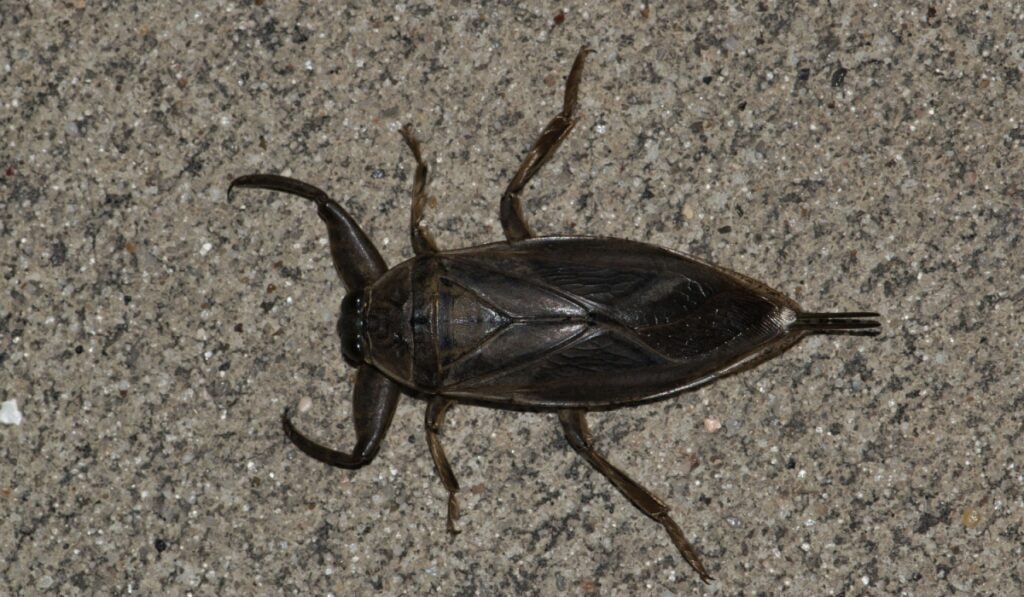
Lethocerus americanus, sometimes called the electric light bug, toe-biter, or fish killer, is a giant water bug in the family Belostomatidae, native to southern Canada and the United States. That name – Belostomatidae – sounds sciency, but the creature itself is anything but ordinary. Known colloquially as toe-biters, Indian toe-biters, electric-light bugs, alligator ticks, or alligator fleas in Florida, these freshwater hemipteran insects are the largest in the order Hemiptera – meaning the largest of all “true bugs” in the world.
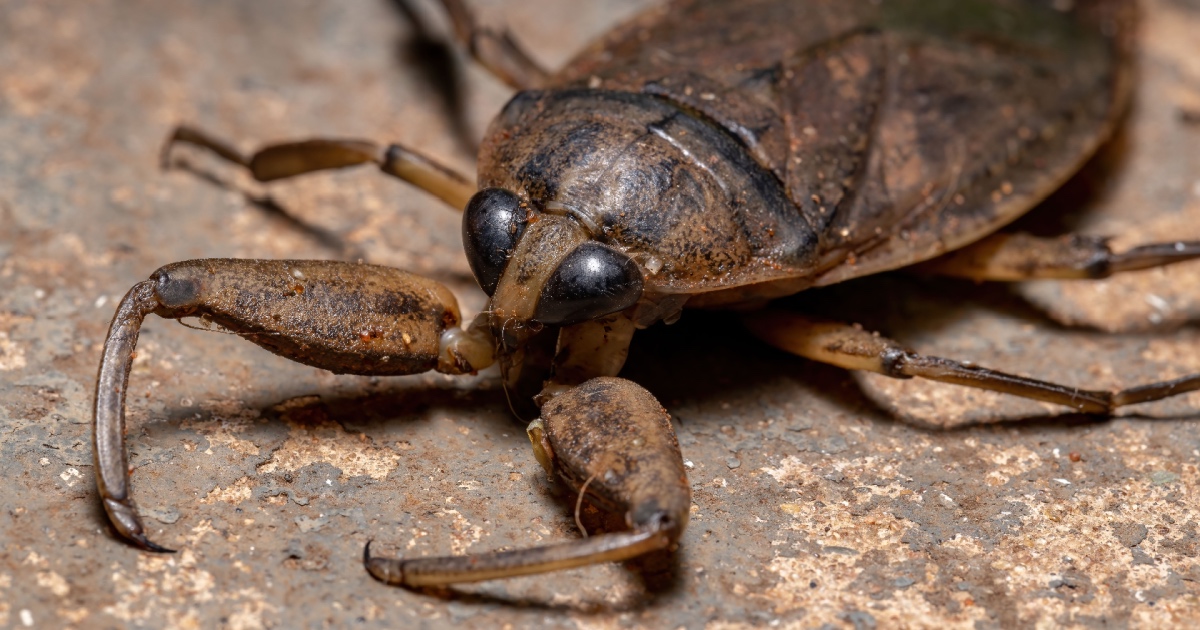
It typically measures 5 to 6 cm (roughly 2.0 to 2.4 inches). That’s about the size of a large grape – flat, oval-shaped, and the same mottled brown as pond mud. Giant water bugs are oval-shaped, with pincer-like front appendages that capture and hold prey. In other words, it’s almost invisible underwater unless you know exactly what to look for.
2. It’s a Stealthy, Highly Effective Predator
Don’t let the stillness fool you. Lethocerus americanus is an ambush predator that lies in wait among aquatic vegetation or submerged debris, using its raptorial forelegs to grasp passing prey such as insects, tadpoles, and small vertebrates. When prey comes within range, it lunges forward with surprising speed.
A pair of front fore limbs is used for capturing and latching onto its intended prey, which it then injects with digestive toxins through a somewhat retractable proboscis, much like that of a mosquito. Once captured, the bug pierces the prey with its proboscis and injects salivary enzymes that initiate extra-oral digestion by liquefying the internal tissues – then sucks up the resulting nutrient-rich fluid through the same mouthparts, leaving behind only the empty exoskeleton or shriveled remains of the victim.
Commonly found in ponds, marshes, and on the edges of lakes and slow-moving streams, adults and larvae feed on other insects, small crustaceans, tadpoles and frogs, snails, and small fish. Field observations documented by researchers and compiled in a review published in National Geographic confirm the insect’s reputation extends well beyond this: giant water bugs are voracious predators that take down everything from ducklings to venomous snakes. According to that review, one consistent theme emerged from decades of research: these insects seem almost fearless in their predation, with one researcher reporting the first confirmed field observation of a giant water bug preying on a turtle.
Field reports note the giant water bug can eat an animal 50 times its own size, which would be the equivalent of a person eating an elephant in a single meal. This claim comes primarily from naturalist field observation rather than controlled laboratory research, so it should be understood as a reported extreme rather than a typical feeding event. Still, for an insect, the prey range documented in peer-reviewed literature is genuinely striking. If you spend time near ponds and wonder why the frog population seems thin some years, this insect may be part of the answer.
3. That Bite Is Not a Myth
The “toe-biter” nickname exists for a reason. Giant water bugs are not aggressive toward humans and will bite purely in self-defense – most bites happen when someone accidentally grabs one, steps on it barefoot near a pond, or tries to remove it from a pool without proper tools.
A 2010 clinical case report published in Wilderness & Environmental Medicine documented seven patients bitten by giant water bugs belonging to the Belostomatidae family. The authors reported seven cases of patients bitten by these large predatory insects, noting that their toxic saliva is capable of provoking intense pain and paralysis in vertebrates – and that victims experienced intense, excruciating pain, with one patient manifesting hypoesthesia (reduced sensation) in the forearm. Clinical findings suggest these effects are likely related to the enzymatic action of salivary secretions, which can digest tissue and cause severe pain and possible local anesthesia.
The rostrum can also be used in self-defense, and their sting is very painful to humans, causing swelling and pulsating pain, but usually resolves within about five hours at most. This five-hour figure comes from naturalist literature on the Lethocerus genus and reflects the upper range for symptom duration. Symptoms vary but may persist for up to five hours, typically without lasting damage – a description from a biology educator writing about field encounters. Most water bug bites resolve within several hours without medical intervention.
If you’re bitten, clean the area, apply ice to reduce swelling, and monitor symptoms for a few hours. A giant water bug bite is not life-threatening. If you see one, use a net or cup – not your bare hands. Water shoes are a sensible precaution when wading in shallow, weedy lakes during summer months.
4. It Can Fly – and That’s Why It Turns Up in Your Pool
Many people assume that because these bugs live in water, they stay in water. They don’t. During mating season, giant water bugs fly from pond to pond or pool of water, and it is during these flights that they fly to lights in large numbers – earning their other common name, “electric light bugs.” This is documented by the University of Florida Institute of Food and Agricultural Sciences, which has studied the family Belostomatidae extensively.
Lethocerus adults are attracted to lights and are drawn in large numbers as they disperse from one water body to another during the rainy season. This is how they end up in backyard pools across the U.S. The giant water bug flies between habitats, and you may also spot water bugs flying around porch lights, streetlights, and other lights at night.
If you find one in your pool, don’t reach in bare-handed. Scoop it out with a net and deposit it well away from the pool. To reduce the odds of future visits, turn off pool lights overnight and keep the area around the pool clear of standing water and debris. For more on identifying bites from insects with similarly startling defensive behaviors, this guide to common bug bites is a useful starting point.
5. It Has a Surprisingly Clever Set of Defenses
Biting is actually a last resort for the giant water bug. Before it gets to that point, this insect has a few other tricks up its shell. It prefers to avoid humans rather than engage them. If disturbed in the water, speed and camouflage are its first tools. Even if agitated on dry land, it will first attempt to escape or feign death before raising its forelegs in a defensive posture.
If agitation continues, L. americanus will use its fore limbs to latch onto the source of the agitation and attempt to deliver a painful bite. But before it reaches that point, naturalist accounts describe the bug playing dead convincingly – becoming rigid for several minutes when removed from the water – and being capable of squirting a foul-smelling fluid as a deterrent. The toe-biter has also been known to latch onto humans, even pretending to be dead before attacking with its sharp beak.
The playing-dead trick is convincing enough that many people have assumed they found a dead bug, only to receive a sharp surprise when they reached down to pick it up. Whether the bug looks dead or alive, handle it with a tool – not your fingers. An apparently motionless giant water bug on the edge of your pool or on a wet driveway near water is very likely still alive and fully capable of delivering a memorable bite.
6. Its Reproductive Behavior Flips the Script on Parenting
Giant water bugs have an unusual approach to raising offspring, one that sets them apart from virtually every other insect you’re likely to encounter. An unusual trait typical of many giant water bugs is that parental care is reversed – males rear the young.
In the Lethocerus species common to North America, males of the genus guard eggs glued to vegetation until they hatch. In species of the subfamily Belostomatinae, the eggs are typically laid on the male’s wings and carried until they hatch, and the male cannot mate during this period. The males invest considerable time and energy in reproduction, and females take the role of actively finding males to mate – a role reversal that matches the predictions of parental investment theory in evolutionary biology.
Adult females will alternate between feeding and mating, laying about 150 or more eggs in their lifetime – though few nymphs survive to maturity due to cannibalism and other predators. The nymphs, which look like mini versions of the adult, go through five stages of growth – called instars – over the next two months before reaching adulthood. This five-stage progression is confirmed by laboratory rearing studies of related belostomatid species, including a study published in the Journal of Entomology and Zoology Studies, which documented the five distinct nymphal instars through controlled rearing conditions.
When you spot what looks like a giant water bug with a lumpy, textured back, you’re likely looking at a father doing his job – one of the more unusual parenting arrangements in the insect world.
7. It Actually Plays a Useful Role in the Ecosystem
For all its reputation as an unpleasant summer surprise, the giant water bug earns its place in freshwater ecosystems. Individuals prey on aquatic insects, small fish, frogs, tadpoles, small birds, and other organisms they are able to capture. Powerful enzymes are injected into prey to kill them – and this feeding activity has meaningful downstream effects on pond ecosystems.
As apex invertebrate predators, they regulate the populations of smaller aquatic creatures – including mosquito larvae, which is a direct benefit to people living near freshwater. As top-shelf predators, giant water bugs are key to maintaining a healthy ecosystem. Water pollution can harm their populations, and alien species such as crayfish and bullfrogs can prey on water bugs – meaning the health of their populations is itself an indicator of freshwater quality. Researchers have noted that “we can conserve whole ecosystems through the conservation of giant water bugs.”
Giant water bugs also fall prey to larger fish, ducks, and possibly raccoons or turtles, forming a crucial link in the aquatic food chain. Adults survive winter by burrowing under mud and leaf matter and emerge again in warmer months – so while you’re more likely to encounter one from late spring through fall, the bugs are present year-round in most of their range, just hidden beneath the surface.
Read More: What Are Assassin Bugs, and What Do You Do If You’re Bitten By One?
What to Do If You Encounter One
The giant water bug is not a pest to eradicate or fear in any dramatic sense. It’s a native species doing exactly what it evolved to do. Your best approach is awareness. If you swim in natural freshwater during summer months – especially in weedy, shallow areas with abundant vegetation – wear water shoes and avoid reaching into murky water or plant growth without looking first.
If one shows up in your pool, turn off pool lights at night going forward to reduce the chances of a repeat visit. Scoop the insect out with a net rather than your hands, and release it well away from the water’s edge. There are no specific treatment modalities known to be effective for the bite, making prevention an important strategy. If you are bitten, clean the area thoroughly, apply ice to manage swelling, and give it a few hours. Most water bug bites resolve within several hours without medical intervention.
A giant water bug bite is painful and surprising – it’s not a medical emergency for most people. Those who know what they’re dealing with come away with a story to tell, not a trip to the emergency room. A basic understanding of this insect and where it lives is all the protection you actually need.
AI Disclaimer: This article was created with the assistance of AI tools and reviewed by a human editor.
Read More: Identify Pest Droppings at Home: Bed Bugs, Spiders & More