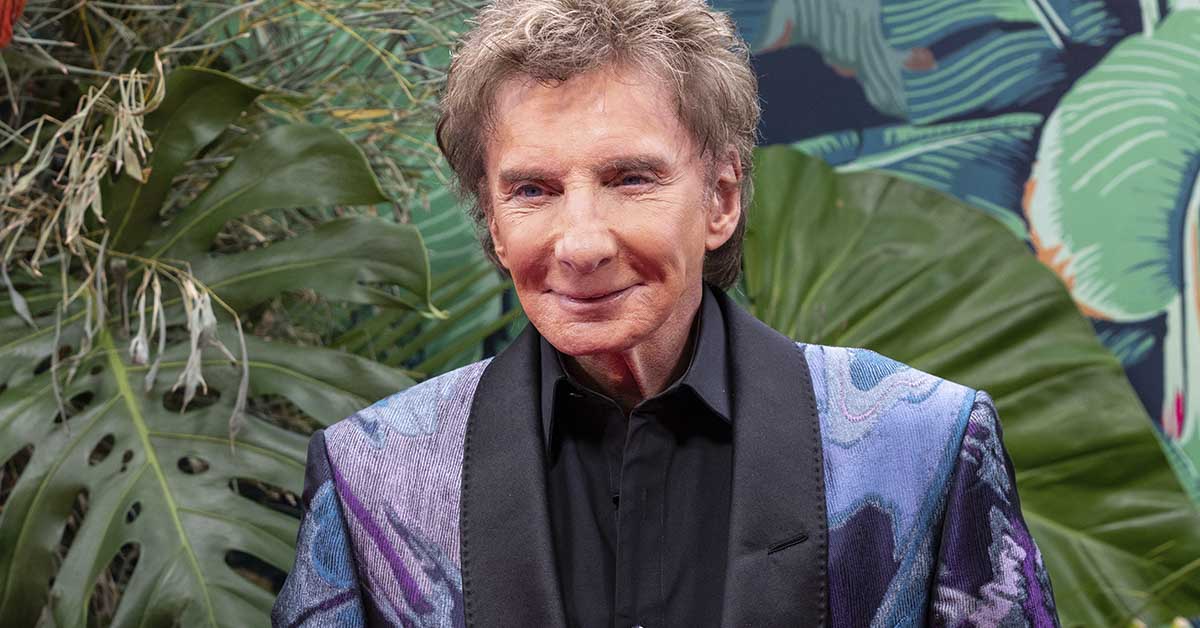

Barry Manilow has spent decades being the kind of performer people never forget. His voice. His showmanship. The songs that seemed to find you exactly when you needed them. So when photos surfaced this week of the 82-year-old smiling on the streets of New York City, something about the image hit differently than a typical celebrity sighting. Because behind that smile was a story most people didn’t know the half of yet.
Four months ago, Manilow was in surgery. Not for a routine procedure. For lung cancer.
What’s striking about his story isn’t just that he survived. It’s how he found out, what the recovery actually cost him, and what he says he now understands about life that he simply didn’t before. It’s a story that carries a quiet but important message for everyone, whether or not you’ve ever listened to a single Manilow record.
How a Bout of Bronchitis May Have Saved His Life
Manilow had been dealing with stage 1 lung cancer, a diagnosis that only came to light after he battled six weeks of bronchitis. “As many of you know, I recently went through six weeks of bronchitis followed by a relapse of another five weeks,” he shared with fans in late 2025.
His doctor initially ordered an MRI because Manilow had complained about hip pain in November. Then, after learning the singer had recently had two separate bouts of bronchitis, the doctor ordered an MRI of his lungs as well. That’s when they found something.
Manilow later described the discovery bluntly. “If he hadn’t done that, man… he saved my life, because there’s no symptoms for what I had. I could go on, nothing hurt – but they found the dot in my lung,” he said.
This type of accidental discovery is more common than people realize. Like many early lung cancers, the spot caused no specific symptoms and was only detected because follow-up scans were done. It’s a pattern that makes diagnostic vigilance in older adults particularly important.
Manilow first announced his cancer diagnosis via Instagram on December 22, 2025. The announcement was candid and immediate. The MRI had discovered a cancerous spot on his left lung that needed to be removed. “It’s pure luck (and a great doctor) that it was found so early. That’s the good news,” he wrote. “The bad news is that now that the Christmas A Gift of Love concerts are over, I’m going into surgery to have the spot removed. The doctors do not believe it has spread and I’m taking tests to confirm their diagnosis.”
The Surgery and What Came After
Four weeks after the diagnosis, Manilow was hospitalized for a lobectomy to remove one of his left lung’s two lobes, followed by seven days in the ICU after surgery. A lobectomy is a major operation in which a surgeon removes an entire section, or lobe, of the lung. It is most often performed for people with early-stage lung cancer and is a common surgery for treating non-small cell lung cancer in its early stages.
The singer spent seven days in the ICU following the successful surgery. “I don’t remember it, thank goodness, because it was a nightmare,” he said. “I’m one of the lucky ones; I don’t have to have chemo, radiation and all that stuff.”
The physical toll of the recovery was significant and honest. The cancer and subsequent surgery saw his weight fall to under 130lbs and took a toll on his voice. He revealed that although he was “using the treadmill three times a day,” his doctor had advised that his “body isn’t ready” to perform a 90-minute set.
Long-term recovery from a lobectomy can take anywhere from a few weeks to several months. Patients who undergo an open thoracotomy need at least one to two months to fully heal. For an 82-year-old, the challenges are compounded. Thoracic surgery is an intensive procedure that requires a hospital stay, and recovery times can be lengthy. Each person heals at a different pace, depending on overall health, age, and any other medical conditions.
In early January, Manilow shared another update on social media, letting fans know he was “Better Today!” with a smiling selfie in his hospital gown. But the path forward wasn’t without setbacks. The following month, he announced via Instagram that he had a “very depressing visit” to his surgeon and would need to postpone more tour dates because his “lungs weren’t ready yet.”
What “I’m One of the Lucky Ones” Actually Means
Manilow’s relief at avoiding chemotherapy and radiation isn’t just a personal sentiment. It reflects a medical reality that makes early detection so critical with lung cancer.
According to the American Lung Association’s 2024 “State of Lung Cancer” report, only 27.4% of lung cancer cases nationwide are diagnosed at an early stage, when the five-year survival rate is much higher at 64%. Unfortunately, 43% of cases aren’t caught until a late stage, when the survival rate drops to just 9%.
Early-stage detection doesn’t just improve survival rates. It often eliminates the need for the most grueling parts of cancer treatment. Because Manilow’s cancer was detected early, chemotherapy and radiation were not required, which is associated with an excellent prognosis.
Usually, if cancer is still gone after five years, a doctor may consider the patient cured. “People who are treated with a lobectomy for early-stage lung cancer have a very good prognosis and can live even longer than 20 years,” according to this WebMD overview of lobectomy surgery.
The thing is, the biggest problem with lung cancer is that it often doesn’t show symptoms until it has spread. Manilow’s case is a reminder that the scans that found his cancer weren’t even looking for it. They were ordered for unrelated reasons by a doctor who happened to be thorough. That’s not a system. That’s luck. And luck isn’t a screening strategy.
Screening with annual low-dose CT scans can reduce the lung cancer death rate by up to 20% by detecting tumors at early stages when the cancer is more likely to be curable, according to the American Lung Association. Lung cancer screening has been recommended for those at high risk since 2013, but only 18.2% of those eligible were actually screened in 2022.
If you’re over 50, have a history of smoking, or have been exposed regularly to secondhand smoke, asking your doctor about lung cancer screening could be one of the most important conversations you have this year.
Cancer-Free and Looking Forward
By late March 2026, doctors confirmed Manilow was cancer-free, requiring no chemotherapy or radiation. The road back to the stage is still being navigated carefully. He was forced to cancel concerts in April 2026 due to ongoing health concerns, though he still plans to head to Las Vegas for a residency running from May 7 to December 19, 2026.
Then came April 24, 2026. Manilow, 82, was photographed in New York City, marking his first public outing since undergoing the lobectomy in December 2025 for stage 1 lung cancer. He was pictured in a black leather jacket, black jeans, and sneakers as he smiled at the cameras, four months after the procedure.
The timing of the outing wasn’t accidental. Manilow was in the city for a significant professional honor: his induction into the American Advertising Federation Hall of Fame. Long before selling over 85 million records worldwide, he was already shaping catchy sounds for commercials.
He also plans to release his first brand-new album in 15 years, What A Time, on June 5, 2026. Primarily produced by Manilow and longtime collaborator Michael Lloyd, What a Time is Manilow’s 33rd studio album and his collection of mostly original songs since 2011’s 15 Minutes.
The title, given everything that happened, lands a little differently now.
The Shift in Perspective
Perhaps the most meaningful part of Manilow’s story isn’t the medical details. It’s what he says the experience did to his inner life.
In a 2026 interview covered by Billboard, Manilow reflected: “It has really, really made me take stock of my life. This made me stop and think about: Have I done what I wanted to do, and have I made people happy? Have I been a good friend?”
He added, “All of those cornball things that I’ve read for all of my life, I started to think about that, too. It really did stop me in my tracks. And the answers are yes. And as a matter of fact, there are more yeses than I ever thought.”
That kind of reflection, prompted by a near-miss, is something many cancer survivors describe. The confrontation with mortality doesn’t just sharpen your sense of fear. For many, it also sharpens your sense of gratitude, of purpose, of what actually matters. Manilow, by all accounts, came through that confrontation with his answers intact.
Read More: Warning Signs of Lung Cancer Everyone Should Know
What This Means for You
Barry Manilow’s story is a genuinely compelling one. But the most useful thing about it isn’t the celebrity angle. It’s the mechanism of his discovery: a thorough doctor, an unexpected imaging scan, a spot found before it could spread. That sequence of events is what saved his life. And it’s entirely reproducible for anyone willing to be proactive about their health.
Lung cancer is the leading cause of cancer deaths in the US, but the American Lung Association’s 2024 report also notes positive news: the lung cancer survival rate has improved 26% in the last five years. That improvement is being driven, in large part, by better screening and earlier detection. Manilow’s outcome shows exactly what’s possible when cancer is caught at stage 1, before it spreads, before it requires the most aggressive treatment options. He skipped chemotherapy. He skipped radiation. He got a lobectomy, seven hard days in the ICU, months of grueling recovery, and then walked out of a car in New York City smiling at cameras. He is now cancer-free.
If there’s a practical takeaway here, it’s this: don’t wait for symptoms. Manilow had none. His cancer was silent. The scan that found it was ordered because of completely unrelated complaints. Annual low-dose CT screening can reduce lung cancer deaths by up to 20%, yet the vast majority of people who are eligible for it never get it done. Talk to your doctor about whether screening is right for you. Ask about your risk. Push for the scan. Because the difference between stage 1 and stage 4 lung cancer isn’t just a number. It’s the difference between “I’m one of the lucky ones” and a very different kind of story.
Disclaimer: This information is not intended to be a substitute for professional medical advice, diagnosis or treatment and is for information only. Always seek the advice of your physician or another qualified health provider with any questions about your medical condition and/or current medication. Do not disregard professional medical advice or delay seeking advice or treatment because of something you have read here.
AI Disclaimer: This article was created with the assistance of AI tools and reviewed by a human editor.
Read More: He Never Smoked, But Still Got Lung Cancer at 45. Here’s the One Symptom He Noticed